Artwork
The Madonna of Humility with the Temptation of Eve
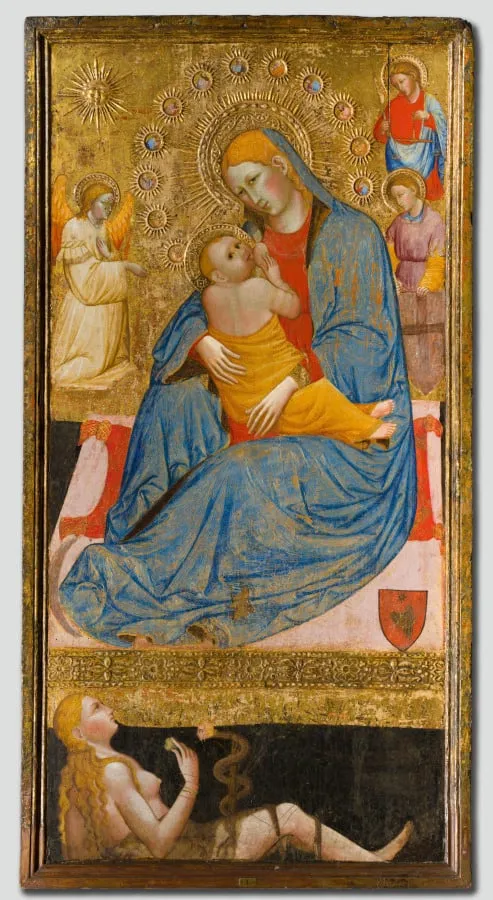
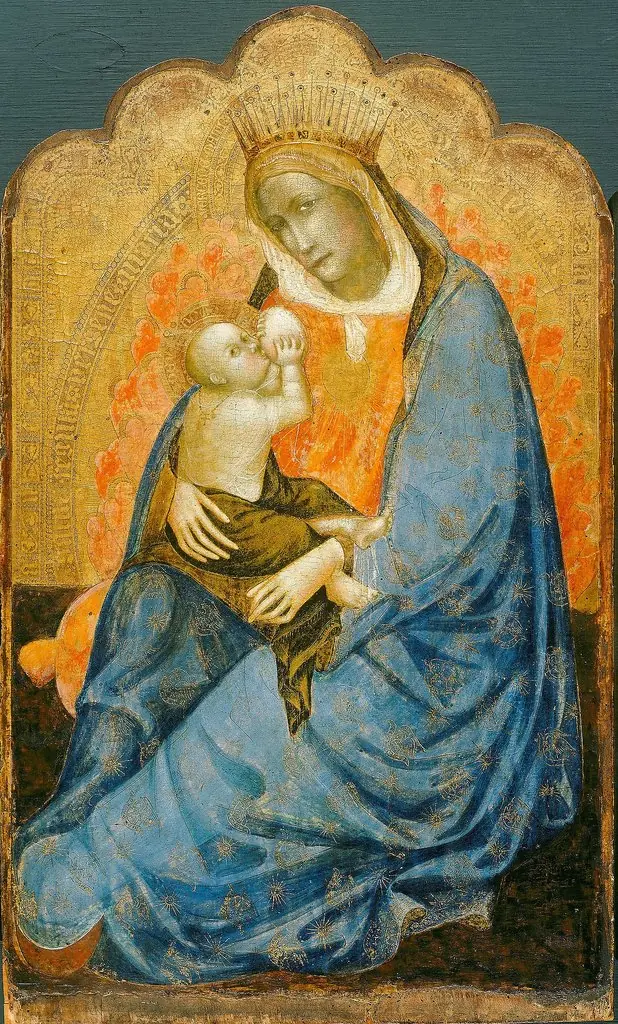
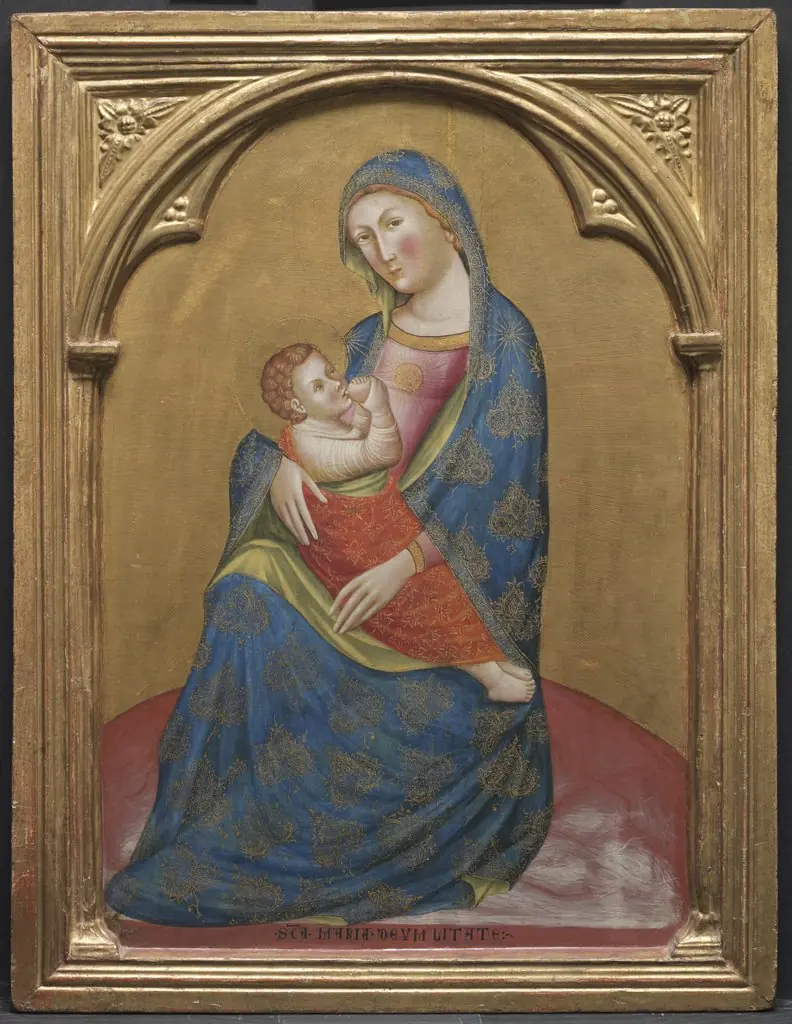
The Madonna of Humility with the Temptation of Eve is an unspecified painting by the Italo Byzantine artist Olivuccio di Ciccarello. It dates from 1400 and is held in the collection of the Cleveland Museum of Art. Created around 1400, this panel painting presents the Virgin Mary seated on the earth, nursing the infant Christ.
About this work
In this 1400 painting, a humble Mary sits on the ground nursing baby Jesus. Saints kneel beside her while his disciples glow like stars in her halo. Down below, Eve reaches for the forbidden fruit, nudged by a serpent.
It’s a quiet battle between good and bad. The top half is calm and holy. The bottom half is messy and human.
Look up Olivuccio di Ciccarello (Italian, Marche, 1360/65–1439) next.
Overview
Created around 1400, this panel painting presents the Virgin Mary seated on the earth, nursing the infant Christ. Flanking her are kneeling figures of Saint George and the Archangels Gabriel and Michael, while luminous star‑like forms emerge from the Virgin’s halo, representing Christ’s disciples. The lower register depicts Eve, urged by a serpent, reaching for the forbidden fruit.
Subject & Meaning
The composition juxtaposes the purity of the Madonna and the Incarnation with the moment of original sin embodied by Eve. By placing the two narratives side by side, the work underscores the theological link between humanity’s fall and its redemption through Christ and his mother.
Technique & Style
Executed in tempera on a wooden panel, the painting shows the delicate modeling typical of early 15th‑century central Italian art. Deep scratches on the surface, especially across the serpent’s face and Eve’s wrist, suggest later defacement, possibly by a zealous viewer intent on symbolically attacking the representation of evil.
History & Provenance
The work is attributed to Olivuccio di Ciccarello, a prolific painter active in the Marche region, particularly in Ancona, where he spent his career and died. Earlier attributions linked the piece to a supposed Carlo da Camerino, a misreading of the artist’s signature that has since been corrected.
Context
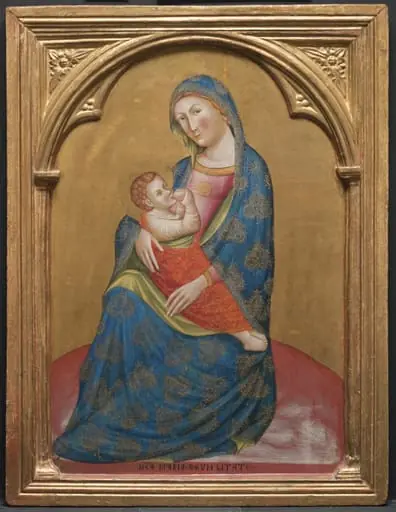
The painting reflects the devotional trends of early Renaissance Italy, where the Madonna of Humility motif—Mary seated directly on the ground—was popular. The inclusion of saints and angels alongside biblical episodes illustrates the period’s integrated approach to narrative and liturgical imagery.
Artist & collection
Artist
Olivuccio di Ciccarello (died 1439) was an Italian painter. Little is known of his life. He was a native of Camerino and was active from 1388 until his death. In 2002 works formerly attributed to an obscure painter…