Artwork
Madonna of Humility
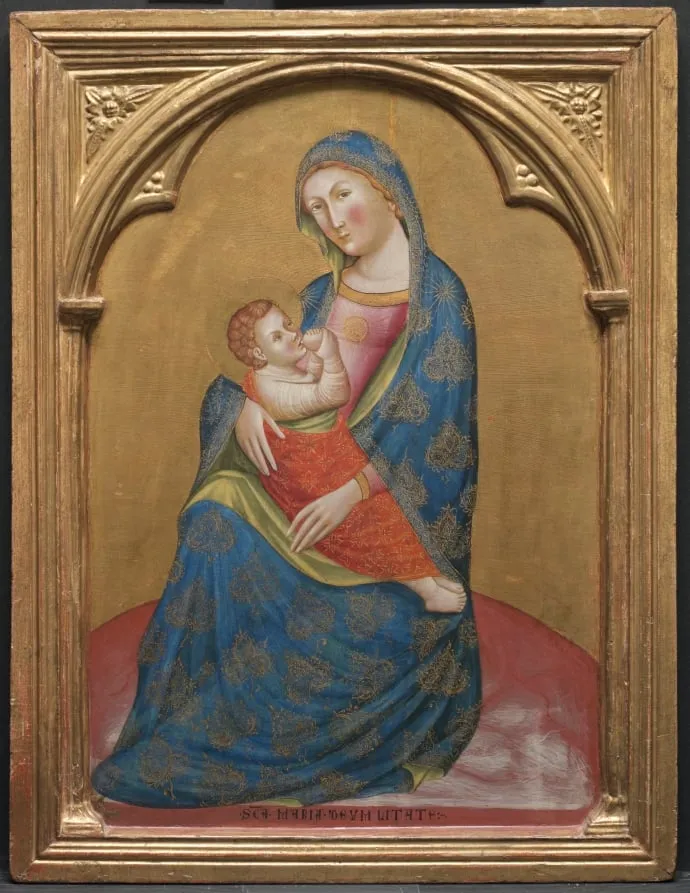
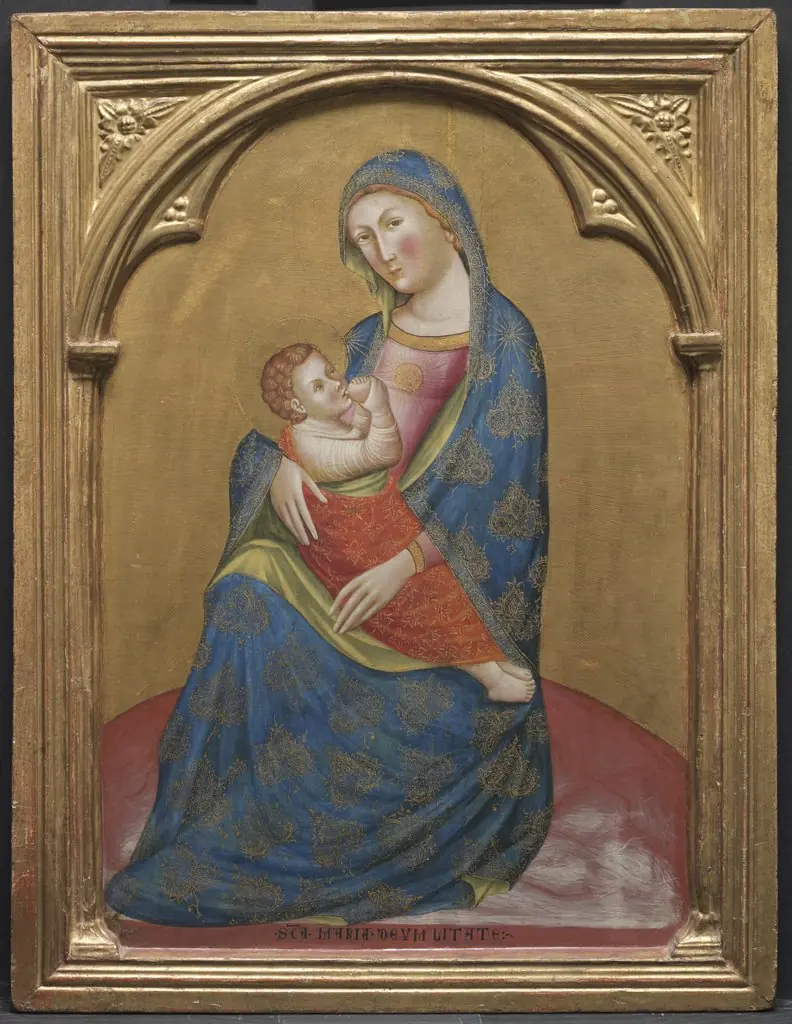
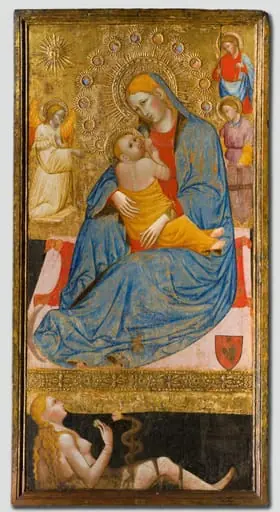
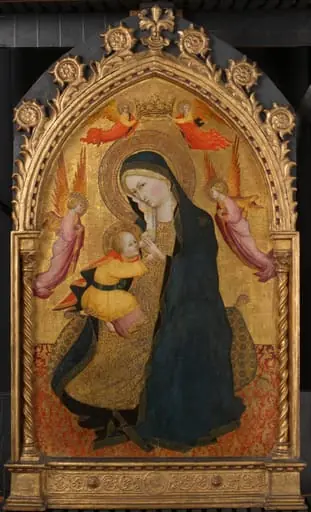
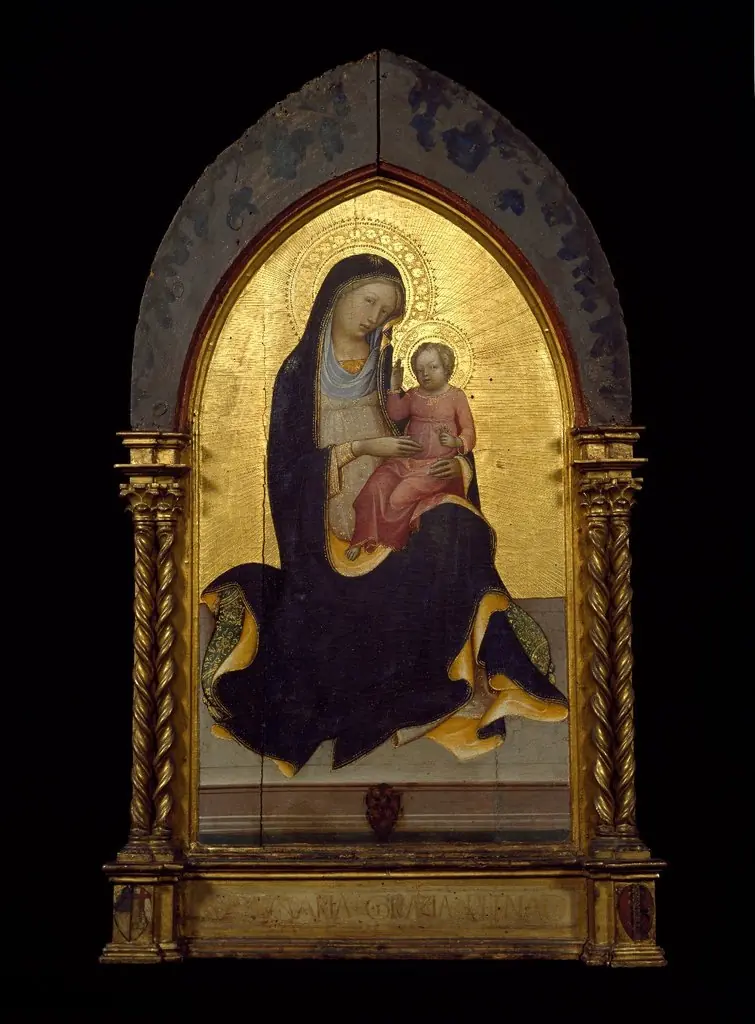
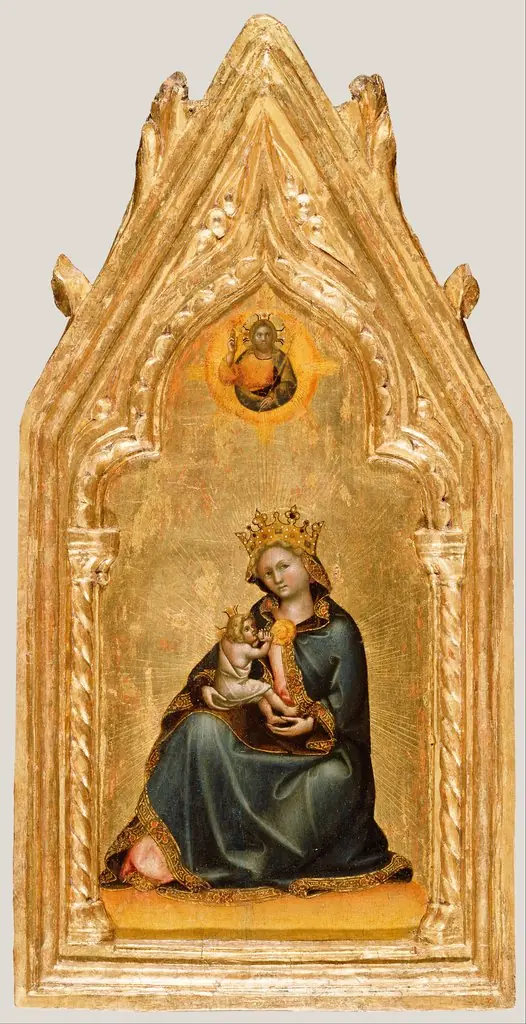
Madonna of Humility is an unspecified painting by the Italo Byzantine artist Catarino Veneziano. It dates from 1374 and is held in the collection of the Cleveland Museum of Art. The panel presents the Virgin seated directly on the floor, cradling the infant Christ on her lap.
About this work
Overview
The panel presents the Virgin seated directly on the floor, cradling the infant Christ on her lap. A modest cushion serves as her sole support, while a luminous gold background frames the intimate scene. The composition emphasizes a grounded, tender interaction between mother and child, diverging from the conventional regal throne setting.
Subject & Meaning
By portraying Mary on the earth rather than a throne, the image conveys the Christian virtue of humility, echoing the Latin concept of humilitas. The tender act of nursing underscores her role as a nurturing mother, aligning with the Franciscan emphasis on simple, accessible piety that became popular in the mid‑fourteenth century.
Technique & Style
The work employs a restrained palette, with the gold leaf behind the figures creating a subtle halo effect. The figures are rendered with gentle modeling, hinting at the soft transitions later associated with sfumato, though the overall approach remains more linear and decorative than fully atmospheric.
Context
The motif of the Madonna of Humility emerged in the 1350s, shortly after the Black Death, when artists sought to present saints in a more relatable, earthly manner. This shift reflected a broader devotional trend promoted by the Franciscan order, which advocated an intimate, compassionate connection to the divine.
Artist & collection