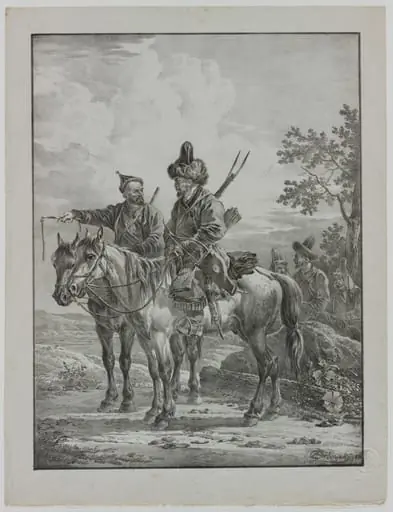
Artwork
The Polish Rider
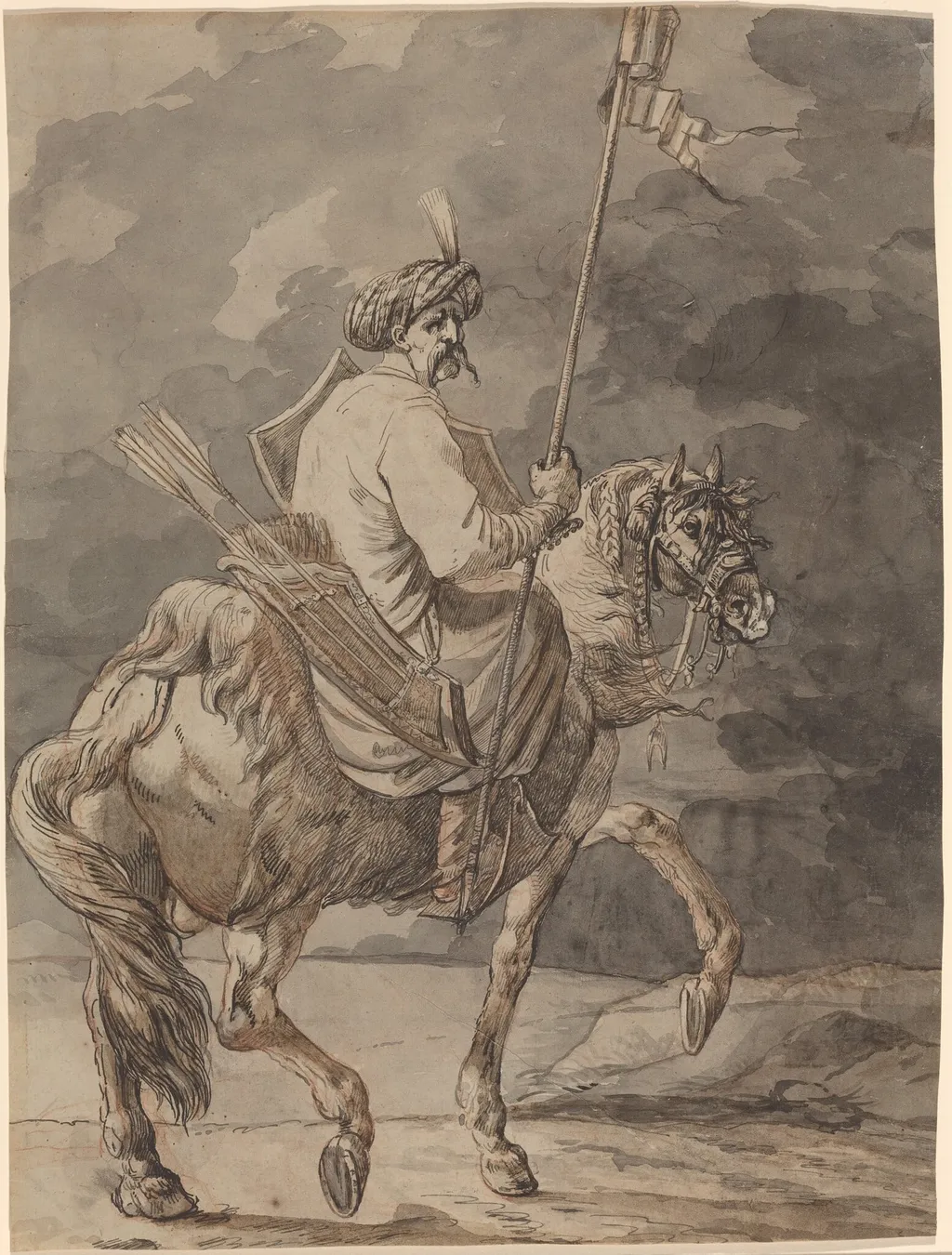
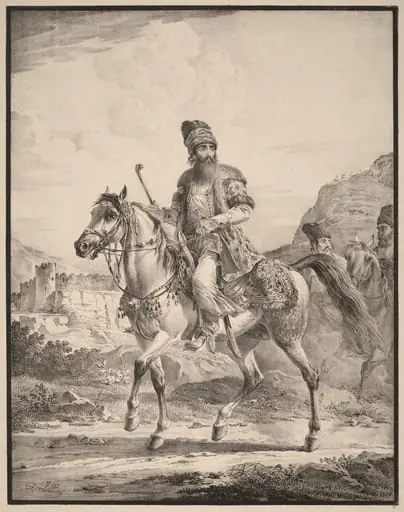
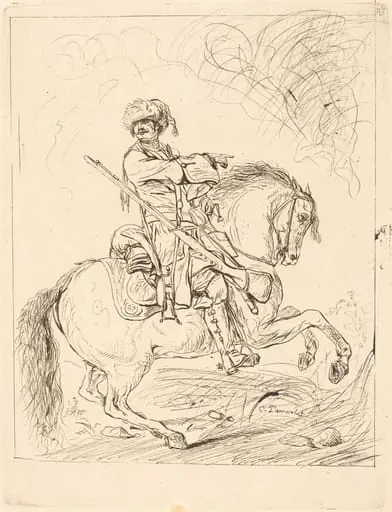
The Polish Rider is an ink drawing by the Romanticist artist Aleksandr Osipovich Orlovskii. It dates from 1804 and is held in the collection of the National Gallery of Art.
About this work
Overview
The Polish Rider is a pen drawing executed in brown ink with gray wash over a red chalk underdrawing on blue paper, completed in 1804 by the Russian artist Aleksandr Osipovich Orlovskii. The work measures roughly the size of a standard sheet and is catalogued as a drawing rather than a painting, reflecting the artist’s interest in rapid, expressive line work.
Subject & Meaning
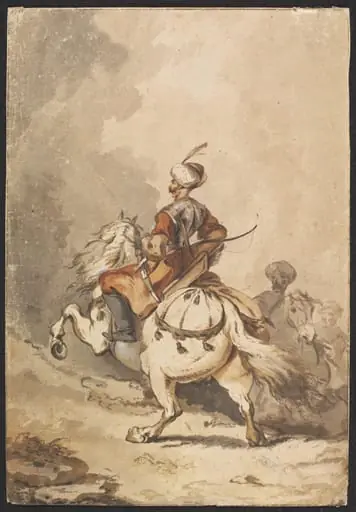
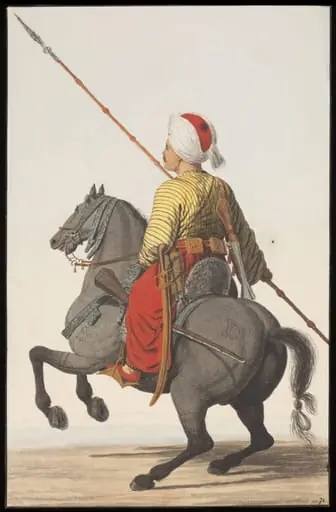
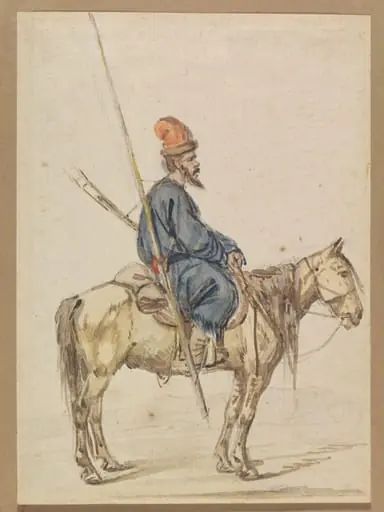
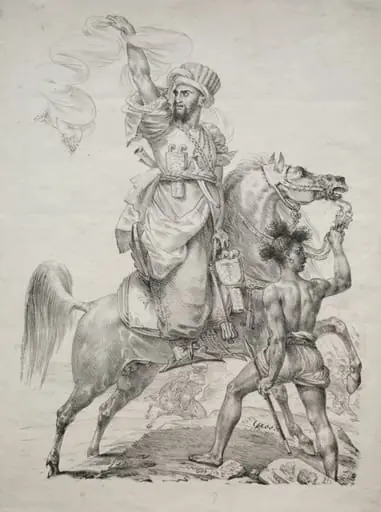
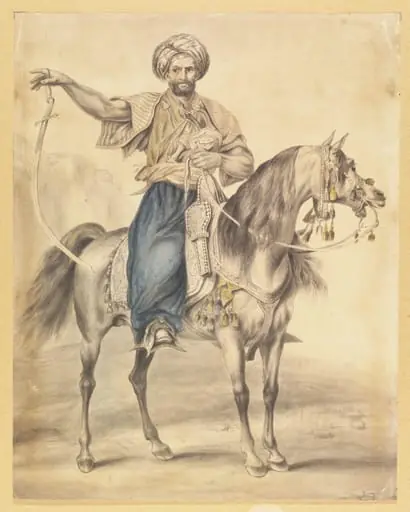
The composition depicts a lone rider on a galloping horse traversing a turbulent, craggy landscape beneath a dark, swirling sky. The rider, cloaked in a loose coat and turban and holding a long staff, faces away from the viewer, emphasizing motion and isolation. The stormy atmosphere and the figure’s tense posture suggest themes of struggle and the sublime power of nature.
Technique & Style
Orlovskii employs swift, gestural lines to convey the horse’s muscular tension and the rider’s urgency, while the gray wash adds atmospheric depth to the stormy sky. The underlying red chalk provides a faint tonal foundation, allowing the ink to stand out against the blue paper. This approach aligns with Romantic-era preferences for dynamic, emotionally charged drawing over meticulous detail.
History & Provenance
Created in 1804, the drawing entered the collection of the State Russian Museum in the early 20th century, where it remains part of the museum’s drawing department. Documentation traces its provenance through several private owners before its acquisition by the museum, confirming its attribution to Orlovskii and its date of execution.
Own this work as a print
Artist & collection