Artwork
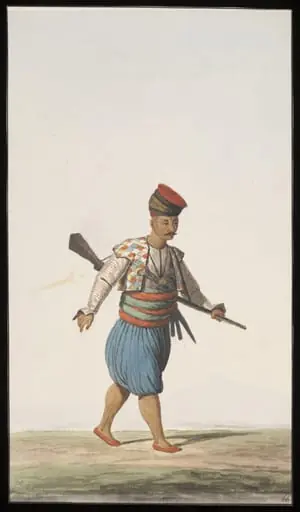
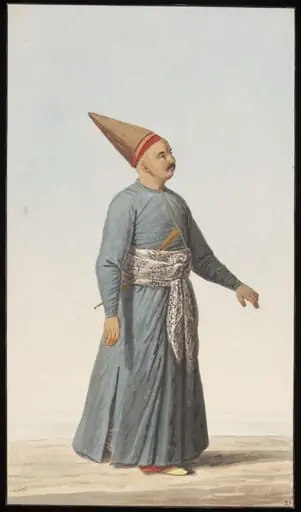
Sipahi, or cavalry soldier
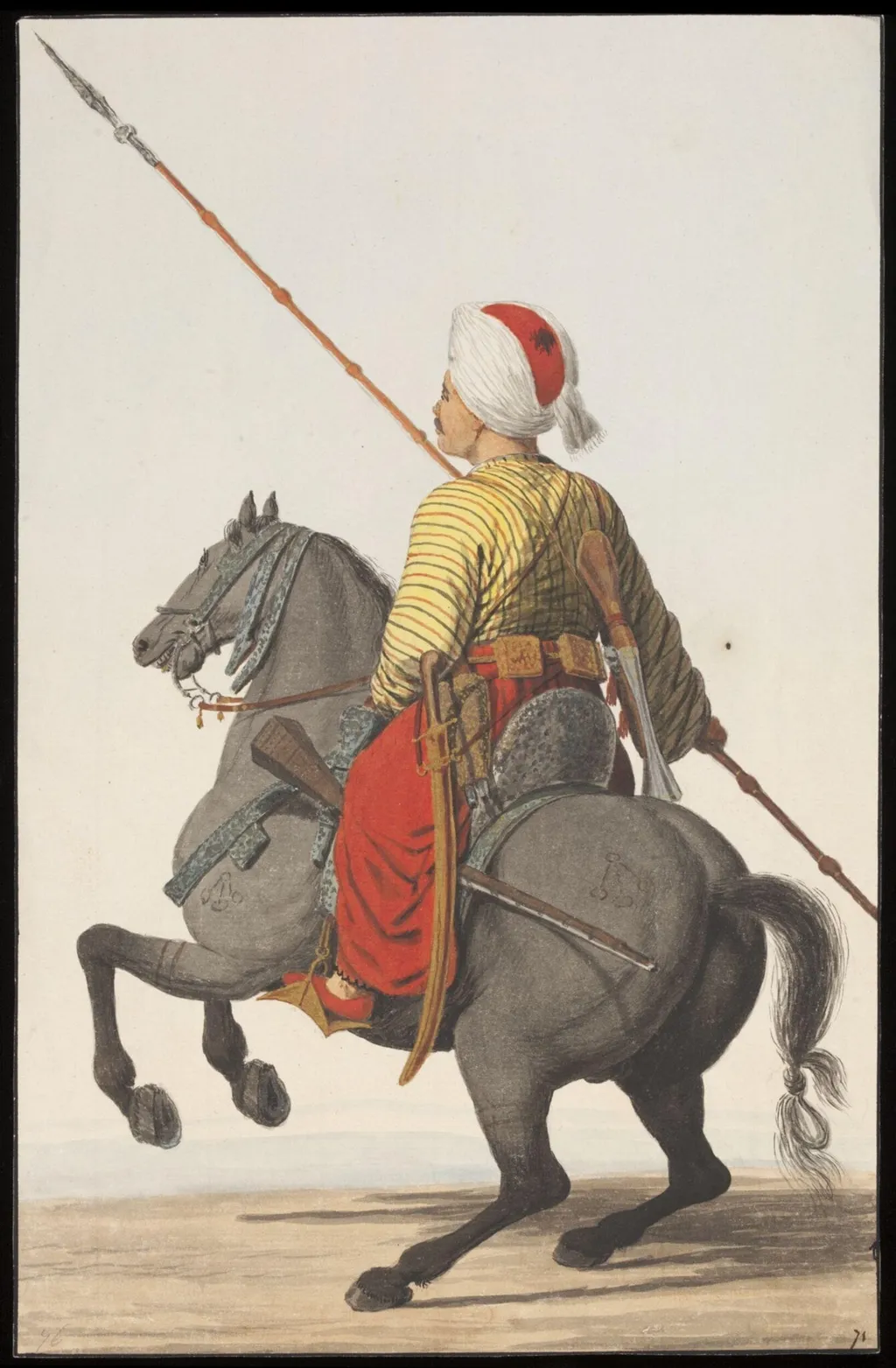
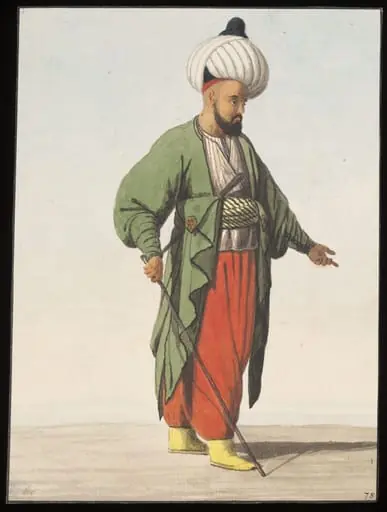
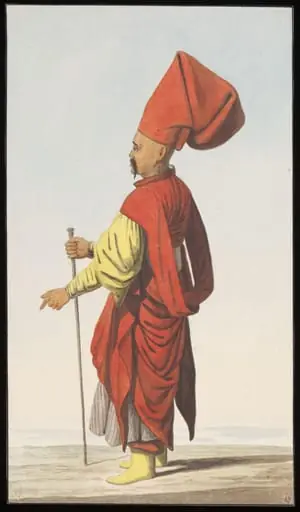
Sipahi, or cavalry soldier is a watercolor work on paper by the Romanesque artist Anonymous Greek artist. It dates from 1809 and is held in the collection of the Victoria and Albert Museum. This watercolour is part of a larger collection commissioned by British diplomat Stratford Canning during his early years in Istanbul.
About this work
Overview
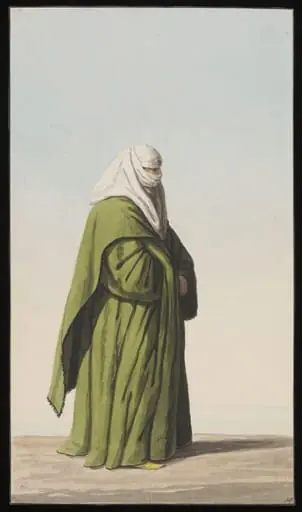
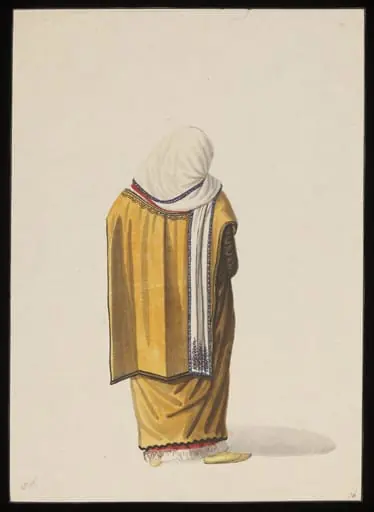
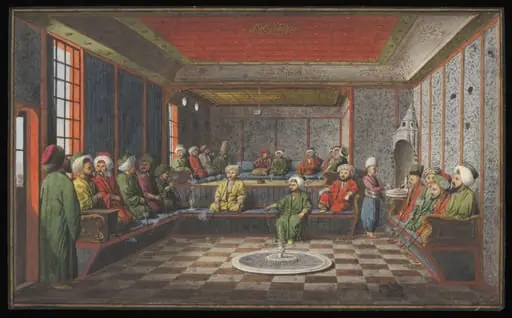
Created between 1808 and the early 1810s, the series documents Ottoman military, architectural, and social life through the eyes of a foreign observer.
This watercolour is part of a larger collection commissioned by British diplomat Stratford Canning during his early years in Istanbul. Created between 1808 and the early 1810s, the series documents Ottoman military, architectural, and social life through the eyes of a foreign observer. The works were produced by an unnamed local artist, likely trained in the Ottoman tradition but influenced by European visual practices. The set was later acquired by the Victoria and Albert Museum in 1895 from Canning’s daughter.
Subject & Meaning
The image depicts a sipahi, a cavalry soldier of the Ottoman Empire, rendered with attention to uniform, weaponry, and posture. Rather than idealized heroism, the portrayal emphasizes material detail and social role, reflecting Canning’s interest in institutional structure. These images served as ethnographic records, capturing the visual language of Ottoman authority and military organization during a period of political transition.
Technique & Style
The watercolour employs dense, luminous pigments typical of Ottoman manuscript illumination, combined with European linear perspective and tonal modeling. The artist blends local pigment techniques with Western spatial conventions, creating a hybrid visual language. The precision in rendering textiles and metalwork suggests close observation, while the flattened background hints at traditional Ottoman compositional habits.
History & Provenance
The drawings were made during Canning’s tenure as first secretary to the British embassy in Istanbul, beginning in 1808. The artist, possibly linked to Konstantin Kapidagli’s circle, worked under Canning’s direction. British architect Charles Cockerell, who visited the embassy in 1810, noted discussions with the painter but left no name. Cockerell’s own copies of these works are held in the British Museum. The original set passed to Canning’s daughter Charlotte and entered the V&A in 1895.
Context
These images emerged during a time when European diplomats and travelers sought systematic documentation of the Ottoman Empire. Canning’s project was part of a broader trend of visual record-keeping, driven by diplomatic curiosity and emerging ethnographic interests. The collaboration with a local artist reflects a rare instance of cross-cultural artistic exchange, where Ottoman visual traditions were adapted to serve foreign observational goals.
Legacy
The series remains a significant resource for understanding Ottoman visual culture through the lens of early 19th-century Western engagement. While the artist’s identity remains elusive, the works demonstrate the fluidity of artistic practice at the intersection of Ottoman and European traditions. Their preservation in the V&A underscores their value as historical documents, offering insight into both Ottoman society and the mechanisms of cross-cultural observation.
Artist & collection

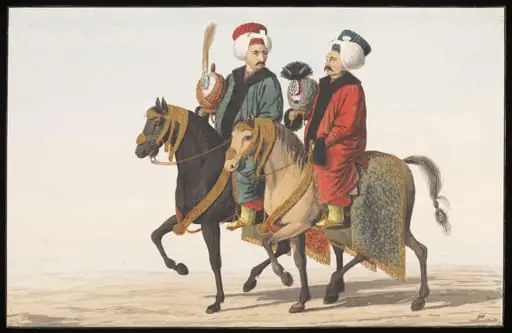
![A Pasha travelling with his escort[?], by Anonymous Greek artist](https://artifactworldgallery.com/img/anonymous-greek-artist--a-pasha-travelling-with-his-escort--01de32b8fcf30843-w320.webp)
![A Serbetci, or drinks seller[?], by Anonymous Greek artist](https://artifactworldgallery.com/img/anonymous-greek-artist--a-serbetci-or-drinks-seller--61bdf44039236f66-w320.webp)
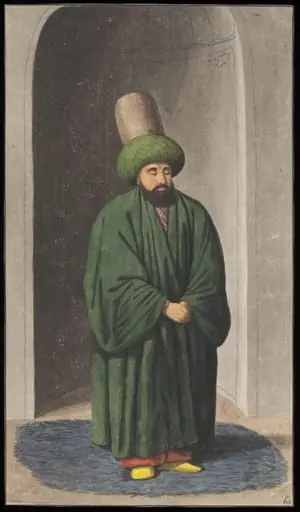
![A Dervish[?], by Anonymous Greek artist](https://artifactworldgallery.com/img/anonymous-greek-artist--a-dervish--3c8916f5a95abb6a-w320.webp)