Artwork
Still Life with Oysters, Sweetmeats and Dried Fruit in a Stone Niche
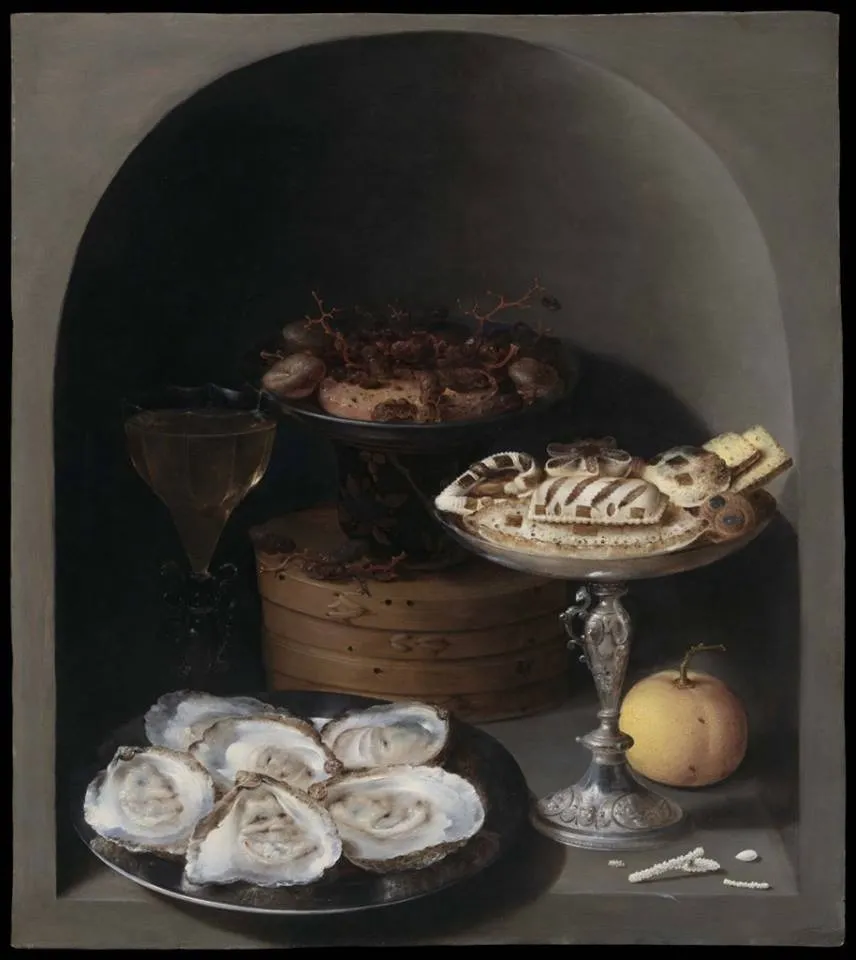
Still Life with Oysters, Sweetmeats and Dried Fruit in a Stone Niche is an oil painting by the Dutch Golden Age artist Osias Beert. It dates from 1609 and is held in the collection of the Museum of Fine Arts Boston.
About this work
Overview
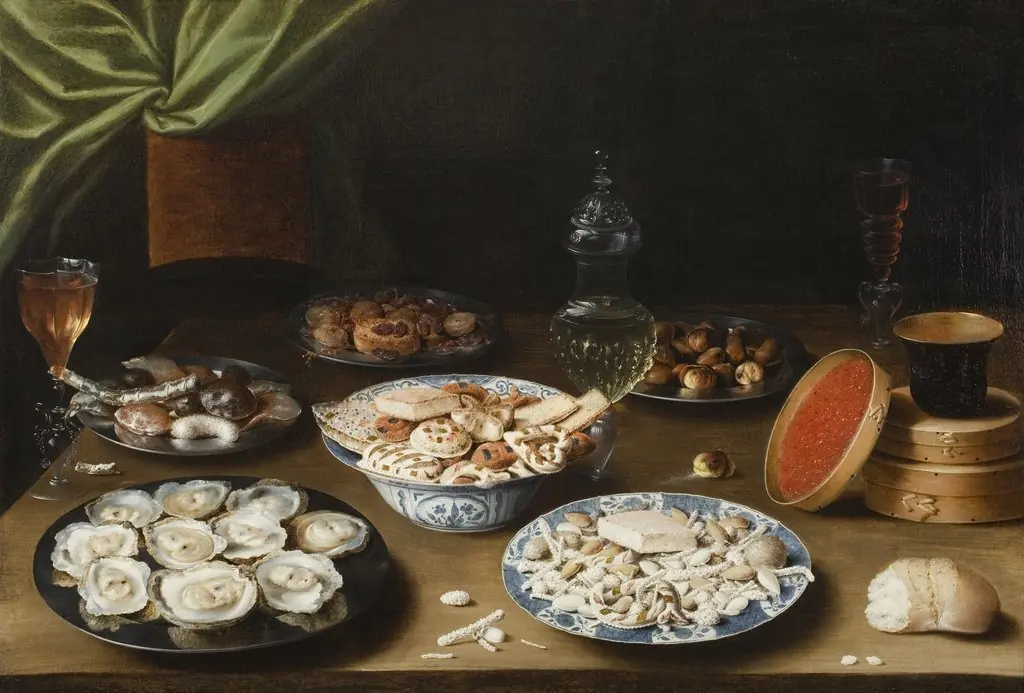
Osias Beert the Elder, a Flemish artist working in Antwerp, completed the oil painting Still Life with Oysters, Sweetmeats and Dried Fruit in a Stone Niche in 1609. The work presents a carefully arranged grouping of foodstuffs and vessels within a recessed stone setting, exemplifying the early development of still‑life painting as an autonomous subject in Northern Europe.
Subject & Meaning
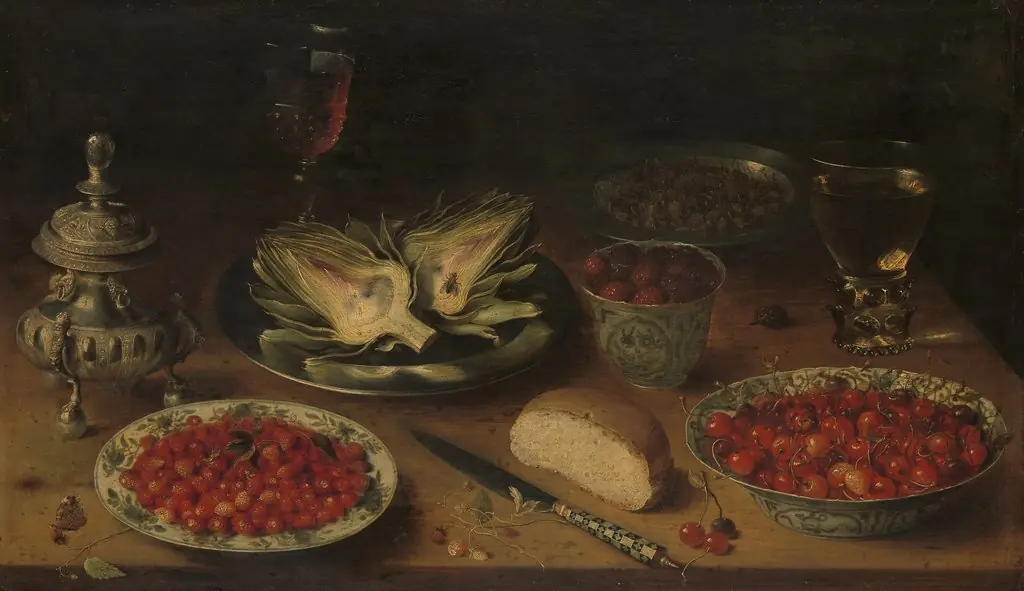
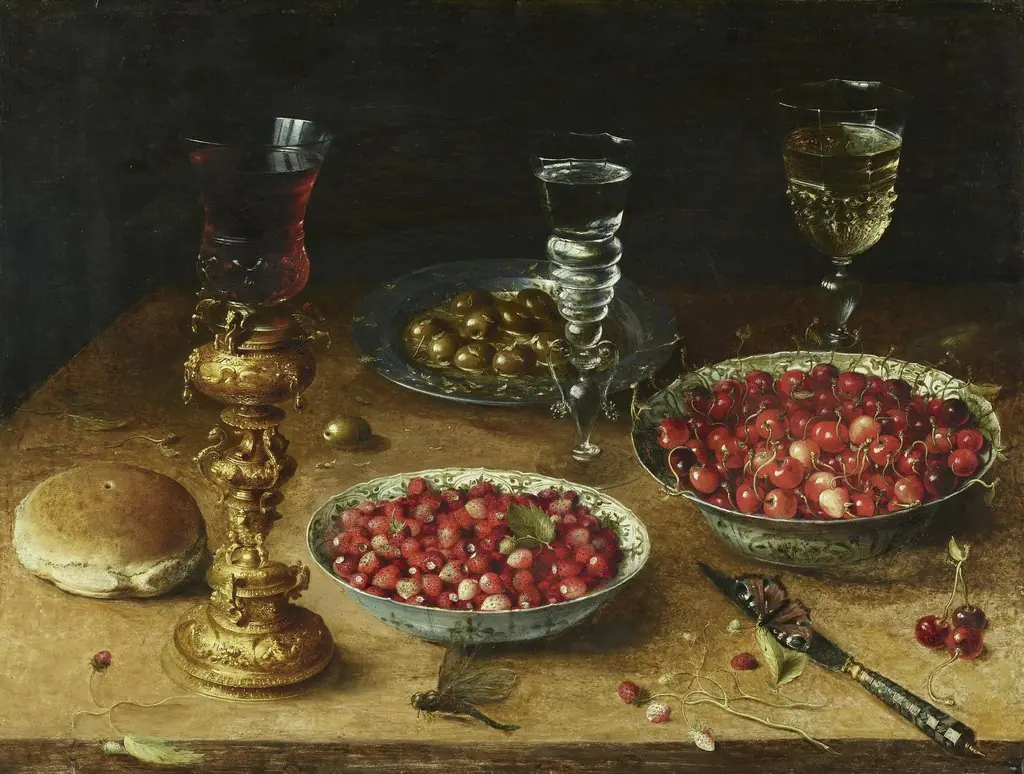
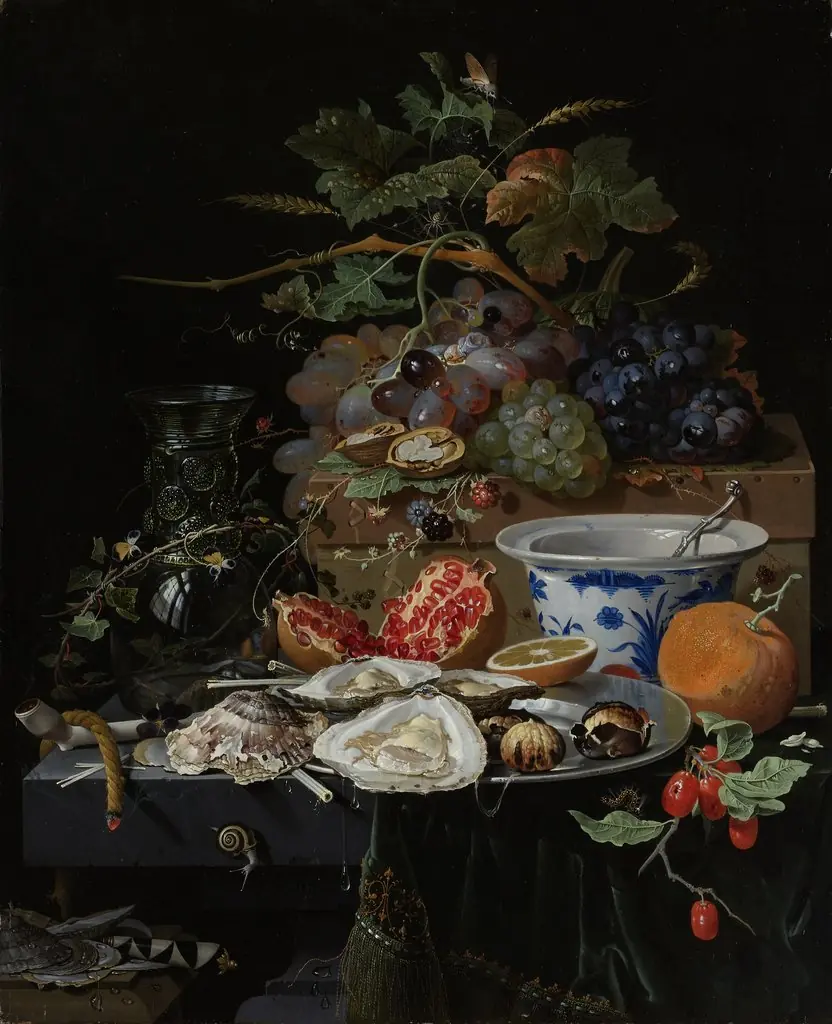
The composition gathers everyday luxuries—a black plate bearing oysters, a silver dish holding pastries, a wooden box of dried fruit, a glass of wine and a ripe peach—within a shallow niche. The selection reflects the period’s fascination with abundance, the sensory appeal of consumable goods, and the symbolic association of such items with prosperity and fleeting pleasure.
Technique & Style
Beert employs a pronounced chiaroscuro, using strong contrasts of light and shadow to model the objects and give the stone niche a convincing depth. The precise rendering of textures—from the glossy shells to the rough stone—demonstrates his meticulous brushwork and his interest in capturing material qualities.
History & Provenance
After its creation in the early seventeenth century, the painting entered various private collections before being acquired by the Museum of Fine Arts, Boston, where it remains part of the museum’s permanent holdings.
Context
The work belongs to the Dutch Golden Age’s early still‑life tradition, a period when artists began to treat arrangements of food, tableware and flowers as subjects worthy of independent artistic exploration, moving beyond purely religious or historical themes.
Artist & collection
Artist
Osias Beert or Osias Beert the Elder (c. 1580 – 1623) was a Flemish painter active in Antwerp who played an important role in the early development of flower and "breakfast"-type still lifes as independent genres in…