Artwork
Peasant at a Window Holding a Pipe and a Jug
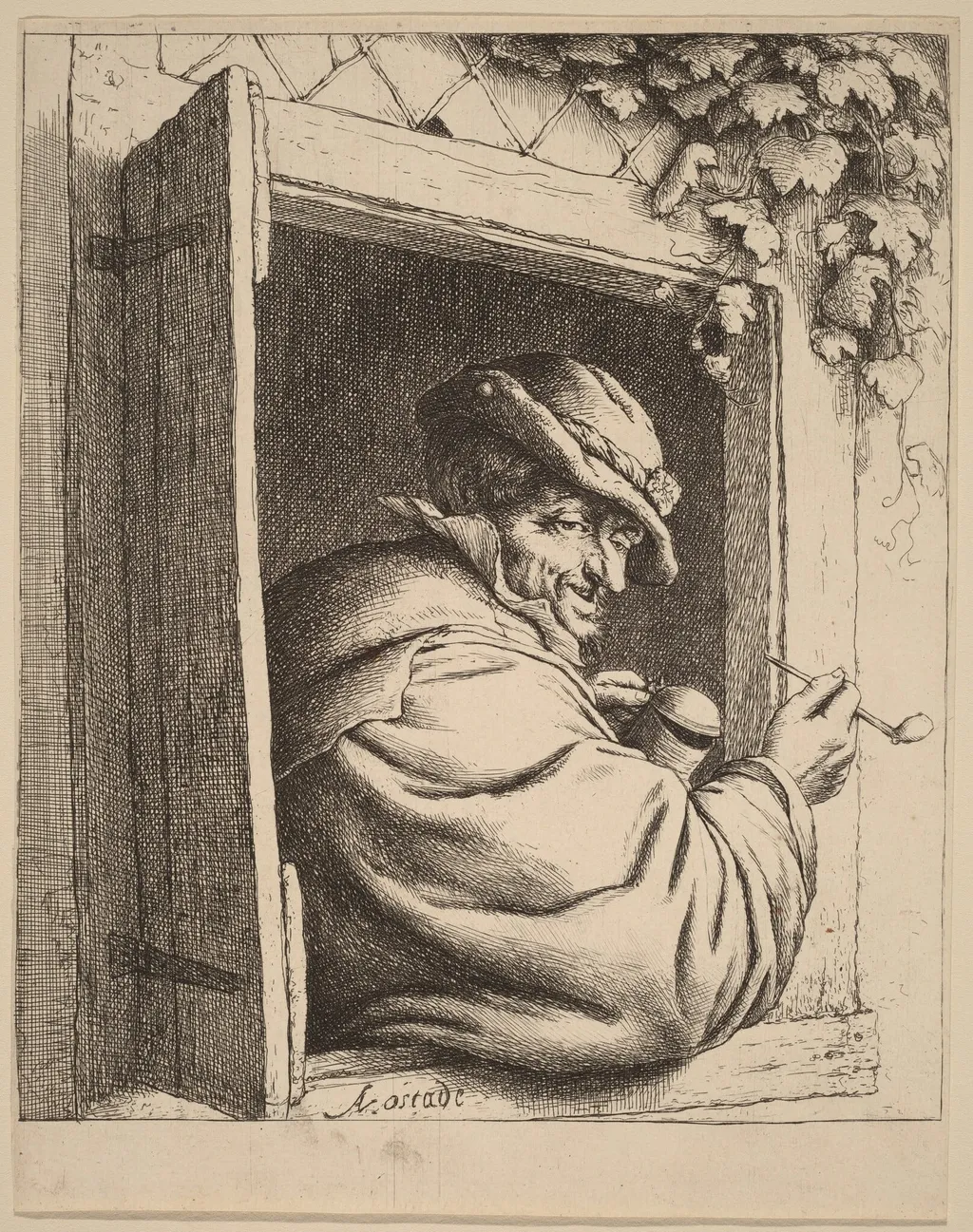
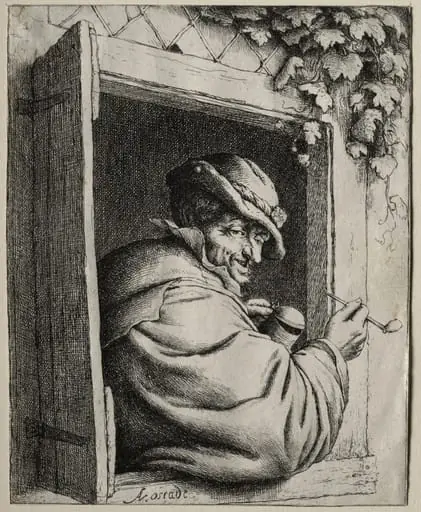
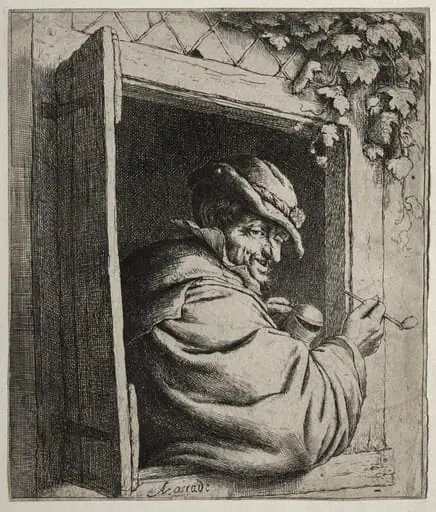
Peasant at a Window Holding a Pipe and a Jug is an ink print by the Baroque artist Adriaen van Ostade. It dates from 1653 and is held in the collection of the National Gallery of Art.
About this work
Overview
Created around 1653, this print by Adriaen van Ostade captures a solitary peasant in a dim interior, holding a pipe and a jug near a window. Executed in etching with drypoint on laid paper, the work reflects the artist’s consistent interest in rural laborers. The composition is intimate and unidealized, emphasizing quiet moments of rest rather than narrative action.
Subject & Meaning
The figure, aged and weary, leans against a windowsill, his posture suggesting exhaustion after labor. The pipe and jug imply a brief pause in daily toil, common in depictions of peasant life. The intrusion of a tree branch and the darkened sky outside frame the scene with a sense of isolation, reinforcing themes of solitude and the quiet endurance of rural existence.
Technique & Style
Van Ostade employed etching for broad tonal areas and drypoint for dense, scratchy lines that enhance texture—wrinkled skin, frayed fabric, weathered wood.
Van Ostade employed etching for broad tonal areas and drypoint for dense, scratchy lines that enhance texture—wrinkled skin, frayed fabric, weathered wood. The rough, hurried strokes convey immediacy, avoiding polish in favor of emotional authenticity. The window frame is rendered with slight distortion, compressing the space and drawing attention to the figure’s confinement within the humble interior.
History & Provenance
The print was made during the height of van Ostade’s career, when his genre scenes gained popularity among Dutch collectors. While the exact early ownership is undocumented, similar works from this period entered private and institutional collections across the Netherlands and beyond. Its survival in good condition reflects its enduring appeal to connoisseurs of Northern printmaking.
Context
In mid-17th century Holland, genre painting flourished as urban audiences sought representations of rural life. Van Ostade’s prints, like his paintings, catered to this demand without romanticizing poverty. This image aligns with broader cultural interests in authenticity and moral reflection, contrasting with aristocratic ideals by honoring the dignity of ordinary laborers.
Legacy
Van Ostade’s approach influenced later artists who favored unembellished depictions of common life. His use of drypoint to convey texture and mood became a model for printmakers seeking emotional depth over technical refinement. Though less celebrated than his paintings, this etching remains a quiet testament to his skill in capturing the subtleties of daily existence.
Artist & collection
Artist
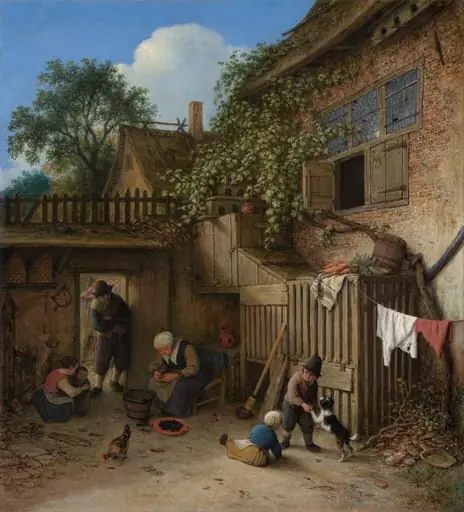
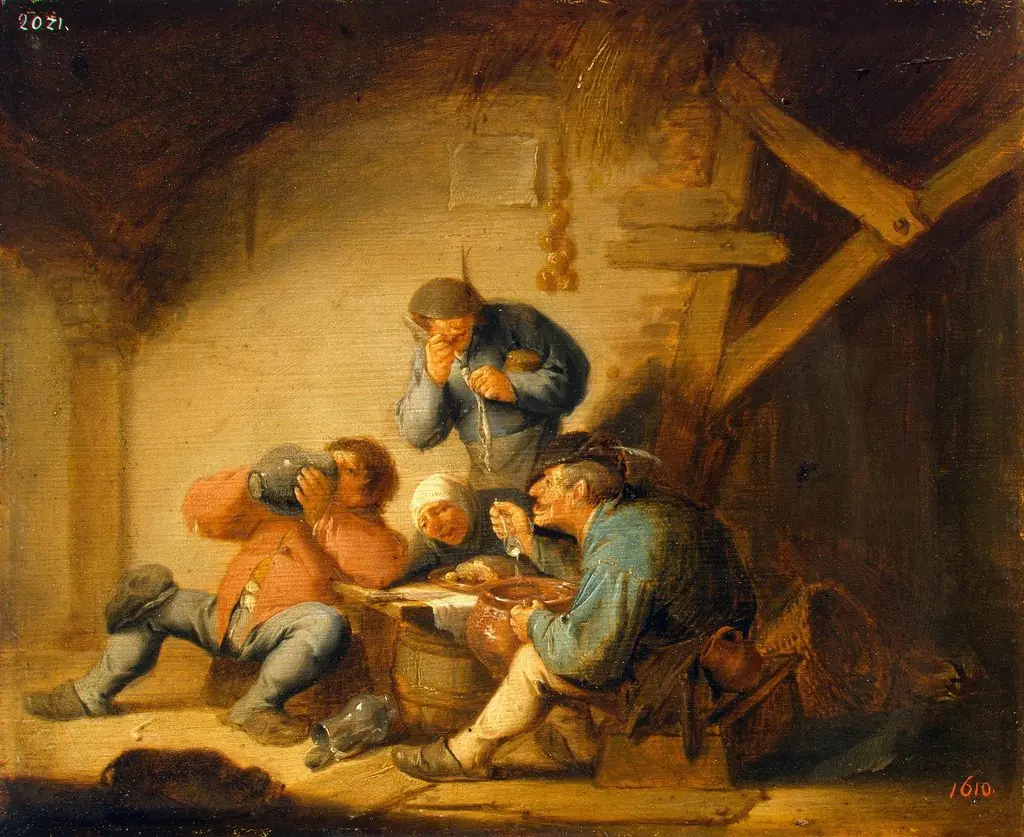
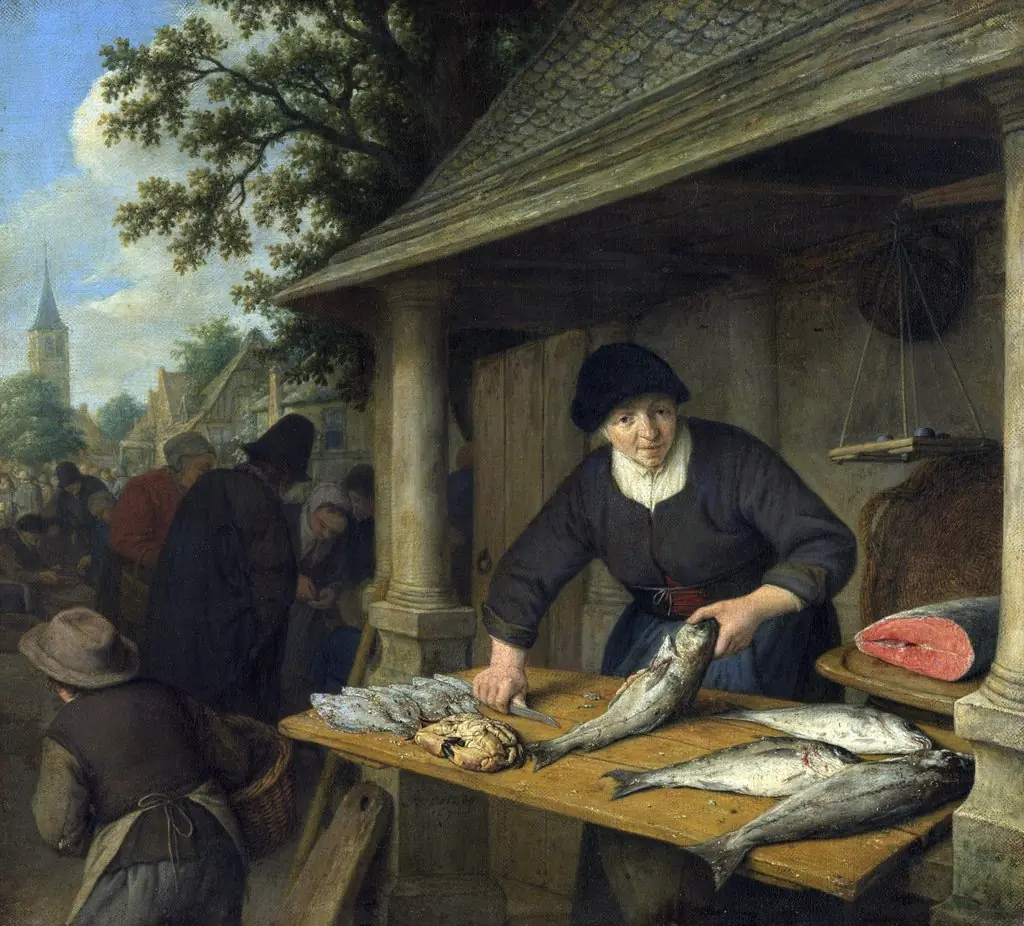
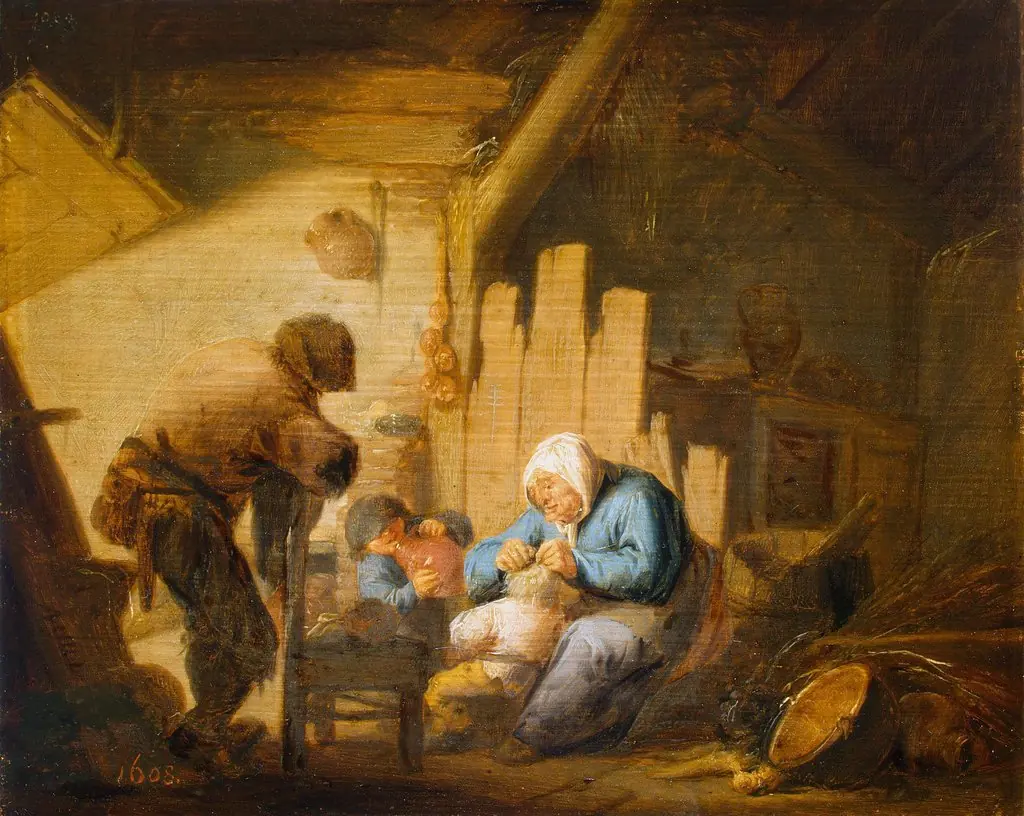
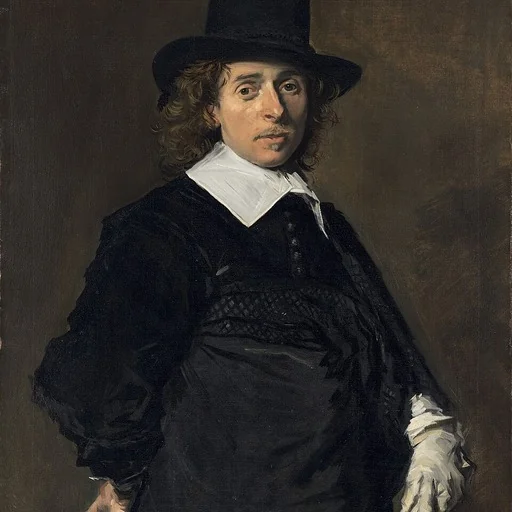
Adriaen van Ostade (baptized as Adriaen Jansz Hendricx 10 December 1610 – buried 2 May 1685) was a Dutch Golden Age painter of genre works, showing the everyday life of ordinary men and women.