Artwork
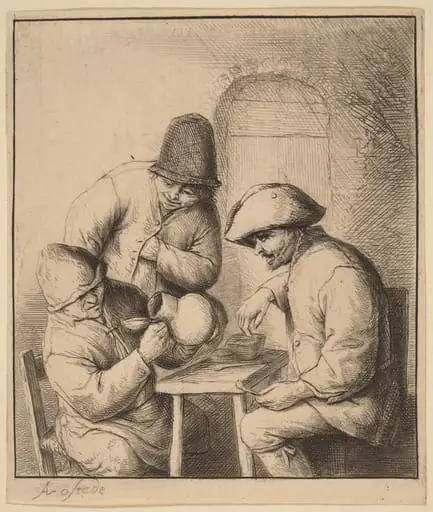
Three Peasants at an Inn, One Looking Down a Jug
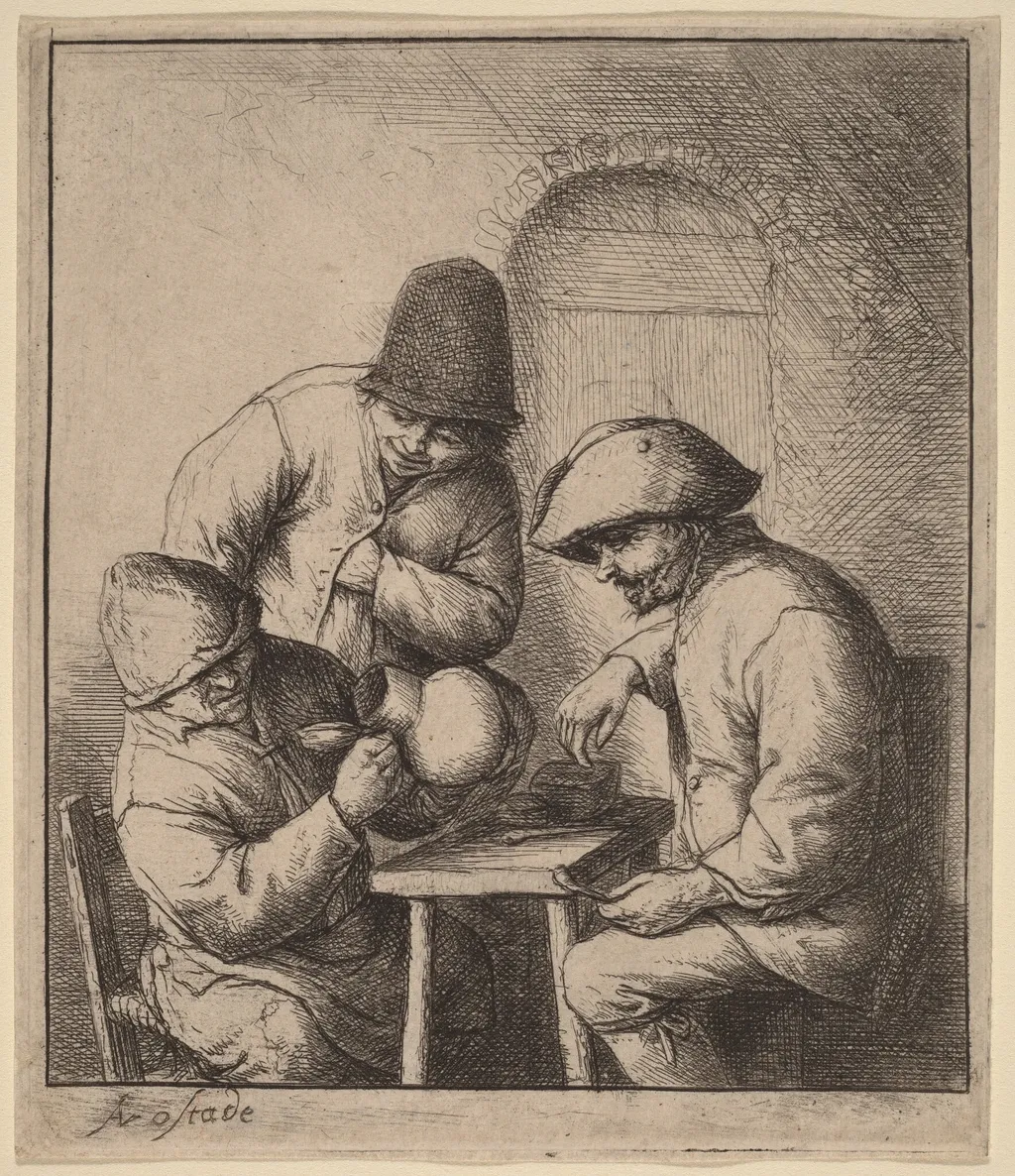
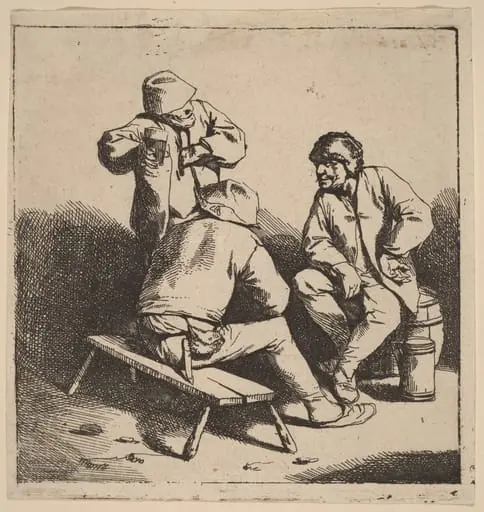
Three Peasants at an Inn, One Looking Down a Jug is an ink print by the Baroque artist Adriaen van Ostade. It dates from 1648 and is held in the collection of the National Gallery of Art.
About this work
Overview
The composition centers on a solitary figure examining a jug, while two companions observe closely, their postures conveying quiet intimacy.
Created around 1648 by Adriaen van Ostade, this etching with drypoint captures three peasants in a modest interior. Executed on laid paper, the print reflects the artist’s dedication to portraying rural laborers in unidealized moments. The composition centers on a solitary figure examining a jug, while two companions observe closely, their postures conveying quiet intimacy. The work belongs to a broader Dutch tradition that elevated ordinary life as worthy artistic subject matter.
Subject & Meaning
The scene depicts three laborers in a dim, unadorned inn, engaged in a simple act of drinking. One man peers intently into a jug, possibly assessing its contents, while the others lean in with expressions of quiet curiosity or fatigue. Their worn clothing and hunched postures suggest hardship, yet the moment is rendered without mockery. The image invites contemplation of solitude and shared ritual among the working class, avoiding moral judgment.
Technique & Style
Van Ostade employed etching as the primary technique, augmented by drypoint to deepen shadows and add texture. The rough, expressive lines mimic the grain of wood and the texture of coarse fabric, enhancing the tactile realism of the scene. Subtle tonal variations, achieved through controlled scratching, give depth to the dim interior without relying on heavy aquatint. The hand-drawn quality preserves the immediacy of observation, typical of Dutch printmakers of the period.
History & Provenance
The print emerged during the height of van Ostade’s career, when his genre scenes gained popularity among collectors in the Dutch Republic. While its early ownership is undocumented, it likely circulated among middle-class patrons who valued depictions of rural life. As a print, it was reproducible and accessible, allowing van Ostade’s vision of peasant existence to reach a wider audience beyond painted originals.
Context
In mid-17th century Holland, genre painting flourished as civic pride and rising merchant classes sought art that reflected their world. Van Ostade, alongside artists like Rembrandt and Jan Steen, turned away from religious or aristocratic themes to depict the daily routines of farmers and inn-goers. This print aligns with that cultural shift, presenting dignity in the mundane without romanticizing poverty.
Legacy
Van Ostade’s etchings, including this one, helped define the visual language of Dutch peasant scenes for later generations. His use of intimate composition and expressive line influenced printmakers well into the 18th century. Though less celebrated than his oil paintings, these works remain vital records of how ordinary people were seen—and how they saw themselves—in the Dutch Golden Age.
Artist & collection
Artist
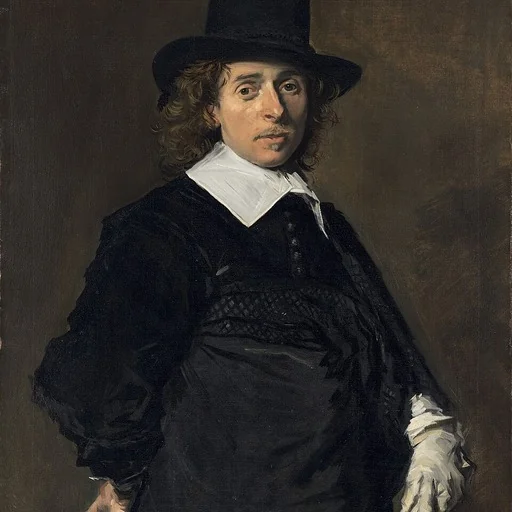
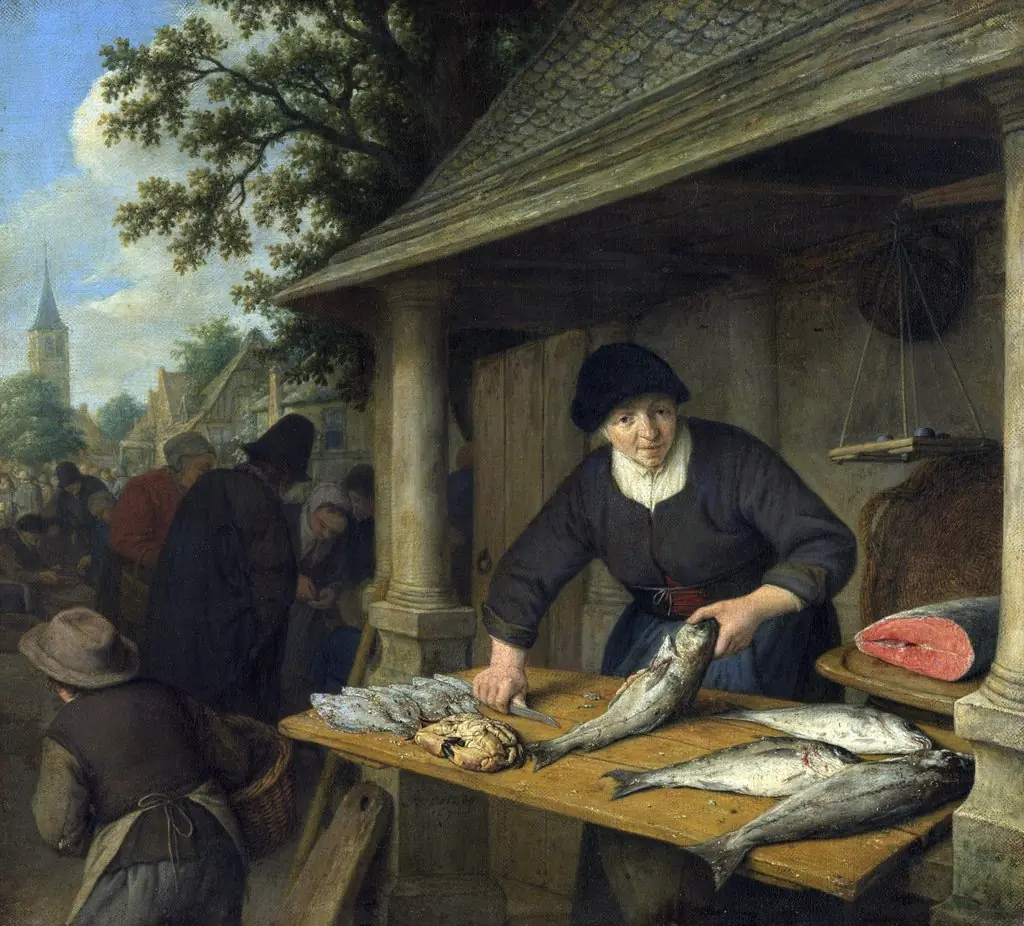
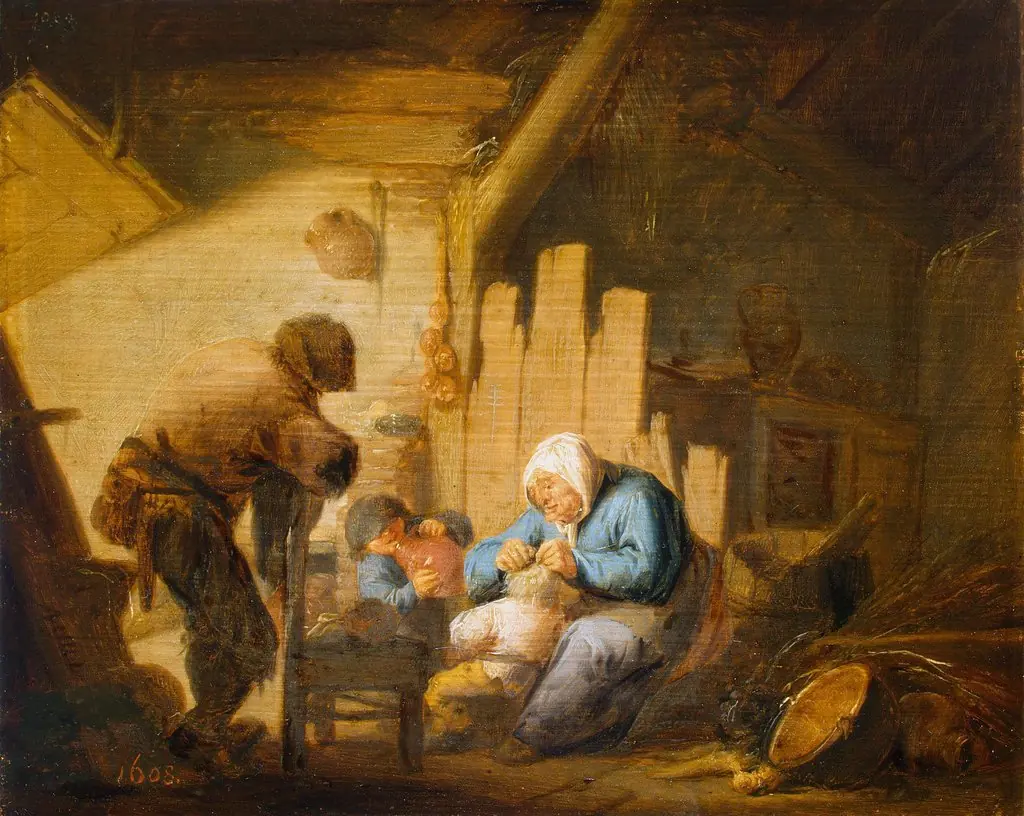
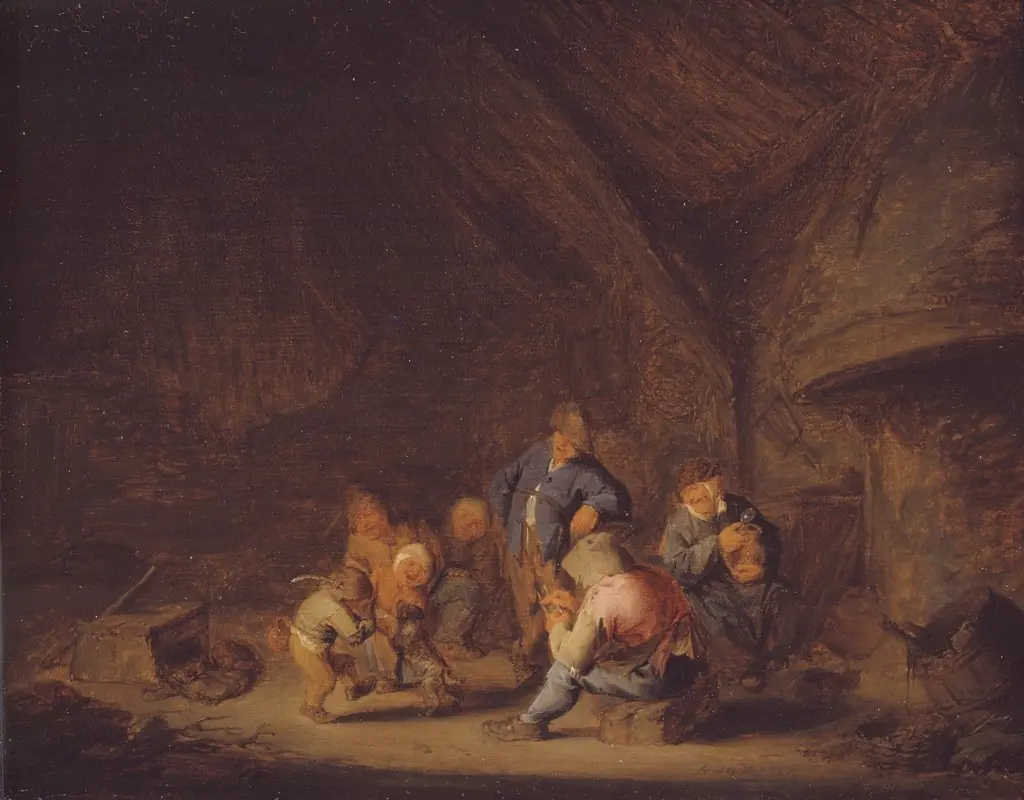
Adriaen van Ostade (baptized as Adriaen Jansz Hendricx 10 December 1610 – buried 2 May 1685) was a Dutch Golden Age painter of genre works, showing the everyday life of ordinary men and women.

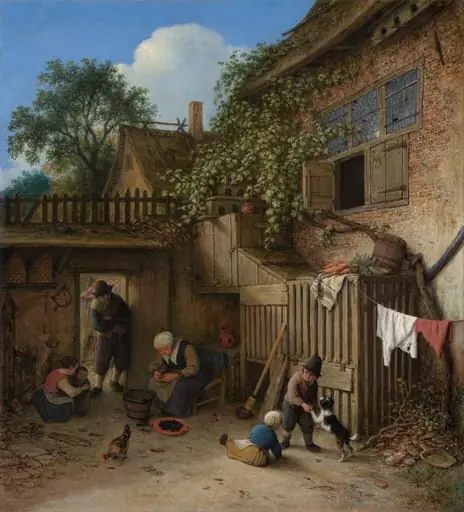
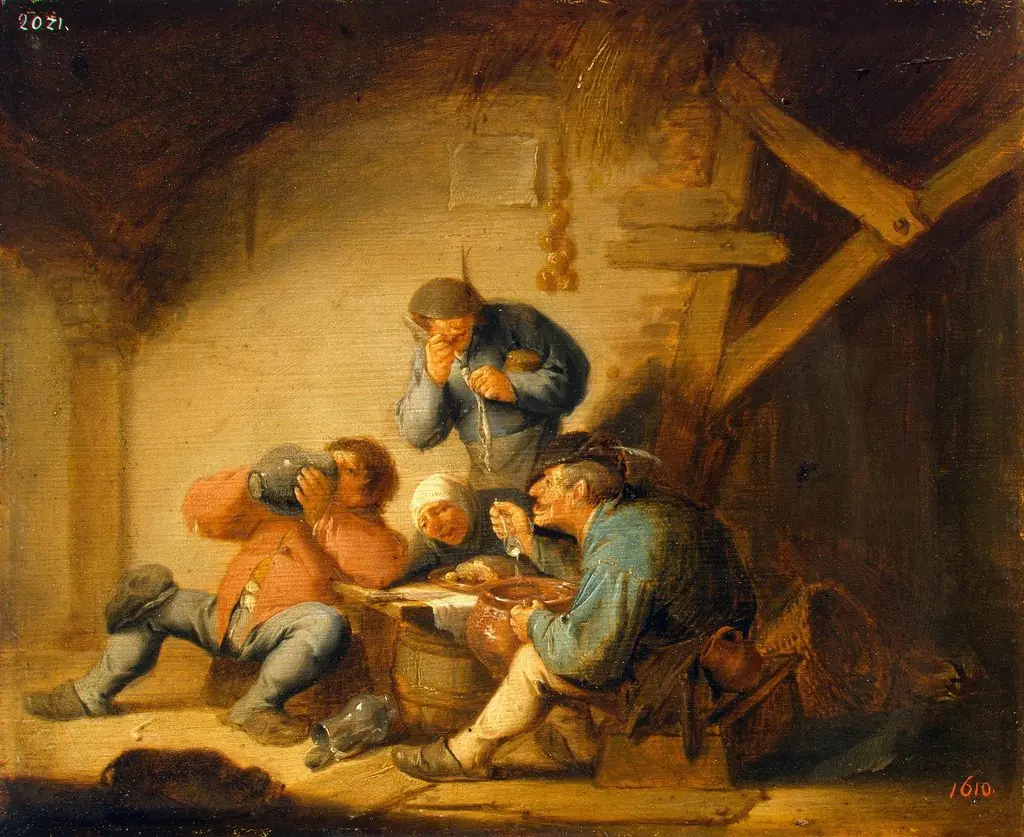
 The Three Drinkers
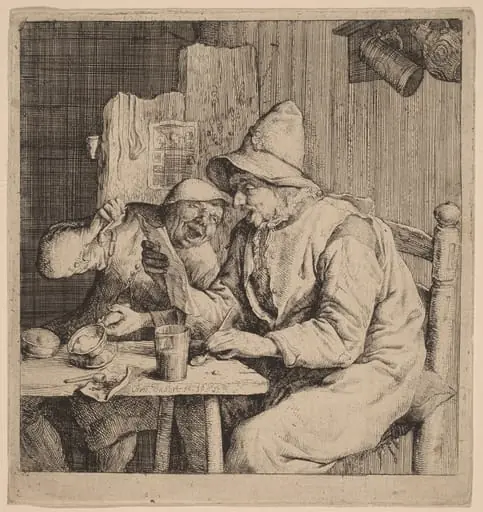 Two Peasants Singing
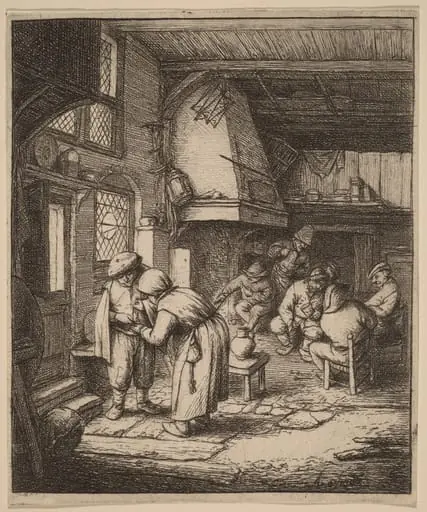 Man Paying the Landlady at an Inn
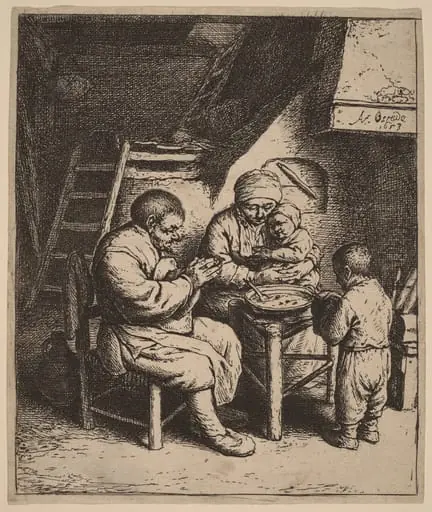 Peasant Family Praying Before a Meal
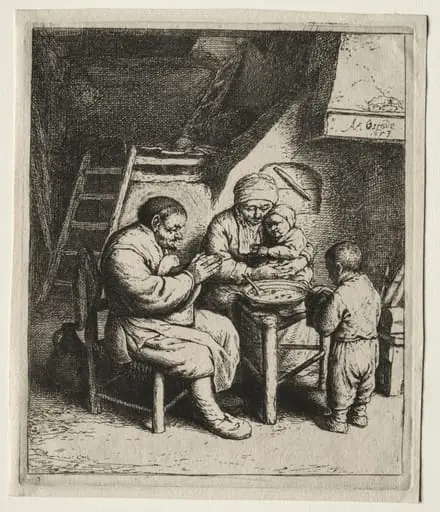 Saying Grace
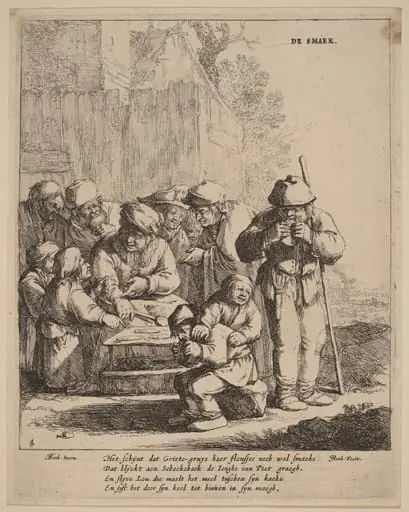 De Smaek (Taste)
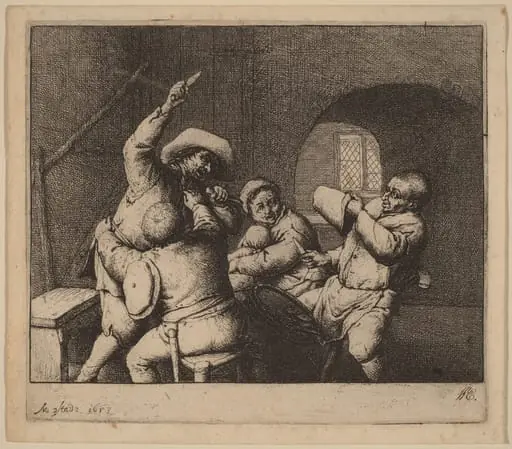 Knife Fight Among Peasants
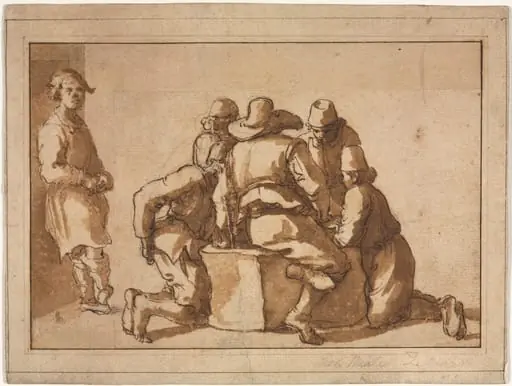 Genre Scene of Young Men Playing a Game
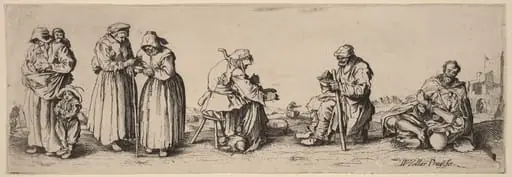 Six Men and Women Beggars
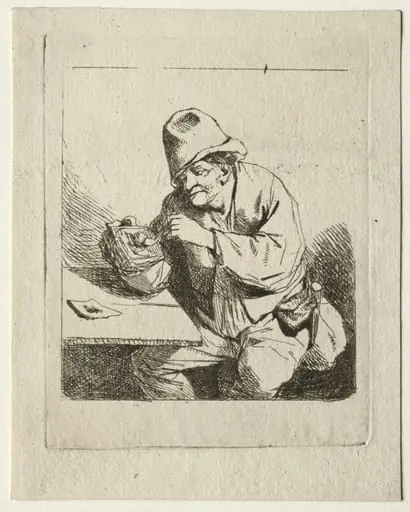 Peasant Lighting his Pipe
 Three Peasants at an Inn, One Looking Down a Jug
 The Flirtation of a Young Innkeeper