Artwork
Self-portrait with Folded Arms
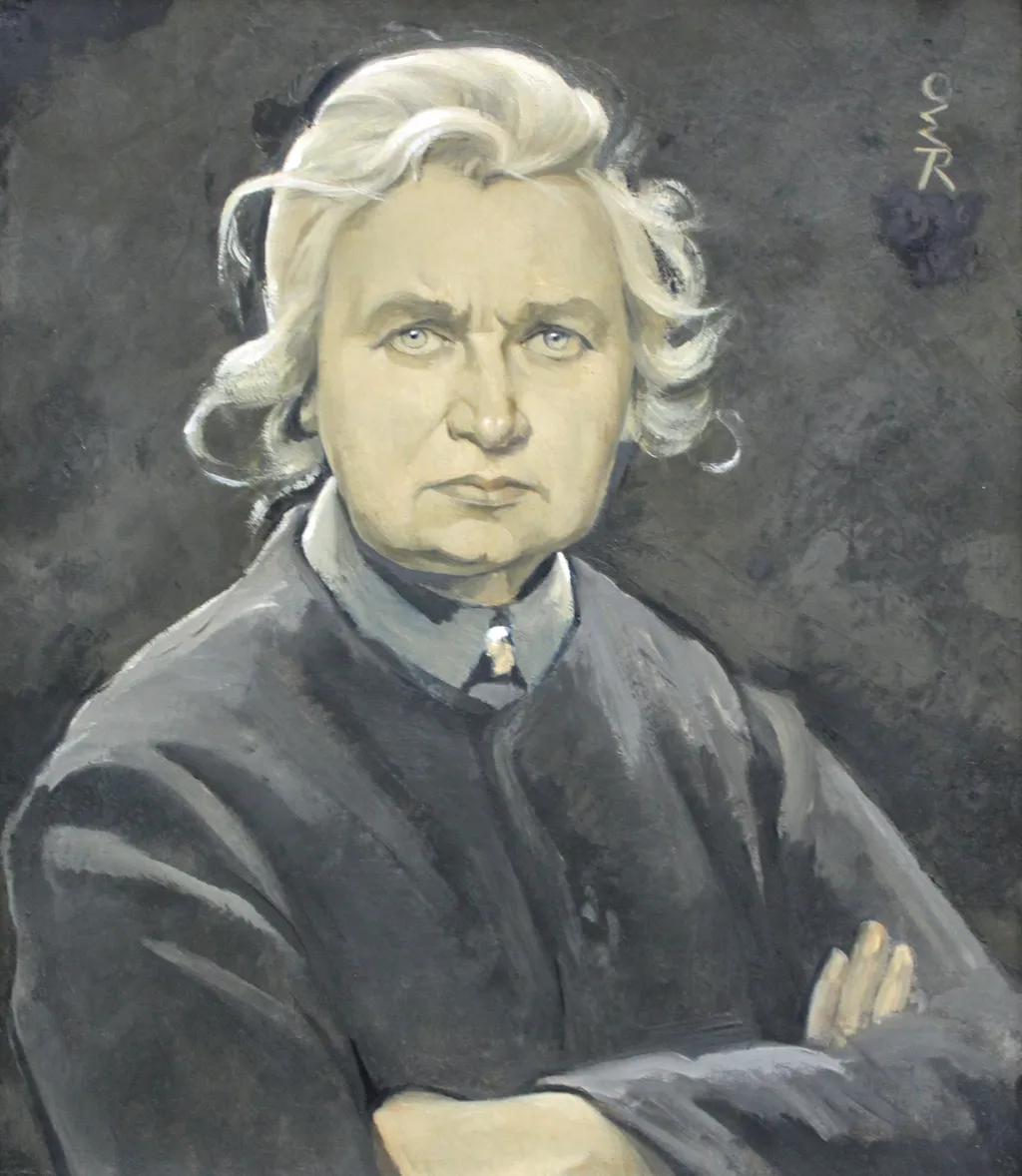
Self-portrait with Folded Arms is an unspecified painting by Ottilie Roederstein. It dates from 1926 and is held in the collection of the Städel Museum.
About this work
Overview
Ottilie Roederstein painted this self-portrait in 1926, near the end of her life. As a German-Swiss artist active in the late 19th and early 20th centuries, she focused on portraiture and was associated with the artistic circles of Frankfurt. The work is held in the Städel Museum’s collection, reflecting her recognition within German-speaking art institutions of her time.
Subject & Meaning
The painting presents Roederstein as an older woman with short, white hair and a composed demeanor.
The painting presents Roederstein as an older woman with short, white hair and a composed demeanor. Her folded arms and direct gaze convey quiet self-assurance rather than emotional display. The formal attire—dark jacket, collared shirt, and tie—suggests a deliberate alignment with professional identity, possibly signaling her role beyond traditional gendered expectations of femininity in her era.
Technique & Style
Roederstein employed a restrained palette dominated by muted grays and dark tones, with the figure emerging from an indistinct, textured background. Brushwork is controlled and precise, emphasizing structure over expressiveness. The lighting is even, avoiding dramatic contrasts, which reinforces the painting’s introspective and unadorned character.
History & Provenance
Created in 1926, the portrait was acquired by the Städel Museum shortly after its completion. Roederstein, who lived from 1859 to 1937, maintained a long-term partnership with Elisabeth Winterhalter, a pioneering female physician. Their relationship, though rarely documented publicly, likely influenced Roederstein’s emphasis on autonomy and intellectual presence in her self-representation.
Context
In early 20th-century Germany, women artists often navigated limited institutional support and societal expectations. Roederstein’s choice to depict herself in masculine-coded attire and with an unsmiling, direct gaze aligns with broader efforts by women to assert professional legitimacy. Her work reflects a quiet resistance to conventional portrayals of female artists as decorative or emotionally expressive.
Legacy
Though not widely known outside regional art circles, Roederstein’s self-portrait remains a significant example of a woman artist asserting agency through visual self-representation. Her work contributes to the understudied history of female artists in Central Europe who prioritized dignity and restraint over spectacle, leaving a subtle but enduring mark on portraiture of the period.
Artist & collection
Artist
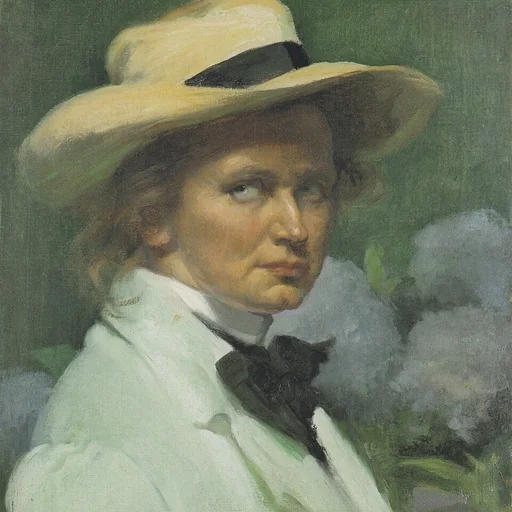
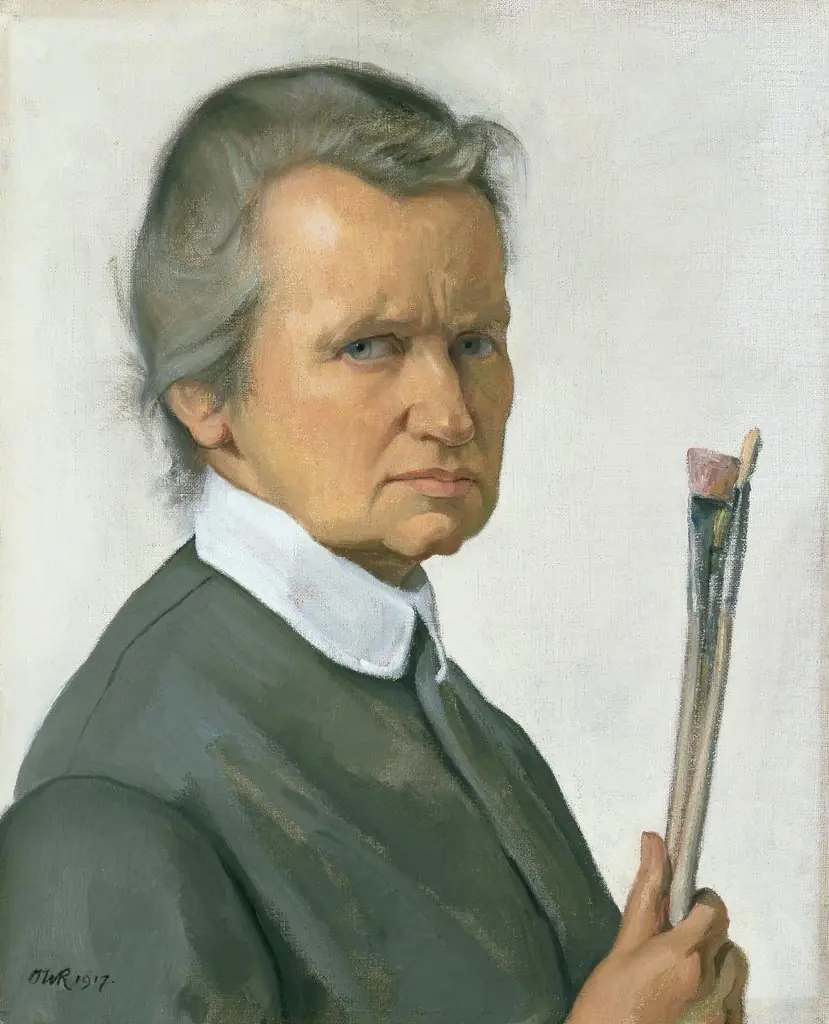
Ottilie Wilhelmine Roederstein (22 April 1859 – 26 November 1937) was a German-Swiss painter. She was the long-time companion of Elisabeth Winterhalter, one of the first female doctors in Germany.

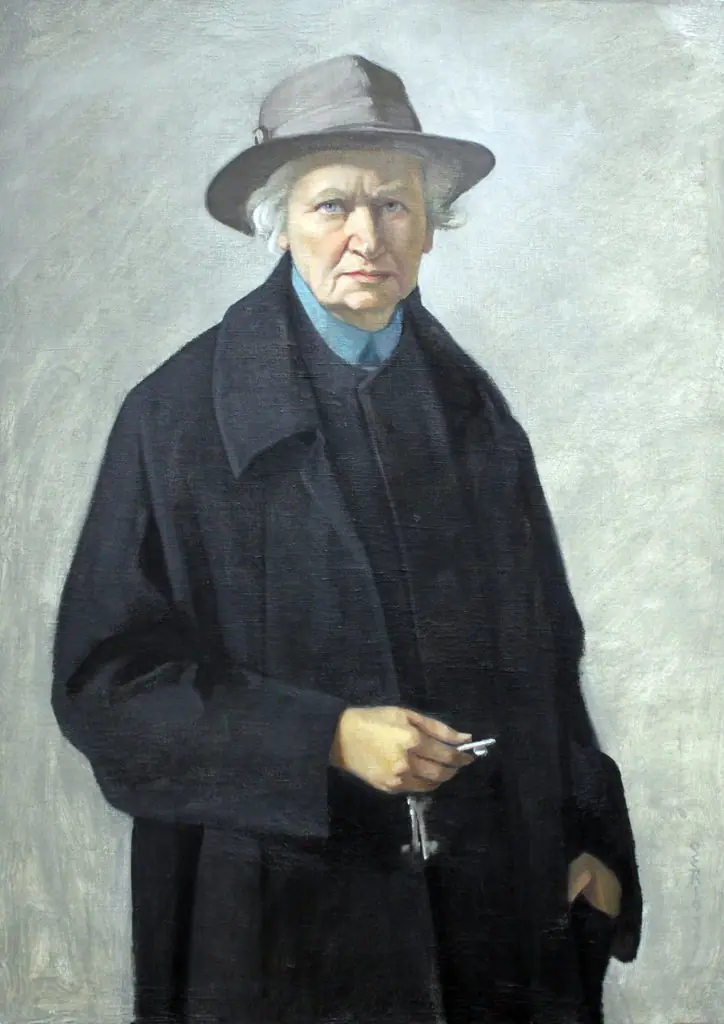 Self-portrait with keys
 Autoportret
 Προσωπογραφία γυναίκας ώριμης καθιστής
 Portretul doamnei Thérèse Richard
 Akkunan ääressä
 Study for the Portrait of Ernest Renan
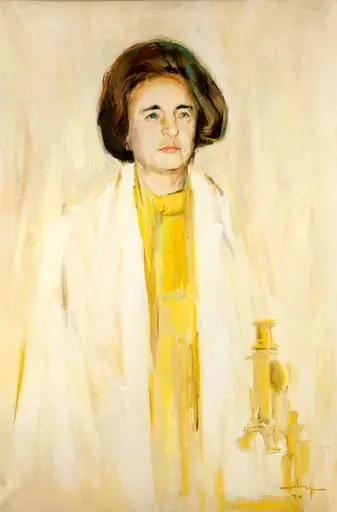 Tablou „Elena Ceușescu” semnat dreapta jos indescifrabil, atribuit lui Ion Țarălungă. Tabloul o prezintă pe Elena Ceaușescu într-o postură gravă de cercetător (halat alb și microscop alăturat). Comandat de Consiliul de Conducere al Ministerului Apărării Naționale și oferit Elenei Ceaușescu la 5 ianuarie 1979.
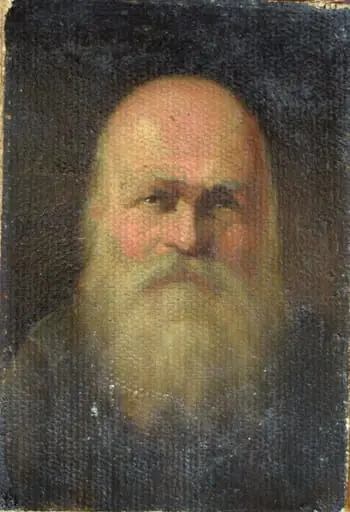 Cap de bătrân
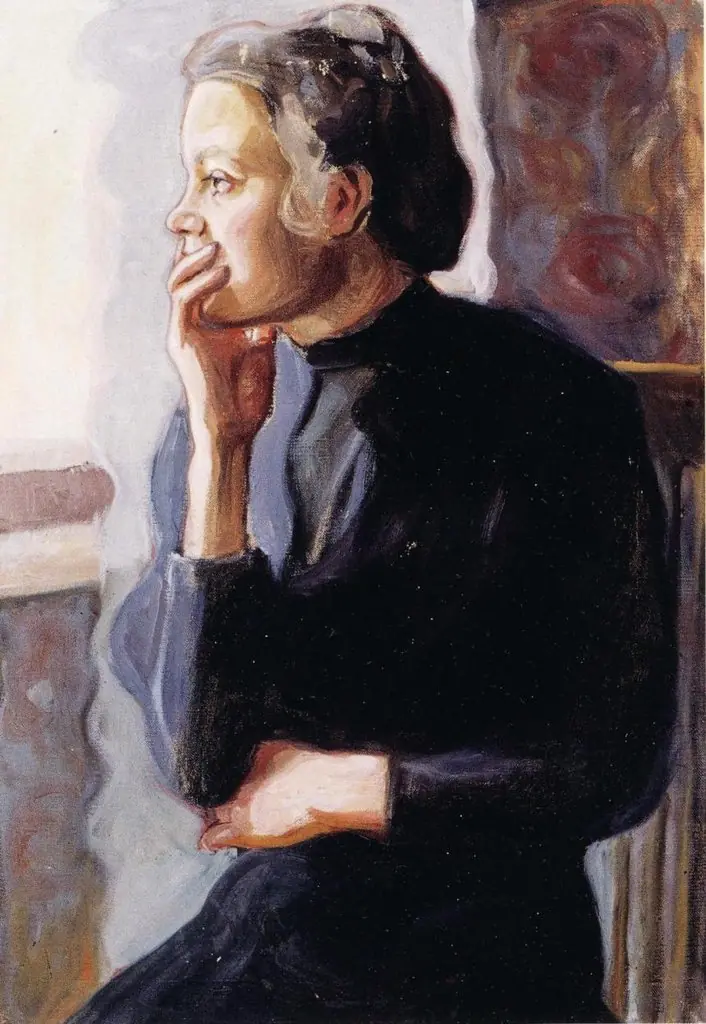 At the Window
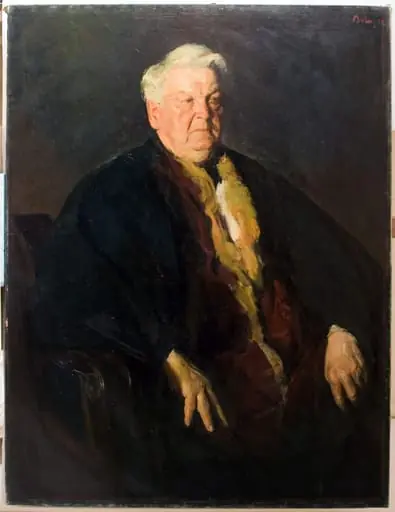 Portretul scriitorului Mihail Sadoveanu
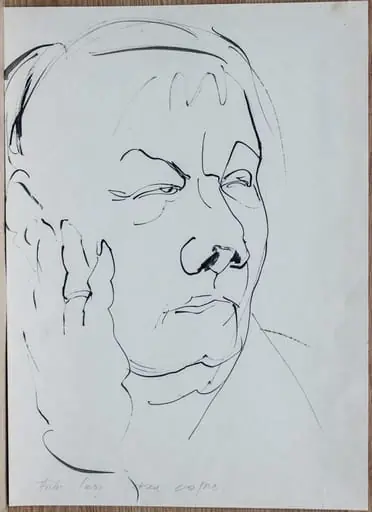 Desen copie
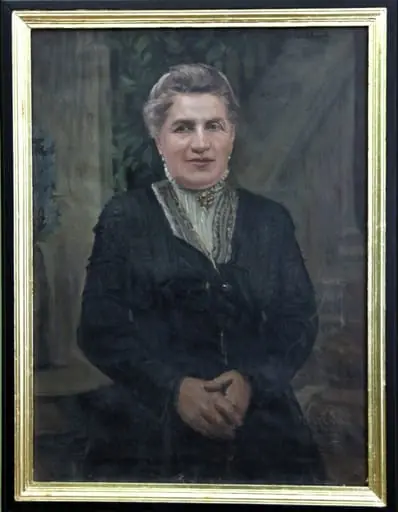 Portret de femeie