Artwork
Frauenakt vor Landschaft
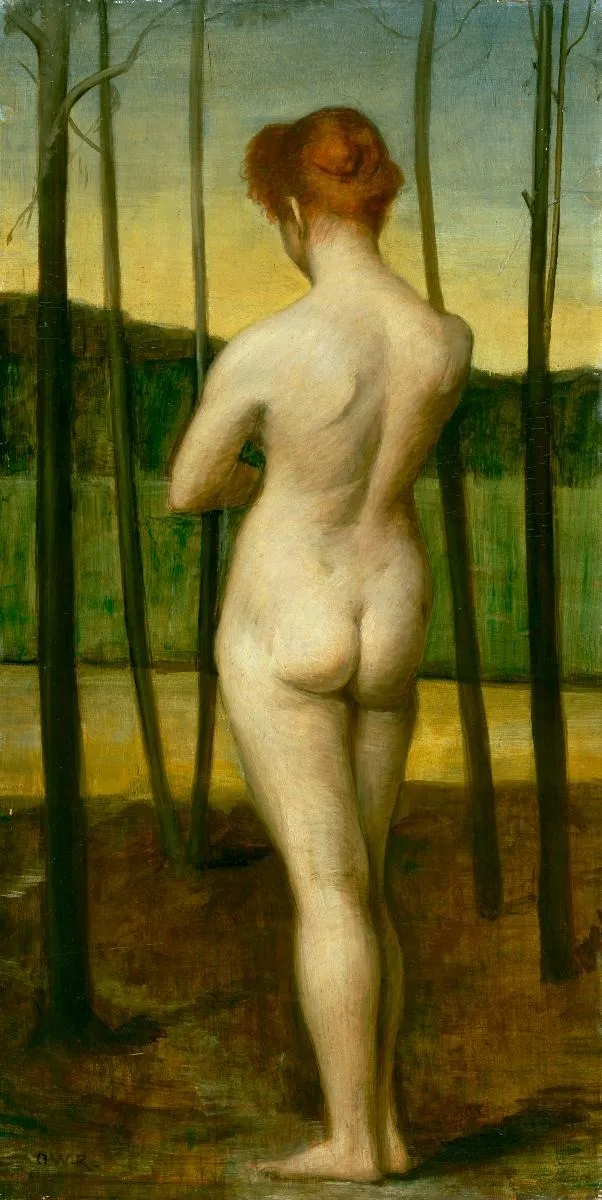
Frauenakt vor Landschaft is a tempera painting by the Post-Impressionist artist Ottilie Roederstein. It dates from 1899 and is held in the collection of the Kunsthaus Zürich.
About this work
Overview
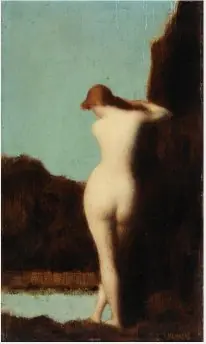
Created in 1899, this tempera painting by Ottilie Roederstein presents a solitary nude woman positioned within a wooded landscape. The figure faces away, her red hair gathered in a bun, while a tranquil backdrop of trees, water and a sky tinged with yellow at the horizon frames the scene. The work is part of the Kunsthaus Zürich’s collection.
Subject & Meaning
The composition juxtaposes the human form with nature, emphasizing a quiet, introspective mood. The woman’s relaxed stance—left hand on her hip, right arm at her side—suggests a moment of personal repose, while the surrounding forest and water convey a sense of harmony between body and environment.
Technique & Style
Executed in tempera, the painting displays the medium’s characteristic matte finish and fine brushwork, allowing subtle color transitions and a delicate surface texture. Roederstein’s handling reflects post‑impressionist tendencies, with a softened palette and an emphasis on atmospheric light rather than strict realism.
History & Provenance
The piece was produced toward the end of the 19th century, a period when Roederstein was active in both German and Swiss artistic circles. It entered the holdings of the Kunsthaus Zürich, where it remains accessible to the public as part of the museum’s representation of late‑19th‑century Swiss painting.
Context
Roederstein’s career intersected with progressive social networks, notably her friendship with physician Elisabeth Winterhalter, which informed her interest in portraying women in autonomous, natural settings. This work aligns with contemporary explorations of the female nude that move beyond academic conventions toward personal expression within the landscape.
Artist & collection
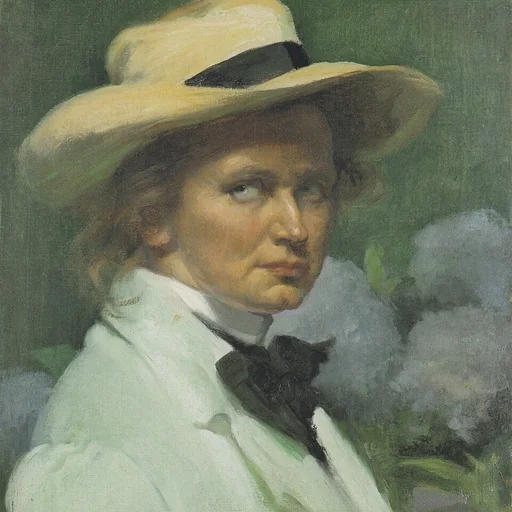
Artist
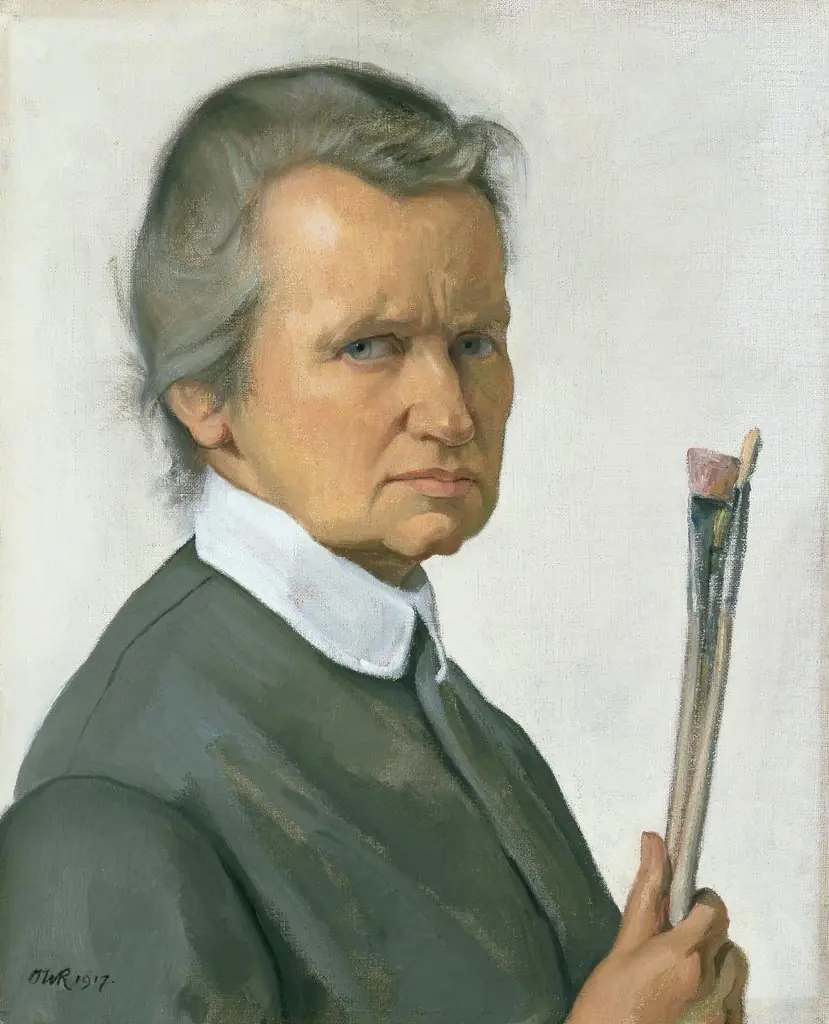
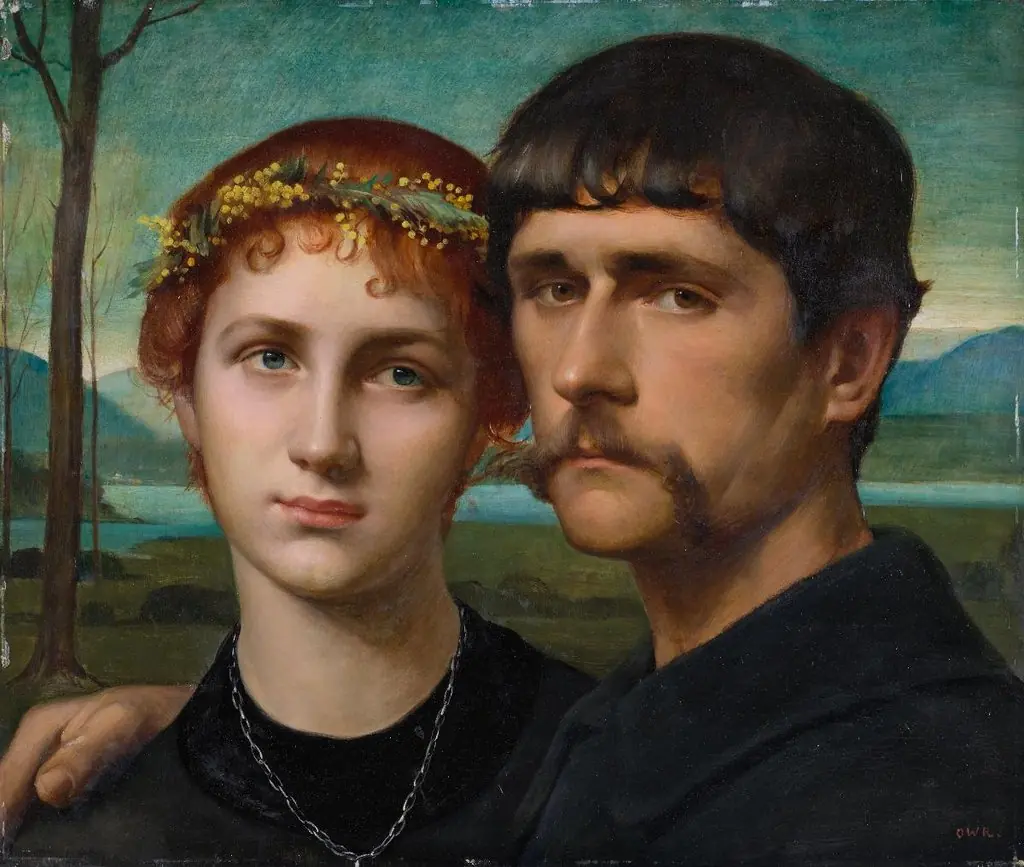
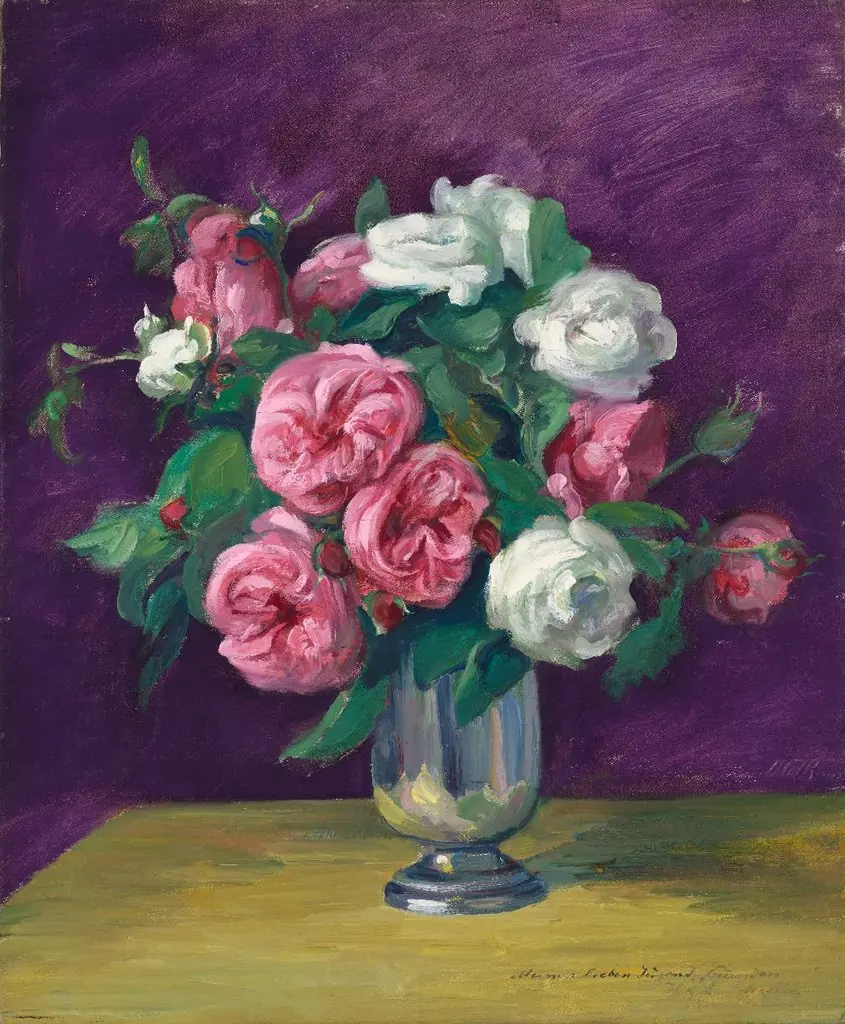
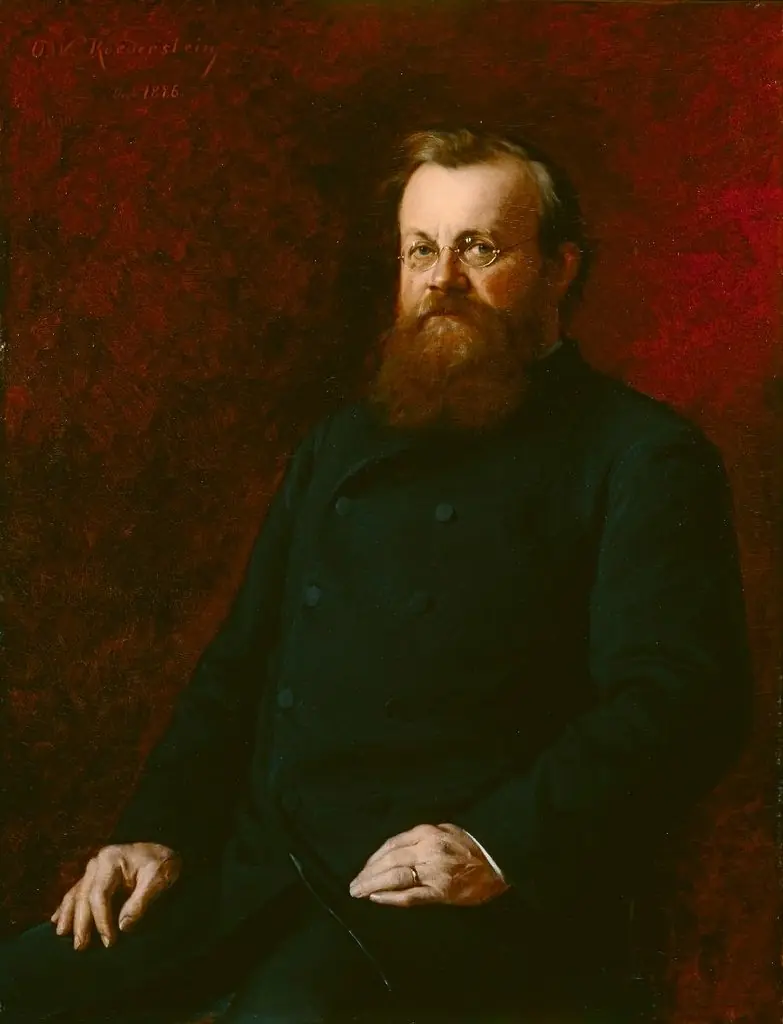
Ottilie Wilhelmine Roederstein (22 April 1859 – 26 November 1937) was a German-Swiss painter. She was the long-time companion of Elisabeth Winterhalter, one of the first female doctors in Germany.