Artwork
Heste ved stranden
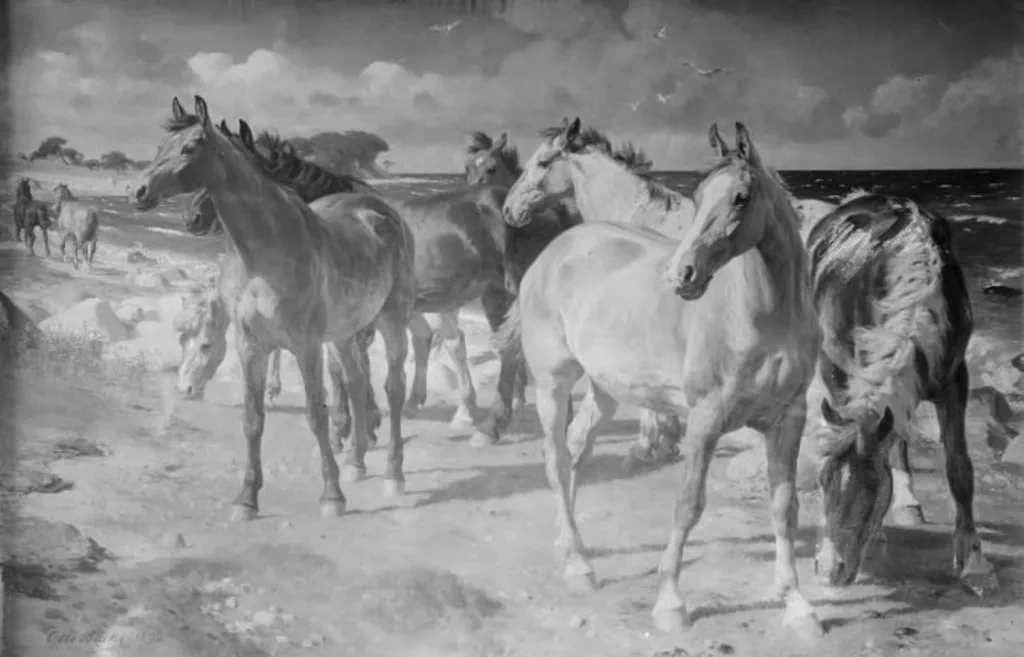
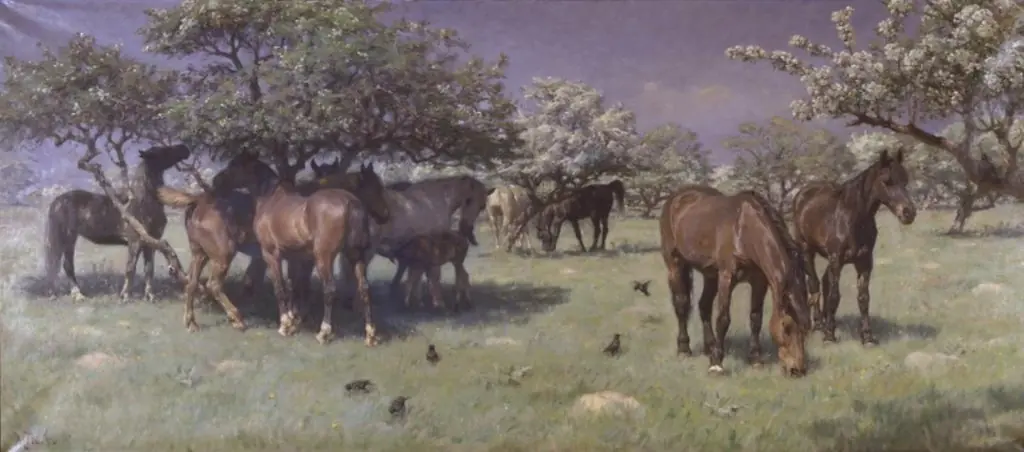
Heste ved stranden is an oil painting by the Impressionist artist Otto Bache. It dates from 1896 and is held in the collection of the Statens Museum for Kunst.
About this work
Overview
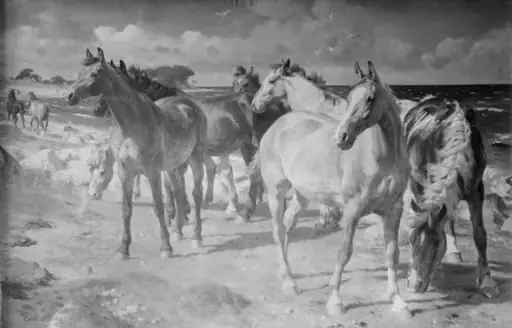
Painted in 1896 by Danish artist Otto Bache, *Heste ved stranden* is an oil-on-canvas work depicting a group of horses on a coastal shore.
Painted in 1896 by Danish artist Otto Bache, *Heste ved stranden* is an oil-on-canvas work depicting a group of horses on a coastal shore. Bache, known for his detailed renderings of animals and everyday scenes, applied his training in realism to this tranquil coastal study. Though rooted in observational accuracy, the painting’s loose brushwork and atmospheric handling reflect influences from contemporary European trends, including Impressionist light studies.
Subject & Meaning
The painting presents a quiet moment of horses at rest along a shoreline, their postures varied and naturalistic. Some face the viewer, others look outward, suggesting unforced awareness of their surroundings. The absence of human figures emphasizes the animals’ autonomy, framing them as subjects of quiet dignity rather than symbols of labor or sport. The scene evokes solitude and the rhythm of nature, without overt narrative or allegory.
Technique & Style
Bache employed a range of brush techniques to differentiate textures: thick impasto for the horses’ manes and wet sand, softer strokes for the sky and distant waves. Chiaroscuro is subtly used to model the animals’ forms, giving volume without dramatic contrast. The palette is restrained—earthy browns, grays, and off-whites—enhancing the muted, overcast atmosphere. The brushwork is deliberate yet fluid, balancing realism with a sensitivity to light and movement.
History & Provenance
Created in 1896, the painting entered the collection of Statens Museum for Kunst in Copenhagen, where it remains today. Bache, a professor at the Royal Danish Academy of Fine Arts, frequently exhibited at national salons, and this work aligns with his later focus on animal subjects and coastal landscapes. Its acquisition by the national museum reflects its recognition as a representative example of late 19th-century Danish realism infused with modern observational approaches.
Context
In the 1890s, Danish artists increasingly turned from historical themes toward everyday life and natural environments. Bache’s work reflects this shift, engaging with the international rise of plein air painting and the study of animal behavior. While not a pure Impressionist, he absorbed elements of the movement’s attention to light and transient effects, adapting them to a distinctly Nordic sensibility marked by subdued tones and restrained emotion.
Legacy
Though not among Bache’s most widely reproduced works, *Heste ved stranden* exemplifies his mature style and his role in bridging academic tradition with modern observation. It stands as a quiet testament to Danish art’s engagement with nature and animal life during a period of stylistic transition. The painting continues to be studied for its nuanced handling of texture, atmosphere, and the unembellished presence of its subjects.
Artist & collection
Artist
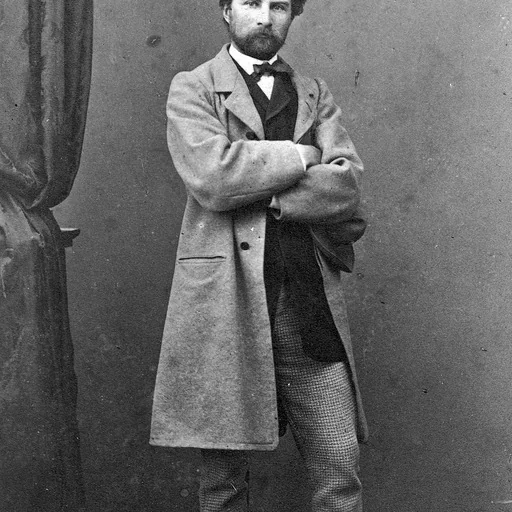
Otto Bache (21 August 1839 – 28 June 1927) was a Danish Realist painter best known for his depictions of historical scenes, animal studies, genre compositions, and portraits.