Artwork
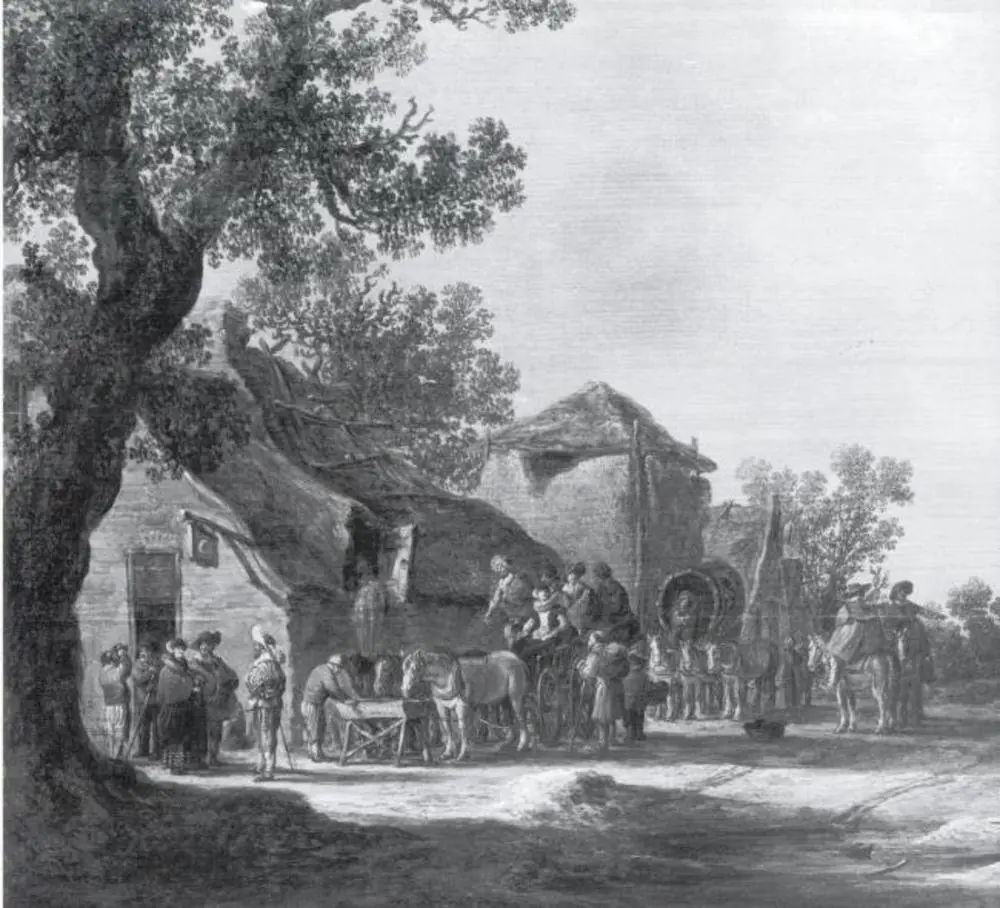
A Kneading Cart outside a Tileworks in Jutland
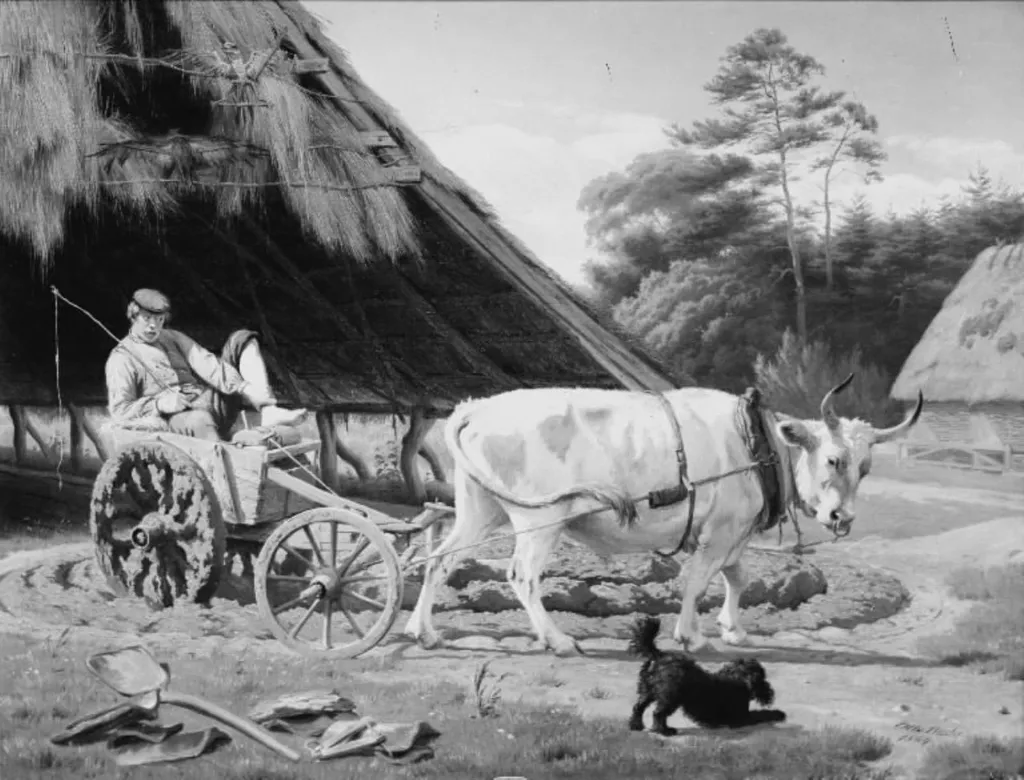
A Kneading Cart outside a Tileworks in Jutland is an oil painting by the Realist artist Otto Bache. It dates from 1864 and is held in the collection of the Statens Museum for Kunst.
About this work
Overview
Its restrained palette and unembellished composition reflect the principles of Realism prevalent in mid-nineteenth-century Danish art.
Painted in 1864 by Danish artist Otto Bache, this oil on canvas depicts a quiet rural scene in Jutland. Bache, trained at the Royal Danish Academy of Fine Arts, focused on everyday life rather than grand historical narratives. The work captures a moment of labor at a tileworks, emphasizing the rhythm of ordinary existence. Its restrained palette and unembellished composition reflect the principles of Realism prevalent in mid-nineteenth-century Danish art.
Subject & Meaning
The painting shows a man seated on a cart drawn by a cow, parked before a thatched building likely used for tile production. A dog rests nearby, adding to the sense of stillness between tasks. No dramatic action occurs; instead, the scene conveys the dignity of routine labor. The figures and animals are engaged in their customary roles, suggesting a quiet endurance tied to the land and seasonal work, without romanticization or sentimentality.
Technique & Style
Bache employed careful observation to render textures: the roughness of the thatch, the coarse hide of the cow, the worn fabric of the man’s clothes. The palette is subdued, dominated by earth tones and soft grays, with light filtering through a cloudy sky. Shadows are gently modeled, enhancing volume without dramatic contrast. The brushwork is precise yet unobtrusive, prioritizing fidelity to appearance over expressive flourish.
History & Provenance
Created in 1864, the painting entered the collection of Statens Museum for Kunst in Copenhagen, where it remains today. It was produced during a period when Danish artists increasingly turned to native landscapes and rural life as subjects. Bache’s reputation as a realist painter, grounded in academic training, helped legitimize such scenes within institutional circles, securing the work’s place in Denmark’s national art heritage.
Context
In 1860s Denmark, industrialization was slowly altering rural economies, yet many artists continued to document traditional ways of life. Bache’s focus on a tileworks—a modest, localized industry—reflects a broader cultural interest in preserving the visual record of agrarian labor. The painting aligns with a national movement to define Danish identity through its people and landscapes, away from foreign artistic influences.
Legacy
Though not widely exhibited outside Denmark, the painting exemplifies the quiet realism that defined a generation of Danish painters. It stands as a record of pre-industrial labor practices and the aesthetic values of its time. Bache’s commitment to unadorned observation influenced later generations who sought to portray everyday life with integrity, contributing to Denmark’s distinctive contribution to European Realism.
Own this work as a print
Artist & collection
Artist
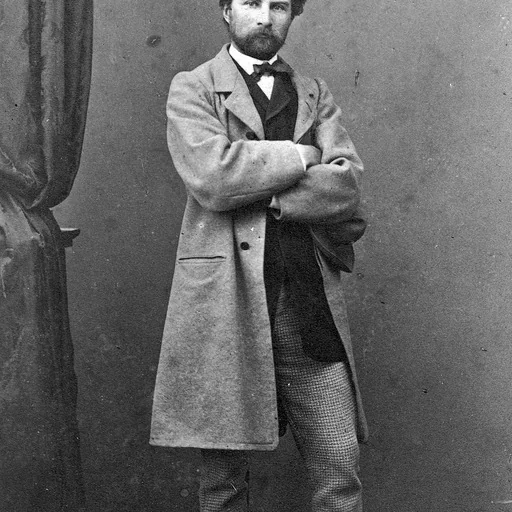
Otto Bache (21 August 1839 – 28 June 1927) was a Danish Realist painter best known for his depictions of historical scenes, animal studies, genre compositions, and portraits.