Artwork
Etchings of Venice: The Lace Makers
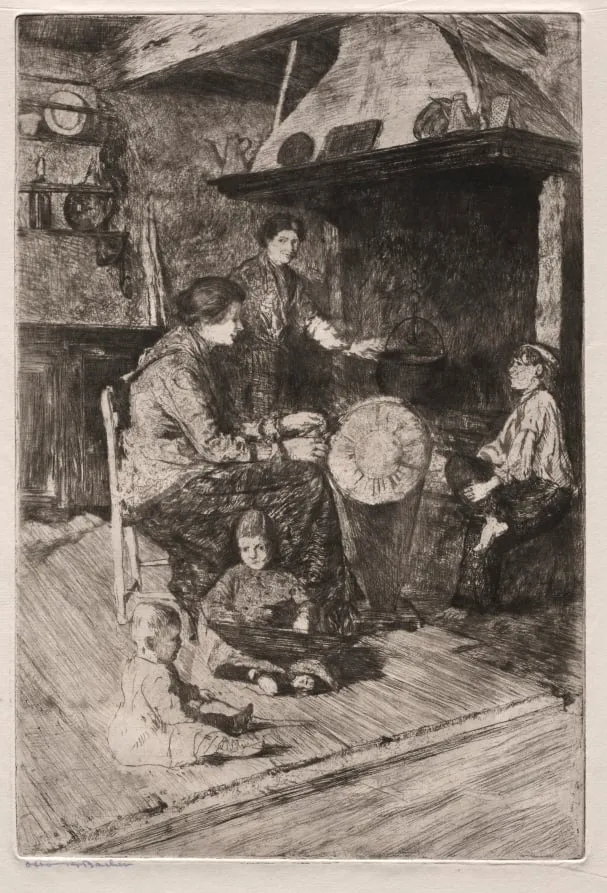
Etchings of Venice: The Lace Makers is a print by the Romanticist artist Otto Henry Bacher. It dates from 1850 and is held in the collection of the Cleveland Museum of Art. Otto H.
About this work
Overview
Though often associated with oil painting, Bacher’s printmaking emphasized quiet observation over grandeur.
Otto H. Bacher, an American artist known for his detailed etchings and genre scenes, produced *Etchings of Venice: The Lace Makers* as part of a series capturing Venetian life. Though often associated with oil painting, Bacher’s printmaking emphasized quiet observation over grandeur. This work reflects his interest in ordinary moments, rendered with precision and restraint. The piece resides in The Cleveland Museum of Art’s collection, where it contributes to broader narratives of 19th-century American engagement with European subjects.
Subject & Meaning
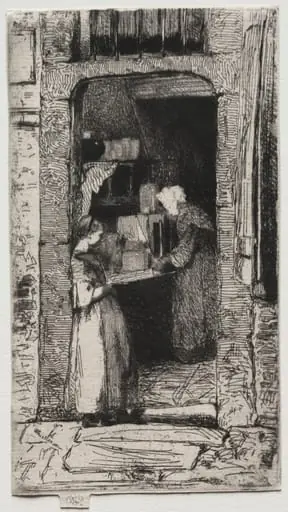
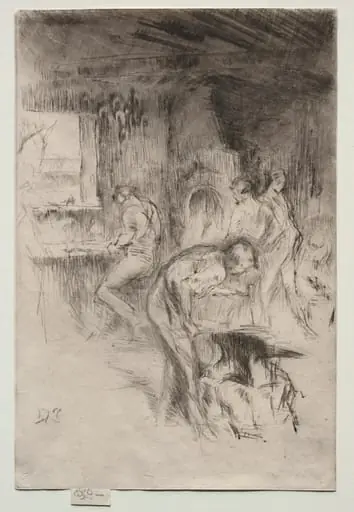
The scene depicts four figures engaged in the quiet labor of lace-making: a woman at a wheel, two children on the floor, and another woman standing with a small object in hand. The setting is intimate and unidealized—a dim, cluttered interior suggesting domestic routine. No narrative climax is offered; instead, the focus lies in the rhythm of daily work, highlighting the endurance and repetition inherent in artisanal craft. The absence of spectacle invites contemplation of unseen lives.
Technique & Style
Bacher employed etching to capture subtle tonal variations, using fine lines and controlled ink washes to suggest dim interior light. The composition avoids ornate detail, favoring atmospheric depth through contrast between shadowed walls and the faint glow on the lace wheel and figures. Textures are implied rather than rendered precisely—shelves, fabric, and wood are suggested with economical strokes. This restraint aligns with a realist sensibility, prioritizing mood over decorative flourish.
History & Provenance
Created in the mid-19th century, the etching emerged during a period when American artists increasingly traveled to Europe to study and document local customs. Bacher’s work was part of this trend, though his approach remained understated compared to contemporaries. The print entered The Cleveland Museum of Art’s collection through documented acquisition, likely as part of a broader effort to preserve American printmaking from the period. Its preservation reflects institutional interest in lesser-known genre works.
Context
In the 1850s, European artisanal traditions attracted Western artists seeking authenticity beyond academic ideals. Venice, with its long-standing lace industry, became a frequent subject. Bacher’s depiction aligns with broader Romantic-era interests in everyday life, yet avoids sentimentality. Unlike theatrical genre paintings, his etching presents labor without moralizing, reflecting a shift toward observational realism. The work stands as a quiet counterpoint to more dramatic depictions of Venetian life.
Legacy
Bacher’s *Etchings of Venice: The Lace Makers* contributes to a modest but significant body of American printmaking that documented foreign scenes with restraint. While not widely exhibited today, it remains a representative example of how 19th-century artists used etching to explore cultural specificity without embellishment. Its presence in a major museum collection affirms its role in documenting the quiet intersections of art, labor, and place during a period of expanding artistic exchange.
Artist & collection
Artist
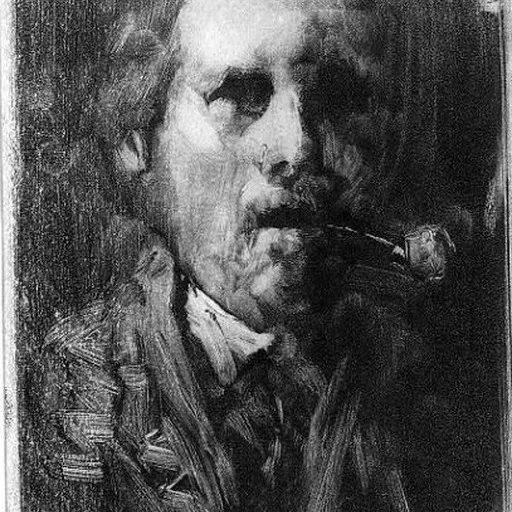
Otto Henry Bacher (May 31, 1856, Cleveland - August 16, 1909, Bronxville, New York) was an American artist; primarily known for his etchings and illustrations. He also painted oils in a variety of genres.