Artwork
Spring Street, Cleveland
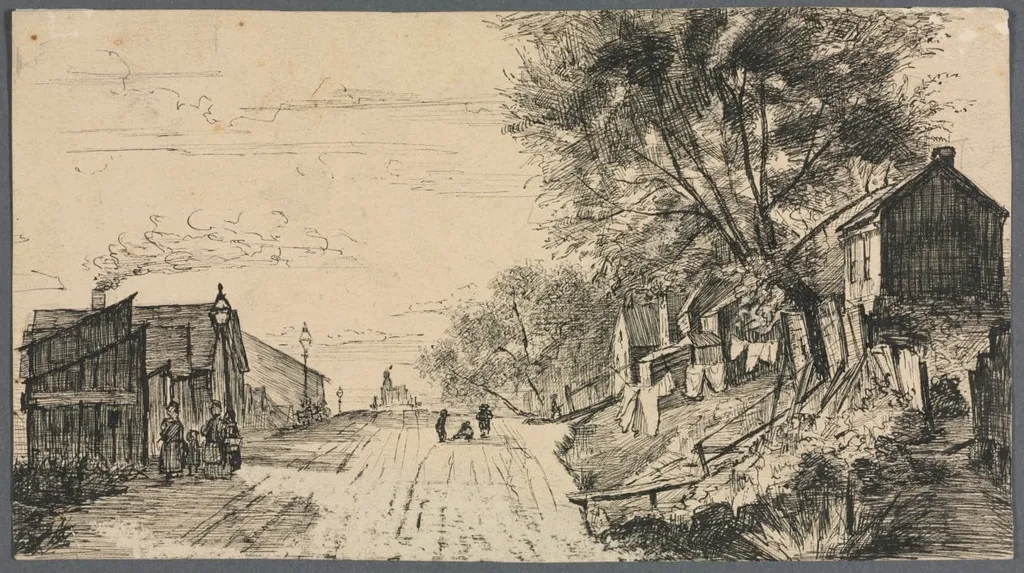
Spring Street, Cleveland is a drawing by the Impressionist artist Otto Henry Bacher. It dates from 1887 and is held in the collection of the Cleveland Museum of Art. Otto H.
About this work
Overview
This piece captures a quiet moment on Spring Street, reflecting his interest in everyday scenes rather than grand narratives.
Otto H. Bacher, born in Cleveland in 1856, created this drawing in 1887 as part of his exploration of urban life in his native city. Though known primarily for etchings and illustrations, he also worked in drawing and oil. This piece captures a quiet moment on Spring Street, reflecting his interest in everyday scenes rather than grand narratives. The work is rendered in tonal pencil or charcoal, emphasizing light and shadow to suggest depth and stillness.
Subject & Meaning
The scene portrays a modest Cleveland street in late 19th century, with pedestrians moving along a dirt path between two buildings and a lone tree. No dramatic event occurs—figures go about routine tasks, suggesting ordinary life. The composition avoids spectacle, instead valuing quiet observation. The absence of industrial elements or signage reinforces a sense of calm, perhaps indicating a transitional moment before urban expansion reshaped the neighborhood.
Technique & Style
Bacher employs a restrained tonal range to model form and space, using subtle gradations of light and dark to define surfaces and depth. The chiaroscuro technique guides the viewer’s eye from the foreground figures toward the receding street and hazy sky. Lines are deliberate but not rigid, allowing the texture of dirt, bark, and brick to emerge through layered strokes. The sky, softly rendered with cloud forms, adds atmospheric weight without distraction.
History & Provenance
Created in 1887, the drawing likely originated from Bacher’s personal studies of Cleveland’s streets during his early career. It was not widely exhibited at the time and remained in private hands for decades. Its survival suggests it held personal significance to the artist or a local collector. The work entered public collection in the mid-20th century, where it now serves as a record of the city’s pre-industrial urban fabric.
Context
In the 1880s, Cleveland was growing rapidly, yet many neighborhoods retained rural rhythms. Bacher’s focus on a quiet street contrasts with the era’s industrial imagery, offering an alternative view of urban life. His work aligns with American realist tendencies of the time, influenced by European academic drawing traditions. Unlike contemporaries who emphasized progress, Bacher documented stillness, perhaps as a response to rapid change.
Legacy
Though not widely published or reproduced, this drawing contributes to a modest but important body of work documenting Cleveland’s pre-modern streetscape. It stands as a quiet counterpoint to more celebrated urban scenes of the period, valued for its sincerity and attention to subtle detail. Today, it helps contextualize the city’s visual history and the role of local artists in preserving everyday environments before they vanished.
Artist & collection
Artist
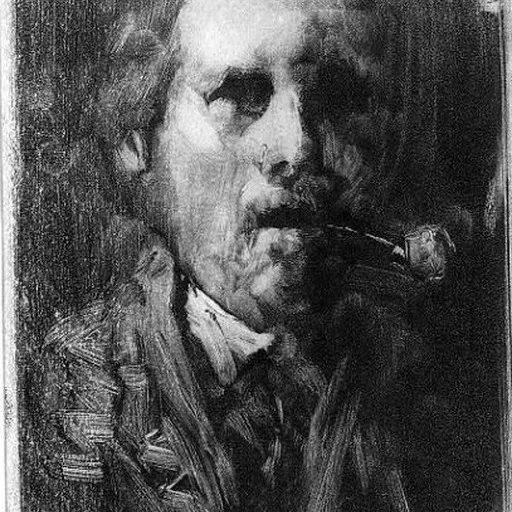
Otto Henry Bacher (May 31, 1856, Cleveland - August 16, 1909, Bronxville, New York) was an American artist; primarily known for his etchings and illustrations. He also painted oils in a variety of genres.

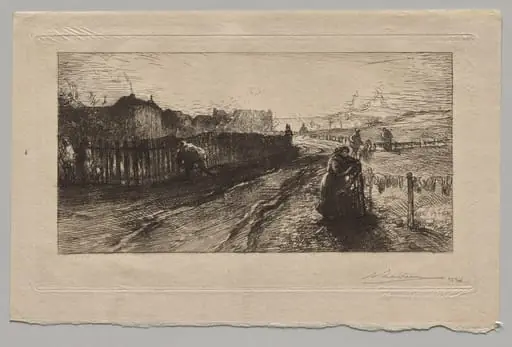 At the Fortifications, Porte de Versailles
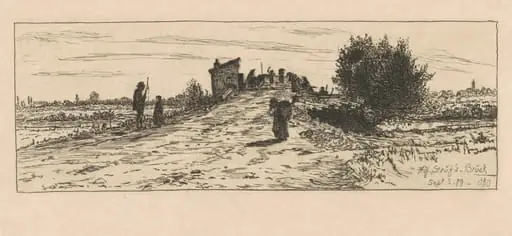 Aŭf Staŭfá Brŭck
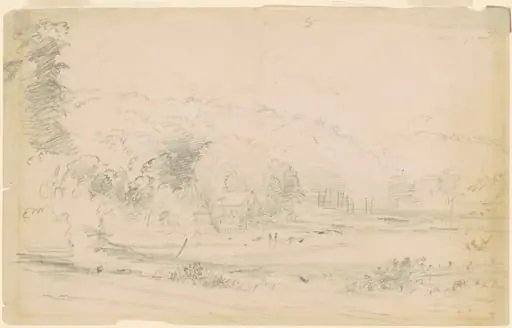 Long Island, New York
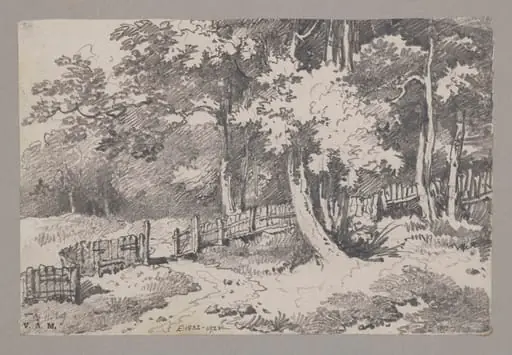 A wooded landscape with a fence and path
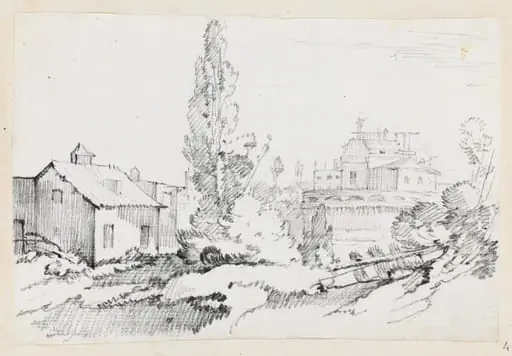 Castel Sant'Angelo from the Northwest
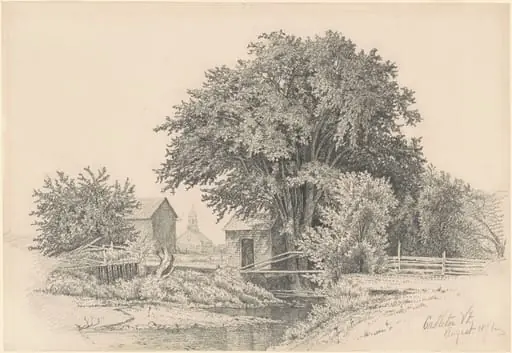 Castleton, Vermont
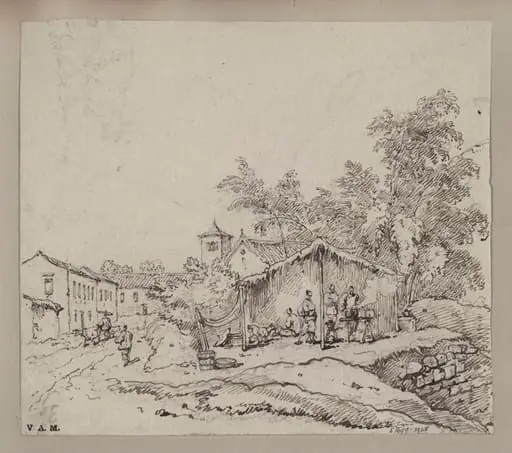 Blacksmiths beneath a thatched shelter, with the church of S. Antonio, Macau
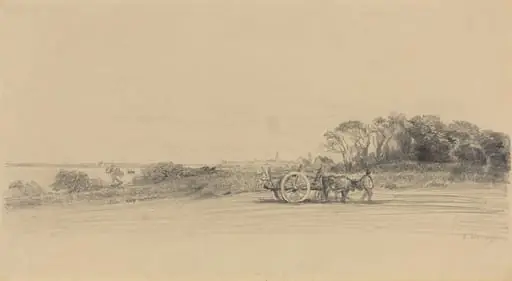 L'Ile aux Moines with Figure and Cart
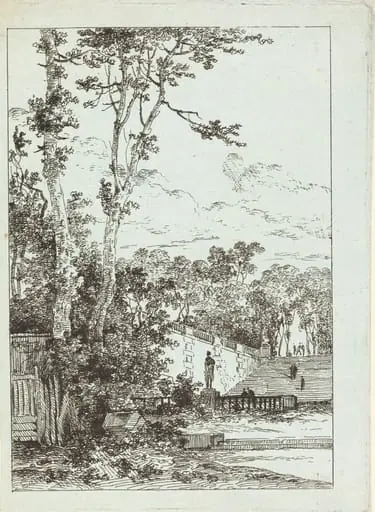 Abandoned Park
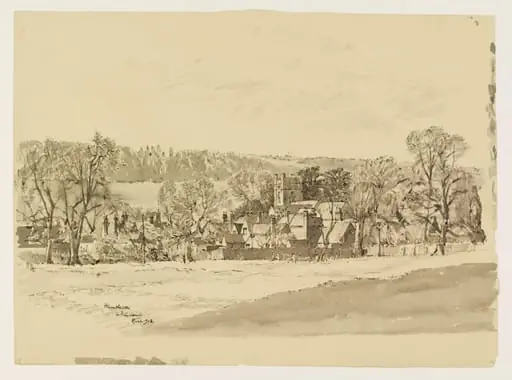 Hambledon
 St. Beuno's Llan-y-cil, Llyn Tegid and the Aran Peak, Merionethshire
 Auf Stauf a-Bruck