Artwork
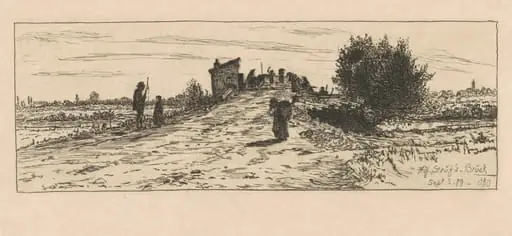
Auf Stauf a-Bruck
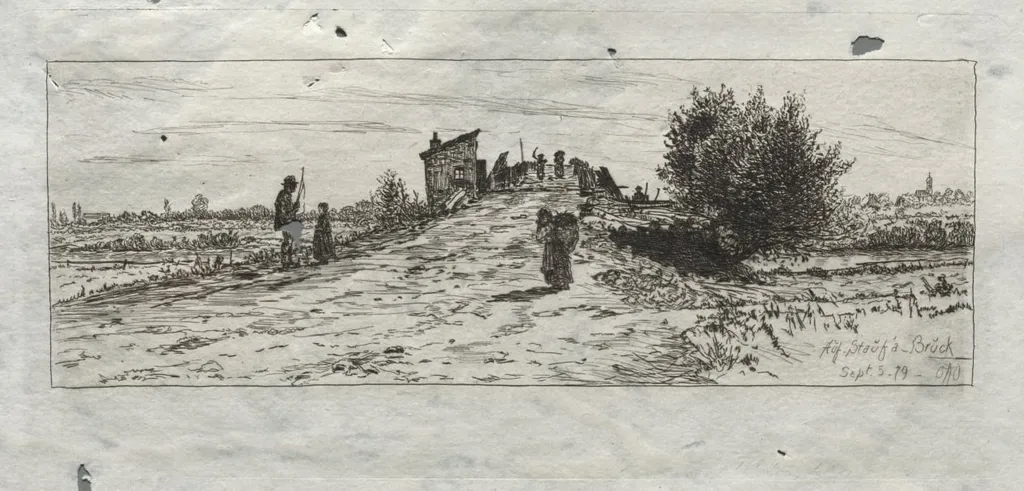
Auf Stauf a-Bruck is a print by the Impressionist artist Otto Henry Bacher. It dates from 1879 and is held in the collection of the Cleveland Museum of Art. Created in 1879 by American artist Otto H.
About this work
Overview
Bacher, born in Cleveland in 1856, was primarily known for his etchings and illustrations, often capturing scenes of daily life with minimal embellishment.
Created in 1879 by American artist Otto H. Bacher, *Auf Stauf a-Bruck* is a pen-and-ink sketch depicting a rural village affected by flooding. Bacher, born in Cleveland in 1856, was primarily known for his etchings and illustrations, often capturing scenes of daily life with minimal embellishment. The work is part of the Cleveland Museum of Art’s collection, reflecting both the artist’s regional ties and his interest in unidealized environments.
Subject & Meaning
The scene portrays a small settlement in the Austrian village of Stauf a-Bruck, where floodwaters have submerged streets and paths. Figures wade through the water, while a single wooden house perches on higher ground, surrounded by trees and modest structures. Bacher avoids dramatic tension, instead presenting the event as a quiet, ordinary disruption—emphasizing resilience and the rhythm of rural existence over spectacle.
Technique & Style
Executed in loose, rapid ink lines on light paper, the drawing favors immediacy over refinement. Shadows and textures are suggested with minimal strokes, and details are implied rather than rendered precisely. This approach aligns with the artist’s illustrative background, where clarity and speed were essential. The absence of color and the sketchlike quality reinforce the sense of a fleeting, observed moment.
History & Provenance
Bacher produced this work during a period of travel in Europe, where he studied local life and landscapes. The sketch was likely made on-site during a visit to the Austrian village of Stauf a-Bruck. It remained in private hands before entering the Cleveland Museum of Art’s collection, where it is preserved as part of a broader effort to document American artists’ engagement with European subjects in the late 19th century.
Context
In the late 1870s, European and American artists increasingly turned to everyday scenes as subjects, rejecting idealized historical or mythological themes. Bacher’s work reflects this shift toward Realism, aligning with contemporaries who valued authenticity over polish. His focus on a modest, weather-affected village mirrors broader cultural interest in the lives of ordinary people during a time of rapid industrial and social change.
Legacy
Though not widely exhibited, *Auf Stauf a-Bruck* exemplifies Bacher’s contribution to American print culture and his role in bringing European observational practices back to the U.S. The sketch remains a quiet testament to his commitment to documenting unvarnished reality. It continues to serve as a reference for students of 19th-century illustration and the evolution of American artistic realism.
Artist & collection
Artist
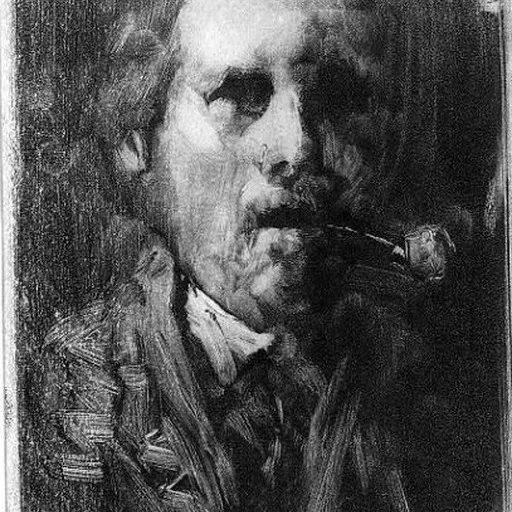
Otto Henry Bacher (May 31, 1856, Cleveland - August 16, 1909, Bronxville, New York) was an American artist; primarily known for his etchings and illustrations. He also painted oils in a variety of genres.

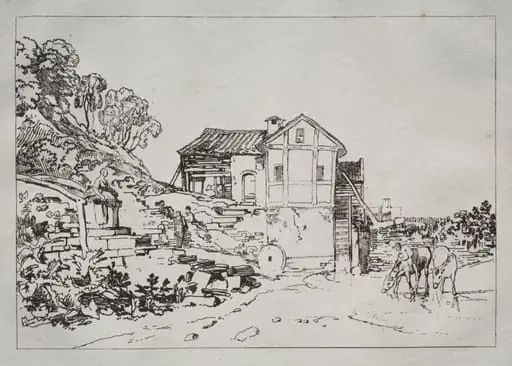 Liber Studiorum: Watermill
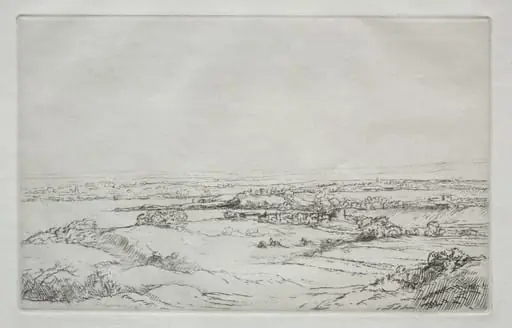 The Meadow near the Lake (La Plaine Près Du Lac)
 Tabriz
 Route de Versailles
 Landscape with the Horse
 Castel Sant'Angelo from the Northwest
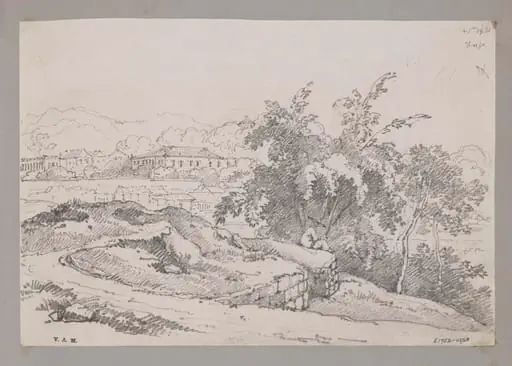 The Casa, Macao, in the gardens of which is Camoens' Cave (the residence of Lady Pereira), Macao
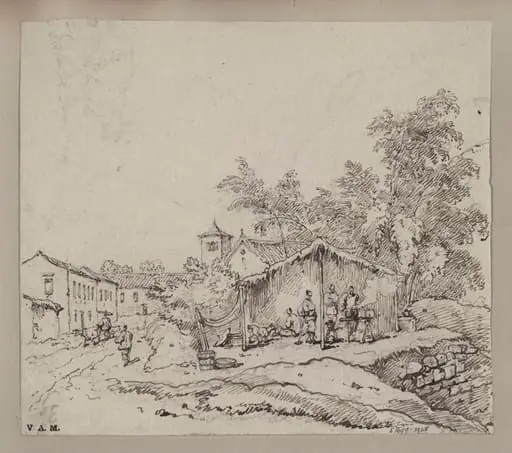 Blacksmiths beneath a thatched shelter, with the church of S. Antonio, Macau
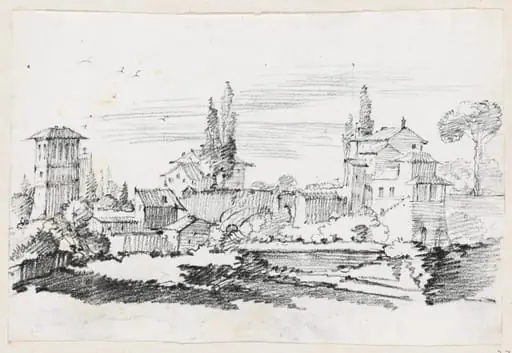 Houses in Italy
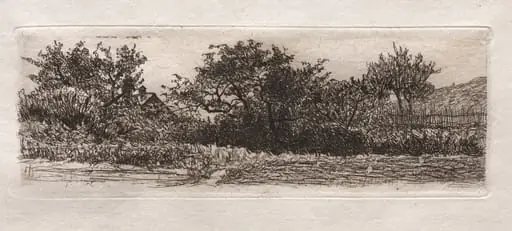 Roofs and Trees
 Aŭf Staŭfá Brŭck
 Abandoned Village