Artwork
Untitled
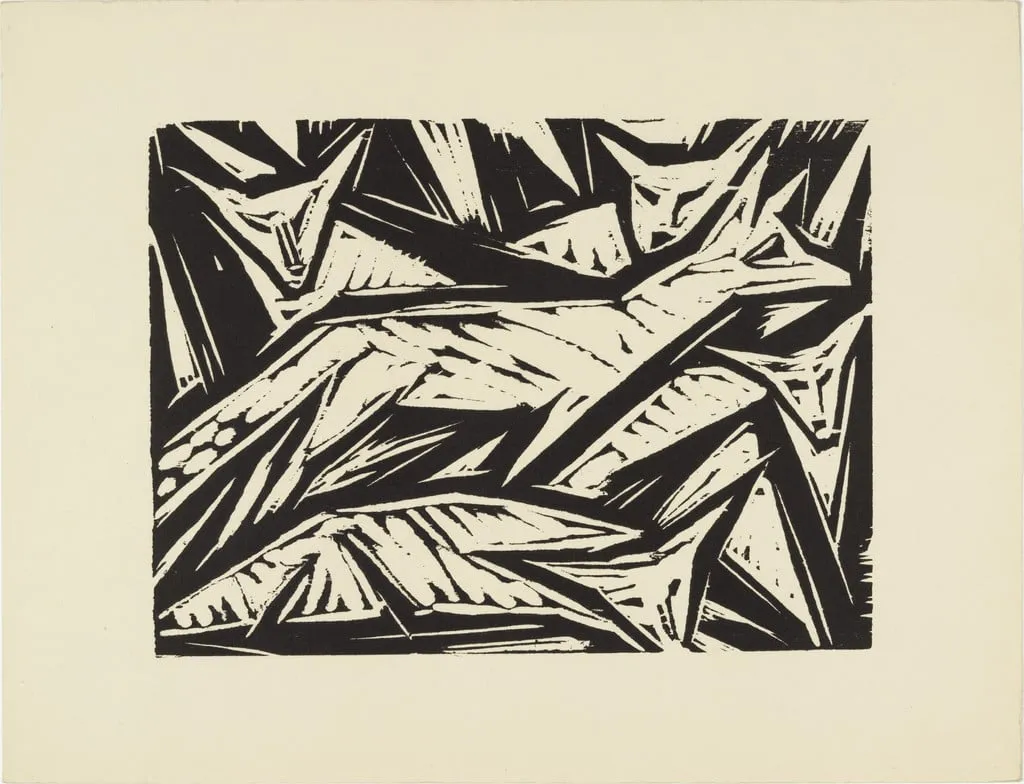
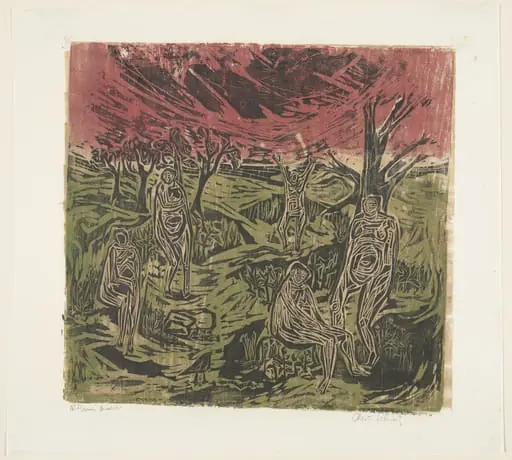
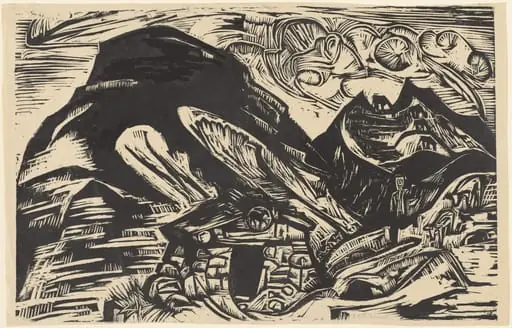
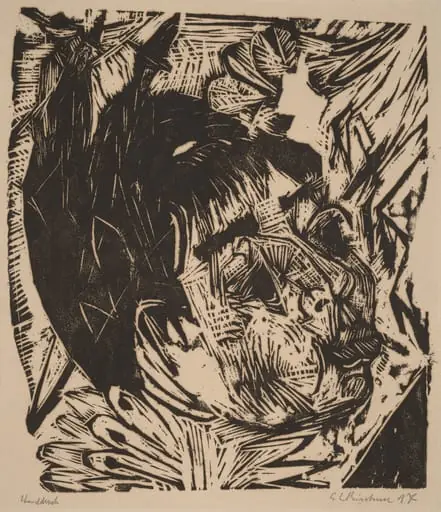
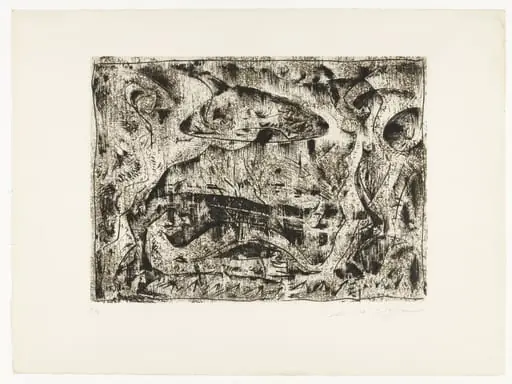
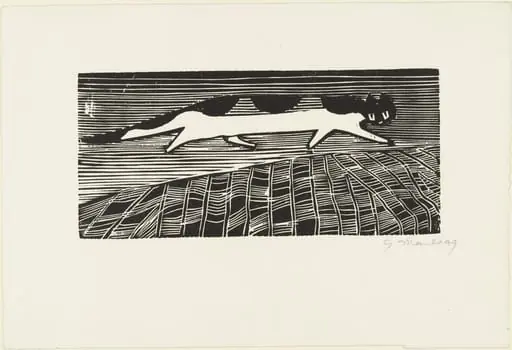
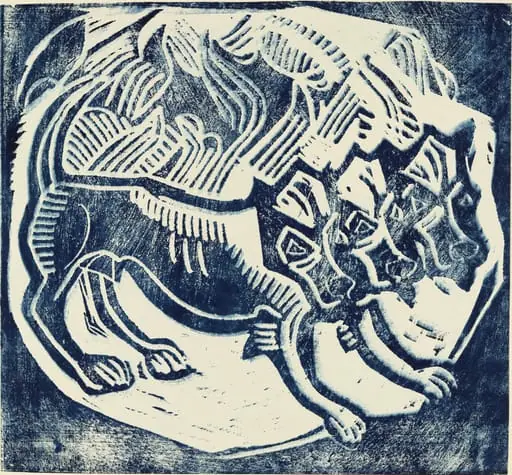
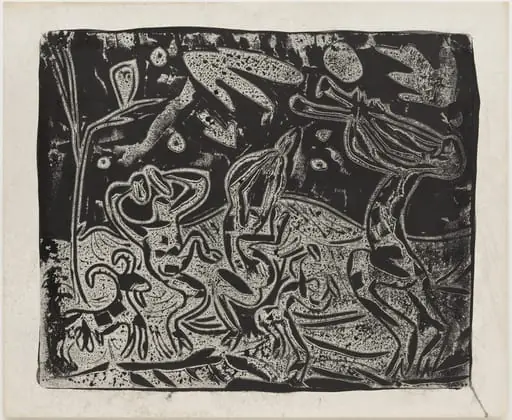
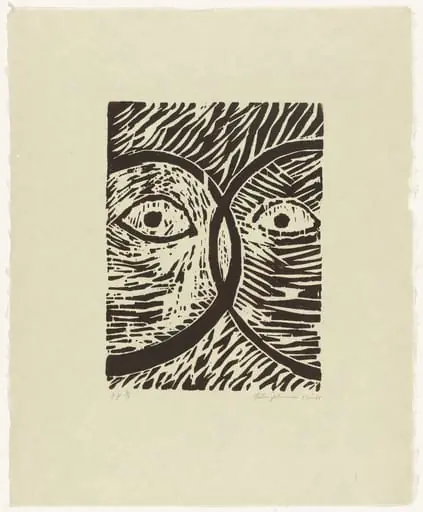
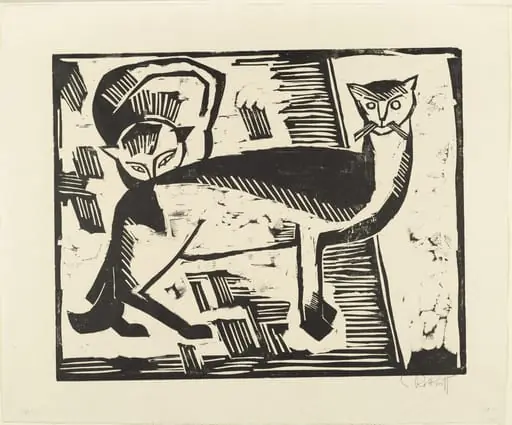
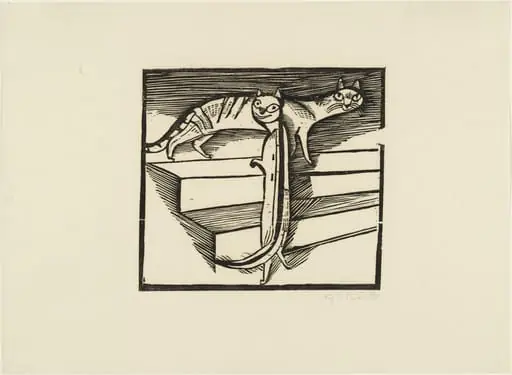
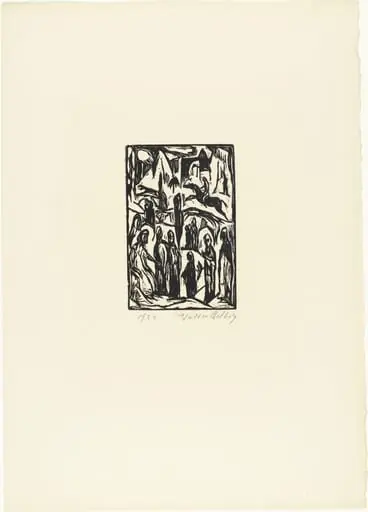
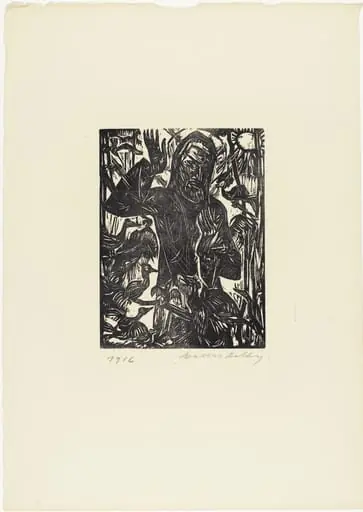
Untitled is an ink print by Otto Lange. It dates from 1917 and is held in the collection of the Museum of Modern Art.
About this work
Overview
Executed during the height of German Expressionism, the work exemplifies the movement’s preference for bold, non-naturalistic forms.
Created in 1917, this woodcut by German artist Otto Lange is a black-and-white print depicting a recumbent horse. Executed during the height of German Expressionism, the work exemplifies the movement’s preference for bold, non-naturalistic forms. Lange, trained in Dresden and later active in the Dresdner Sezession, used the woodcut medium to convey emotional weight through stark contrasts and fractured lines. The piece is now part of The Museum of Modern Art’s collection.
Subject & Meaning
The subject—a horse in repose—is rendered without idealization, stripped of pastoral associations. Its stillness contrasts with the agitation of the lines that define it, suggesting inner tension or exhaustion. The animal’s form, reduced to angular planes, evokes vulnerability rather than strength. In the context of 1917, amid war and social upheaval, the horse may symbolize burden, endurance, or the collapse of traditional values.
Technique & Style
Lange employed the woodcut process to carve deep, incised lines into a wooden block, inking the raised surfaces to produce a high-contrast image. The sharp, jagged contours fragment the horse’s body into geometric shards, while dense black areas create rhythmic negative space. The technique emphasizes the materiality of the medium, with visible grain and abrupt transitions between light and shadow reinforcing the work’s raw, unpolished aesthetic.
History & Provenance
Otto Lange studied at the Kunstgewerbeschule in Dresden under Otto Gussmann and co-founded the Dresdner Sezession in 1919, a group committed to socially engaged art. Though this print predates the group’s formal establishment, it aligns with its emerging ethos. The work entered The Museum of Modern Art’s collection through acquisitions focused on early 20th-century German prints, reflecting its significance within the Expressionist canon.
Context
Produced during World War I, the print reflects a broader cultural mood of disillusionment and fragmentation. German Expressionists rejected academic realism, favoring emotional truth over visual accuracy. Woodcuts, accessible and direct, became a favored medium for artists seeking to communicate urgency and critique. Lange’s work fits within this trend, using primal forms to convey psychological and societal strain.
Legacy
Lange’s woodcuts, including this untitled work, contributed to the legitimization of printmaking as a serious artistic medium in modern art. His use of abstraction and emotional intensity influenced later generations of printmakers in Germany and beyond. Though less widely known than some contemporaries, his work remains a quiet but forceful example of Expressionism’s graphic innovations.
Artist & collection
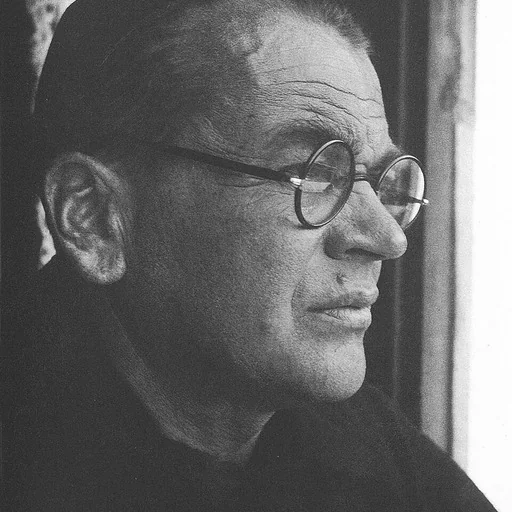
Artist
Otto Lange (29 October 1879 in Dresden – 19 December 1944 in Dresden) was a German Expressionist painter and graphic artist.