Artwork
Untitled
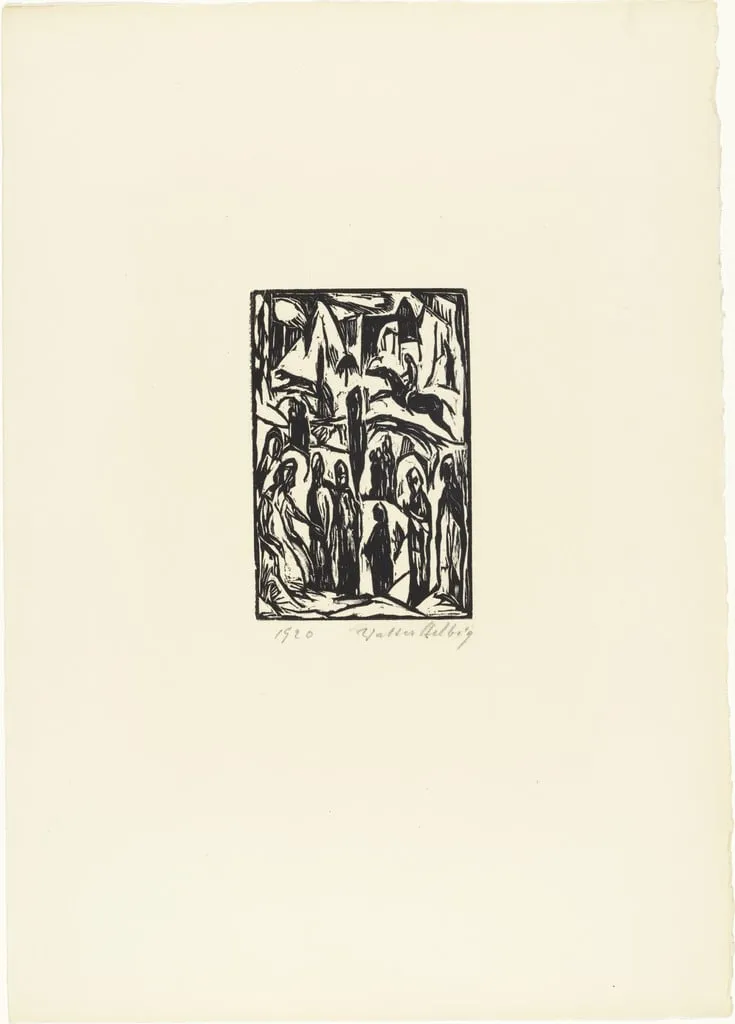
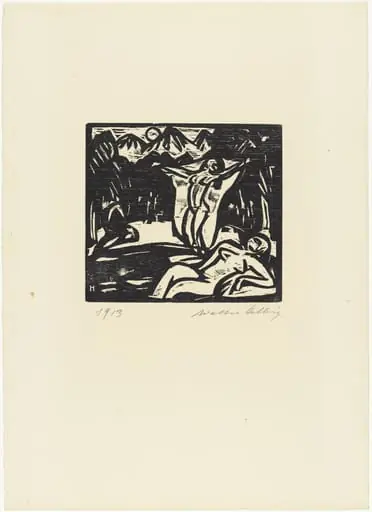
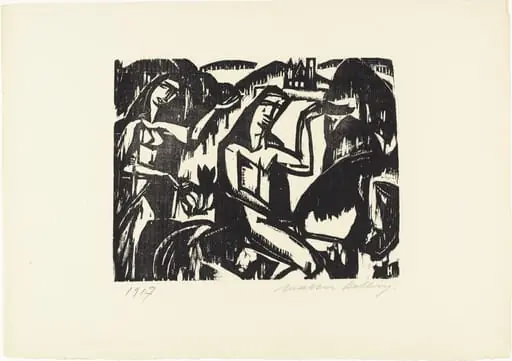
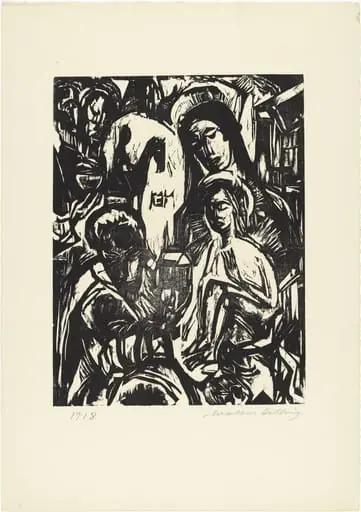
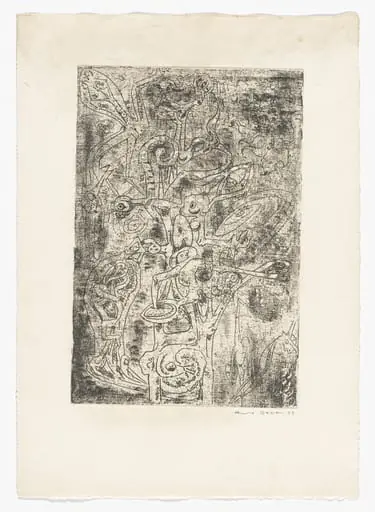
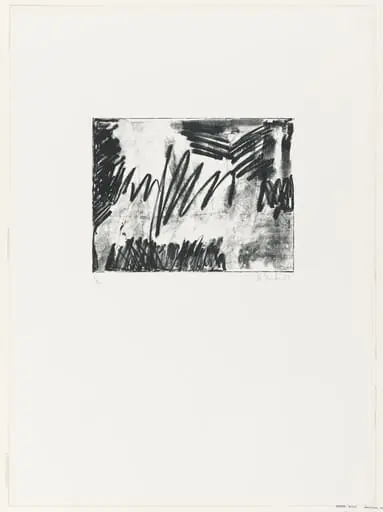
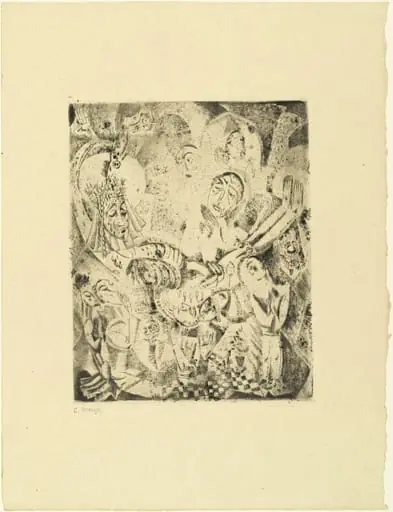
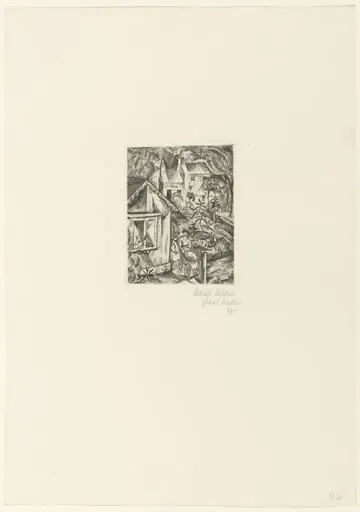
Untitled is an ink print by Walter Helbig. It dates from 1920 and is held in the collection of the Museum of Modern Art.
About this work
Overview
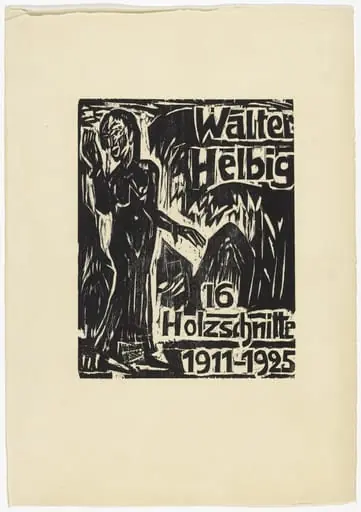
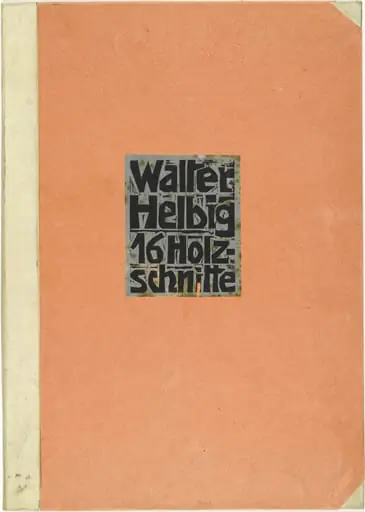
It is part of a larger set that includes a title page, table of contents, cover, and colophon, all produced using the same technique.
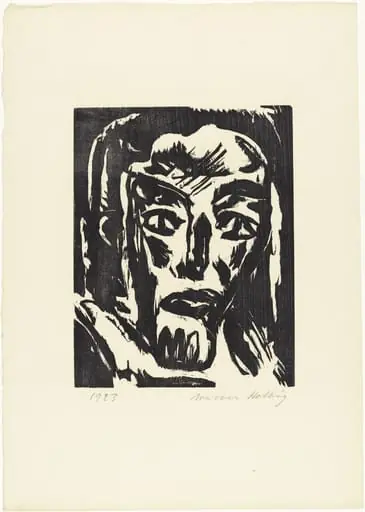
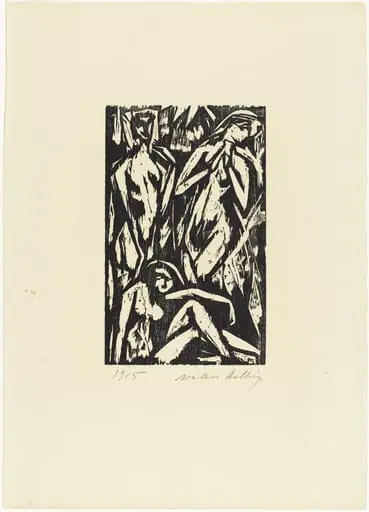
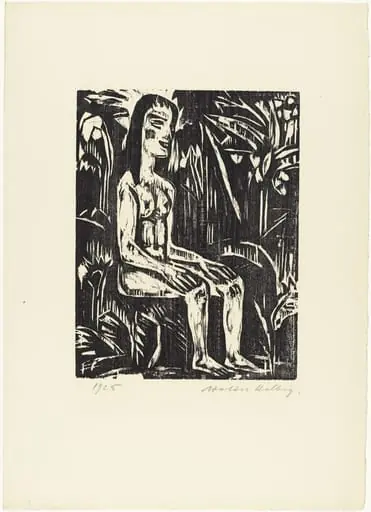
Created in 1920, this woodcut is one of sixteen prints in a portfolio by Walter Helbig. It is part of a larger set that includes a title page, table of contents, cover, and colophon, all produced using the same technique. The work is held in the collection of The Museum of Modern Art. Its stark black-and-white composition reflects the expressive potential of woodcut printing in early 20th-century German art.
Subject & Meaning
The image depicts a cluster of figures beneath a fragmented, angular canopy, their forms rendered with minimal detail. Some hold elongated staff-like objects, suggesting ritual, labor, or procession. The absence of clear narrative context invites interpretation, but the grouping and rigid postures imply collective action or shared tension. The mood is somber, anchored by the heavy, shadowed overhead structure.
Technique & Style
The print was made by carving into a wooden block, removing areas that would remain white, then inking and pressing the surface onto paper. The resulting lines are thick, irregular, and deeply incised, emphasizing the hand-carved nature of the process. Contrast is heightened through bold, unmodulated black shapes, with no gradation or soft edges—characteristic of Expressionist woodcut aesthetics of the period.
History & Provenance
Walter Helbig produced this portfolio in 1920, during a period of intense experimentation in German printmaking. The entire set was likely intended as a unified artistic statement, not individual works. The portfolio entered The Museum of Modern Art’s collection in the mid-20th century, where it remains as part of their holdings of early modern prints.
Context
This work emerged amid the aftermath of World War I, when German artists turned to printmaking for its accessibility and raw expressive power. Woodcuts allowed for direct, unrefined imagery that resonated with social and psychological themes. Helbig’s approach aligns with contemporaries like Käthe Kollwitz and Ernst Ludwig Kirchner, who used the medium to convey emotional intensity and collective experience.
Legacy
Though Helbig is less widely known than some of his peers, this portfolio contributes to the broader recognition of woodcut as a vehicle for modernist expression in interwar Germany. Its inclusion in MoMA’s collection underscores its significance within the history of printmaking, preserving a quiet but forceful example of how form and material could convey existential weight without narrative clarity.
Artist & collection