Artwork
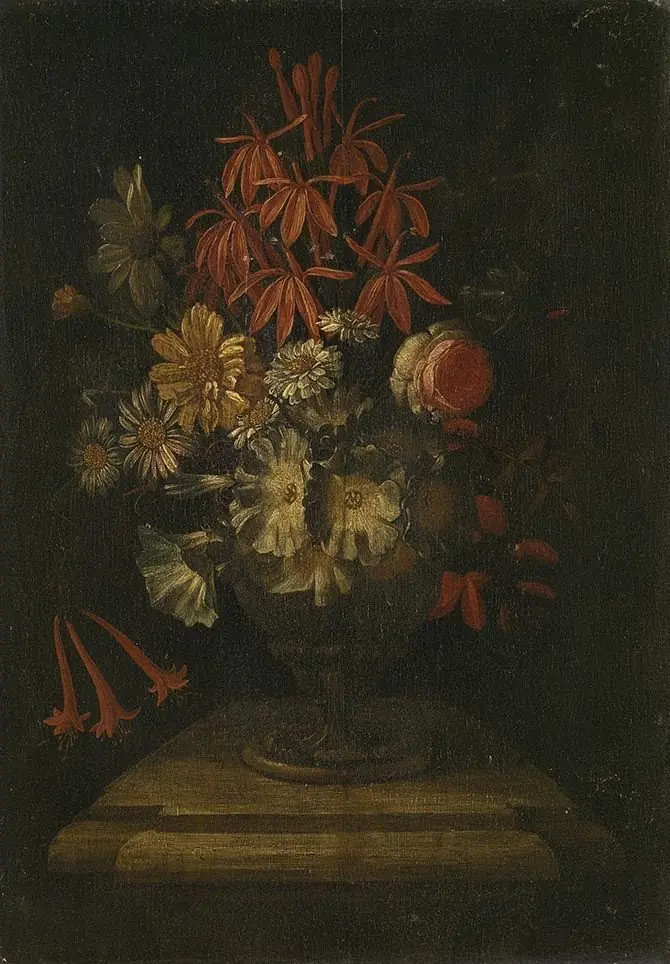
Still life with flowers
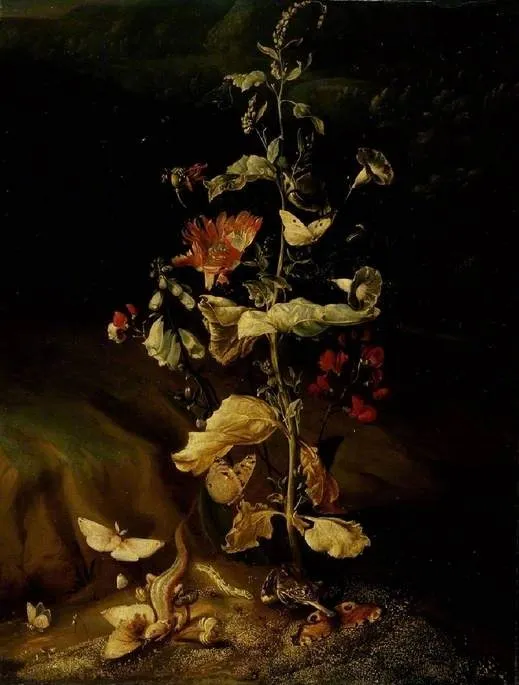
Still life with flowers is an oil painting by the Dutch Golden Age artist Otto Marseus van Schrieck. It dates from 1650 and is held in the collection of the Fitzwilliam Museum.
About this work
Overview
Painted around 1650 by Otto Marseus van Schrieck, this oil on canvas work is a quiet yet precise study of natural elements gathered in a shadowed space.
Painted around 1650 by Otto Marseus van Schrieck, this oil on canvas work is a quiet yet precise study of natural elements gathered in a shadowed space. It belongs to the still life tradition of the Dutch Golden Age, but diverges from floral arrangements by emphasizing decay and wild vegetation. The painting is part of the Fitzwilliam Museum’s collection, where it reflects the artist’s distinctive focus on the untamed margins of nature.
Subject & Meaning
The composition centers on a single, tall plant with a few vibrant blooms amid withered foliage, suggesting the passage of time. Scattered shells and two white butterflies introduce elements of the earth and air, hinting at the interconnectedness of life and decay. The absence of human presence and cultivated order shifts the focus from beauty to the quiet cycles of nature, evoking themes of transience and observation.
Technique & Style
Van Schrieck employed strong contrasts of light and shadow to model each leaf and petal with tactile precision. The dark, near-black background isolates the subject, heightening the luminosity of the orange and red flowers. Brushwork is meticulous yet unobtrusive, capturing the brittle texture of dried leaves and the delicate wings of butterflies. This use of chiaroscuro lends the scene a dramatic, almost theatrical presence despite its modest scale.
History & Provenance
The painting entered the Fitzwilliam Museum’s collection in the 19th century, having passed through private hands since its creation. Van Schrieck’s niche subjects—forest floor flora and fauna—were uncommon among his contemporaries, making his works rare and sought after by collectors interested in natural history. Its survival and preservation reflect its recognition as a distinctive example of Dutch naturalist painting.
Context
During the Dutch Golden Age, still life painting flourished as a genre reflecting scientific curiosity and moral reflection. Van Schrieck’s focus on wild, untended plants and insects aligned with emerging interest in botany and entomology. Unlike ornate floral still lifes, his works avoided idealization, instead presenting nature as it appeared in shadowed woods—humble, transient, and quietly complex.
Legacy
Van Schrieck’s approach influenced later naturalist painters who sought to depict nature without romanticization. His integration of insects, shells, and decaying vegetation into still life compositions expanded the genre’s scope beyond cultivated beauty. Today, his works are studied for their observational rigor and their quiet challenge to conventional notions of aesthetic value in art.
Artist & collection
Artist
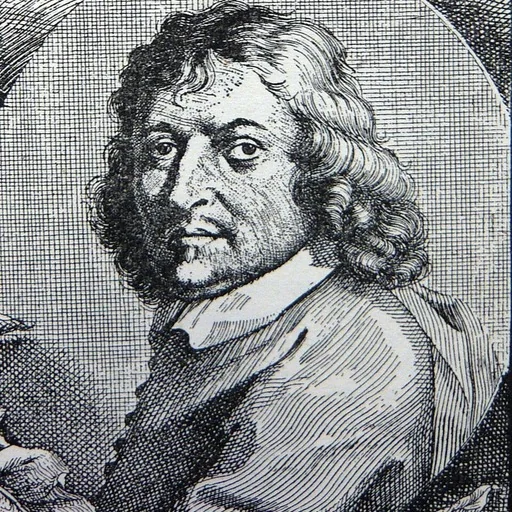
Otto Marseus van Schrieck (ca. 1613, in Nijmegen – buried 22 June 1678, in Amsterdam) was a painter in the Dutch Golden Age. He is best known for his paintings of forest flora and fauna.

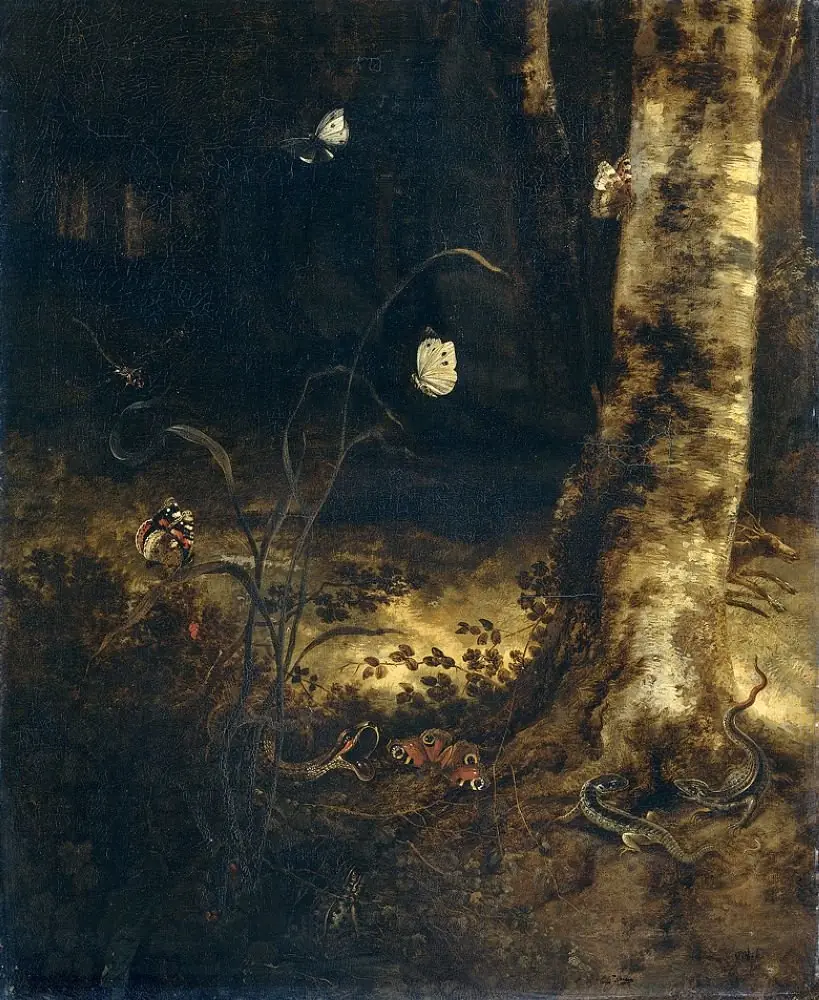 A forest floor with a snake, lizards, butterflies and other insects
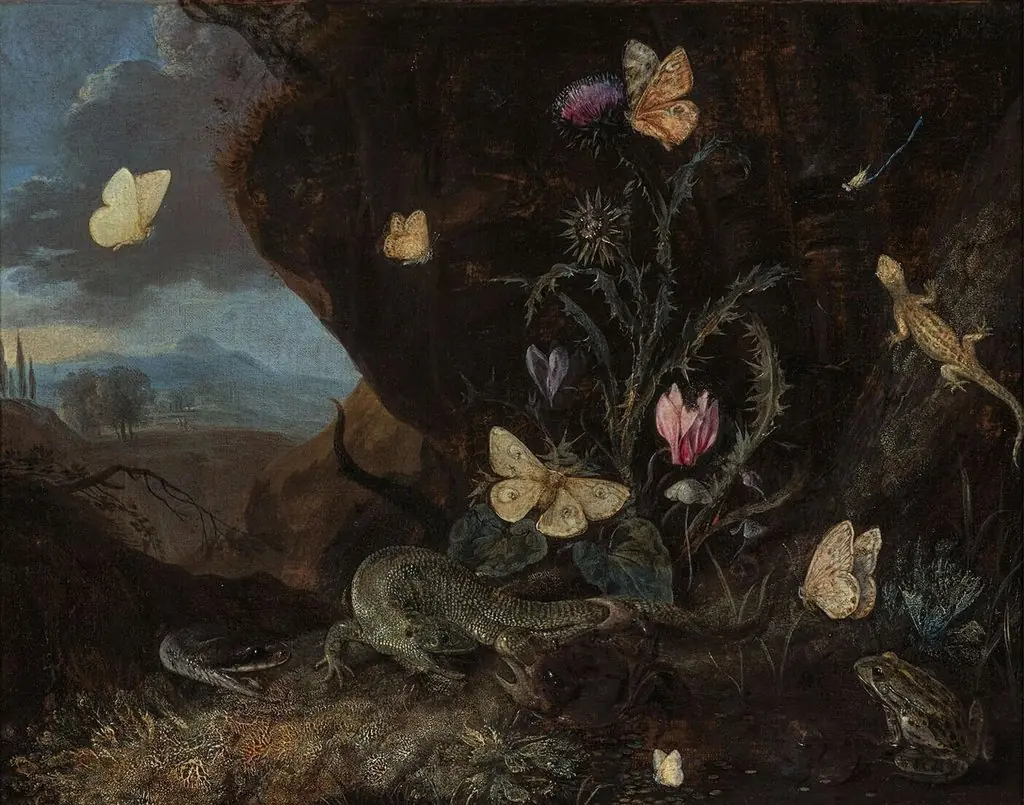 Landschap with insects, cyclamen and thistle
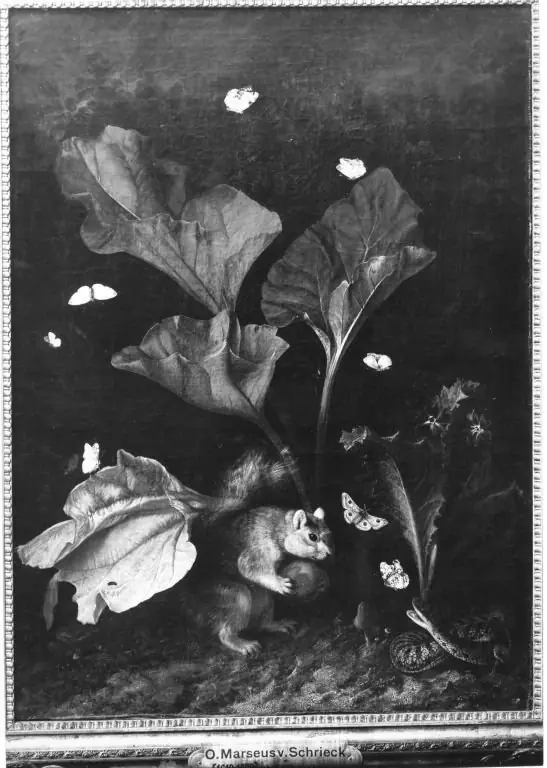 Forest floor still life with rodent
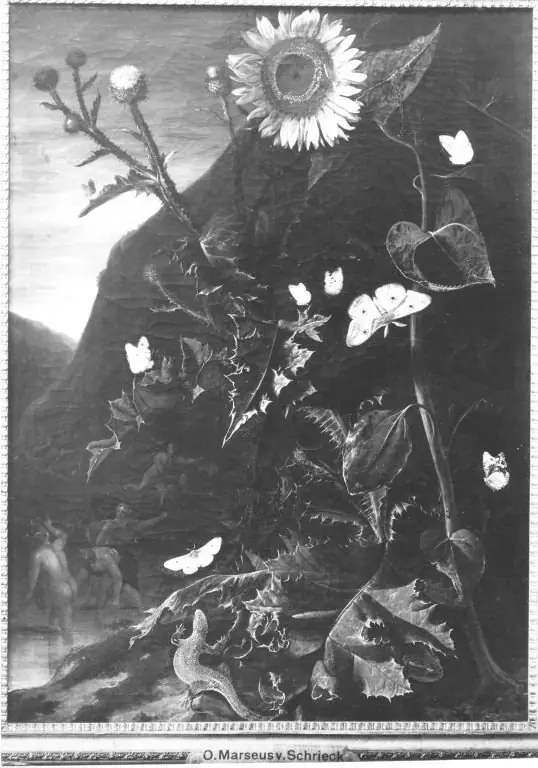 Forest floot still life with Diana and Actäon
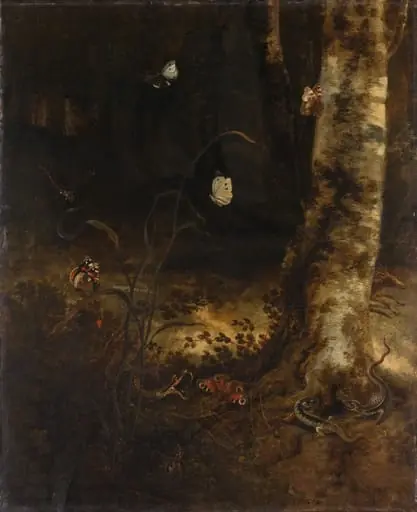 Forest Floor with a Snake, Lizards, Butterflies and other Insects
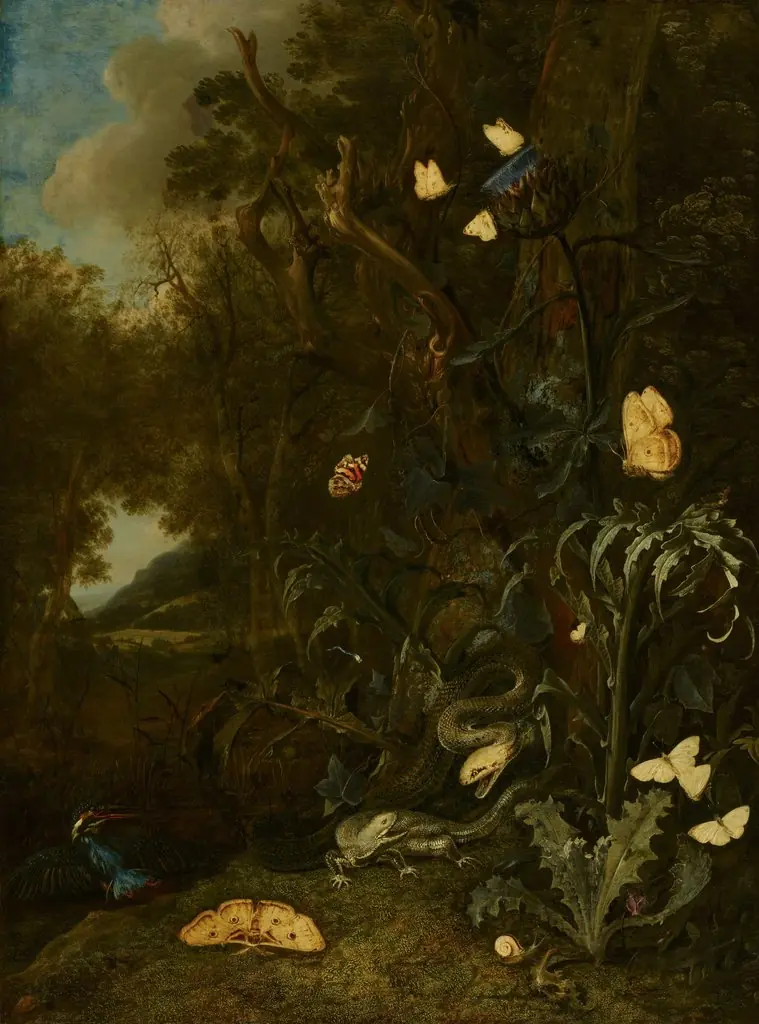 Plants and Insects
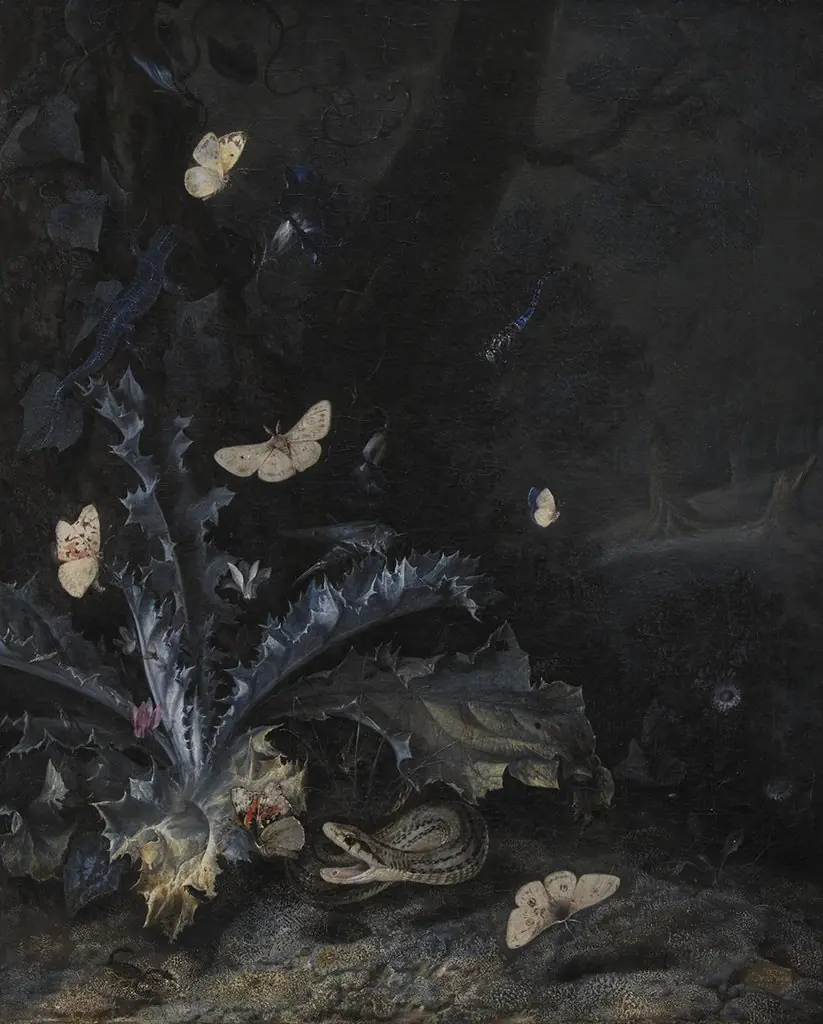 Still Life with Thistle and Snake
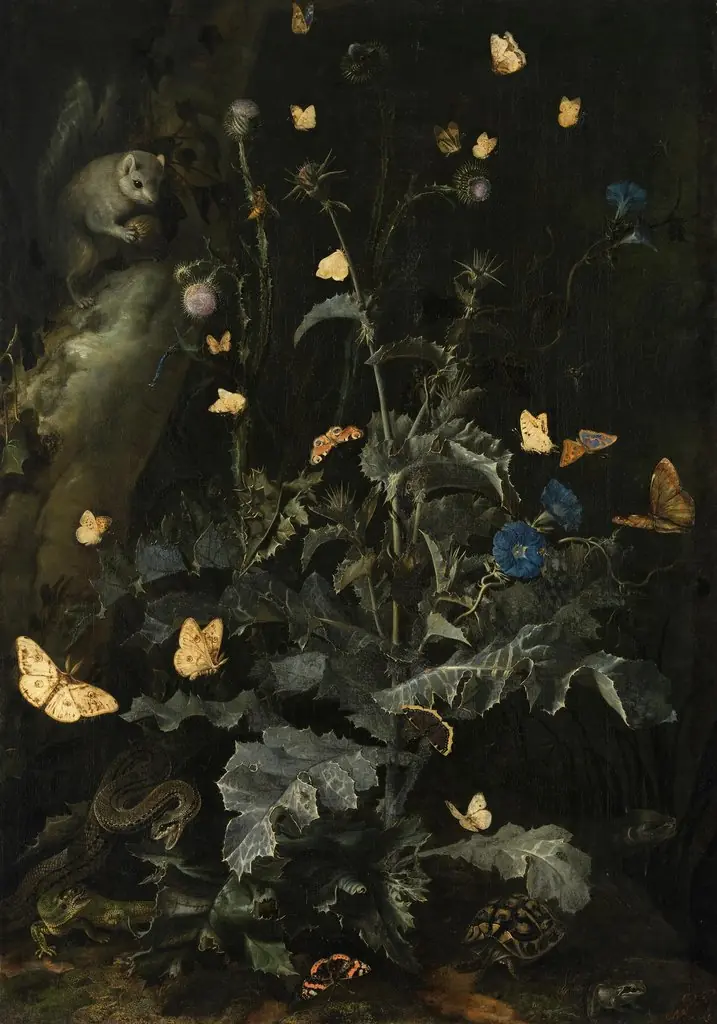 Forest floor still life with thistle and rodent
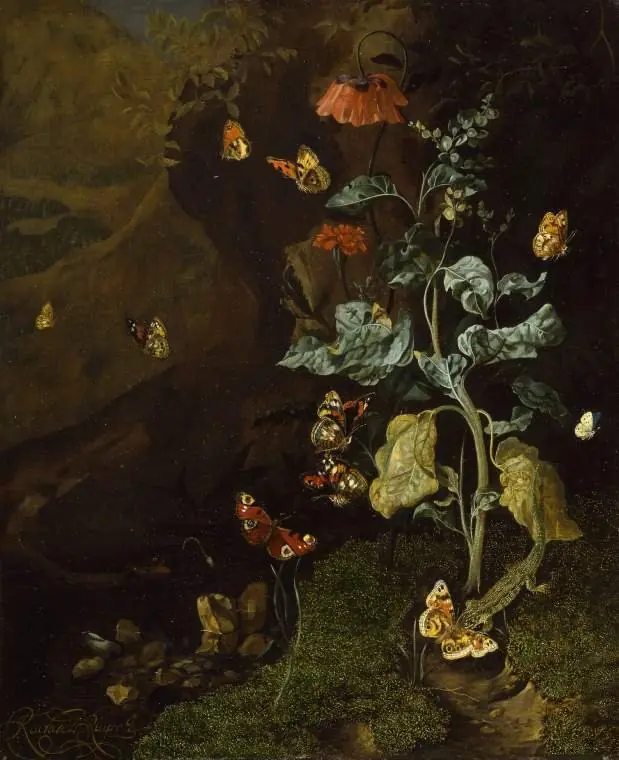 Insects and a lizard in a wood
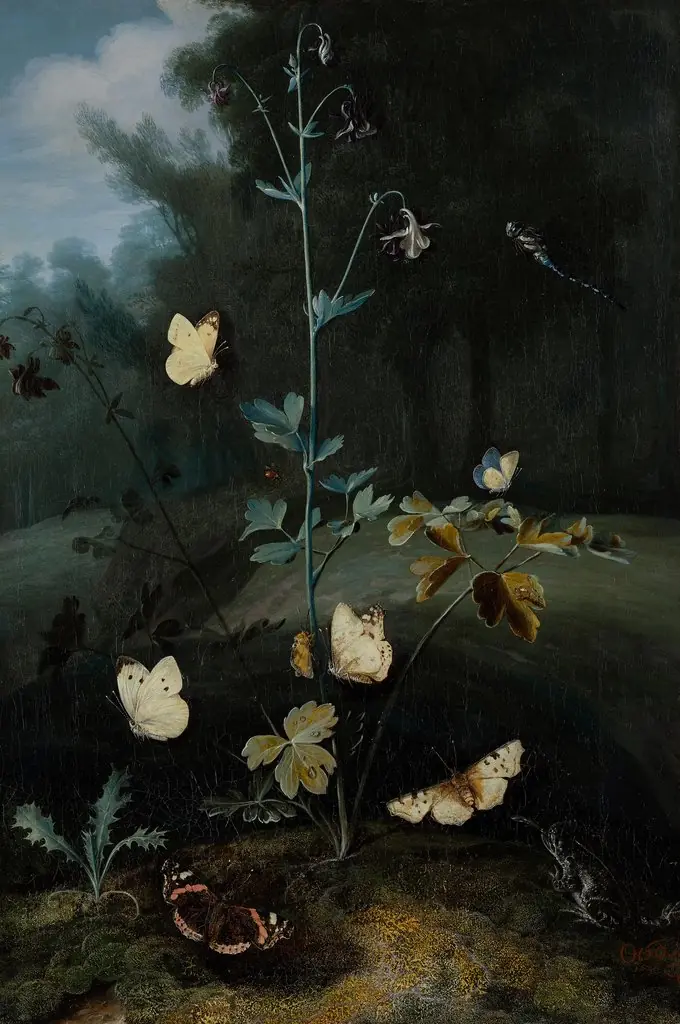 Columbine surrounded by butterflies
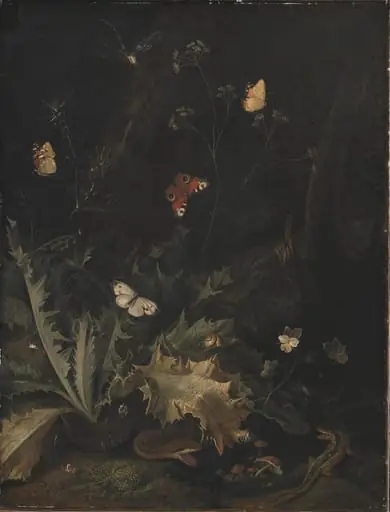 A Forest Floor with a Thistle, a Snake, a Lizard and Butterflies
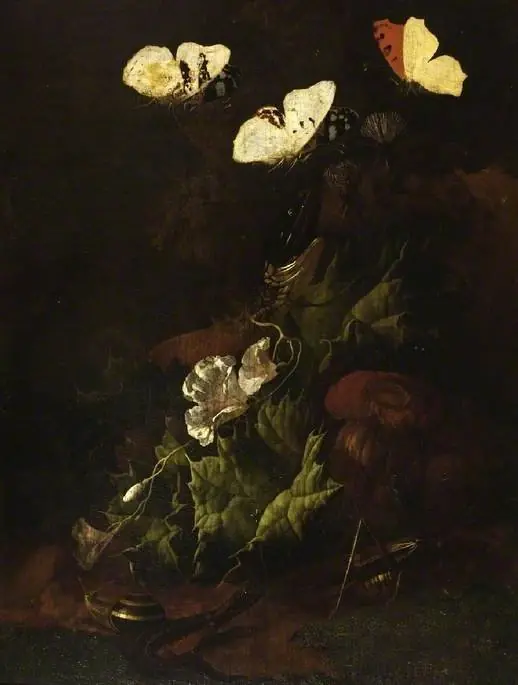 A thistle with snakes and butterflies
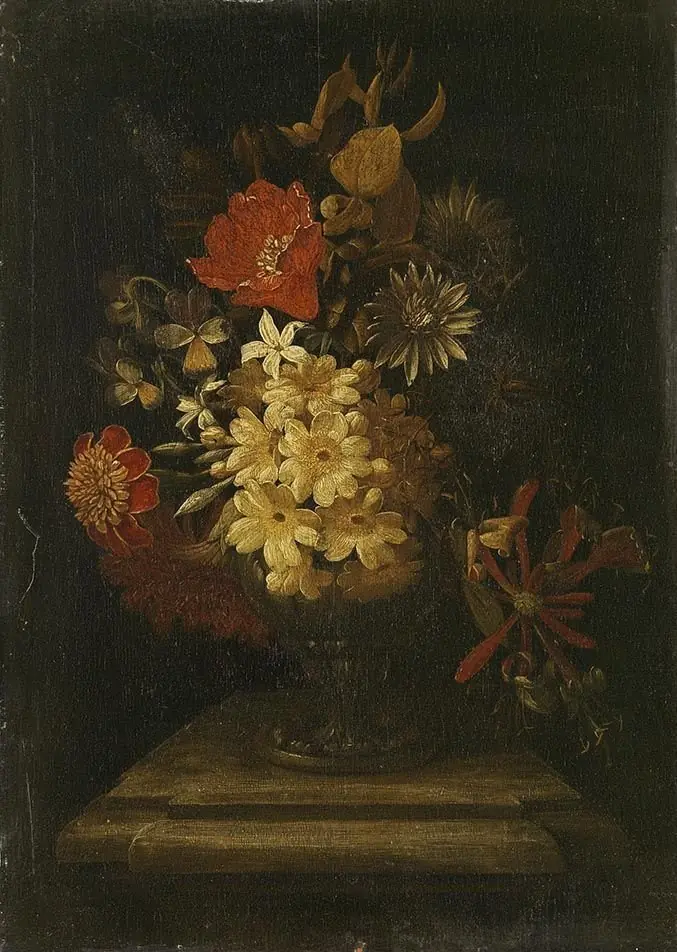 Blumenstück
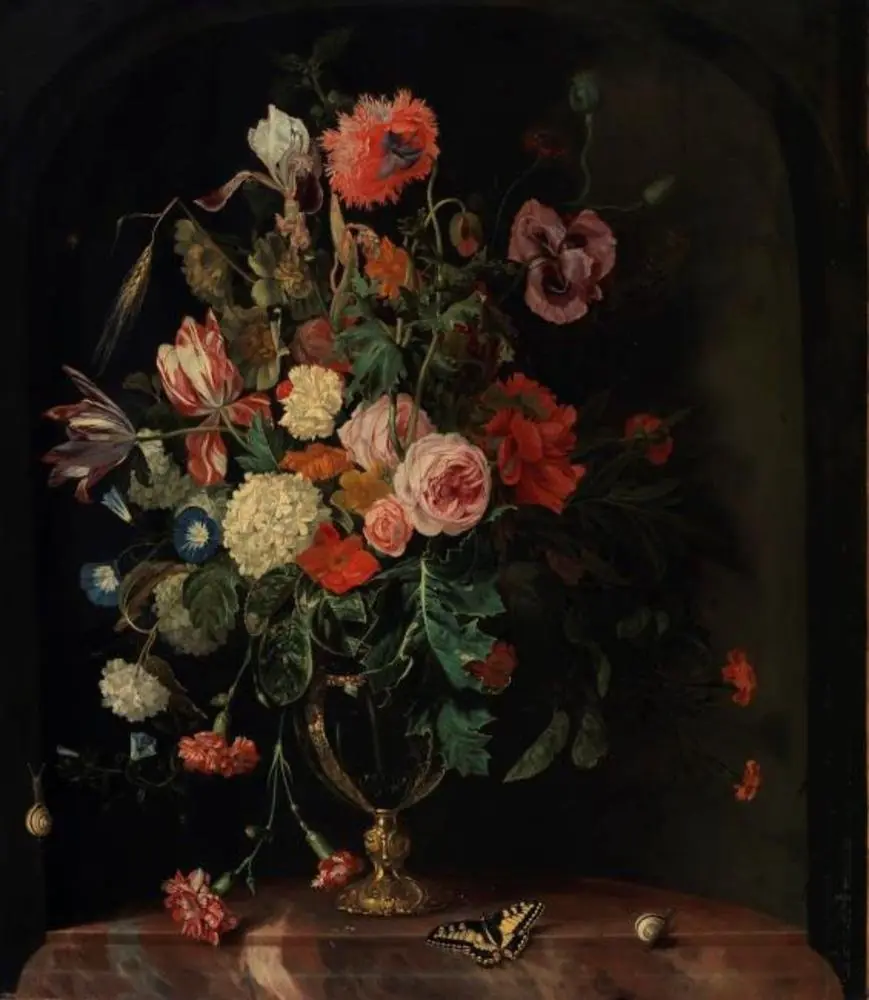 Vase of flowers
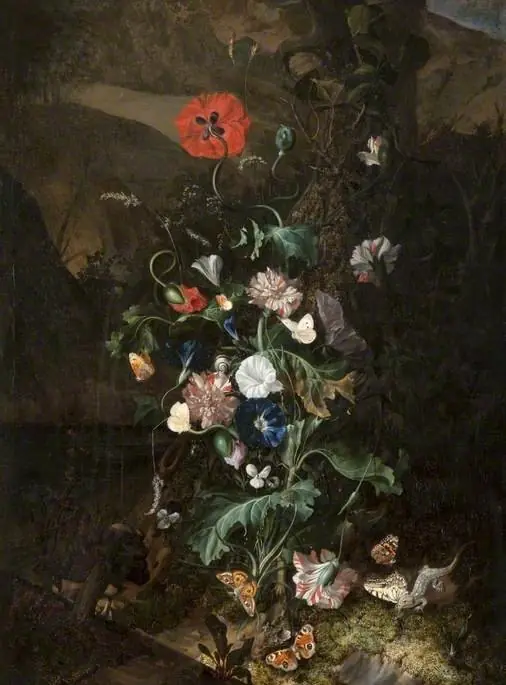 An Arrangement of Flowers by a Tree Trunk
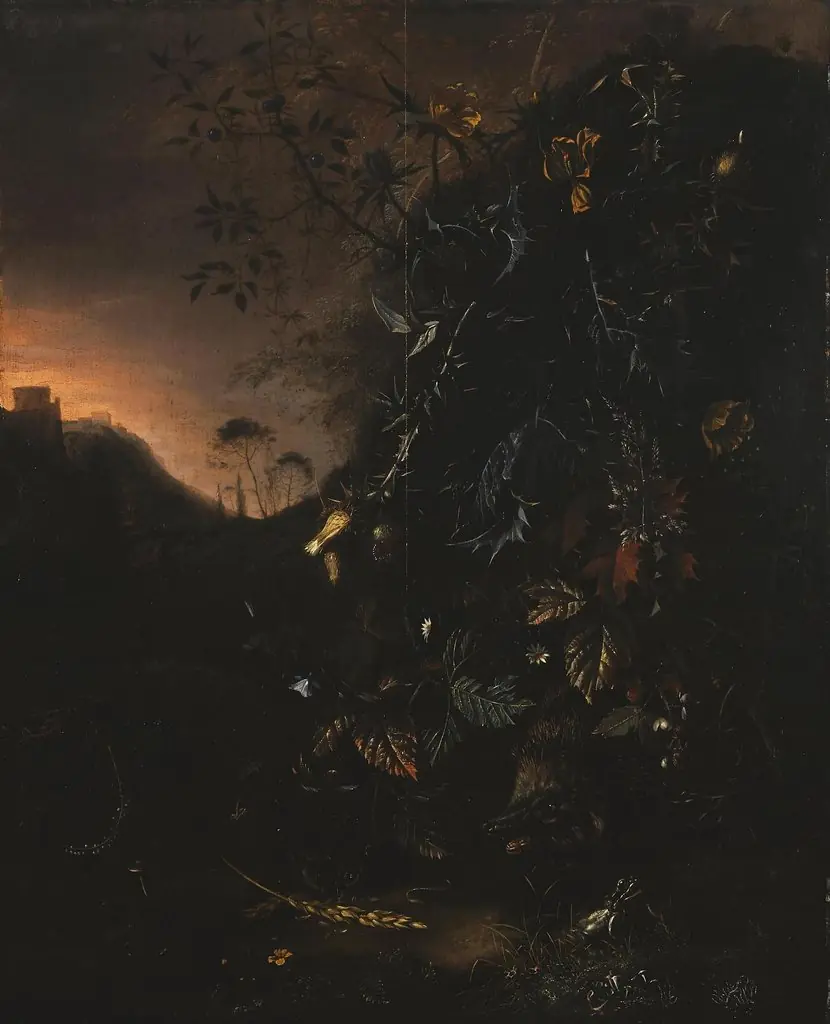 Flowers, a Hedgehog and a Frog
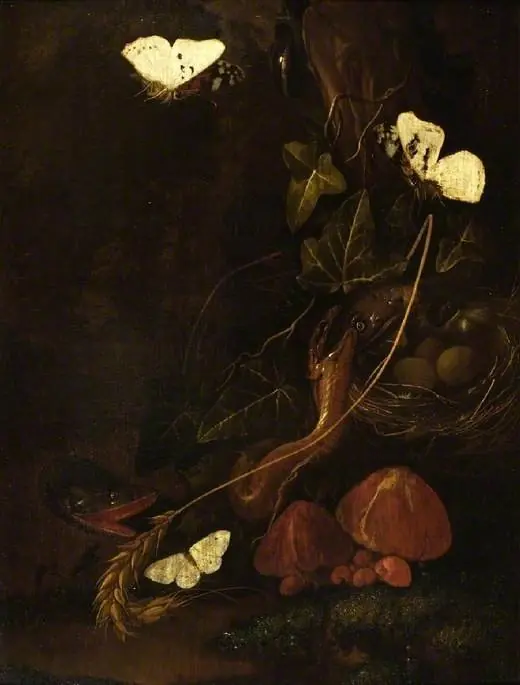 Ivy, with bird's nest, snakes and moths
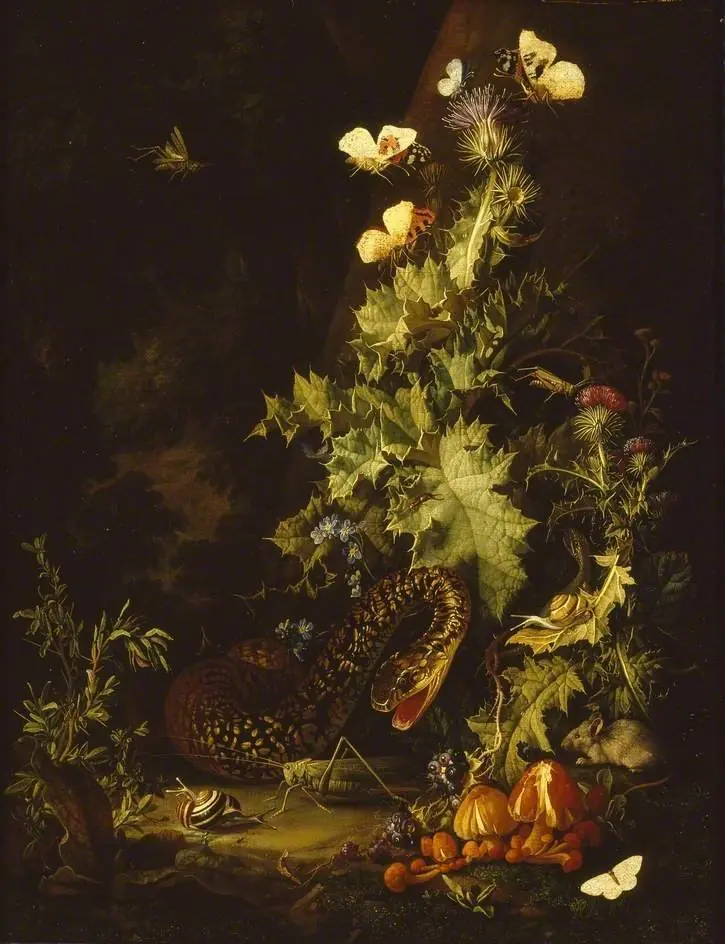 Still Life with a Snake
 Blumenstück
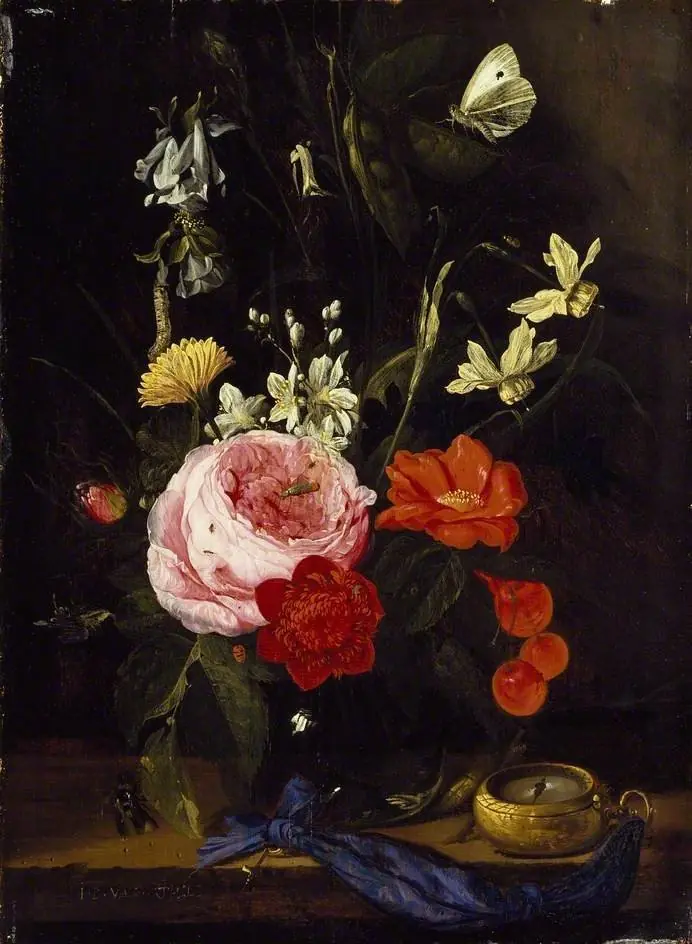 Still Life of Flowers