Artwork
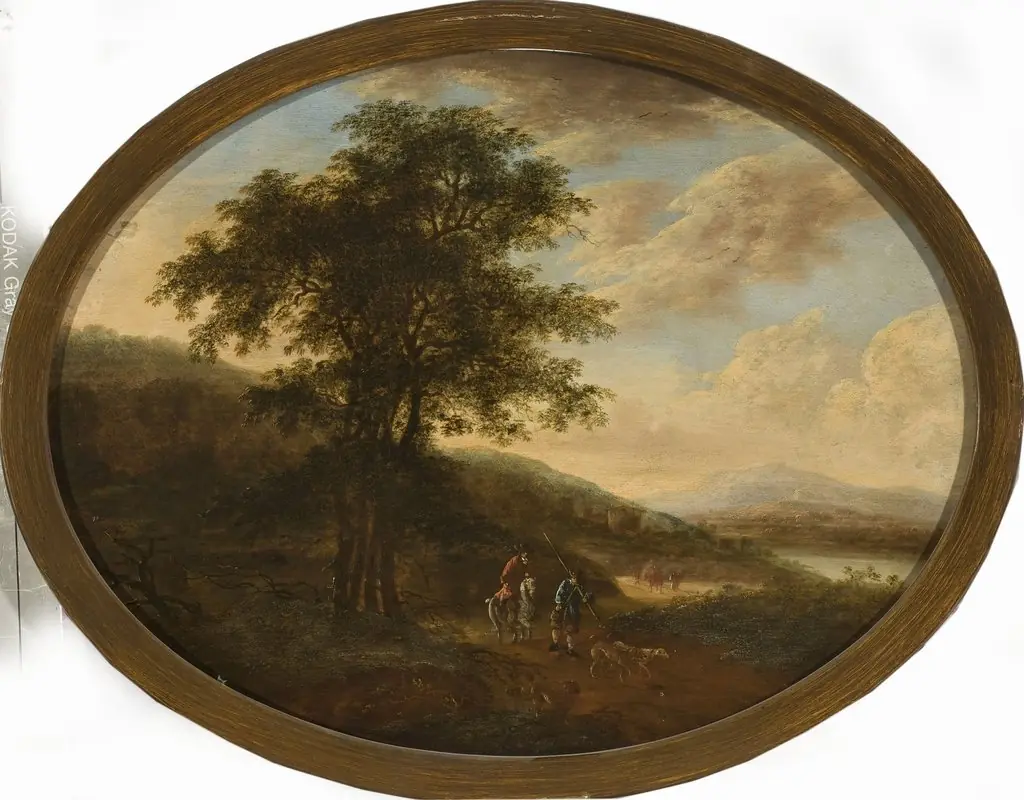
Italian landscape with hunters
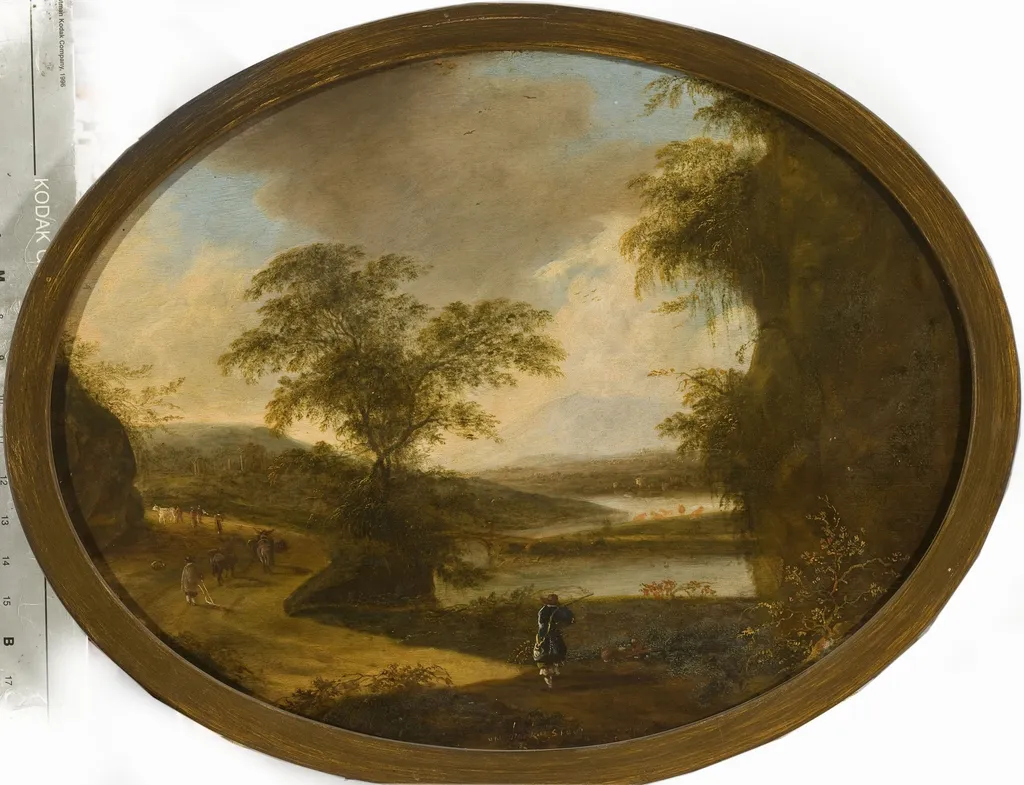
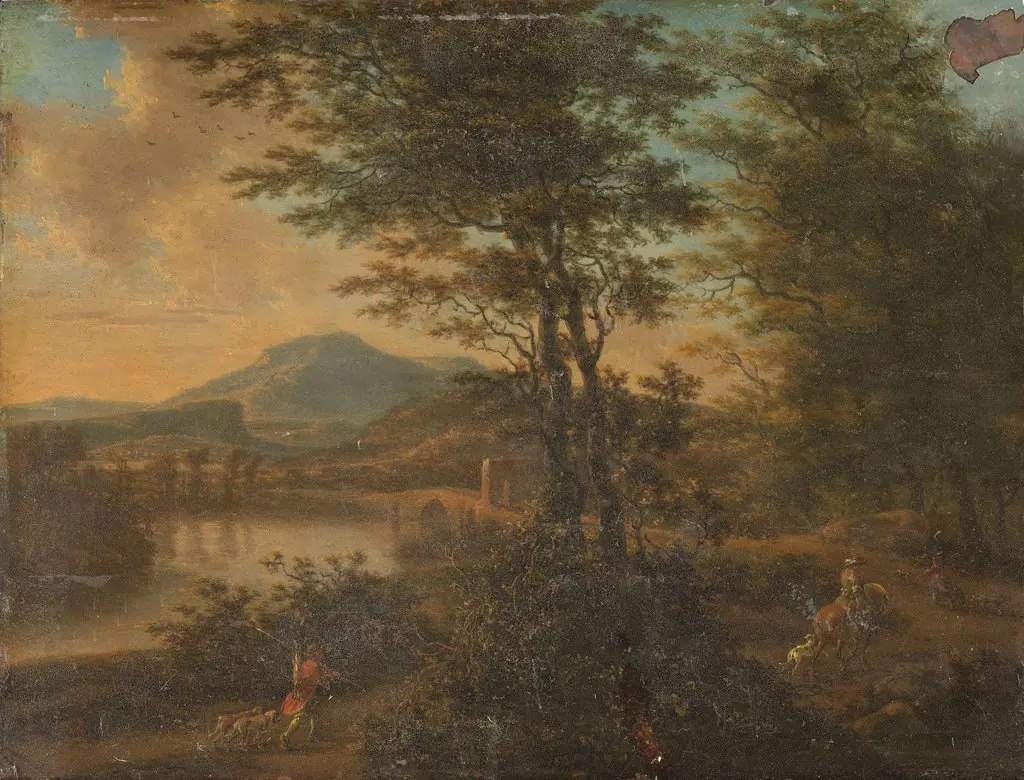
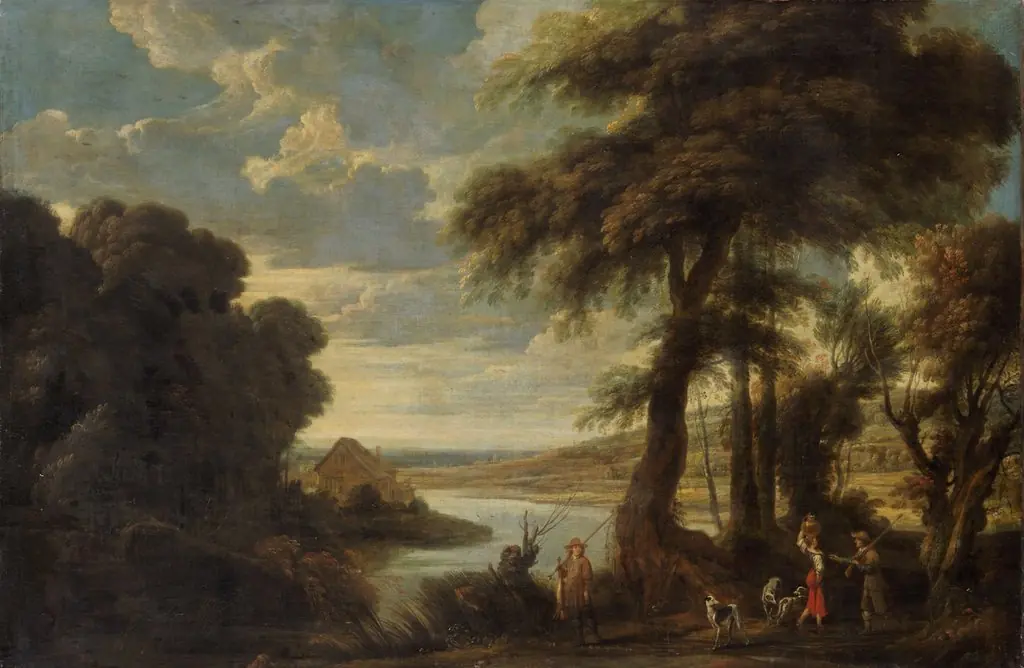
Italian landscape with hunters is an oil painting by the Dutch Golden Age artist Ottomar Hackius. It dates from 1661 and is held in the collection of the National Museum in Warsaw.
About this work
Overview
The composition balances natural elements with subtle human presence, reflecting a 17th-century Northern European interest in idealized southern scenery.
Painted in 1661 by Ottomar Hackius, this oil-on-canvas work presents a tranquil Italianate landscape. It is part of the collection at the National Museum in Warsaw. The composition balances natural elements with subtle human presence, reflecting a 17th-century Northern European interest in idealized southern scenery. The painting’s quiet mood and careful spatial arrangement align with contemporary landscape traditions that favored harmony over drama.
Subject & Meaning
A small group of hunters appears in the middle distance, their figures scaled to emphasize the vastness of the land. Along the water’s edge, a solitary walker moves quietly, reinforcing the scene’s stillness. The figures are not the focus but rather integrated elements that suggest human life within nature. The absence of conflict or narrative tension points to an appreciation of landscape as a contemplative space, not a stage for action.
Technique & Style
Hackius employed oil paint to build layered textures in the foliage and subtle gradations in the sky and water. Soft atmospheric perspective guides the eye from the foreground’s detailed reeds to the hazy hills beyond. Warm ochres and muted greens dominate, creating a cohesive tonal harmony. Brushwork is restrained, favoring smooth transitions over bold strokes, characteristic of Northern artists interpreting Italianate scenery during this period.
History & Provenance
The painting entered the National Museum in Warsaw’s collection in the 19th century, though its earlier ownership remains undocumented. It was likely acquired during a period when European collections expanded through private dealers and aristocratic sales. No records indicate it was exhibited publicly before the 1800s. Its survival through wars and political shifts underscores its status as a stable, if modest, part of the museum’s holdings.
Context
Hackius, a German-born artist active in the Dutch Republic, worked within a tradition where Northern painters idealized Italian landscapes for patrons unfamiliar with the region. Such works were not topographical but evocative, blending observed details with imagined serenity. This painting reflects broader trends in 17th-century art: the fascination with Italy as a symbol of classical calm, filtered through Northern sensibilities of light and composition.
Legacy
Though Hackius is not widely known today, this work exemplifies the quiet, enduring appeal of small-scale landscape painting from the Baroque era. It contributes to understanding how artists outside Italy interpreted and transmitted the myth of the Italian countryside. The painting remains a quiet reference point in Polish collections for studies on Northern European landscape conventions and their cross-regional influences.
Artist & collection
Artist
Dutch painter Ottomar Hackius left two quiet landscapes from the 1660s. In Italian landscape you’ll find rolling hills and a soft sky held in pale greens and blues. Italian landscape with hunters adds tiny figures…