Artwork
A Wolf Attacked by Dogs
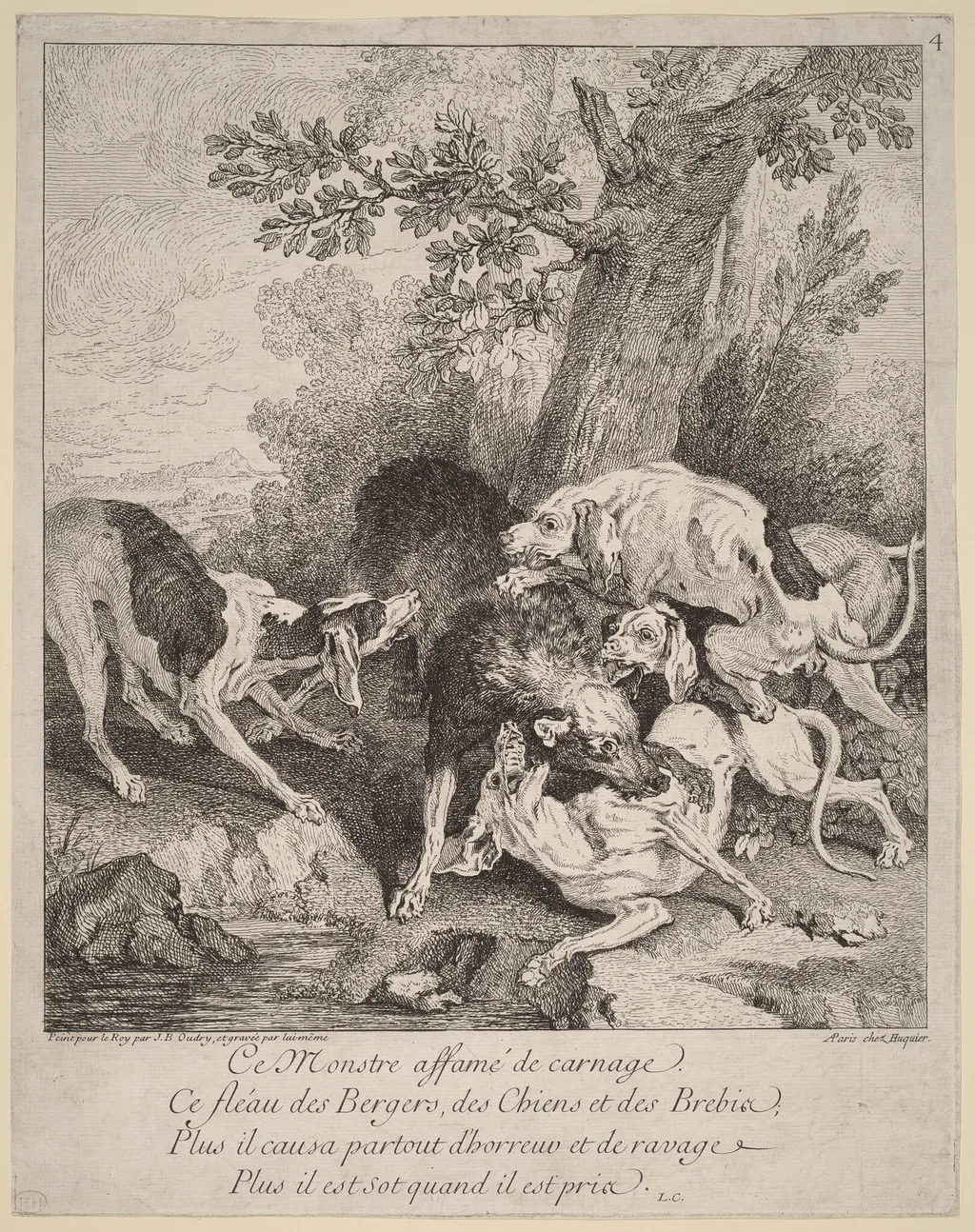
A Wolf Attacked by Dogs is an ink print by the Baroque artist Jean-Baptiste Oudry. It dates from 1725 and is held in the collection of the National Gallery of Art. Created in 1725, this print by Jean‑Baptiste Oudry presents a dramatic encounter between a lone wolf and a group of aggressive dogs.
About this work
Overview
Created in 1725, this print by Jean‑Baptiste Oudry presents a dramatic encounter between a lone wolf and a group of aggressive dogs. Executed as an etching on laid paper, the image captures the animal struggle with meticulous line work characteristic of early eighteenth‑century French printmaking.
Subject & Meaning
The composition centers on a wolf ensnared in a thicket, its fur ragged and expression weary, while snarling dogs bite and claw at it. An inscription describing the wolf as a “monster of carnage” suggests a moralizing intent, casting the dogs’ assault as punitive rather than merely violent.
Technique & Style
Oudry employed the etching process, incising fine, controlled lines into a metal plate that were then transferred to paper. The delicate rendering of fur, foliage, and the stark sky reflects the Rococo’s decorative sensibility combined with a keen observation of animal anatomy.
History & Provenance
The work belongs to Oudry’s early print output, produced before his later fame as a tapestry designer and painter of animal subjects. It was later catalogued among his family’s artistic holdings; his son Jacques‑Charles Oudry pursued painting, continuing the family’s artistic legacy.
Context
During the early 1700s, French artists often used animal scenes to illustrate moral lessons or allegories. Oudry’s naturalistic approach aligns with contemporary tastes for detailed, lifelike depictions that could serve both decorative and didactic purposes in aristocratic collections.
Own this work as a print
Artist & collection

Artist
Jean-Baptiste Oudry was a French Rococo painter, engraver, and tapestry designer. He is particularly well known for his naturalistic pictures of animals and his hunt pieces depicting game. His son, Jacques-Charles Oudry, was also a painter.

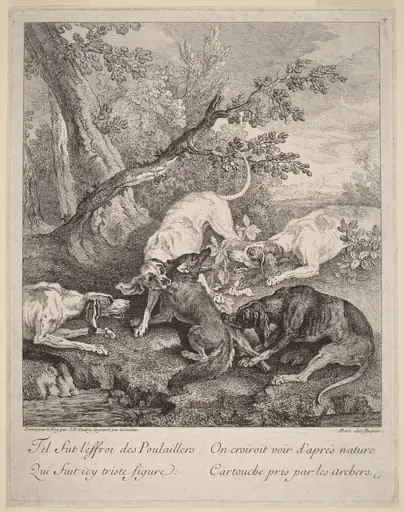 A Fox Attacked by Dogs
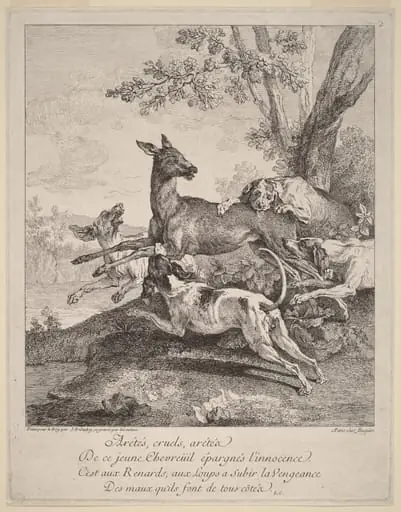 A Deer Attacked by Dogs
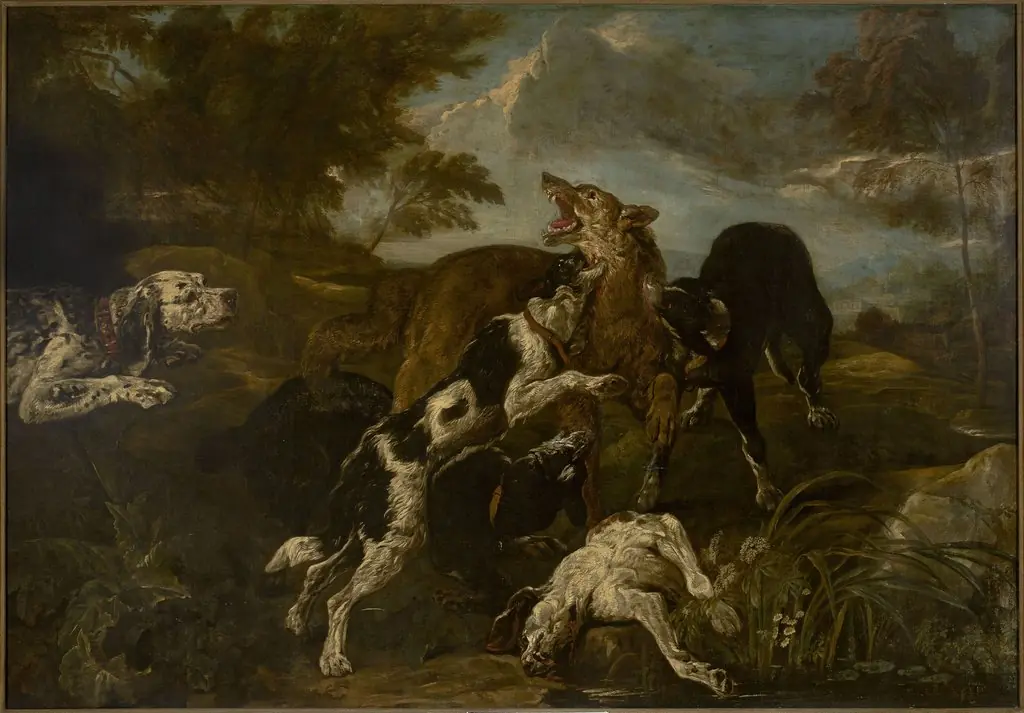 Dogs fighting a wolf
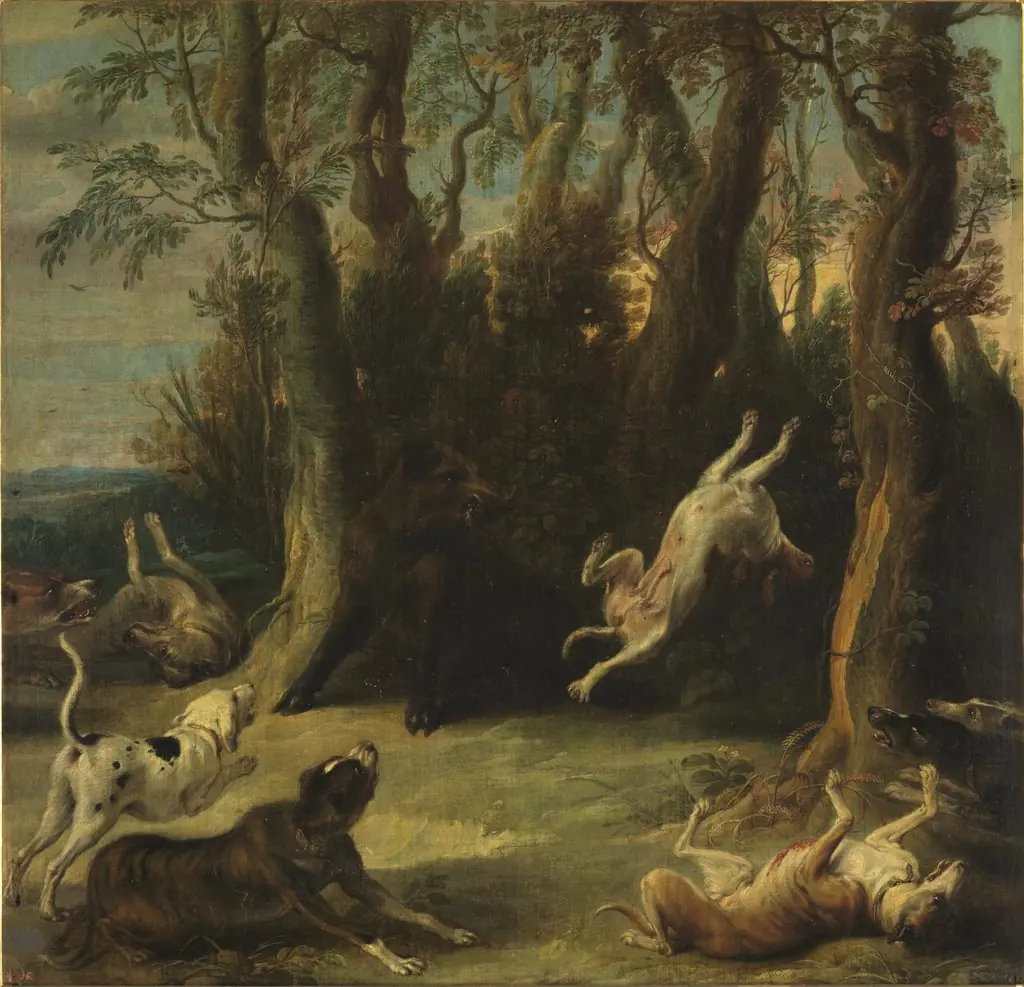 Dogs attacking a wild boar
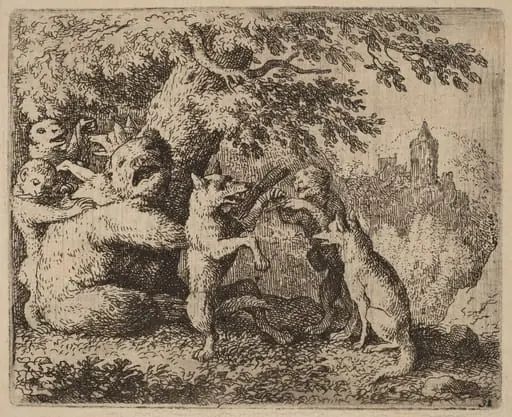 The Bear and the Wolf are Persecuted
 Dogs and a bear fighting
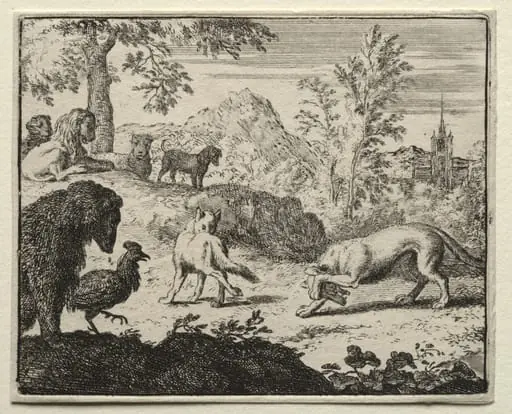 Reynard the Fox: The Combat Between Reynard and the Wolf
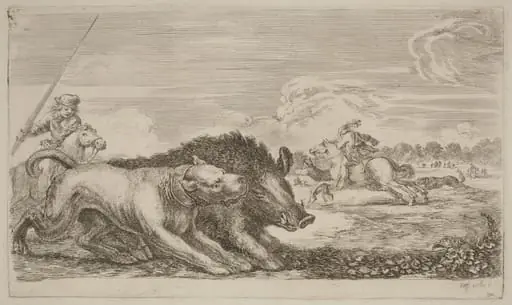 Boar Chased by a Dog
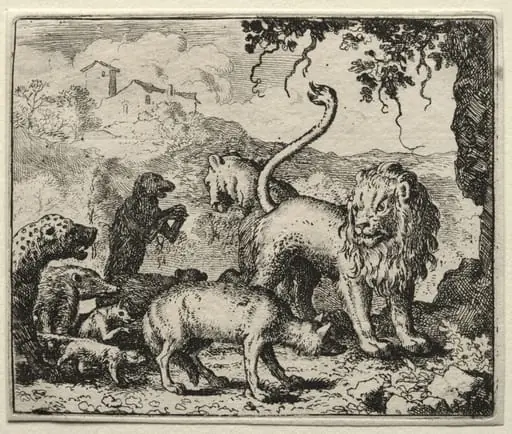 Reynard the Fox: First Complaint of the Wolf
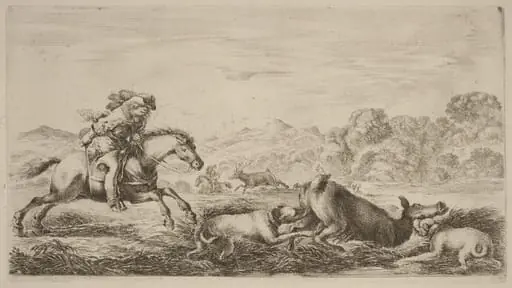 Doe in a Marsh Attacked by Two Dogs
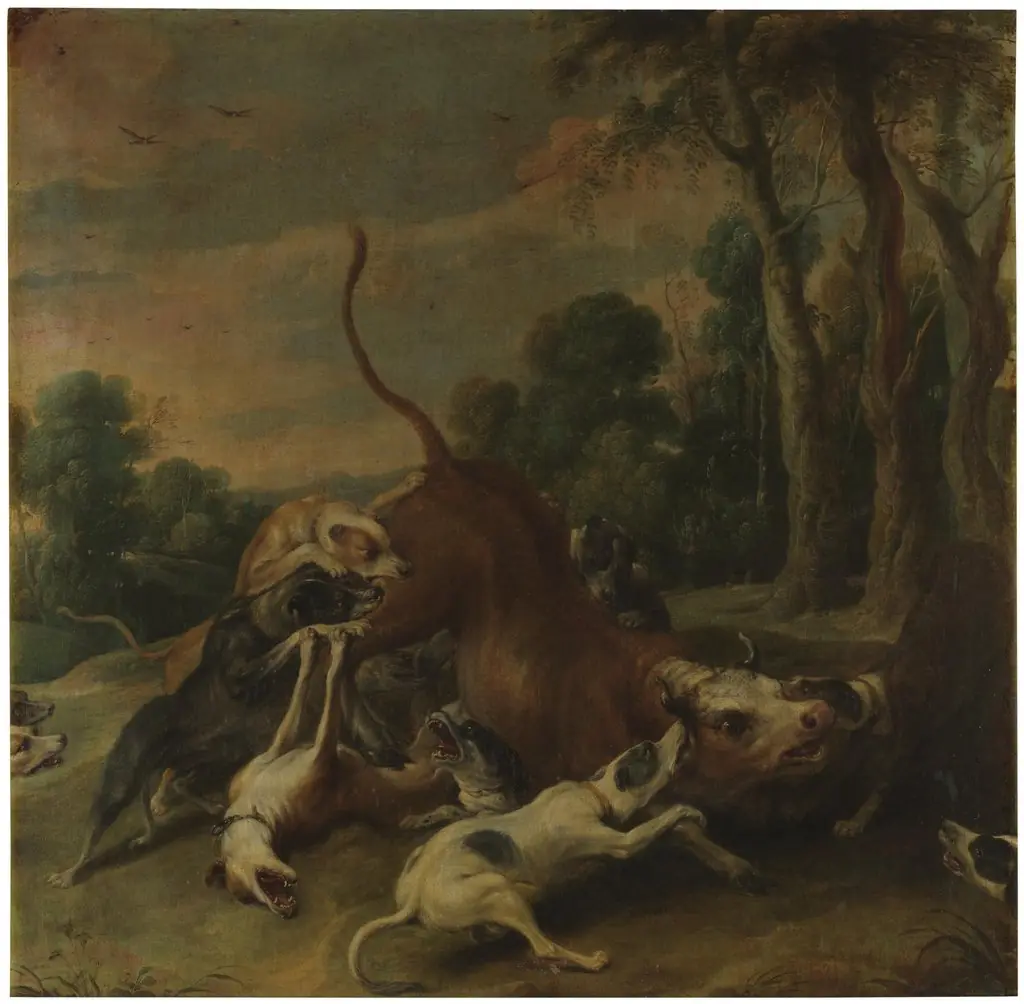 A bull overpowered by dogs