Artwork
Ester Wegeliuksen os. Tawaststjernan muotokuva
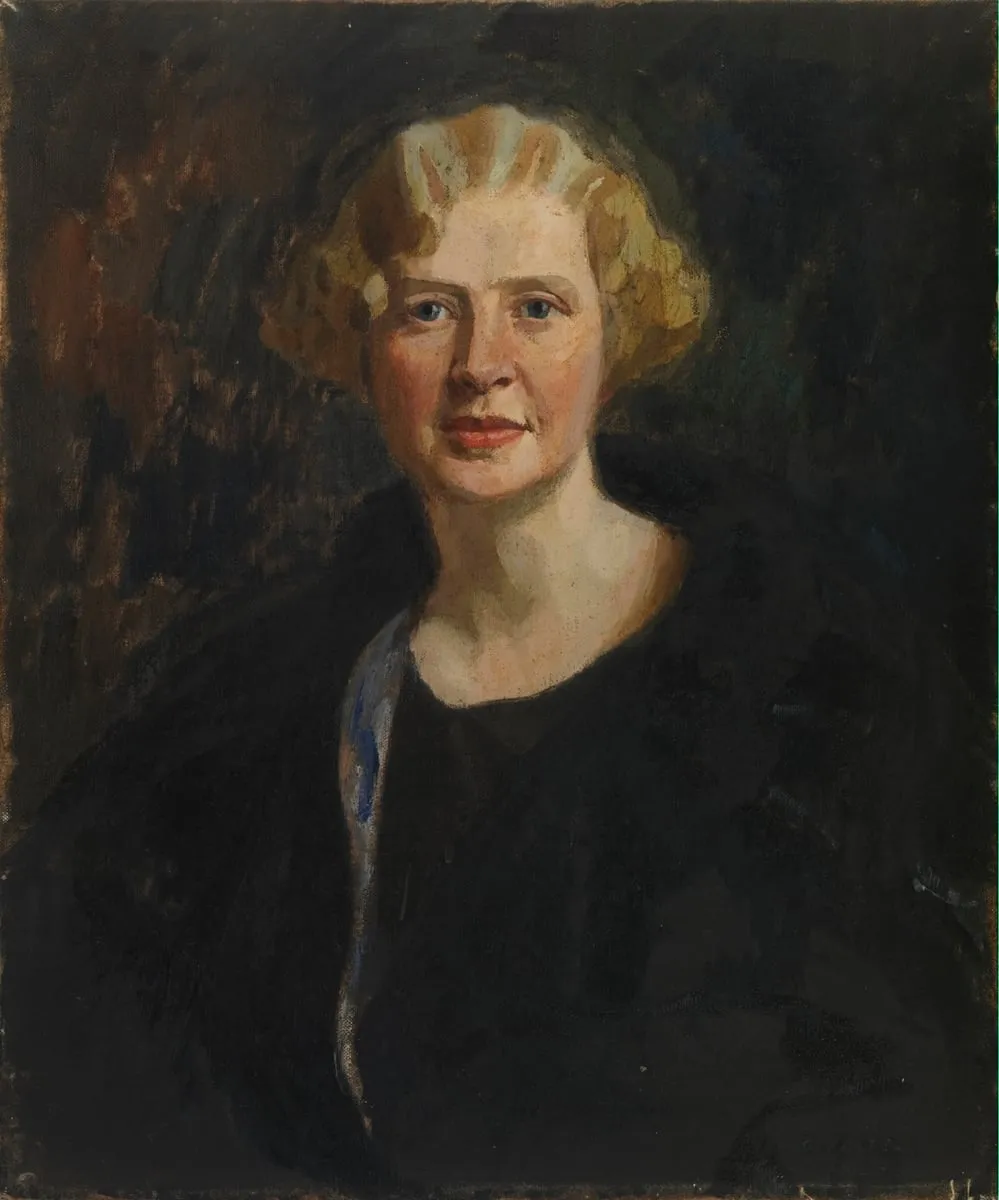
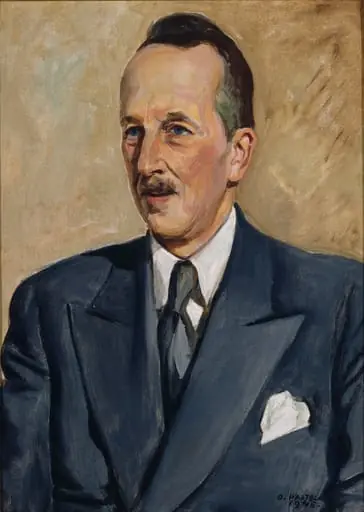
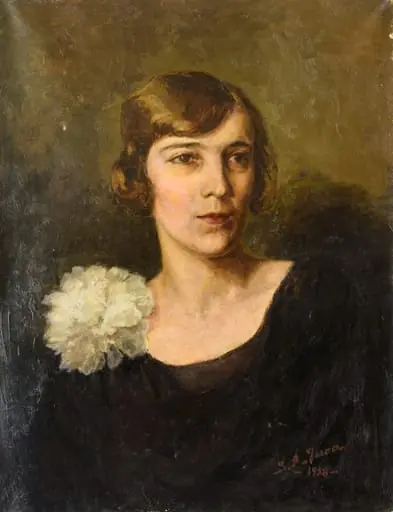
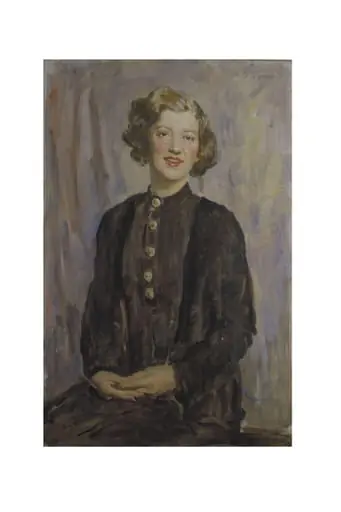
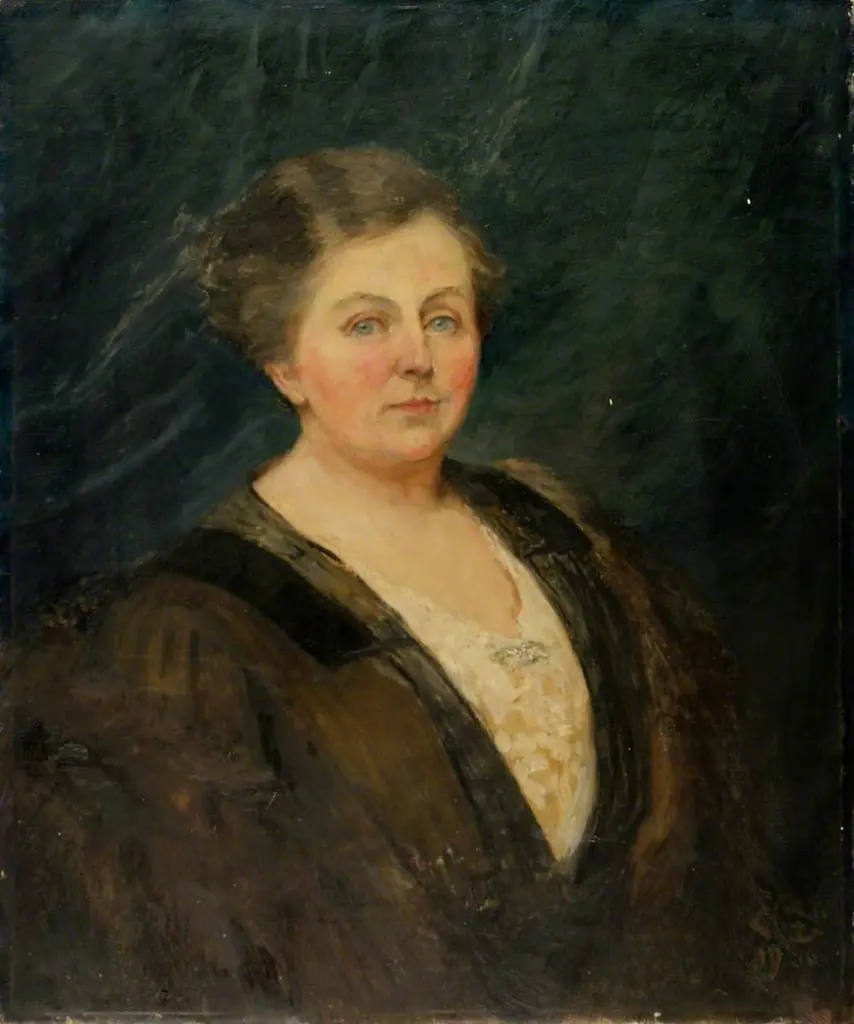
Ester Wegeliuksen os. Tawaststjernan muotokuva is an unspecified painting by Oskari Paatela. It is held in the collection of the Finnish National Gallery. This portrait presents a woman with short, curly blonde hair and a simple black dress, rendered in a restrained, tonal palette.
About this work
The woman's attire and hairstyle suggest that the painting may have been created in the early 20th century.
This portrait painting depicts a woman with short, curly blonde hair and a black dress. Her face is turned slightly to the left, and she gazes directly at the viewer with a neutral expression. The background of the painting is dark and shadowy, which helps to accentuate the subject's features.
The woman's attire and hairstyle suggest that the painting may have been created in the early 20th century. However, without more information, it is difficult to determine the exact date or context of the painting.
To learn more about the artist who created this portrait, look up Paatela, Oskari.
Overview
This portrait presents a woman with short, curly blonde hair and a simple black dress, rendered in a restrained, tonal palette. The dark, undefined background isolates her figure, drawing focus to her face and posture. Her direct gaze and composed expression convey quiet presence rather than narrative drama. The work is attributed to Oskari Paatela, a Finnish painter active in the early 20th century, though precise dating remains uncertain due to limited documentation.
Subject & Meaning
The sitter, identified as Ester Wegeliuksen os. Tawaststjernan, is depicted without adornment or symbolic props, suggesting an emphasis on personal identity over social status. Her neutral expression and unadorned attire reflect a shift toward intimate, unidealized portraiture common in early modern Nordic art. The direct eye contact invites a private, almost contemplative engagement between subject and viewer.
Technique & Style
The painting employs subtle gradations of light and shadow to model the face and fabric, with minimal brushwork in the background to enhance spatial focus. The texture of the hair and the smoothness of the dress are rendered with quiet precision, avoiding theatricality. The palette is muted, dominated by blacks, grays, and warm tones in the skin, reinforcing a sense of restraint and psychological depth.
History & Provenance
The portrait is linked to Ester Wegeliuksen os. Tawaststjernan, a Finnish woman of the early 1900s, though little is documented about her life or relationship to the artist. Oskari Paatela, known for portraits of middle-class Finns, likely painted this during his active years between 1900 and 1930. The work’s provenance is not publicly detailed, and its current location or ownership remains unverified in accessible records.
Context
Created during a period when Finnish artists were moving away from romanticized portraiture toward psychological realism, this work aligns with broader Nordic trends of introspective representation. Paatela’s practice often captured ordinary individuals with dignity and simplicity, reflecting a cultural emphasis on modesty and individuality amid national identity formation after independence from Russia.
Legacy
While not widely exhibited or studied, the portrait contributes to a quiet archive of early 20th-century Finnish domestic portraiture. It exemplifies Paatela’s role in documenting non-elite subjects with sensitivity, offering insight into the visual culture of a society transitioning between tradition and modernity. Its preservation, though limited in public recognition, supports ongoing research into regional artistic practices of the era.
Artist & collection
Artist
A Finnish painter of the early 20th century, Oskari Paatela made straightforward portraits and landscapes.