Artwork
Untitled
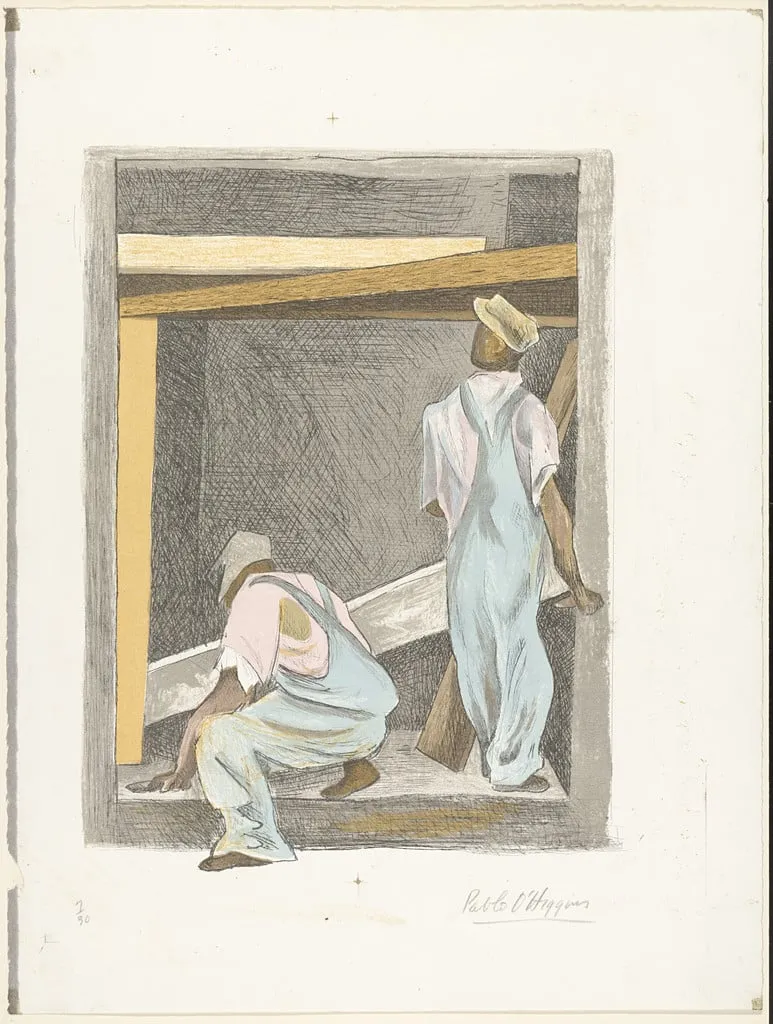
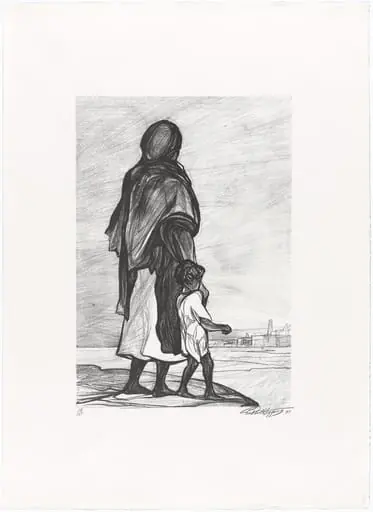
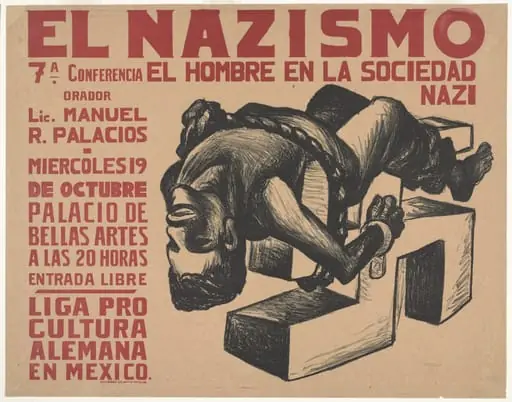
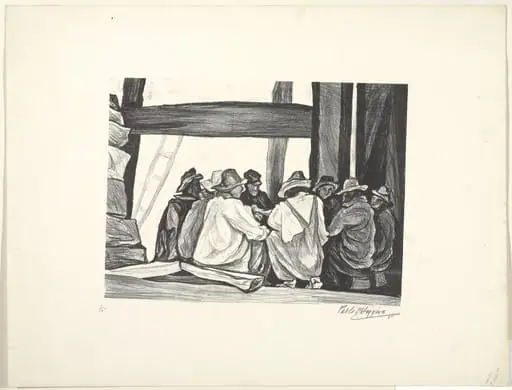
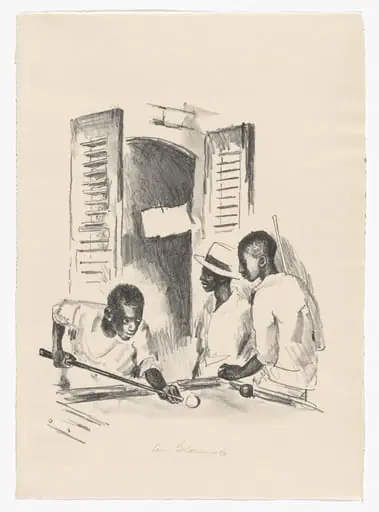
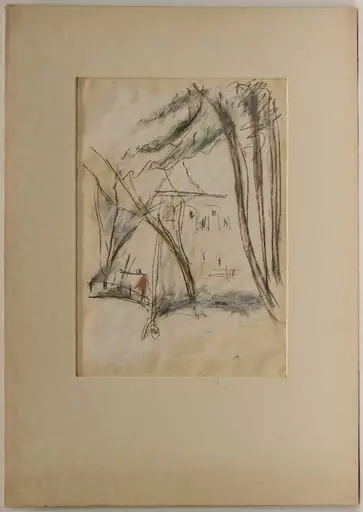
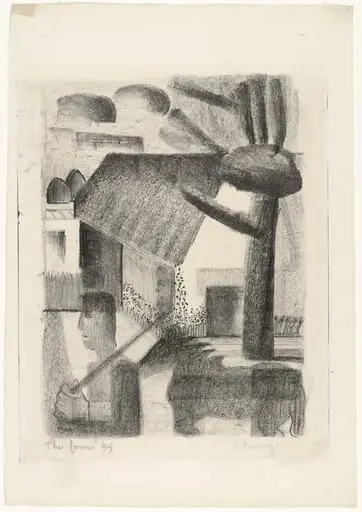
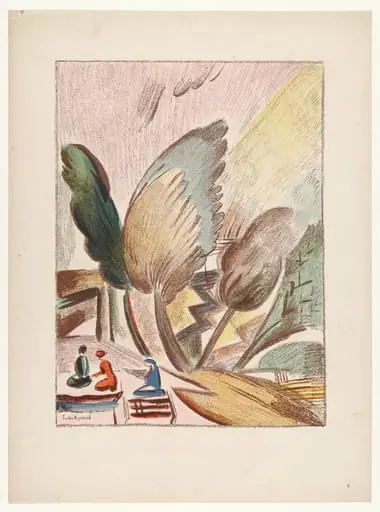
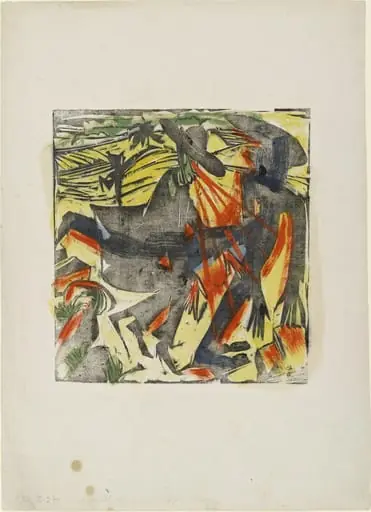
Untitled is an ink print by Pablo O'Higgins. It dates from 1940 and is held in the collection of the Museum of Modern Art. Pablo O’Higgins produced this 1940 lithograph during a period of active engagement with public art in Mexico.
About this work
Overview
Pablo O’Higgins produced this 1940 lithograph during a period of active engagement with public art in Mexico.
Pablo O’Higgins produced this 1940 lithograph during a period of active engagement with public art in Mexico. Though American by birth, he became a central figure in Mexico’s post-revolutionary artistic community, aligning with muralists who sought to make art accessible to the working class. This print reflects his commitment to depicting everyday labor and quiet human presence through the medium of lithography, a technique allowing for nuanced tonal variation on paper.
Subject & Meaning
The scene portrays two figures in a confined interior: one crouched on the floor, the other standing beside a wooden beam, gripping a long-handled tool. Their postures suggest rest or pause amid labor, evoking the physicality of manual work without overt drama. The dim light filtering through a small window implies isolation and restraint, reinforcing themes of endurance rather than resistance. The absence of narrative detail invites contemplation of unseen labor and the dignity of quiet moments.
Technique & Style
O’Higgins employed lithography to achieve subtle gradations of gray, using minimal line work and soft shading to define form. The muted palette and restrained contrast emphasize volume over detail, focusing attention on the figures’ gestures and the texture of the rough walls. The simplicity of the composition—lacking ornament or background context—heightens the sense of intimacy and immediacy, characteristic of his approach to printmaking as a tool for social observation.
History & Provenance
Created in 1940, the lithograph entered the collection of The Museum of Modern Art as part of its broader effort to document modern printmaking with social relevance. O’Higgins’ association with Mexican muralists and his involvement in state-sponsored art projects lent credibility to his prints within institutional circles. Its acquisition reflects MoMA’s interest in transnational modernism and the role of print media in political and cultural expression during the 1930s and 1940s.
Context
In the late 1930s and early 1940s, Mexican artists increasingly turned to printmaking to reach wider audiences beyond murals. O’Higgins, like others in his circle, used lithographs to distribute images of laborers and indigenous communities, aligning with revolutionary ideals of equity and visibility. This work emerged amid state support for public art and growing international interest in Mexican visual culture, positioning it within a broader movement to redefine art’s social function.
Legacy
Though less widely known than his muralist peers, O’Higgins’ prints contributed to a lasting shift in how printmaking was perceived within Latin American modernism. His focus on unidealized laborers and restrained aesthetic influenced later generations of Mexican graphic artists. The work remains a quiet but persistent example of how modest techniques could convey profound social awareness without grandiosity.
Artist & collection
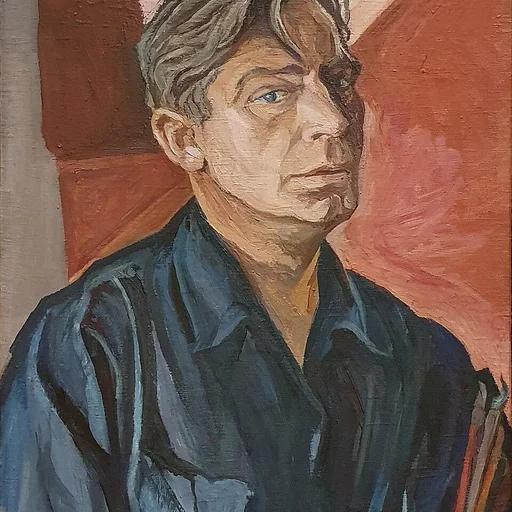
Artist
Pablo Esteban O'Higgins (born Paul Higgins Stevenson; March 1, 1904 - July 16, 1983) was an American-Mexican artist, muralist and illustrator.