Artwork
Untitled
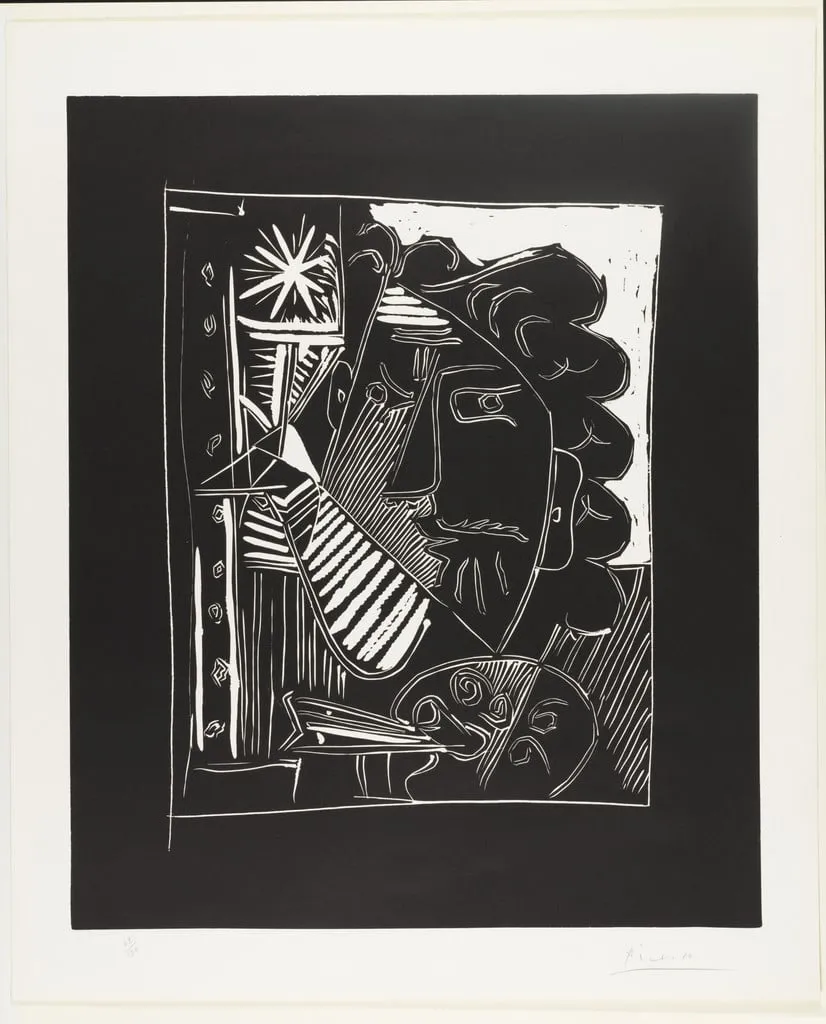
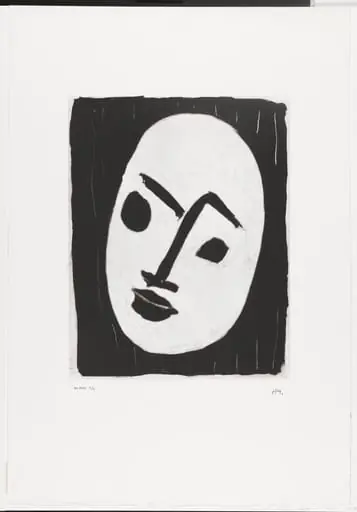
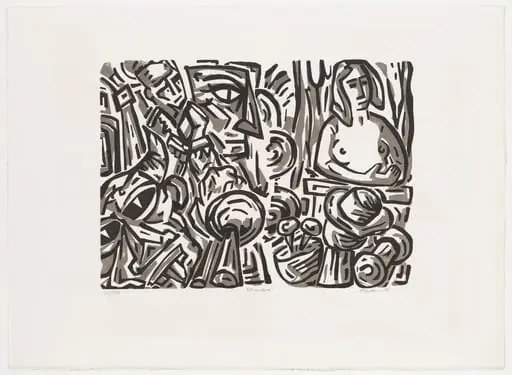
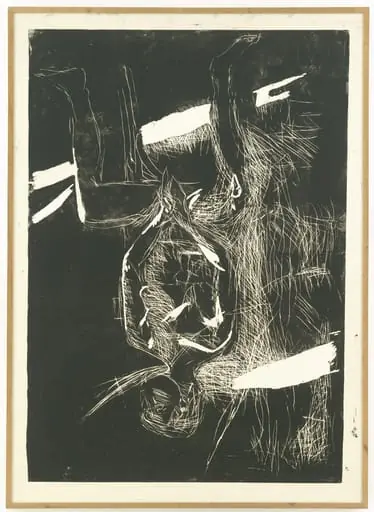
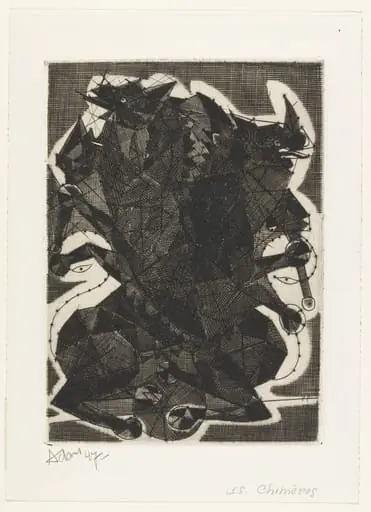
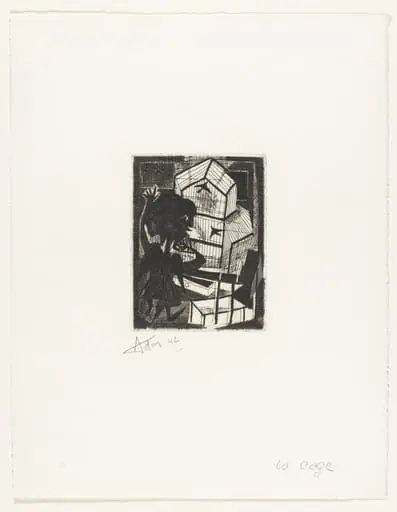
Untitled is a print by Pablo Picasso. It dates from 1963 and is held in the collection of the Museum of Modern Art. Created in 1963, this linoleum cut is one of many prints Picasso produced in his later years.
About this work
Overview
Unlike his earlier innovations, this piece is abstract and stripped of narrative detail, emphasizing form and texture over representation.
Created in 1963, this linoleum cut is one of many prints Picasso produced in his later years. The work reflects his continued engagement with printmaking, a medium he explored extensively after moving to France. Unlike his earlier innovations, this piece is abstract and stripped of narrative detail, emphasizing form and texture over representation. It is part of The Museum of Modern Art’s collection, where it is held as an example of his experimental phase.
Subject & Meaning
The composition presents two contrasting forms: a vertical, slender shape resembling a staff or flag, topped with a star, and a dense, amorphous mass occupying the right half. Neither element is clearly defined, inviting multiple interpretations—perhaps symbolic, perhaps purely formal. Picasso avoids explicit meaning, allowing the tension between order and chaos to dominate the viewer’s perception without guiding it.
Technique & Style
Executed in linoleum cut, the print relies on carved grooves that resist ink, leaving bold, irregular lines and stark contrasts between black and white. The edges are jagged and uneven, suggesting haste or deliberate roughness. The technique produces a tactile, stamped quality, emphasizing the physical act of carving and pressing. This method aligns with Picasso’s interest in direct, unrefined mark-making during this period.
History & Provenance
Picasso made this work during his decades-long residence in southern France, a time when he focused on prolific output across mediums. The print was acquired by The Museum of Modern Art in the years following its creation, likely through direct donation or purchase from the artist’s circle. Its inclusion in the museum’s collection reflects institutional recognition of his late-period prints as significant contributions to modern printmaking.
Context
In the 1960s, Picasso was no longer seeking to redefine art movements but rather revisiting and distilling his visual language. Linoleum cuts offered a fast, accessible way to explore abstraction without the constraints of painting. This work fits within a broader series of prints from his final years, where simplified forms and expressive line work replaced earlier complexity, reflecting a mature, introspective approach to image-making.
Legacy
This print contributes to the understanding of Picasso’s late career as one of continuous experimentation. It demonstrates how he used humble materials and techniques to achieve powerful visual effects, influencing later artists interested in abstraction and process-driven printmaking. Its presence in a major museum underscores its role as a quiet but persistent example of his enduring engagement with form and material.
Artist & collection
Artist
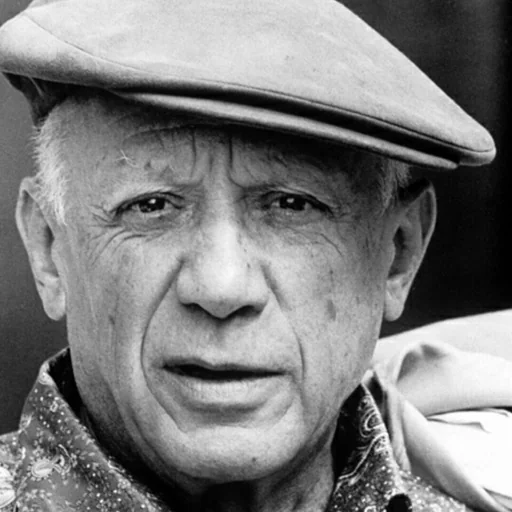
Pablo Ruiz Picasso (25 October 1881 – 8 April 1973) was a Spanish painter and sculptor who spent most of his adult life in France.