Artwork
Untitled
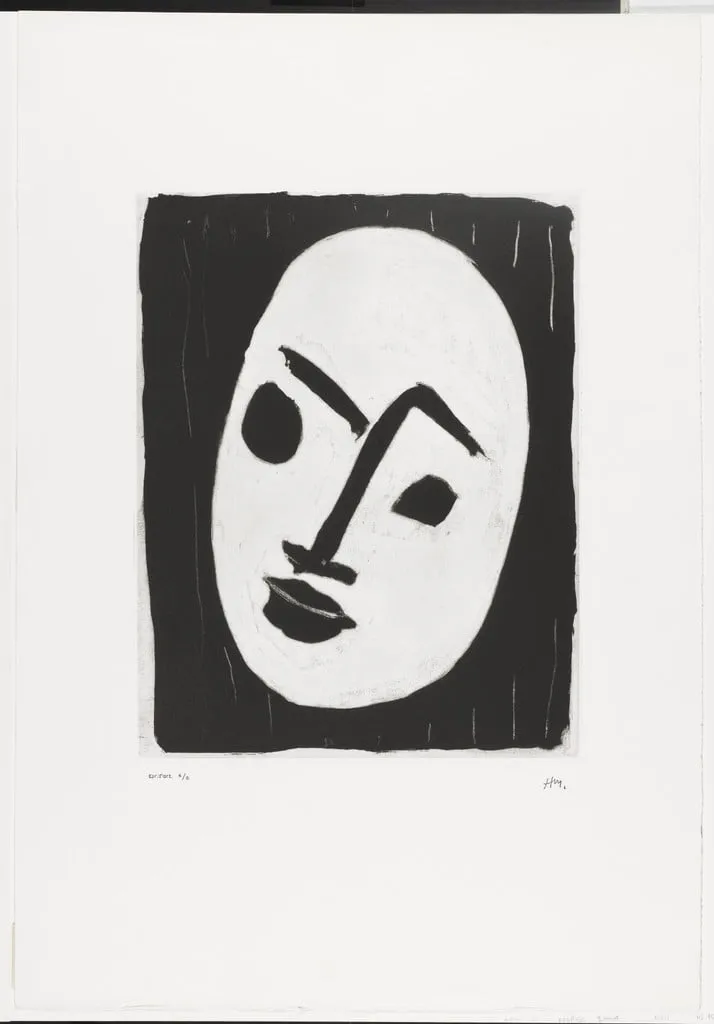
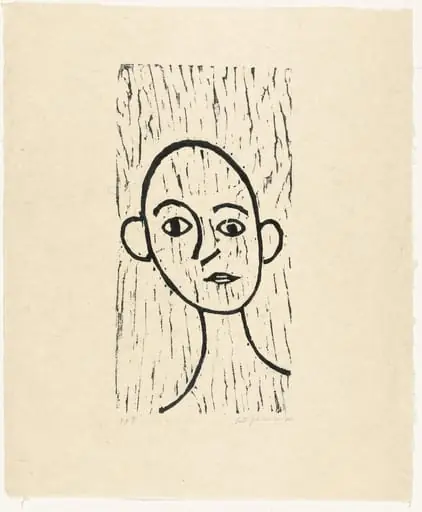
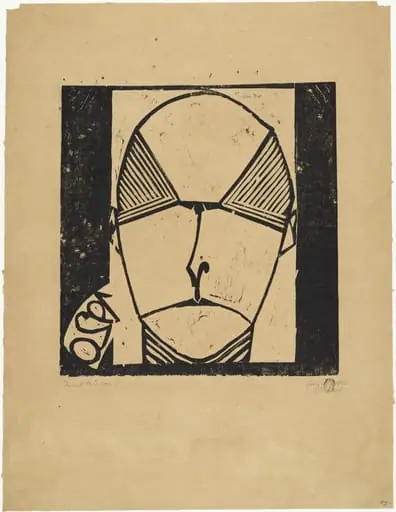
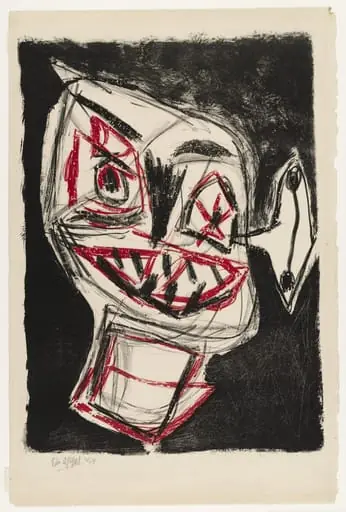
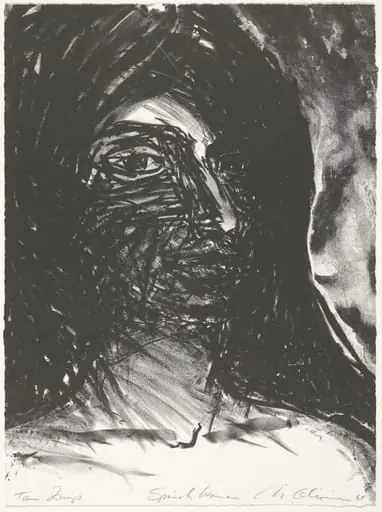
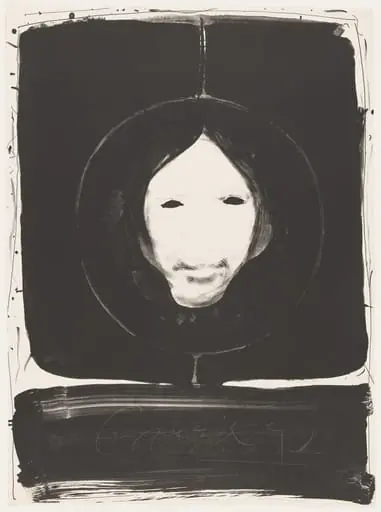
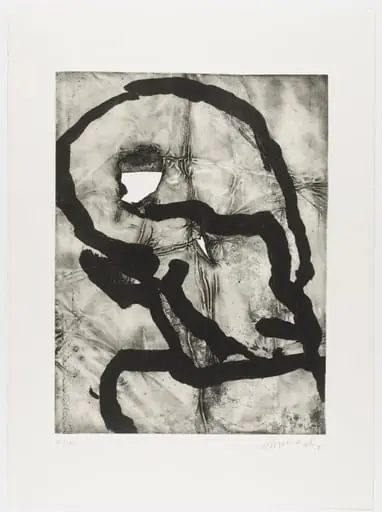
Untitled is an ink print by Henri Matisse. It dates from 1950 and is held in the collection of the Museum of Modern Art.
About this work
Overview
Created in 1950, this aquatint is one of Henri Matisse’s final print works, produced during a period when he focused intensely on paper-based media.
Created in 1950, this aquatint is one of Henri Matisse’s final print works, produced during a period when he focused intensely on paper-based media. Despite physical limitations, he continued to explore expressive form through simplified line and contrast. The work belongs to a series of late prints that reflect his enduring interest in the interplay of positive and negative space, executed with precision and economy.
Subject & Meaning
The image presents a stylized human face, stripped of detail to its essential contours. Features are reduced to minimal marks—a circle for the eye, a curve for the mouth, a straight line for the nose—suggesting identity rather than realism. The stark contrast between the white oval head and black background evokes a sense of presence, as if the face emerges from silence. The abstraction conveys emotional resonance through restraint, not narrative.
Technique & Style
Matisse employed aquatint to achieve subtle tonal gradations, yet here he limited the palette to pure black and white, emphasizing line and shape. The bold, unmodulated contours reflect his shift toward cut-paper aesthetics, where form is defined by edge rather than volume. His hand is confident and deliberate, each mark serving a structural or expressive purpose, with no ornamentation or excess.
History & Provenance
The print was made in the last year of Matisse’s life, during his time in Nice, as he worked closely with master printers to translate his drawings into prints. It entered The Museum of Modern Art’s collection shortly after its creation, recognized as part of his significant late-period print output. Its preservation reflects its importance within the broader context of his artistic evolution.
Context
In the 1950s, Matisse turned increasingly to printmaking and paper cutouts as alternatives to painting, constrained by health but not imagination. This work aligns with contemporaneous cut-paper compositions, sharing their emphasis on silhouette and spatial clarity. It stands as a quiet counterpoint to the chromatic intensity of his earlier Fauvist works, revealing a mature artist refining expression through reduction.
Legacy
This aquatint exemplifies Matisse’s late commitment to distilling form to its essence, influencing generations of artists who sought emotional clarity through minimalism. Its directness and restraint resonate in postwar graphic design and abstract portraiture. As one of his final printed works, it anchors his legacy not only in color and movement, but in the power of the single, decisive line.
Artist & collection
Artist
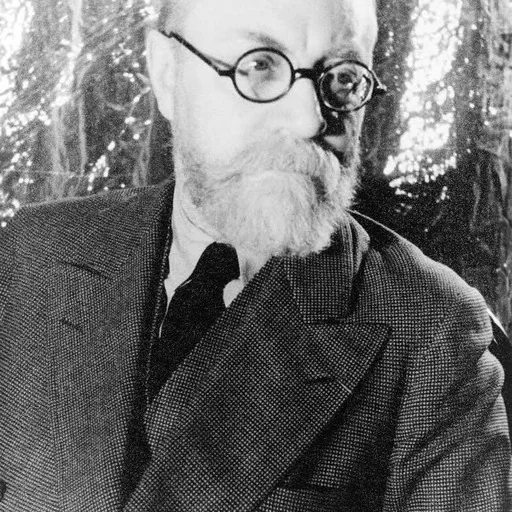
Henri Émile Benoît Matisse (French: ; 31 December 1869 – 3 November 1954) was a French visual artist, known for both his use of colour and his fluid and original draughtsmanship.