Artwork
Untitled
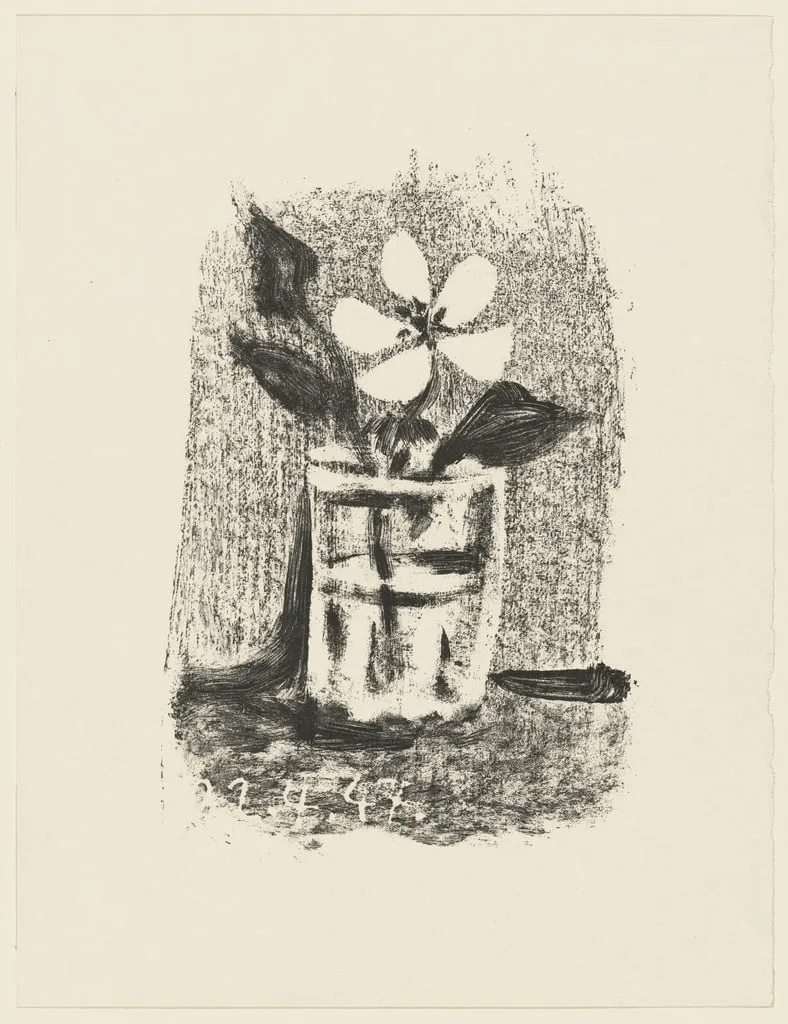
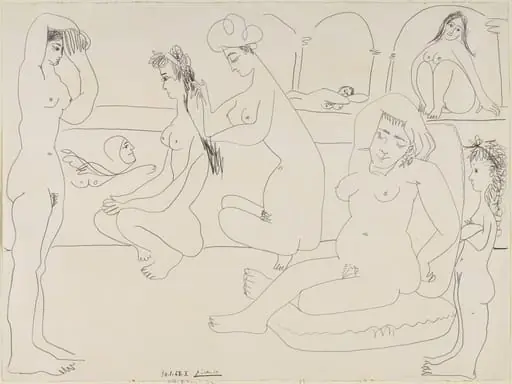
Untitled is an ink print by Pablo Picasso. It dates from 22 and is held in the collection of the Museum of Modern Art.
About this work
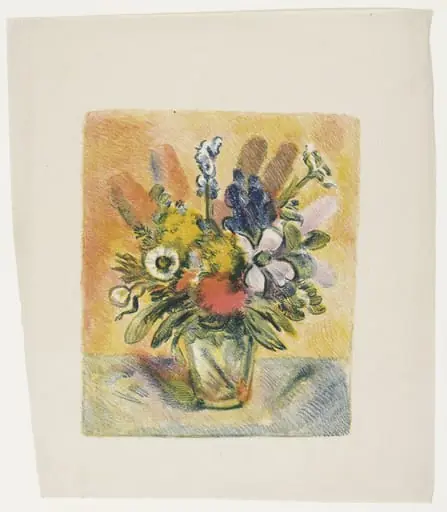
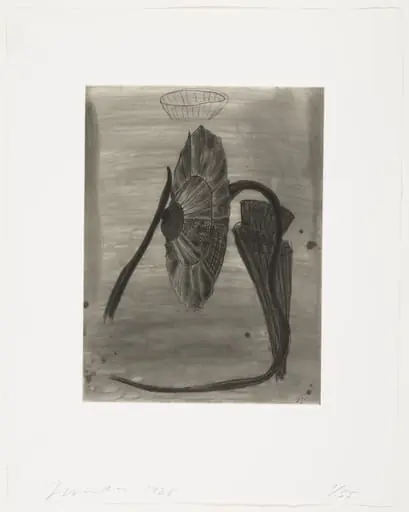
The background of the painting is a light beige color, which provides a subtle contrast to the darker tones of the flower and pot.
This painting features a simple yet elegant composition, with a flower in a pot as its central subject. The flower has five petals and a long stem, while the pot is depicted in a rough, textured style. The background of the painting is a light beige color, which provides a subtle contrast to the darker tones of the flower and pot.
The painting's style is characterized by bold, expressive brushstrokes and a focus on form and texture. The artist's use of color is muted, with a predominance of earth tones that add to the overall sense of simplicity and elegance.
The painting is a lithograph, created by Pablo Picasso in 1947. To learn more about the artist's work, check out the artist: Pablo Picasso.
Overview
This lithograph, dated 1947, is one of many print works by Pablo Picasso during a prolific period in his career. Though unsigned and untitled, it belongs to a series of intimate compositions he produced in the years following World War II. Held in the collection of The Museum of Modern Art, it reflects his ongoing engagement with printmaking as a medium for spontaneous expression.
Subject & Meaning
The image centers on a single flower in a simple pot, rendered with minimal detail yet strong presence. The five-petaled bloom and curved stem suggest natural growth, while the textured vessel grounds the composition. No symbolic narrative is overt; instead, the subject invites quiet contemplation, aligning with Picasso’s interest in elemental forms during this phase of his work.
Technique & Style
Executed in lithography, the print employs a restrained palette of earth tones—ochres, grays, and deep browns—to emphasize texture over color. The pot’s surface is built with rough, gestural lines, contrasting with the smoother, flowing contours of the stem and petals. Bold, direct mark-making characterizes the technique, revealing the artist’s hand and the immediacy of the lithographic process.
History & Provenance
Created in 1947, the lithograph emerged from Picasso’s active printmaking period in southern France, where he collaborated with master printers. It entered The Museum of Modern Art’s collection shortly after its production, part of a broader acquisition of his graphic works during the mid-20th century. Its provenance remains unbroken within institutional hands.
Context
In the late 1940s, Picasso turned increasingly to printmaking as a means of exploring form without the demands of large-scale painting. His work during this time often returned to domestic and natural motifs—flowers, birds, still lifes—reflecting a quieter, more introspective phase after the turbulence of war and the intensity of Cubism.
Legacy
This lithograph exemplifies Picasso’s enduring influence on modern printmaking, demonstrating how traditional techniques could be revitalized through expressive, personal vision. Though not among his most widely reproduced works, it contributes to the understanding of his later graphic output and his commitment to simplicity as a formal and emotional strategy.
Artist & collection
Artist
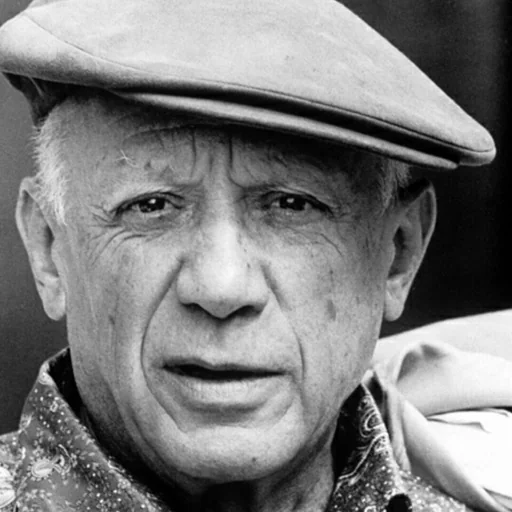
Pablo Ruiz Picasso (25 October 1881 – 8 April 1973) was a Spanish painter and sculptor who spent most of his adult life in France.