Artwork
A Bunch of Pansies
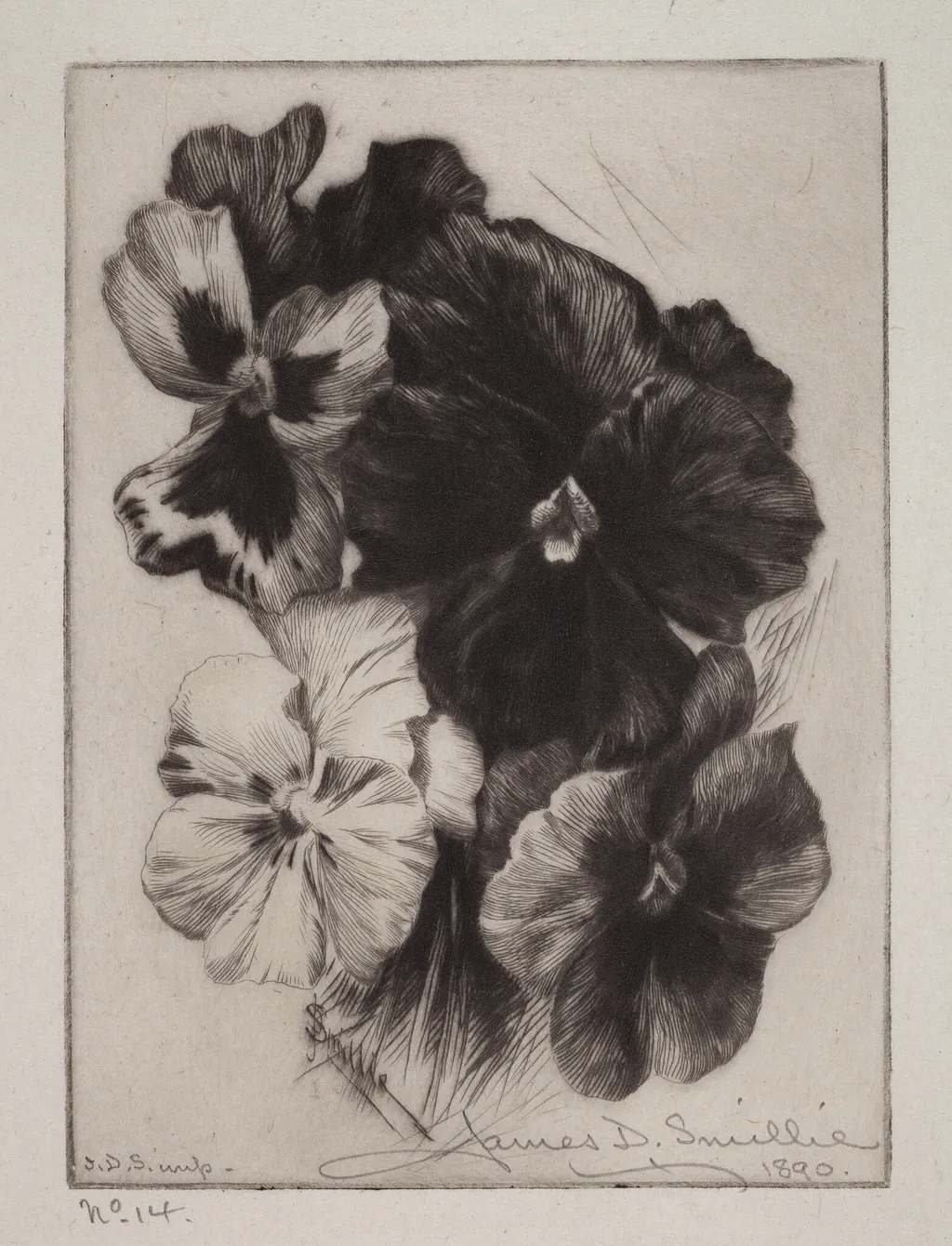
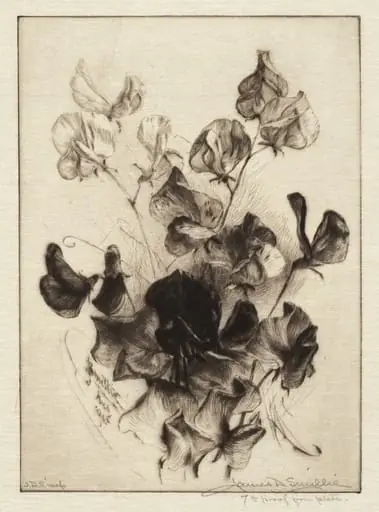
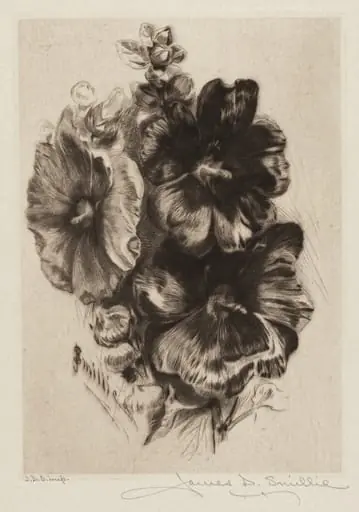
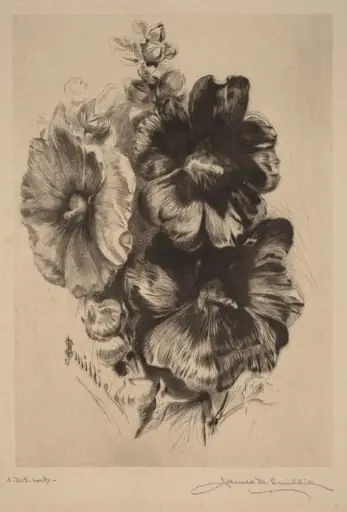
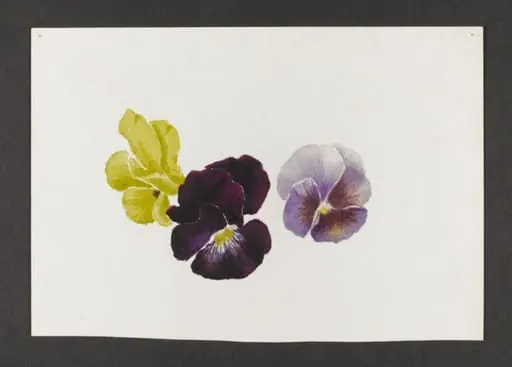
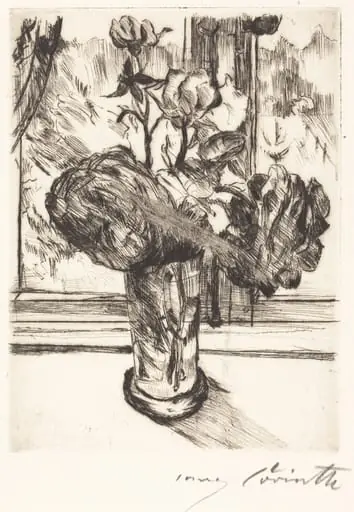
A Bunch of Pansies is an ink print by the Impressionist artist James David Smillie. It dates from 1890 and is held in the collection of the National Gallery of Art.
About this work
Overview
The image relies entirely on the tonal contrasts and fine lines produced by scratching directly into a metal plate, a technique characteristic of drypoint.
A Bunch of Pansies is a black-and-white drypoint print made by James David Smillie in 1890. The composition centers on a dense grouping of pansies, rendered without background or spatial context. The image relies entirely on the tonal contrasts and fine lines produced by scratching directly into a metal plate, a technique characteristic of drypoint. The flowers occupy the entire field, creating an intimate, almost claustrophobic focus.
Subject & Meaning
The subject is a simple bouquet of pansies, arranged tightly and without ornamentation. There is no symbolic narrative or overt metaphor; the work’s significance lies in its quiet attention to natural form. The flowers, rendered with precision, invite contemplation of their delicate structure. The absence of context or setting emphasizes the purity of the botanical subject, turning the ordinary into a study of texture and shape.
Technique & Style
Smillie employed drypoint, a printmaking method in which a sharp needle scratches lines directly into a metal plate, retaining ink in the burr it creates. The resulting image features soft, velvety blacks and fine, irregular lines that mimic the texture of petals and stems. The dark centers of the flowers contrast with lighter, thinner outlines, enhancing their three-dimensionality. The style is intimate and detailed, prioritizing tactile quality over dramatic contrast.
History & Provenance
Created in 1890, the print belongs to Smillie’s later period, when he focused increasingly on intimate botanical subjects. It was produced during a time when American artists were exploring printmaking as a medium for personal expression, distinct from large-scale painting. The work was likely issued in small editions, common for drypoints of the era, and has remained in private and institutional collections since its creation.
Context
In the late 19th century, American artists like Smillie turned to printmaking as a way to engage with realism and naturalism outside academic traditions. Drypoint, though labor-intensive, allowed for direct, expressive mark-making. This work aligns with a broader interest in domestic and floral subjects among printmakers, reflecting a shift toward quiet, observational art amid industrialization and urban expansion.
Legacy
A Bunch of Pansies exemplifies Smillie’s contribution to American printmaking through its technical precision and restrained aesthetic. While not widely known outside specialist circles, it remains a representative example of late 19th-century drypoint practice. Its enduring presence in museum collections underscores its value as a quiet, finely executed study in form and material.
Own this work as a print
Artist & collection

Artist
James David Smillie was an American artist, cofounder of the American Watercolor Society and New York Etching Club. His brother was painter George Henry Smillie.