Artwork
Untitled
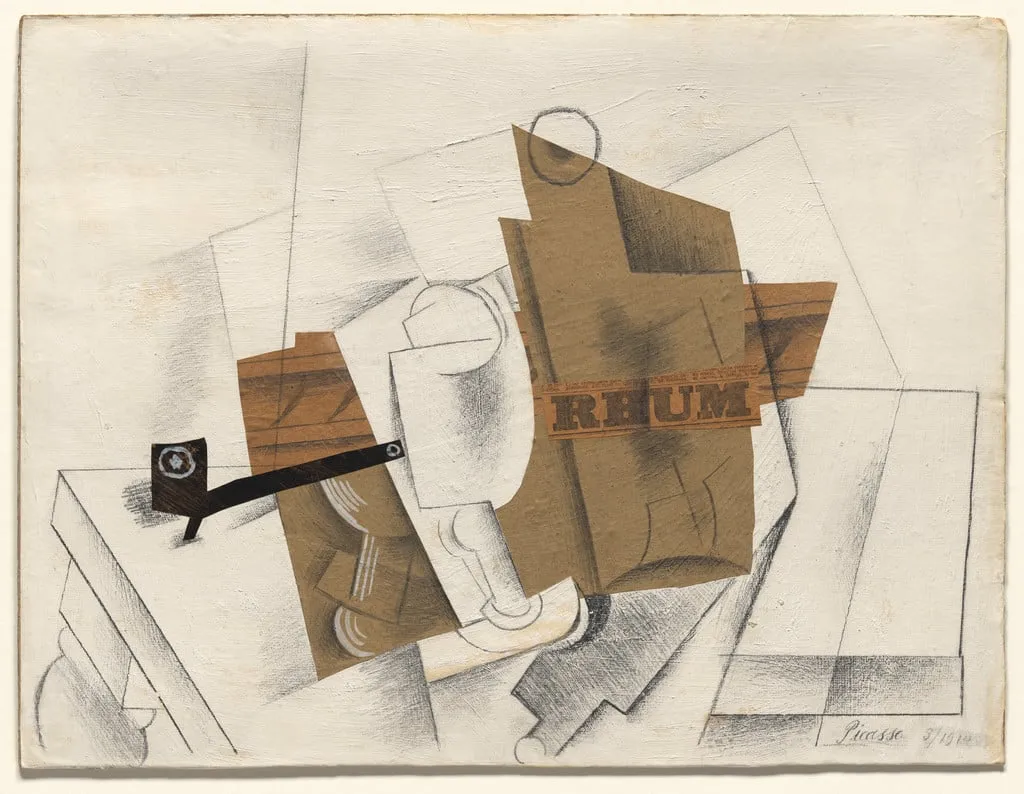
Untitled is a gouache drawing by Pablo Picasso. It dates from 1914 and is held in the collection of the Museum of Modern Art.
About this work
Overview
The piece is held in the collection of The Museum of Modern Art, where it stands as a key example of early 20th-century material experimentation in fine art.
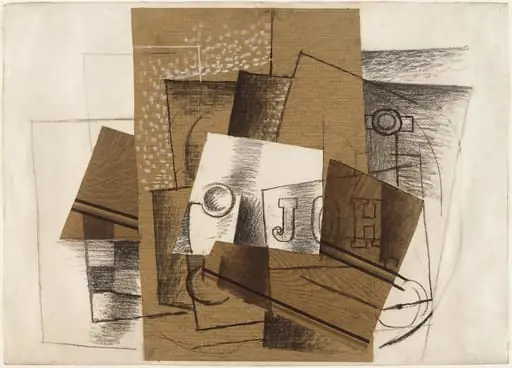
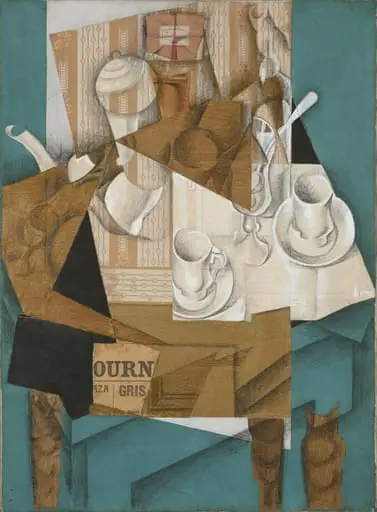
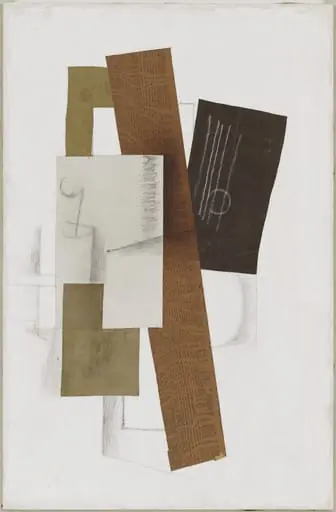
Created in 1914, this work is a mixed-media drawing composed of cut and pasted paper elements—colored, printed, and hand-painted—along with pencil and gouache on a prepared wooden board. It exemplifies Picasso’s shift toward collage within Cubism, abandoning brushwork in favor of assembling fragments of everyday materials. The piece is held in the collection of The Museum of Modern Art, where it stands as a key example of early 20th-century material experimentation in fine art.
Subject & Meaning
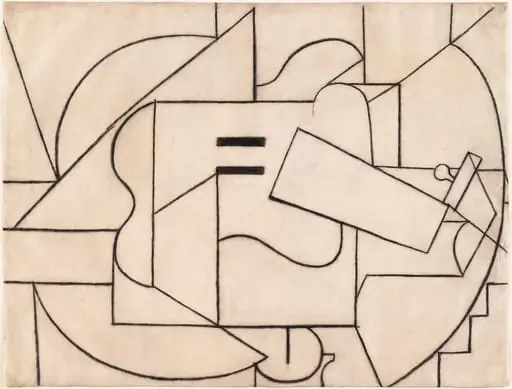
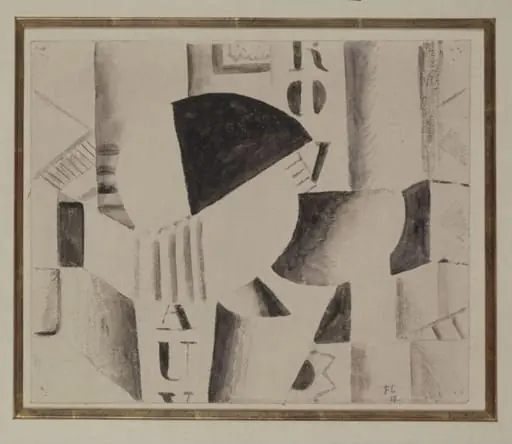
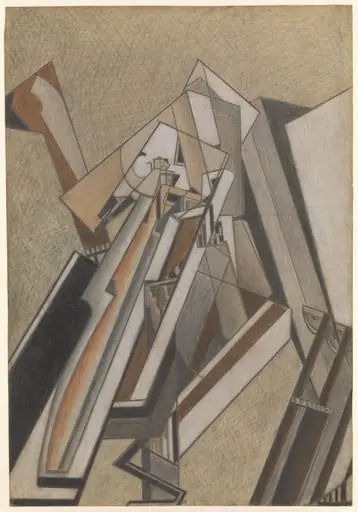
The composition arranges simplified, abstracted forms resembling a chair, bottle, and boxes in a loose, stacked configuration. These objects, rendered without illusionistic depth, suggest domestic items stripped of function. Fragmented text fragments like 'REUM' and a small black cross mark introduce ambiguity, possibly referencing advertising, labels, or personal notation. The work resists clear narrative, instead inviting attention to the materiality and arrangement of signs rather than their representational content.
Technique & Style
Picasso constructed the image using scissors and adhesive, not paintbrushes, elevating mundane materials to the status of artistic medium. Gouache provided flat, opaque color, while printed paper introduced pre-existing typography and texture. The palette is restrained—dominated by muted browns, grays, and black—emphasizing form over decoration. This method, part of Synthetic Cubism, prioritized assembly over depiction, challenging conventions of artistic labor and representation.
History & Provenance
Made during Picasso’s intensive exploration of collage between 1912 and 1914, this work emerged from a period when he and Georges Braque were redefining pictorial space through non-traditional materials. It entered The Museum of Modern Art’s collection in the mid-20th century, where it has remained as part of a broader effort to document the evolution of modernist practice. Its preservation reflects its recognized role in the transition from analytical to synthetic approaches in Cubism.
Context
In 1914, Europe stood on the brink of war, and artistic innovation often mirrored societal fragmentation. Picasso’s use of printed ephemera—newspaper clippings, packaging, labels—reflected a world saturated with mass-produced imagery. His collages responded not to idealized beauty but to the textures of modern life, turning discarded materials into structured compositions that questioned the boundaries between art and the everyday.
Legacy
This work contributed to a broader redefinition of drawing and composition in modern art, influencing generations of artists to incorporate found materials into their practice. By rejecting traditional techniques in favor of assembly, Picasso expanded the definition of what constituted a drawing. The piece remains a touchstone for discussions on materiality, authorship, and the democratization of artistic media in the 20th century.
Artist & collection
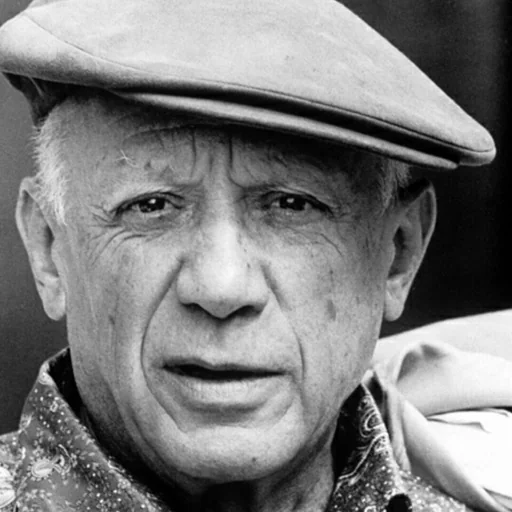
Artist
Pablo Ruiz Picasso (25 October 1881 – 8 April 1973) was a Spanish painter and sculptor who spent most of his adult life in France.