Artwork
Calvary
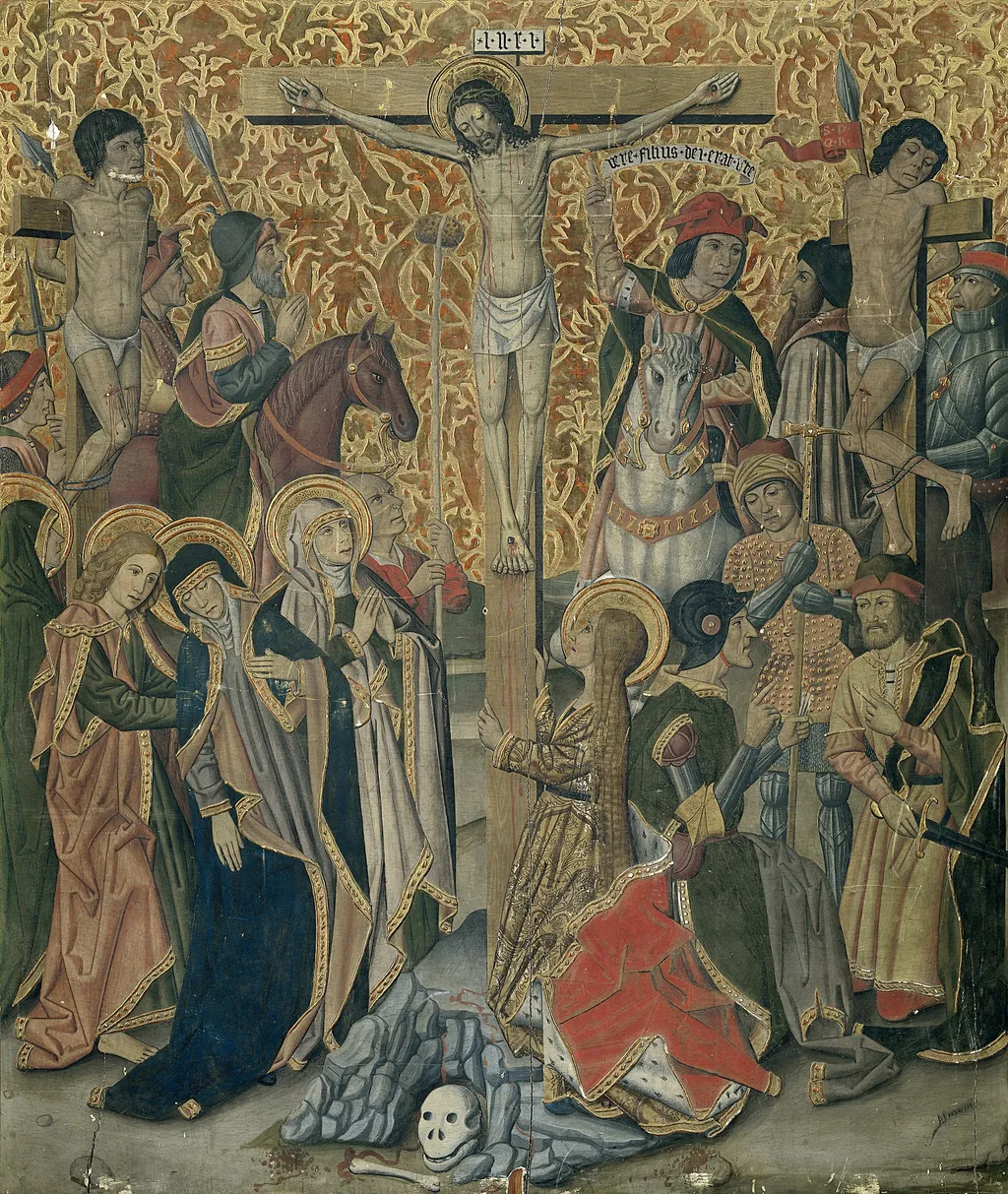
Calvary is an oil painting by the Northern Renaissance artist Pablo Vergós. It dates from 1494 and is held in the collection of the Rijksmuseum.
About this work
Overview
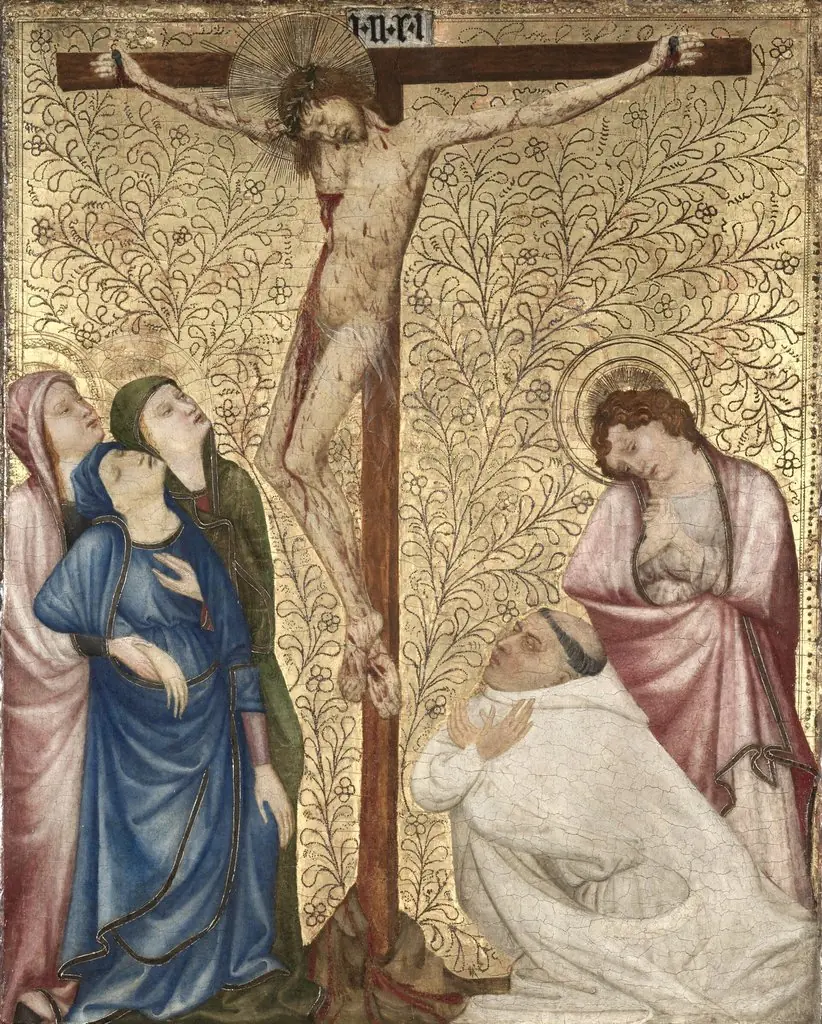
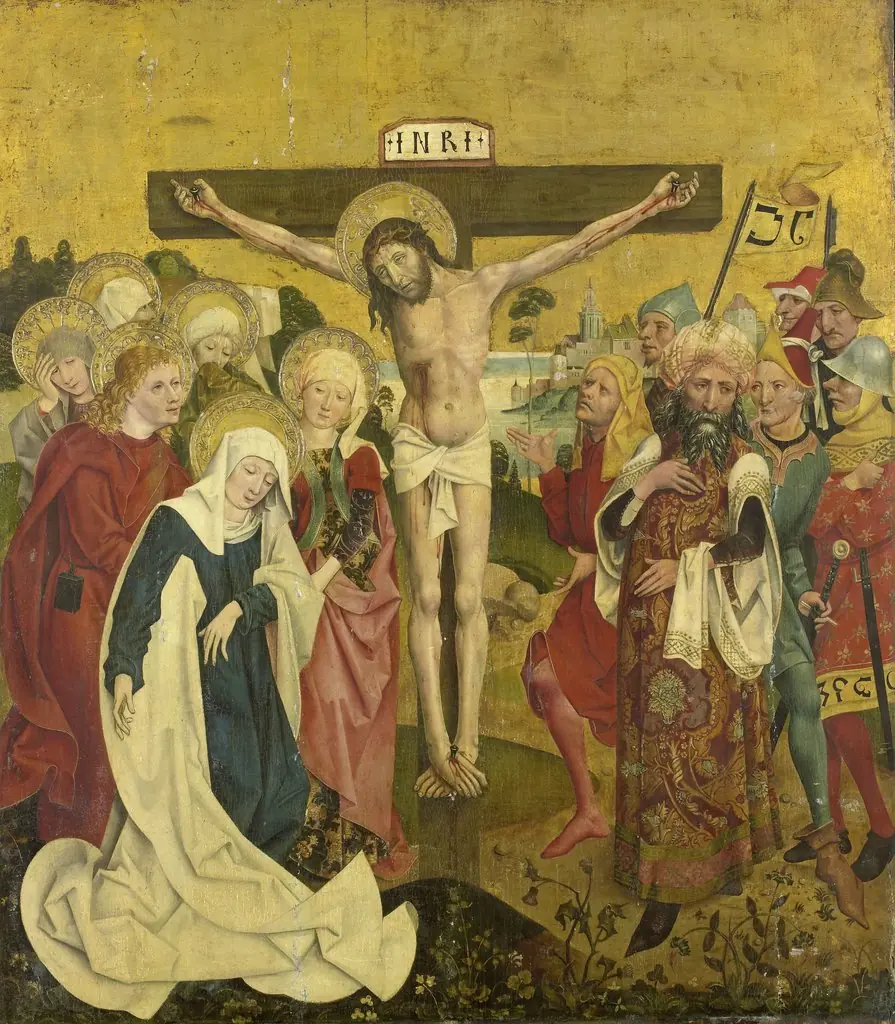
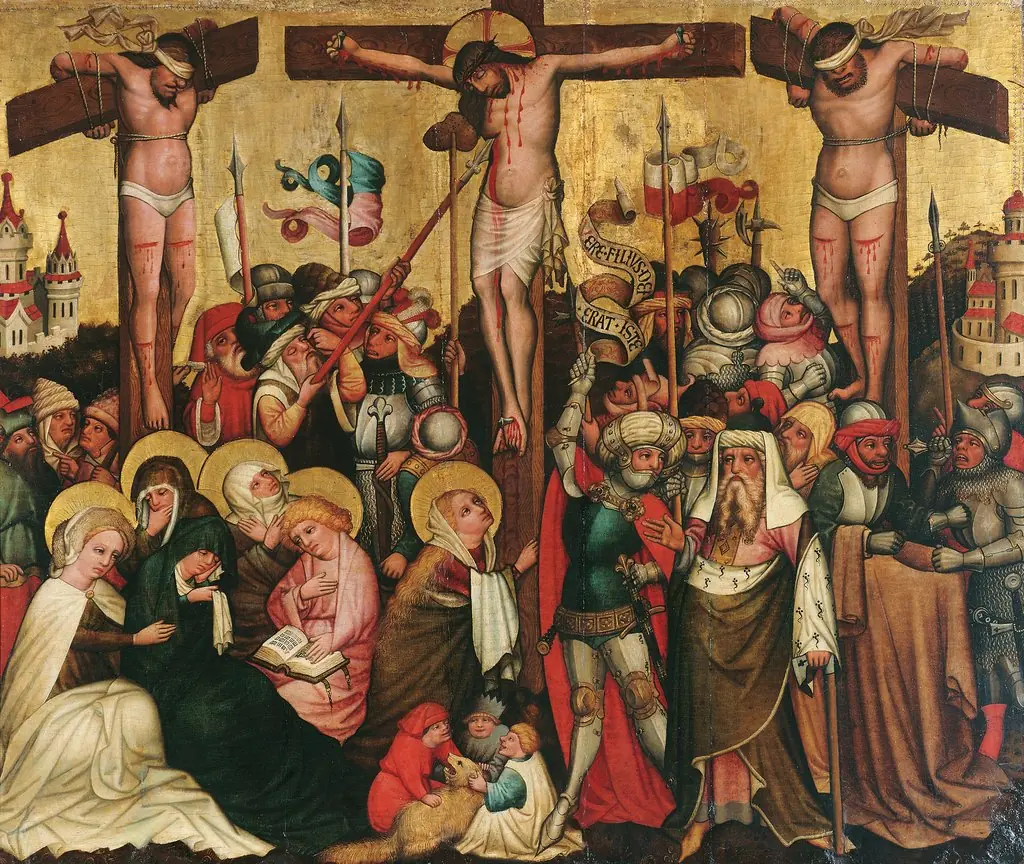
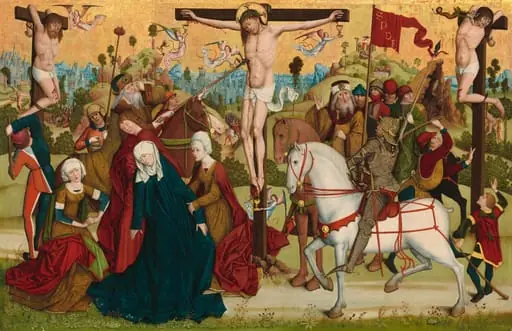
Calvary, executed in oil on panel in 1494, presents a conventional crucifixion scene centered on the figure of Christ on the cross. The composition is framed by a densely patterned gold background that heightens the work’s devotional atmosphere. The painting belongs to the collection of the Rijksmuseum, where it is displayed among other early Netherlandish religious works.
Subject & Meaning
The central figure is the crucified Jesus, surrounded by a gathering of onlookers that includes three robed women on the left, their hands clasped in prayer, and a group of armored soldiers on the right, some bearing spears. A skull rests at the foot of the cross, a traditional symbol of mortality and the site of Golgotha.
Technique & Style
Vergós employs a flat, linear approach, using bold outlines and simplified shapes to delineate each figure. Bright, saturated pigments contrast sharply with the gilded backdrop, creating a vivid visual hierarchy. The figures appear rigid and two‑dimensional, a stylistic choice that emphasizes narrative clarity over naturalistic modeling.
History & Provenance
Created at the close of the 15th century, the painting reflects the devotional practices of its time. It entered the Rijksmuseum’s holdings through acquisition in the early 20th century, where it has remained a representative example of late medieval Iberian religious art.
Context
The work aligns with contemporary European crucifixion iconography, where gold leaf and ornamental patterns often framed sacred narratives. Its composition and stylization suggest influences from both the Flemish tradition and local Spanish workshops active during the period.
Own this work as a print
Artist & collection