Artwork
H Beard Print Collection
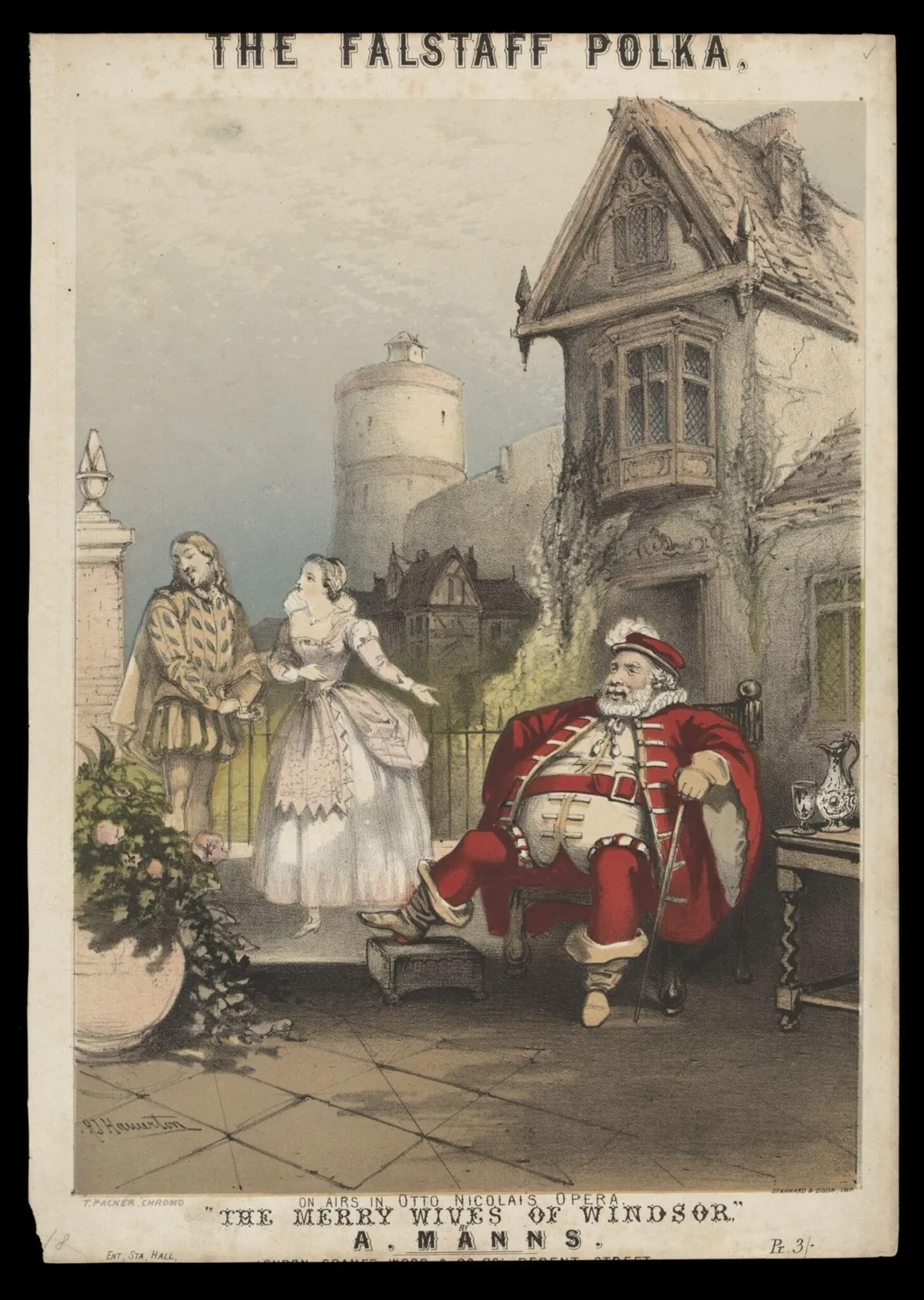
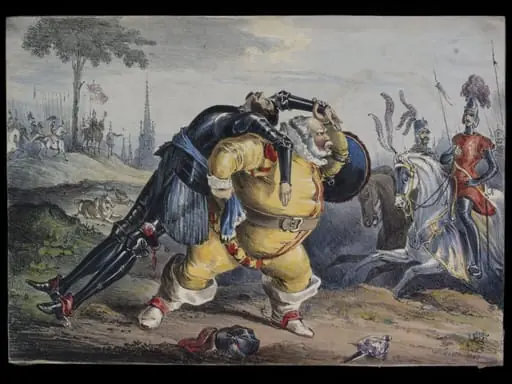
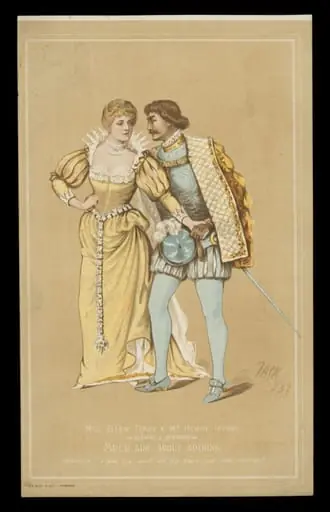
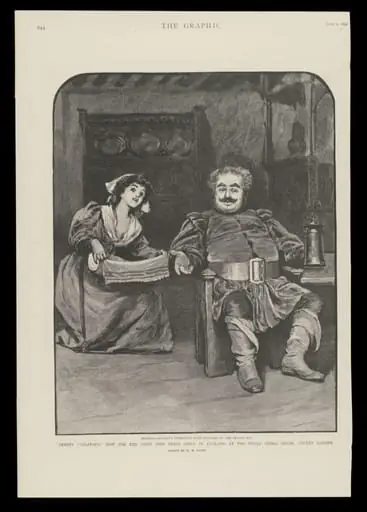
H Beard Print Collection is a print by T. Packer. It is held in the collection of the Victoria and Albert Museum. This hand-coloured chromolithograph depicts a scene from Otto Nicolai’s opera The Merry Wives of Windsor, featuring the character Falstaff.
About this work
Overview
Packer and published as part of the Harry Beard Print Collection, it combines printed lines with manual watercolour additions to enhance detail and vibrancy.
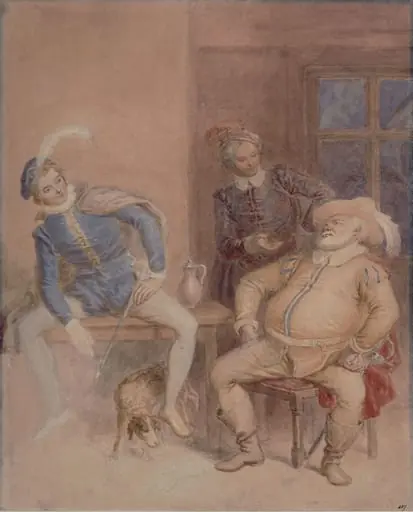
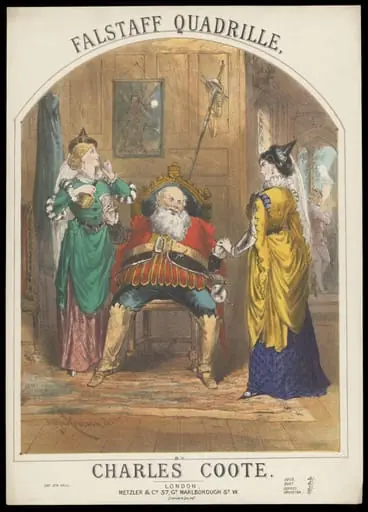
This hand-coloured chromolithograph depicts a scene from Otto Nicolai’s opera The Merry Wives of Windsor, featuring the character Falstaff. Created by T. Packer and published as part of the Harry Beard Print Collection, it combines printed lines with manual watercolour additions to enhance detail and vibrancy. The composition centers on Falstaff’s relaxed posture, framed by architectural elements suggesting the English countryside near Windsor.
Subject & Meaning
Falstaff, portrayed as a corpulent figure in Tudor-inspired attire, embodies the comedic, self-indulgent nobleman from Shakespeare’s source material. His lounging pose, with one booted foot elevated, conveys ease and indulgence. Nearby, a young couple in fashionable dress engages in quiet conversation, subtly contrasting his solitary revelry with youthful social energy. The inclusion of Windsor Castle in the distance anchors the scene in a recognizable English setting, reinforcing the opera’s thematic ties to royal and civic life.
Technique & Style
The image is a chromolithograph, a multi-stone printing process that allowed for detailed tonal gradations and multiple colours. Each hue was applied by hand after the initial print, giving each copy slight variations. The rendering of fabric textures—such as the slashed doublet and the soft folds of Falstaff’s gown—demonstrates careful attention to period costume. The background architecture is rendered with simplified perspective, prioritizing decorative effect over spatial realism.
History & Provenance
This print originated in the mid-19th century, during a surge of interest in operatic adaptations of Shakespearean characters. It was produced for domestic consumption, likely as a decorative item for music-loving households. It entered the Harry Beard Collection, a significant assemblage of theatrical ephemera, and is now held by the Victoria and Albert Museum, where it contributes to the study of Victorian visual culture and operatic reception.
Context
The print reflects the Victorian fascination with blending high art and popular entertainment. Opera adaptations of Shakespeare were widely performed and illustrated, serving as cultural touchstones. The choice of Falstaff—a figure of both humor and pathos—aligned with contemporary tastes for character-driven narratives. The detailed costume and architectural backdrop catered to audiences’ desire for historical authenticity, even in lighthearted subjects.
Legacy
As part of the Harry Beard Collection, this print preserves a snapshot of 19th-century theatrical illustration practices. It documents how opera scenes were translated into accessible visual media for the middle class. While not widely known today, it remains a valuable artifact for understanding how Shakespearean characters were visually reimagined in the age of mass reproduction and rising domestic art markets.
Artist & collection
Artist
T. Packer made prints in the Beard collection, a group of works that mostly show everyday scenes and objects. One of them is H Beard Print Collection, which sits alongside other prints that capture moments from daily…