Artwork
Falstaff, Prince Henry and Poins
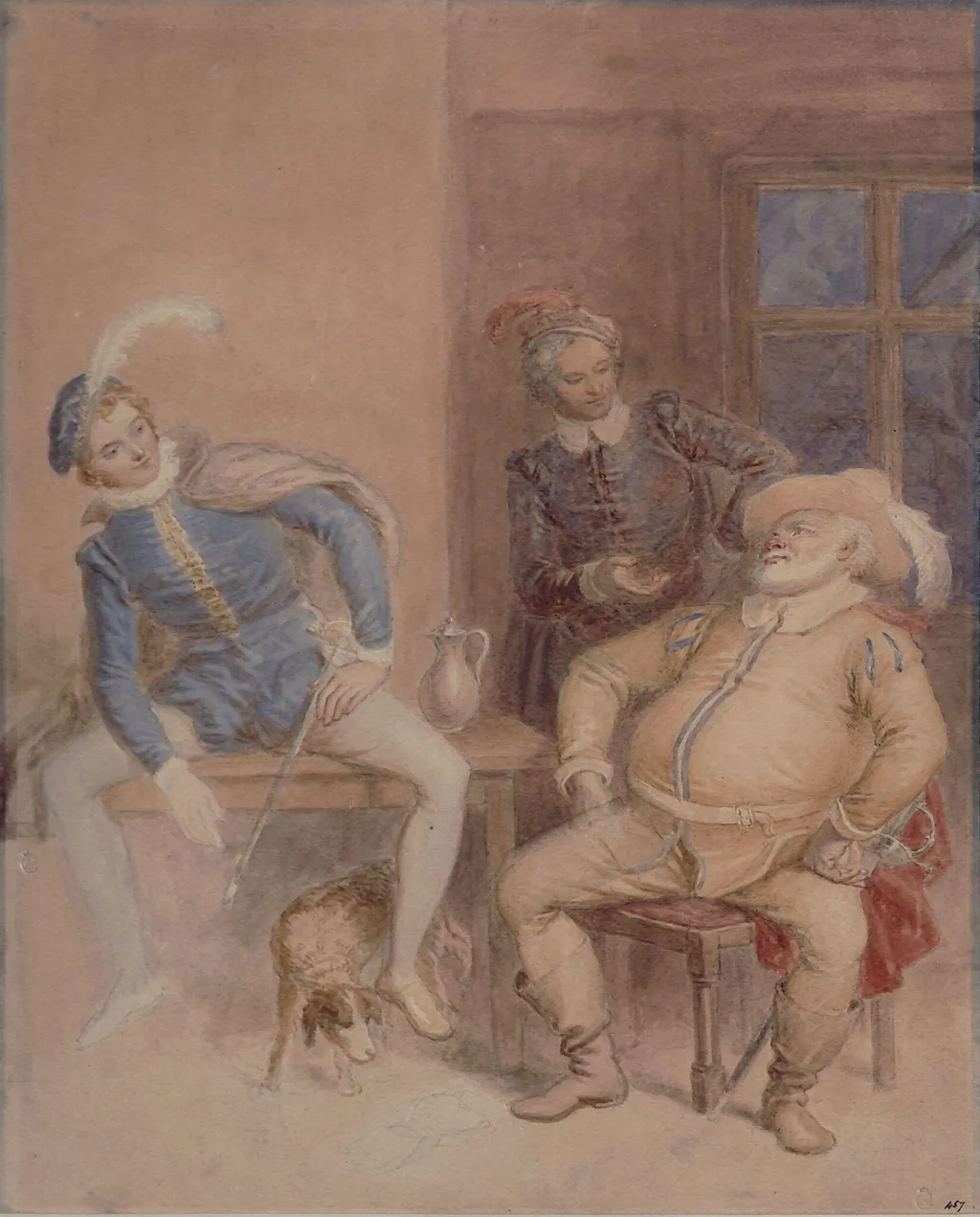
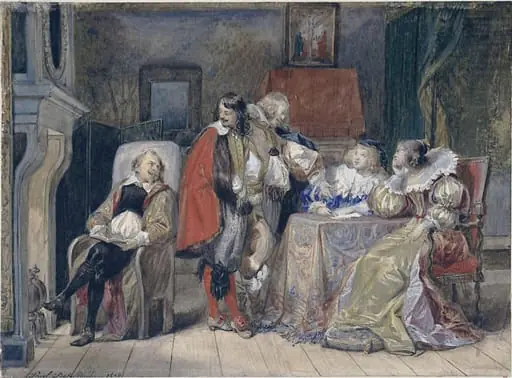
Falstaff, Prince Henry and Poins is a watercolor work on paper by John Masey Wright. It dates from 1850 and is held in the collection of the Victoria and Albert Museum.
About this work
Overview
The scene captures a quiet moment in an interior space, rendered with the lightness and transparency typical of the medium.
Created in 1850 by John Masey Wright, this watercolour depicts three characters from Shakespeare’s *King Henry IV*. The scene captures a quiet moment in an interior space, rendered with the lightness and transparency typical of the medium. The figures are arranged with one seated, one seated opposite, and a third standing behind, suggesting a moment of informal interaction rather than dramatic action.
Subject & Meaning
The figures represent Falstaff, Prince Henry, and Poins—key characters in Shakespeare’s exploration of power, loyalty, and youth. Falstaff, the boisterous knight, is seated beside the prince, while Poins, his cunning companion, stands nearby. The presence of a dog adds a domestic tone, softening the political undertones of the play and emphasizing the personal, almost intimate nature of their camaraderie.
Technique & Style
Wright employed watercolour to achieve a muted, atmospheric effect, with delicate washes defining fabric folds and architectural details. The soft edges and translucent layers lend a sense of immediacy, as if capturing a fleeting moment. The palette is restrained, relying on subtle contrasts between blues, golds, and dark tones to distinguish figures and space without bold lines or heavy pigment.
History & Provenance
The work was completed in 1850 during a period when literary themes were popular in British watercolour painting. It remains part of the collection associated with John Masey Wright’s oeuvre, though specific ownership history after its creation is not widely documented. Its survival reflects continued interest in Shakespearean subjects among 19th-century collectors and artists.
Context
In mid-19th-century Britain, Shakespeare’s plays were frequently reimagined in visual art as part of a broader cultural revival. Wright’s watercolour aligns with this trend, translating dramatic literature into intimate domestic scenes. The 18th-century costumes and furnishings, though historically inaccurate to Shakespeare’s time, reflect contemporary tastes for period nostalgia rather than archaeological precision.
Legacy
Wright’s depiction of Falstaff and his companions contributes to a tradition of literary illustration that prioritized mood over spectacle. While not widely exhibited today, the work exemplifies how watercolour was used to humanize Shakespearean figures, offering viewers a quiet, accessible entry into the emotional world of the plays rather than their grand historical scale.
Artist & collection
Artist
John Masey Wright (1777–1866) was a British watercolourist. He was the son of an organ-builder and was apprenticed to the same business, but, as it proved distasteful to him, he was allowed to follow his natural…

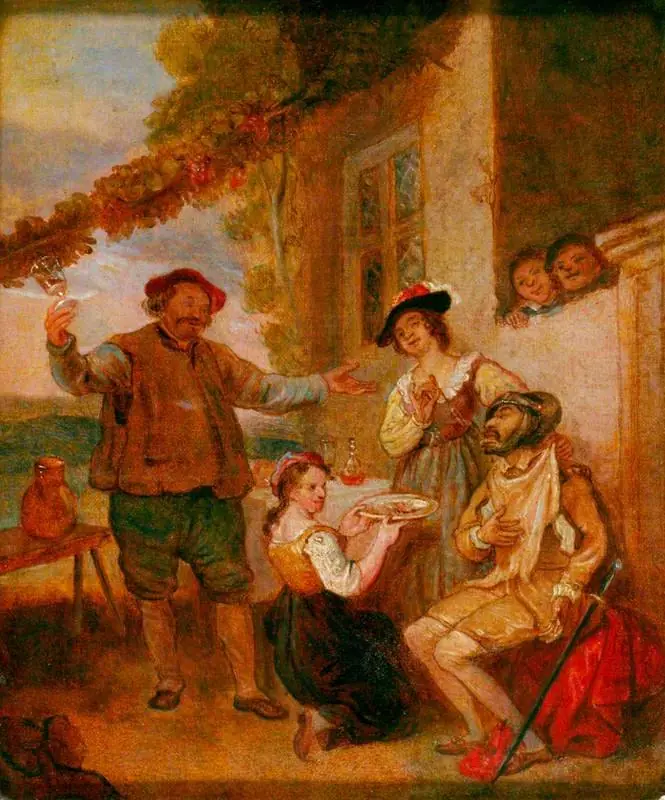 Don Quixote Outside an Inn (from Cervantes' novel)
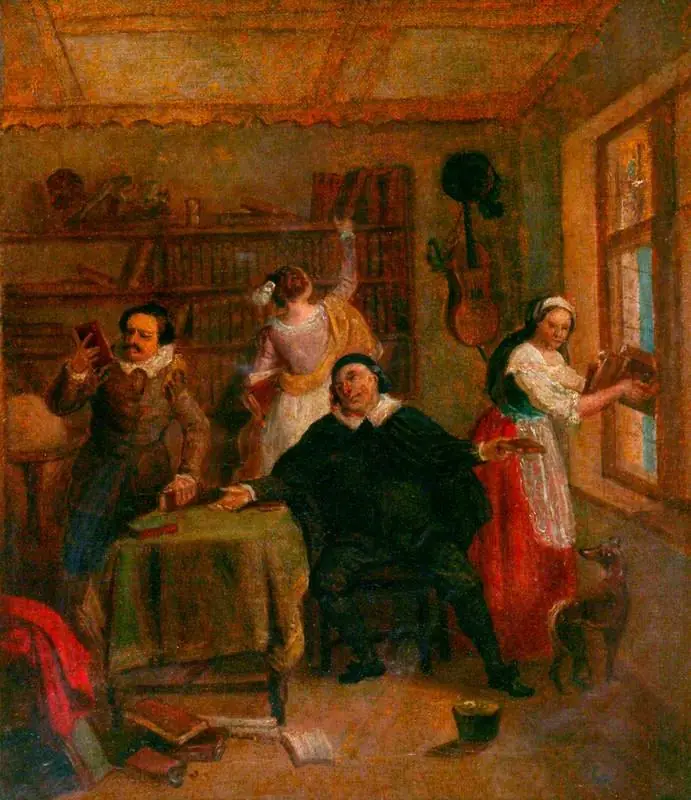 The Barber and Others Purging Don Quixote's Library (from Cervantes' novel)
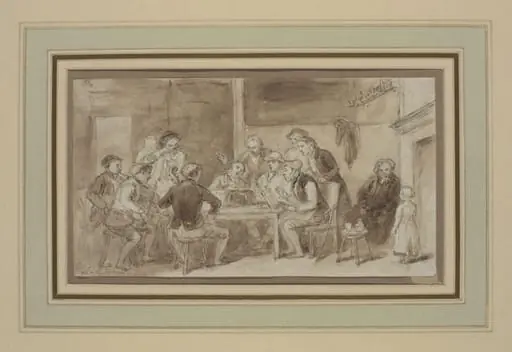 <i>A Musical Party</i>
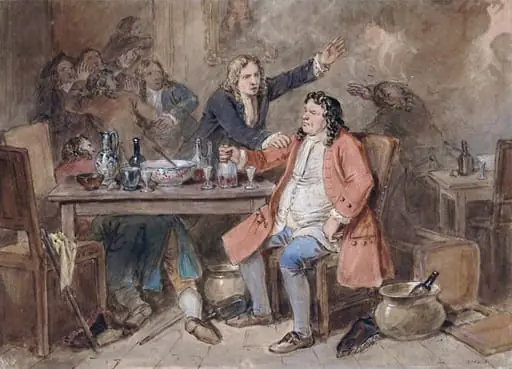 The Everlasting Club
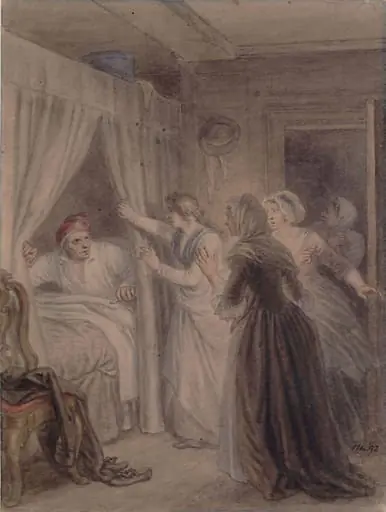 The Alarm
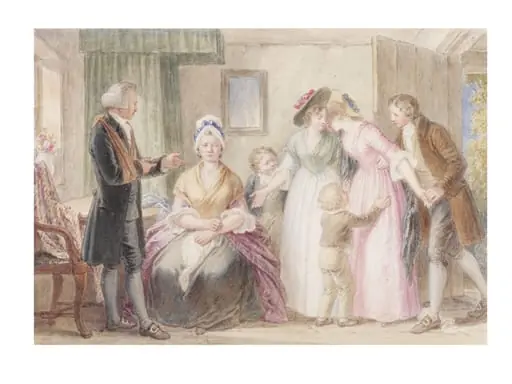 The Return of Olivia Goldsmith
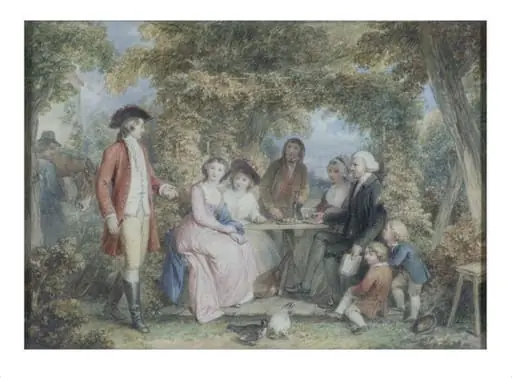 Young Thornhill introducing himself to the Primrose Family
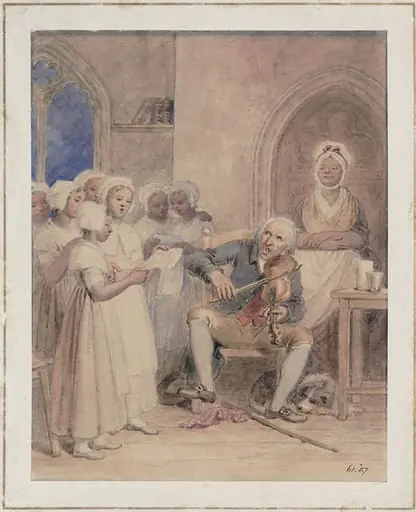 The village choir, the church interior
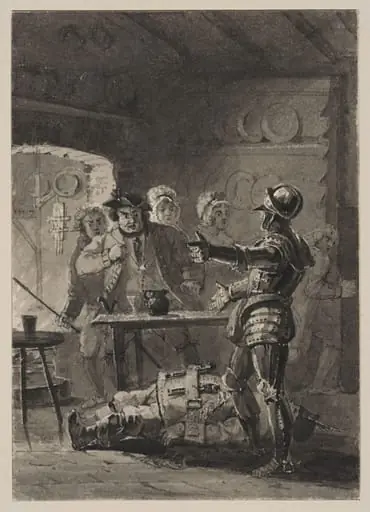 Tristram Shandy
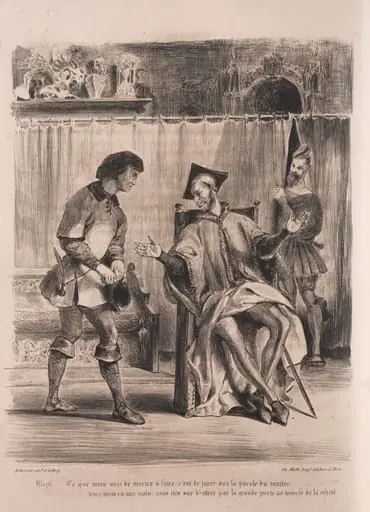 Illustrations for Faust: Méphistophélé receives the schoolboy
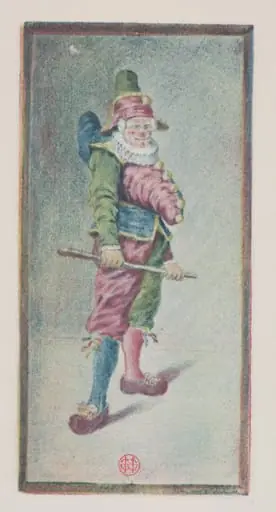 Punchinello, Three-quarters to the Right
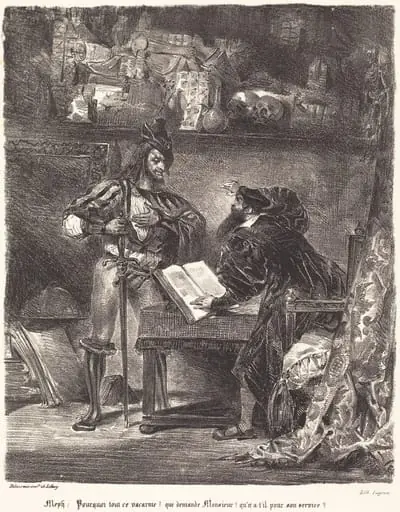 Mephisto Appears to Faust
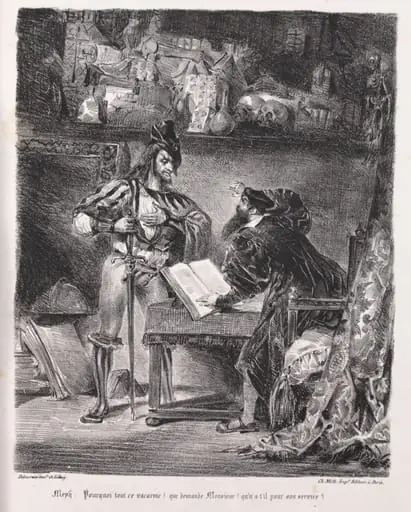 Illustrations for Faust: Méphistophélés visits Faust
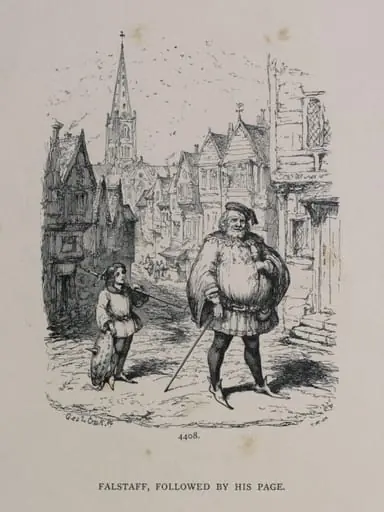 H Beard Print Collection
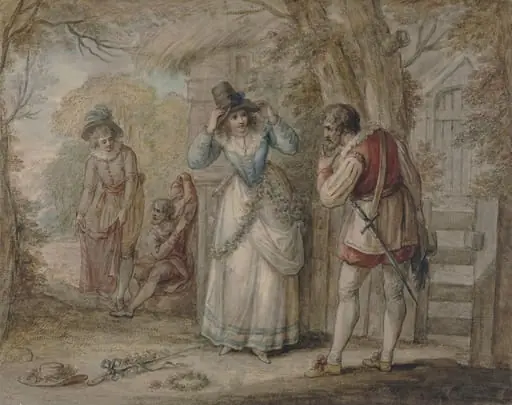 Florizel and Autolycus changing garments
 Untitled
 The Jealousy of Darnley
 H Beard Print Collection
 H Beard Print Collection
 H Beard Print Collection