Artwork
Print Collection
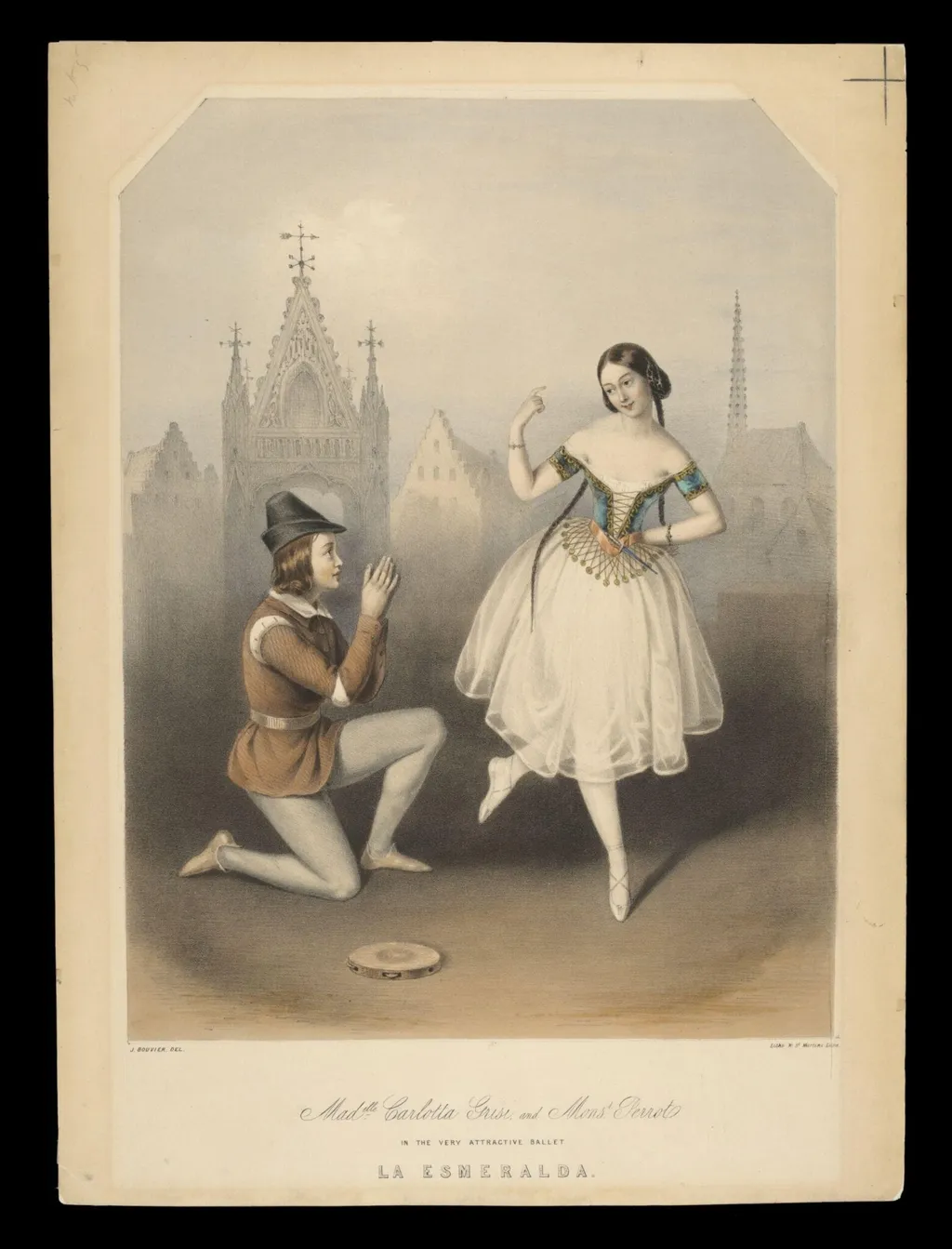
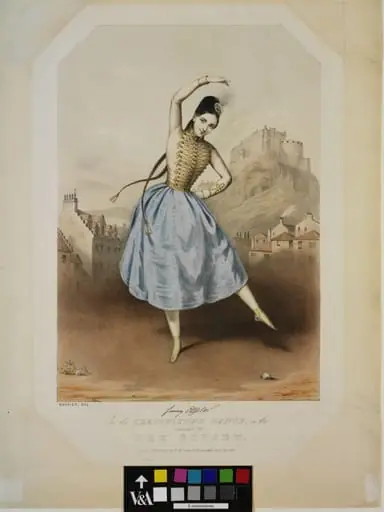
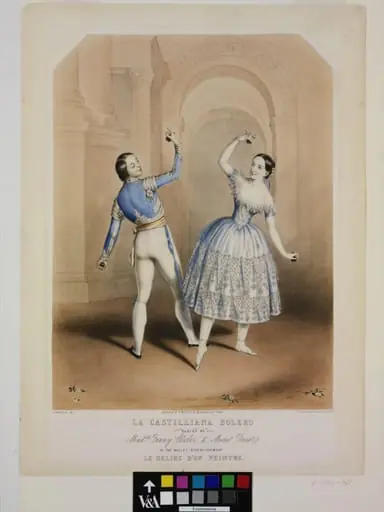
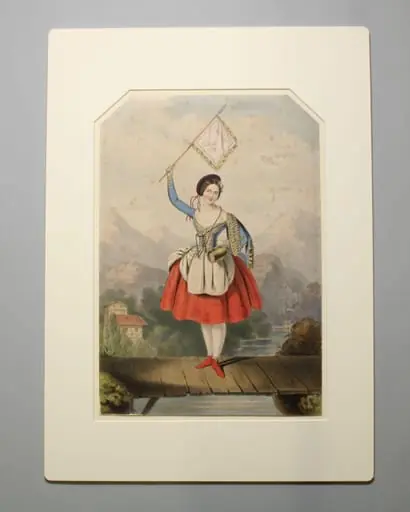
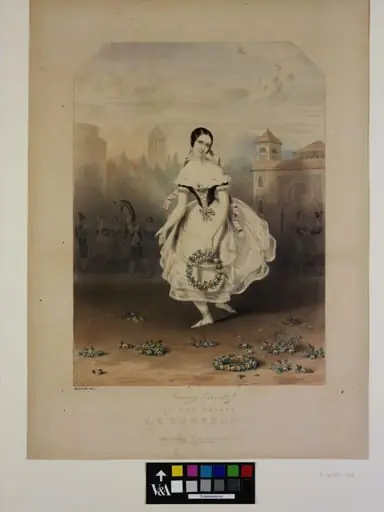
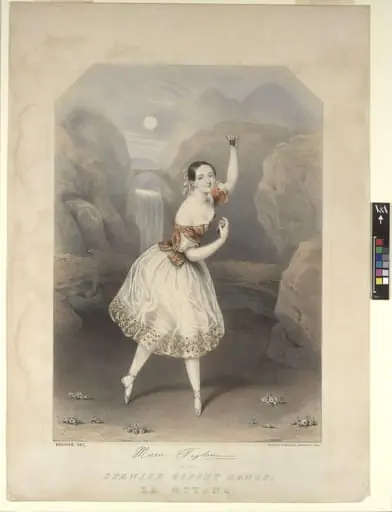
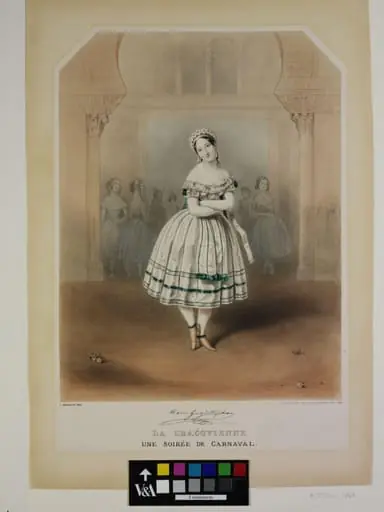
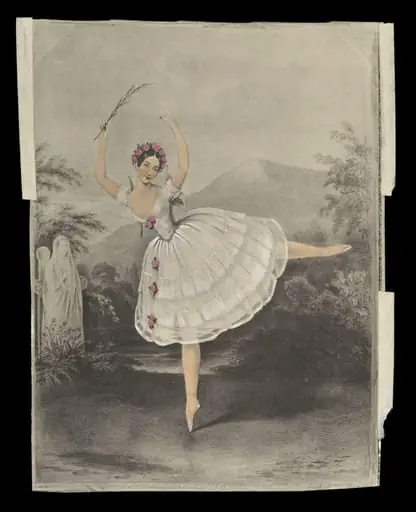
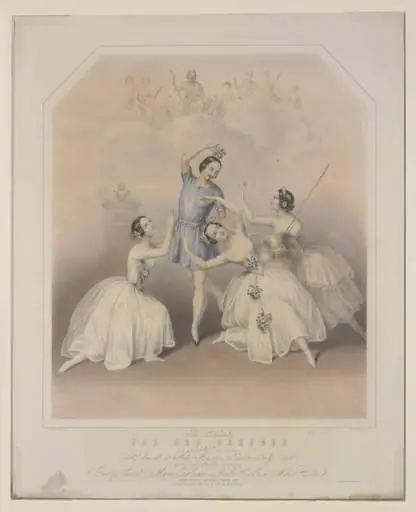
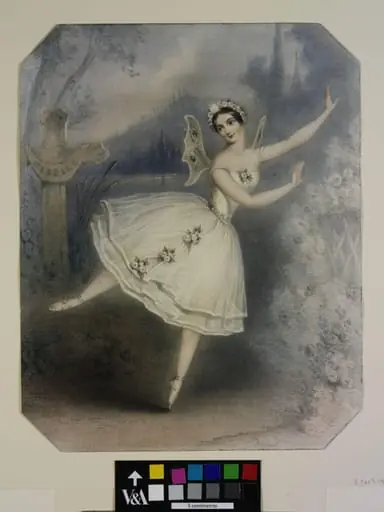
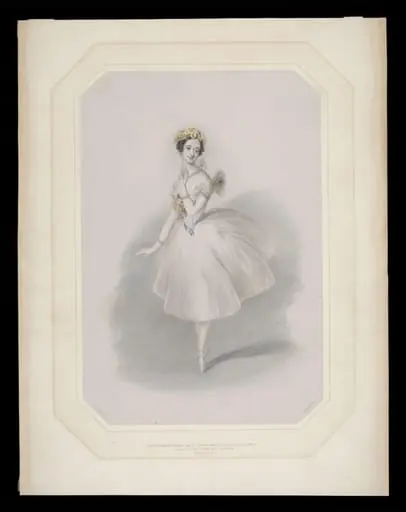
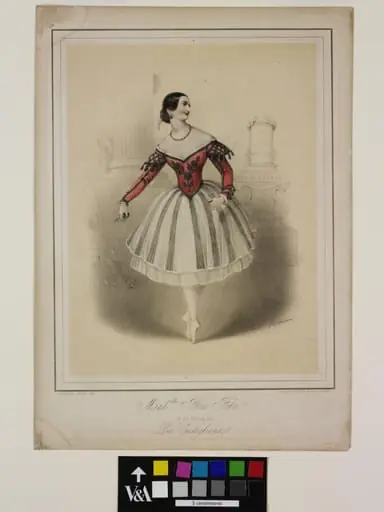
Print Collection is a print by the Romanticist artist Jules Bouvier. It dates from 1844 and is held in the collection of the Victoria and Albert Museum. A hand-colored lithograph from 1844 captures a moment from the ballet La Esmeralda, performed at Her Majesty’s Theatre in London.
About this work
Overview
A hand-colored lithograph from 1844 captures a moment from the ballet La Esmeralda, performed at Her Majesty’s Theatre in London.
A hand-colored lithograph from 1844 captures a moment from the ballet La Esmeralda, performed at Her Majesty’s Theatre in London. The print, based on a drawing by J. Bouvier, portrays principal dancers Carlotta Grisi and Jules Perrot in character. It was produced as part of a series documenting popular theatrical performances of the era, reflecting the public’s fascination with stage spectacle and celebrity performers.
Subject & Meaning
The scene depicts Esmeralda, a Romani dancer, mid-performance with her tambourine, surrounded by symbolic details of her costume, including weighted lattice patterns that reference North African and Egyptian traditions. Beside her, Jules Perrot portrays Gringoire, kneeling with hands raised as he pleads for mercy. Their interaction illustrates a key plot point: Esmeralda’s act of compassion, marrying him to spare his life from an angry mob.
Technique & Style
The image is a lithograph enhanced with manual coloring, a common method for reproducing theatrical scenes before photography. Bouvier’s drawing emphasizes dynamic posture and expressive gesture, while the delicate hand-painted details—such as fabric textures and facial expressions—add immediacy. The composition frames the dancers against a sparse background, directing focus to their interaction and costume.
History & Provenance
Created in 1844, the print was made shortly after the ballet’s London premiere, capitalizing on its popularity. It circulated among theatergoers and collectors as a memento of the performance. The collaboration between Bouvier and the printmaker reflects the growing market for visual records of dance and opera, linking fine art with popular entertainment in mid-19th-century Europe.
Context
La Esmeralda drew from Victor Hugo’s 1831 novel Notre-Dame de Paris, adapting its themes of marginalization and spectacle. The ballet’s use of the corps de ballet to simulate a Parisian crowd was considered innovative, enhancing realism. The portrayal of Esmeralda as a Romani woman reflected contemporary European fascination with exoticism, though often through stereotypical lenses rooted in Orientalist imagery.
Legacy
The print preserves a fleeting moment in dance history, documenting the artistry of Grisi and Perrot during their peak years. Though the ballet itself faded from repertoires, such images helped sustain public memory of 19th-century theatrical innovation. Today, it serves as a visual archive of how dance, costume, and narrative were interpreted for mass audiences in the pre-photographic age.
Artist & collection
Artist
Jules Bouvier made 19th-century lithographs that turned leading ballet dancers into star prints.