Artwork
Il corpo di Luciano Manara visitato dai soldari (The Body of Luciano Manara Visited by Soldiers)
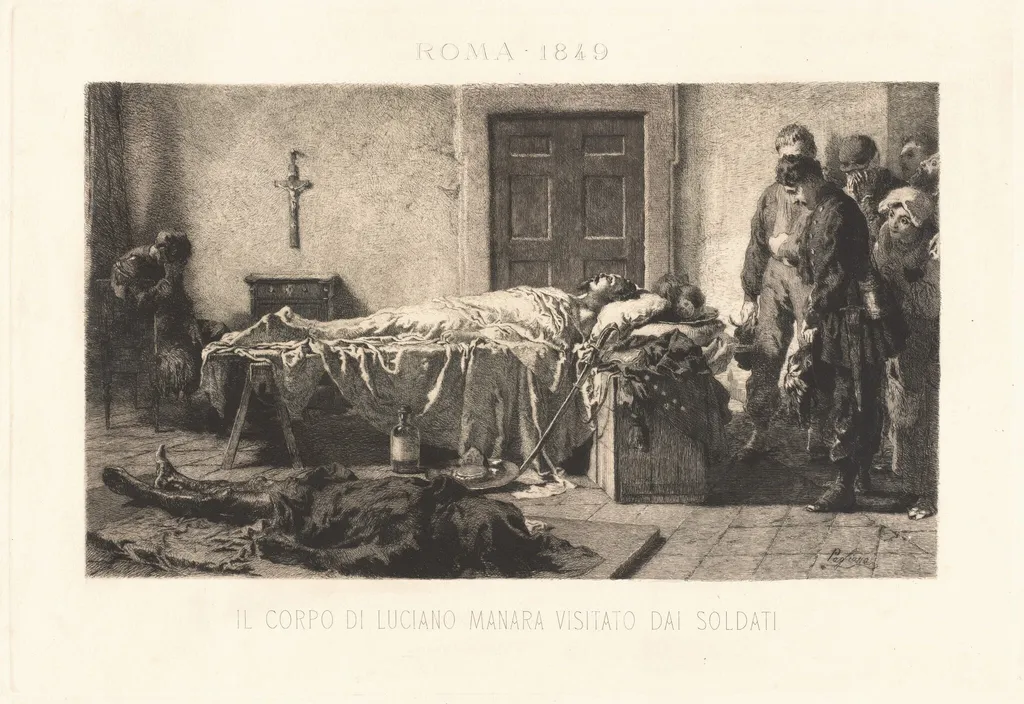
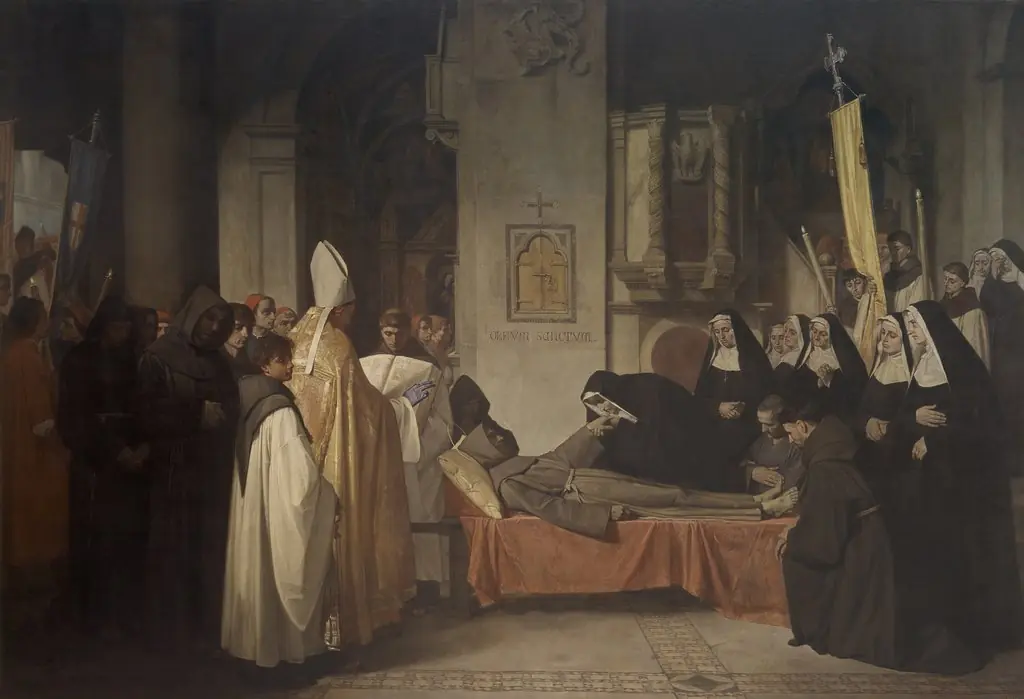
Il corpo di Luciano Manara visitato dai soldari (The Body of Luciano Manara Visited by Soldiers) is an ink print by the Impressionist artist Eleuterio Pagliano. It dates from 1884 and is held in the collection of the National Gallery of Art.
About this work
This etching shows soldiers gathered around a draped body on a table. The light hits their faces and the dead man’s hands. You can see the texture of the paper under the ink.
Pagliano made this in 1884. He used etching and drypoint together, which lets him add fine lines and soft shading. The soldiers’ expressions feel real, not heroic.
Check out Pagliano, Eleuterio for more of his sharp prints.
Overview
Eleuterio Pagliano’s 1884 print, titled *Il corpo di Luciano Manara visitato dai soldati*, presents a somber scene in which a group of soldiers gathers around a shrouded corpse placed on a table. Executed on heavy laid paper, the work captures a moment of quiet observation, emphasizing the stark contrast between the living figures and the lifeless form.
Subject & Meaning
The composition centers on the body of Luciano Manara, a young patriot whose death is being examined by his comrades. The soldiers’ faces are illuminated by a focused light, revealing a range of restrained emotions rather than overt heroism, suggesting a contemplation of sacrifice and the human cost of conflict.
Technique & Style
Pagliano combined traditional etching with drypoint, allowing him to render both precise linear details and subtle tonal gradations. The drypoint work contributes delicate, velvety shadows, especially evident in the rendering of the dead man’s hands and the folds of the drapery, while the etched lines define the soldiers’ features and the texture of the paper itself.
History & Provenance
Created in the late nineteenth century, the print reflects Pagliano’s interest in contemporary historical subjects. Though specific ownership records are limited, the work has been catalogued among Pagliano’s series of prints that document Italian unification themes, underscoring his role as a visual chronicler of the period.
Artist & collection


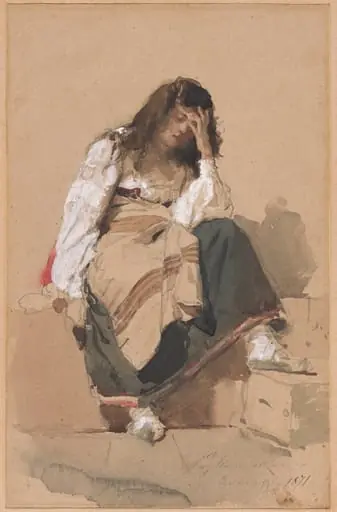
![Indian Summer [L'estate di San Martino], by Eleuterio Pagliano](https://artifactworldgallery.com/img/eleuterio-pagliano--indian-summer-l-estate-di-san-martino--c18fa1d8e52f5b86-w320.webp)
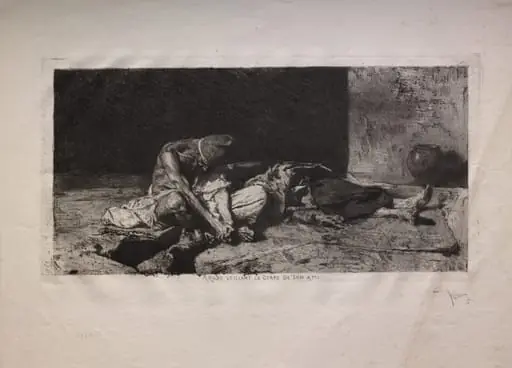 Arab Watching over the Body of His Friend
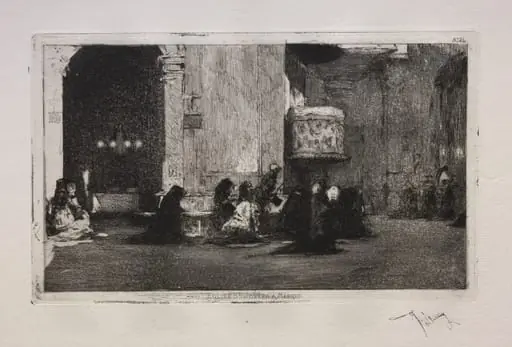 Saint Joseph Church, Madrid
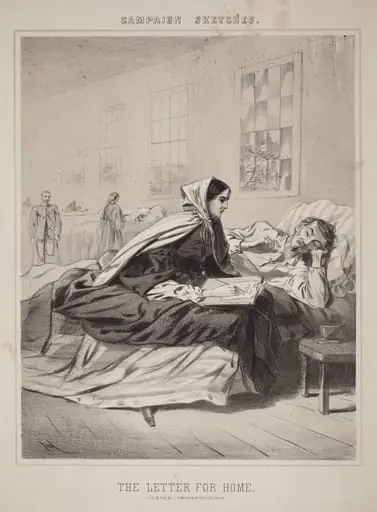 Campaign Sketches: The Letter for Home
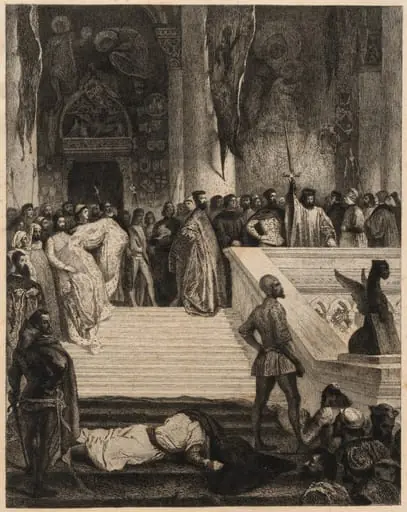 The Death of Doge Marino Faliero
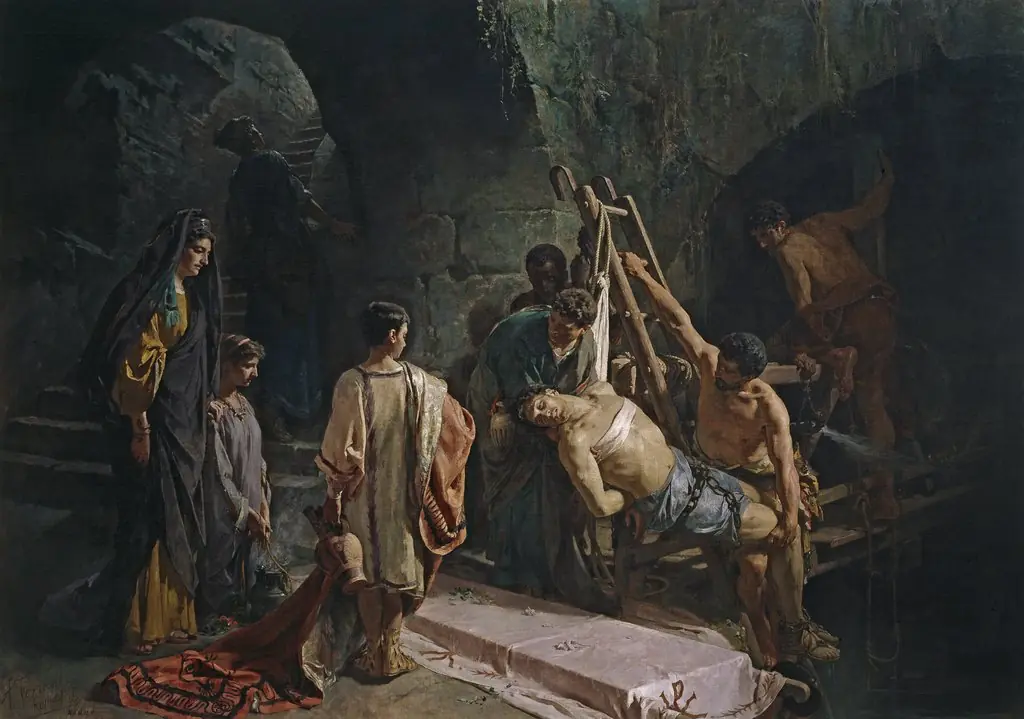 The Burial of Saint Sebastian
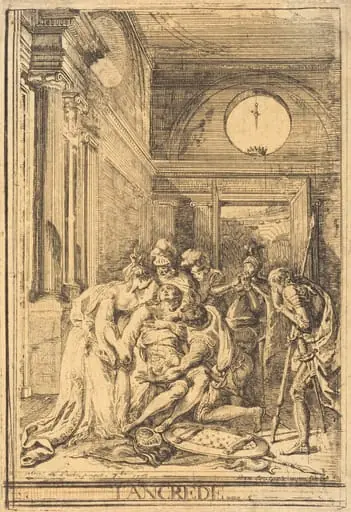 The Death of Tancred
 The Entombment
![The Death of Tancred [left], by Gabriel de Saint-Aubin](https://artifactworldgallery.com/img/gabriel-de-saint-aubin--the-death-of-tancred-left--c0a4b5e0d77d5ed0-w320.webp) The Death of Tancred [left]
The Death of Tancred [left] Untitled
 Saint Alexis
 Celui-la, on peut le mettre en liberté! (This one we can set free! He is no longer dangerous!)
 Traslación de San Francisco de Asís