Artwork
The Entombment
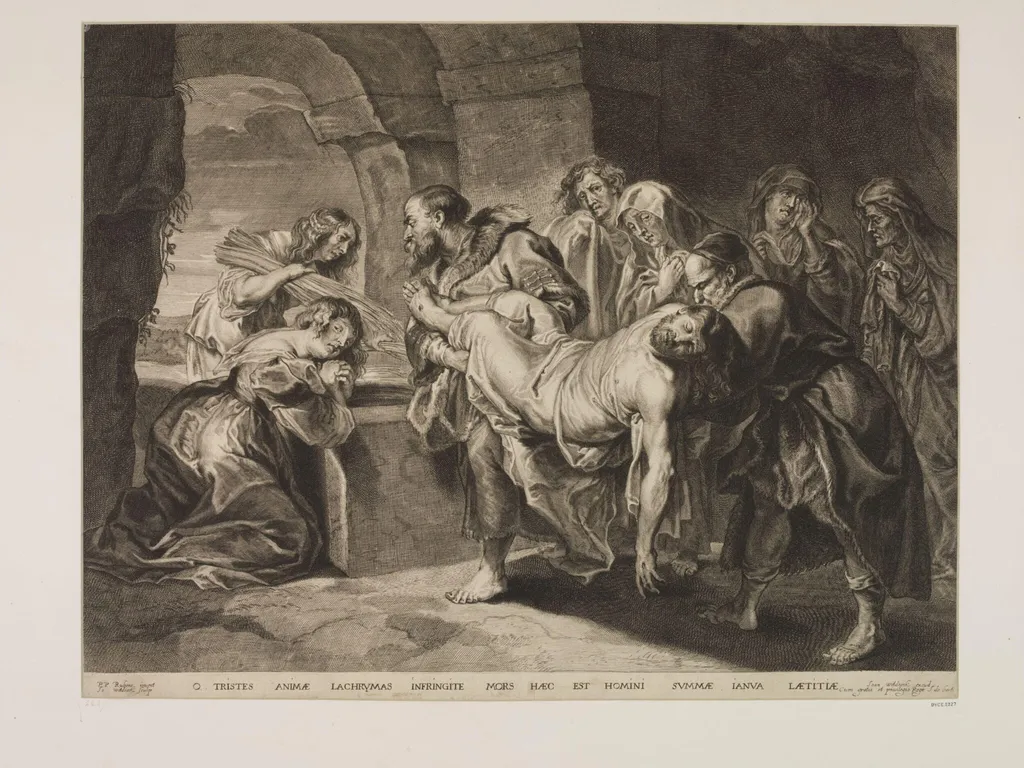
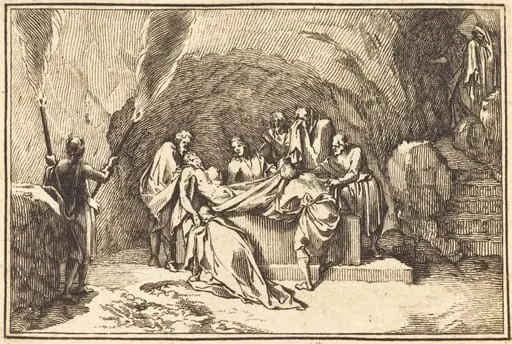
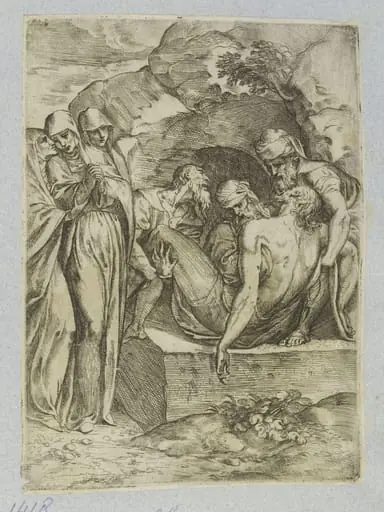
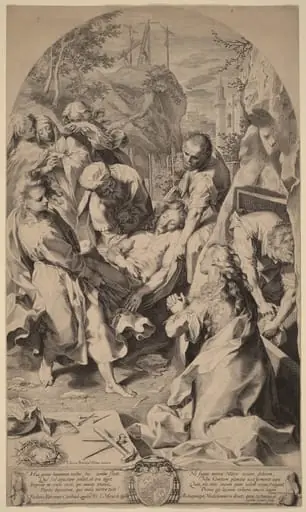
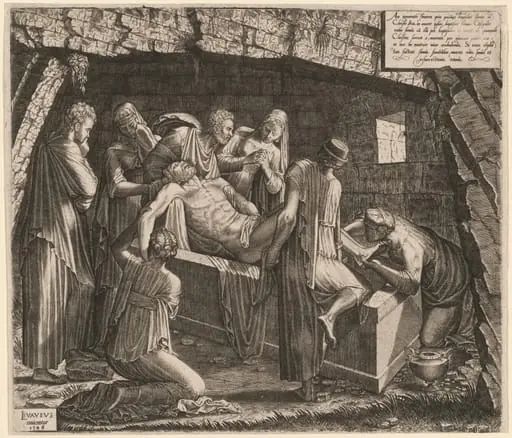
The Entombment is a print by Jan Witdoeck. It is held in the collection of the Victoria and Albert Museum.
About this work
Overview
Witdoeck translated Rubens’s oil painting into a graphic medium, preserving its emotional gravity while adapting it for wider circulation through printmaking.
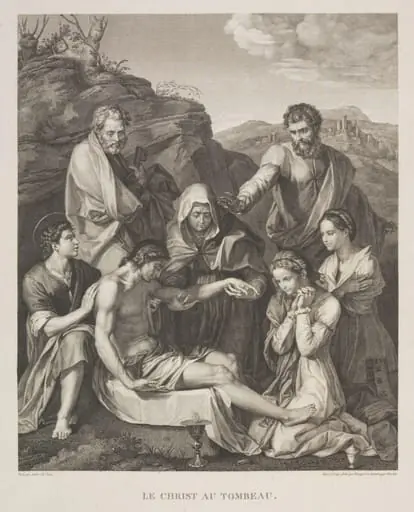
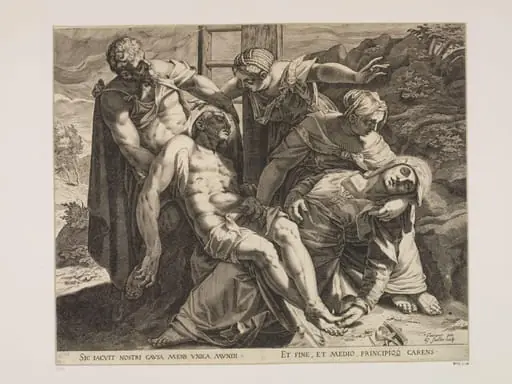
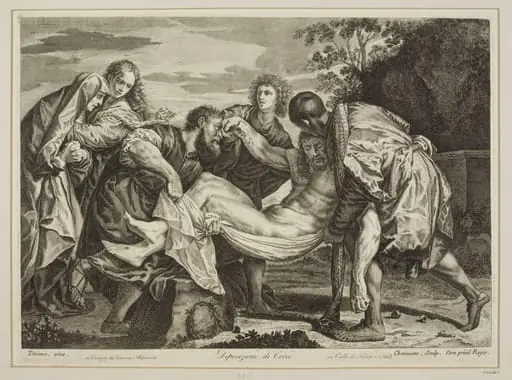
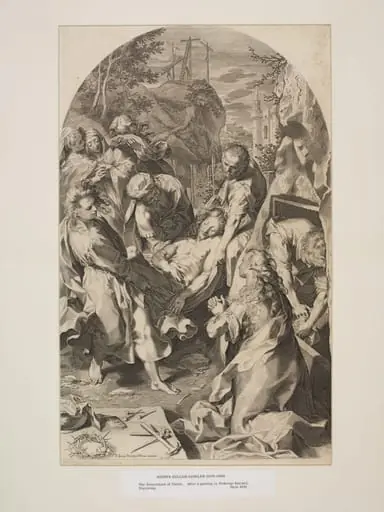
Created around 1650 by Jan Witdoeck, this print on paper portrays the burial of Christ, adapted from a composition originally painted by Peter Paul Rubens. The scene centers on Christ’s wrapped body being prepared for entombment, surrounded by mourners. Witdoeck translated Rubens’s oil painting into a graphic medium, preserving its emotional gravity while adapting it for wider circulation through printmaking.
Subject & Meaning
The scene captures the moment after Christ’s removal from the cross, as mourners gather around his body. A woman kneels with a child, while others stand or crouch in quiet grief. The inclusion of female figures reflects traditional depictions of pious witnesses to Christ’s death. The somber tone and clustered figures emphasize communal sorrow and the weight of loss, aligning with Counter-Reformation devotional themes.
Technique & Style
Witdoeck employed chiaroscuro to model forms and direct focus, using stark contrasts between light and deep shadow. The rough texture of the rocky background and the soft folds of cloth are rendered with fine, controlled lines typical of engraved prints. The lighting isolates the body and key figures, heightening emotional intensity without narrative detail, relying instead on posture and expression to convey meaning.
History & Provenance
The print derives from a lost or lesser-known painting by Rubens, likely produced in the early 17th century. Witdoeck, active in Antwerp, specialized in reproductive engravings of Flemish masterworks. This print was likely made for private collectors or religious institutions seeking accessible versions of prominent devotional imagery, circulating within Catholic Europe during the mid-1600s.
Context
In mid-17th-century Flanders, religious imagery remained central to artistic production despite political and theological upheaval. Reproductive prints like this one allowed devotional scenes to reach audiences beyond those who could view original paintings. Witdoeck’s work reflects the enduring influence of Rubens and the role of print in sustaining Catholic visual culture during a period of religious fragmentation.
Legacy
Though not widely known today, Witdoeck’s print exemplifies the broader practice of engraving as a vehicle for disseminating major compositions. It preserves a visual interpretation of Rubens’s approach to sacred narrative, offering insight into how Flemish artists and publishers sustained religious imagery through mechanical reproduction in an era before photography.
Artist & collection