Artwork
Fazan
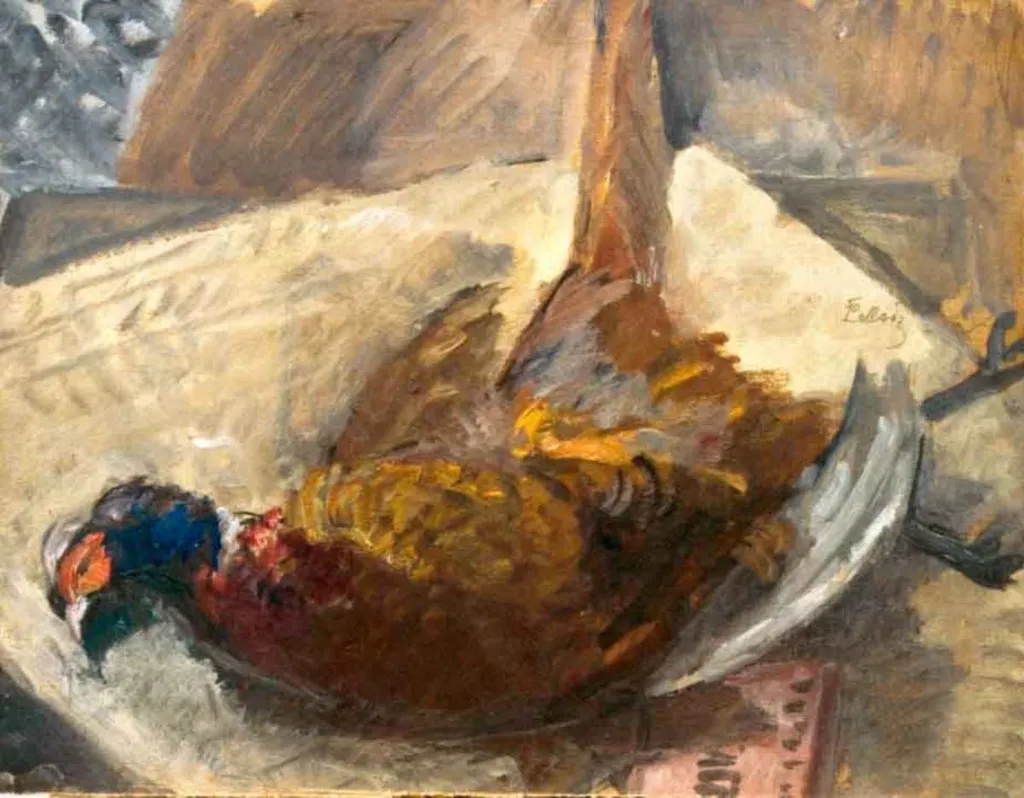
Fazan is an unspecified painting by Theodor Pallady. It dates from 1921 and is held in the collection of the National Museum of Art of Romania.
About this work
Overview
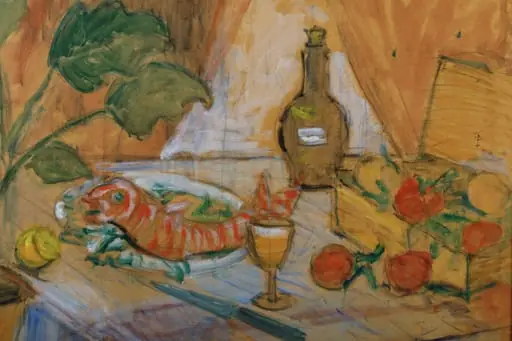
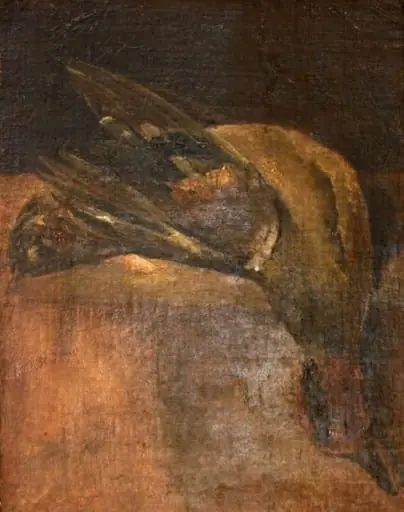
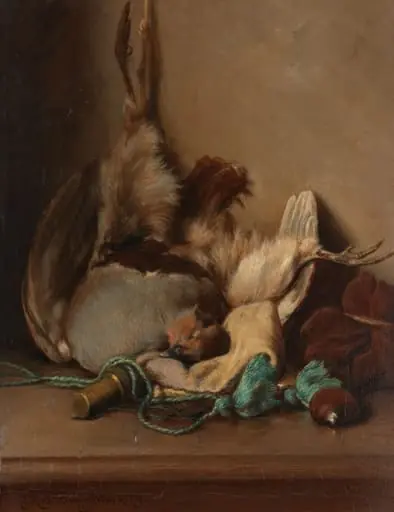
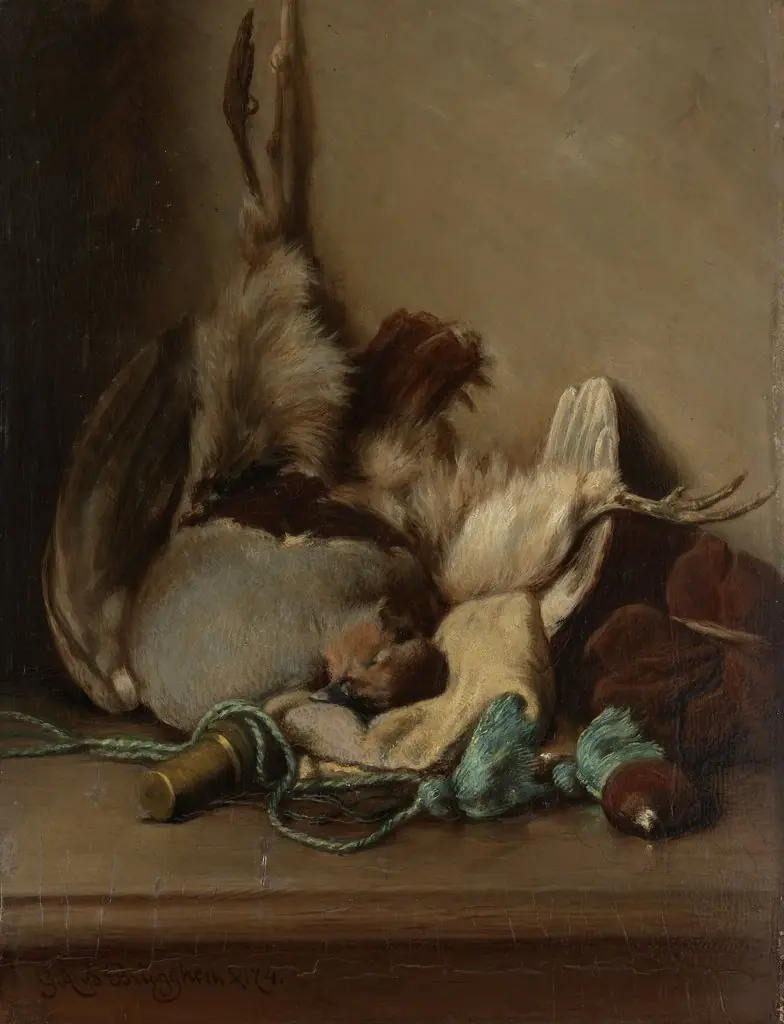
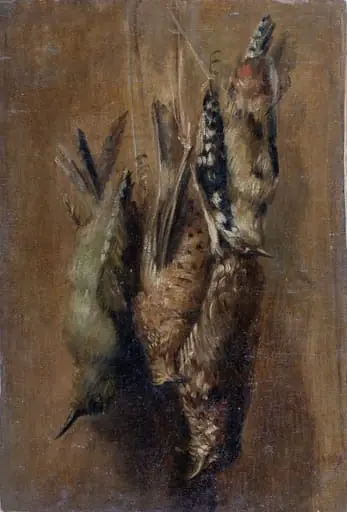
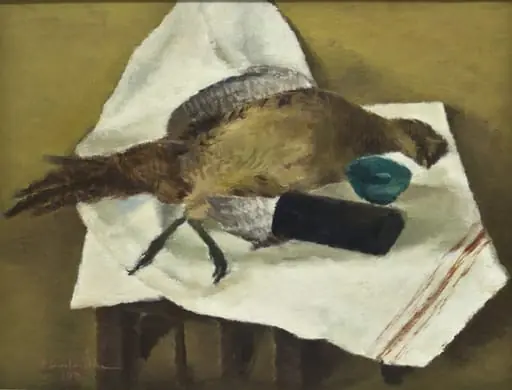
Fazan, painted around 1921 by Theodor Pallady, is a quiet still life depicting a single pheasant resting on its side. The composition focuses entirely on the bird, framed against a muted, earth-toned background. There is no indication of a setting or context beyond the immediate presence of the animal, emphasizing solitude and stillness as central to the work’s character.
Subject & Meaning
The pheasant, rendered in naturalistic detail, is shown in repose, its head turned gently to the left. Its stillness suggests a moment suspended after life, not as a trophy but as an object of quiet reverence. The absence of human presence or symbolic context invites contemplation of the bird’s form and the dignity of its natural state, without overt narrative or moral implication.
Technique & Style
Pallady employed loose, textured brushwork to convey the softness of feathers and the warmth of the background. Shades of russet, ochre, and muted blue build the bird’s plumage with subtle variation, avoiding sharp outlines. The brushstrokes remain visible, grounding the image in tactile reality while preserving a sense of calm, unforced observation.
History & Provenance
Created during Pallady’s mature period in Paris, Fazan reflects his sustained interest in domestic and natural subjects after his early academic training. While specific ownership records are not widely documented, the painting aligns with his broader body of work from the 1920s, which often explored still life and interior scenes with restrained elegance.
Context
In the post-war years, many European artists turned to intimate, non-political subjects as a form of quiet resistance to upheaval. Pallady’s focus on the pheasant fits within this trend, echoing the French still-life tradition while avoiding overt symbolism. His approach was neither decorative nor allegorical, but grounded in attentive observation of ordinary forms.
Legacy
Fazan exemplifies Pallady’s ability to elevate simple subjects through sensitivity to tone and texture. Though not widely exhibited, the work contributes to an understated legacy of Romanian modernism that valued introspection over spectacle. It remains a quiet testament to his commitment to observing the natural world with unembellished care.
Artist & collection