Artwork
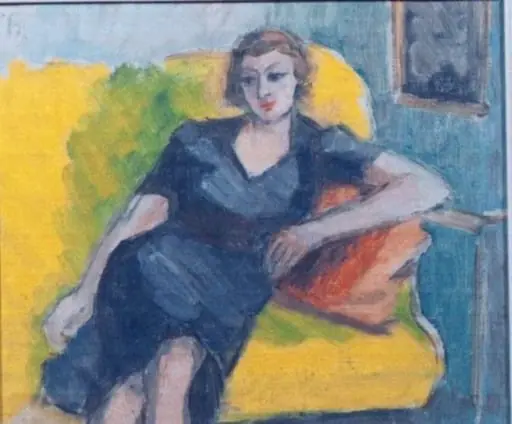
Femeie în galben
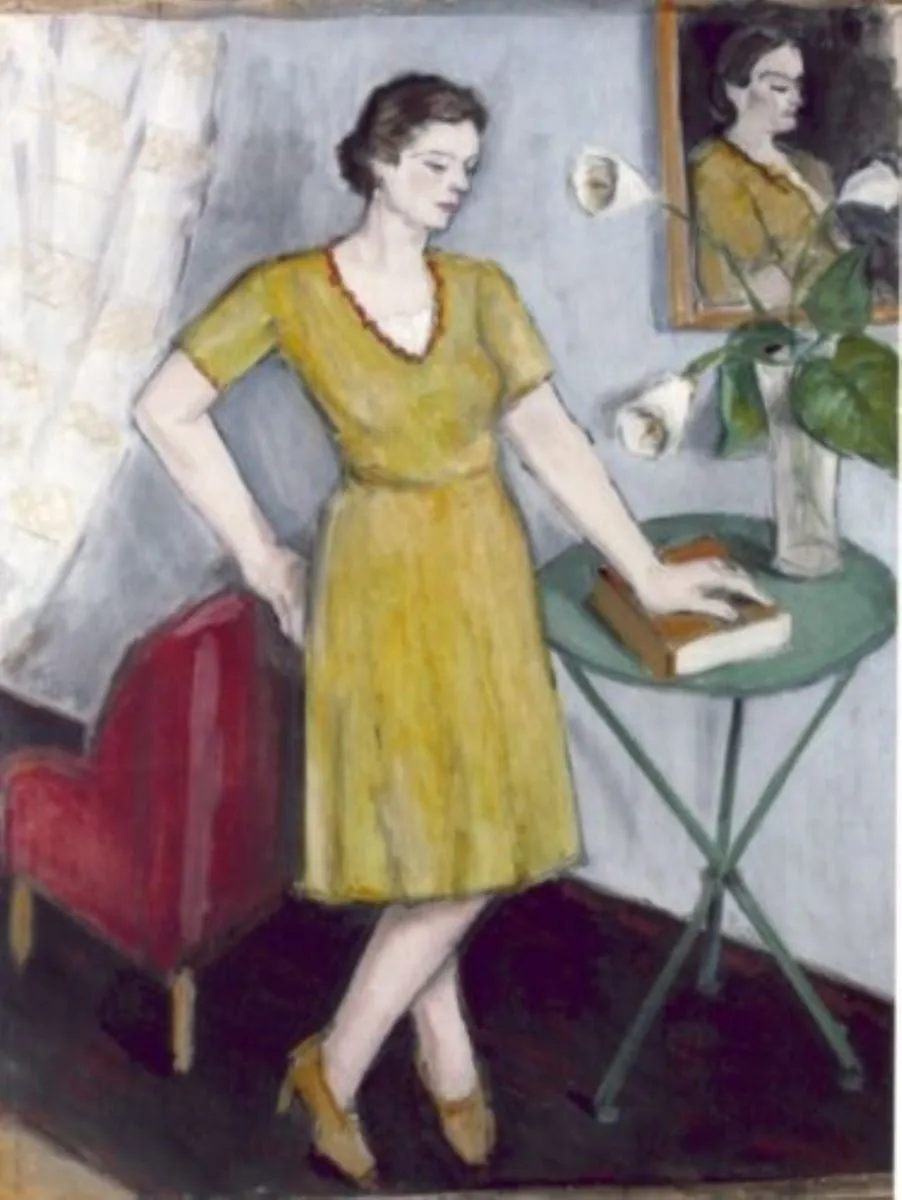
Femeie în galben is an unspecified painting by Theodor Pallady. It dates from 1921 and is held in the collection of the Bucharest Municipality Museum.
About this work
Overview
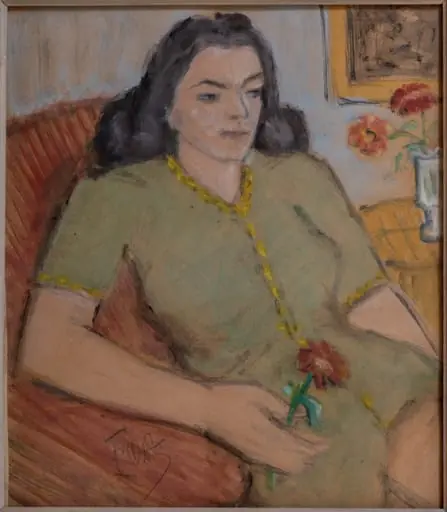
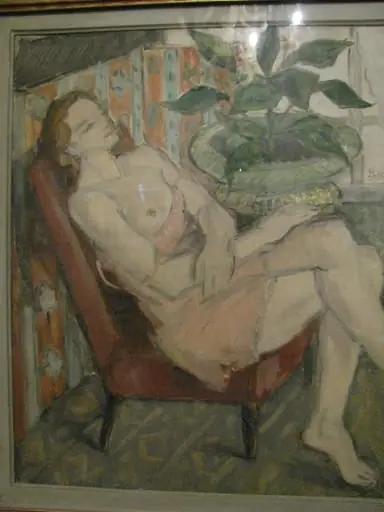
Femeie în galben, painted around 1921 by Theodor Pallady, portrays a solitary woman in a domestic interior. The work is part of the collection at the Museum of Ethnography in Bucharest. Its quiet composition and restrained palette reflect Pallady’s interest in intimate, psychologically nuanced scenes, characteristic of his post-impressionist leanings during this period.
Subject & Meaning
The figure, dressed in yellow and standing beside a red chair, holds a book while her left hand rests lightly on the chair’s back. Her poised posture and refined attire suggest a moment of contemplation. The mirror behind her reflects her image, subtly reinforcing themes of self-awareness and the private interior life of women in early 20th-century urban Romania.
Technique & Style
Pallady employs soft, blended brushwork and a muted yet deliberate color scheme, emphasizing tonal harmony over bold contrast. The yellow dress anchors the composition, while the red chair and floral vase provide subtle counterpoints. The mirror’s reflection is rendered with delicate precision, enhancing spatial depth without disrupting the painting’s calm atmosphere.
History & Provenance
The painting was completed around 1921, during Pallady’s mature period after years spent in Paris. It entered the Museum of Ethnography’s collection in the mid-20th century, where it remains today. Its acquisition reflects institutional interest in Romanian modernist works that capture domestic and cultural life of the interwar era.
Context
Created in the aftermath of World War I, the painting reflects a broader cultural shift toward introspection and personal expression in Romanian art. Pallady’s focus on a solitary woman in a private space aligns with contemporary European trends that elevated everyday moments, moving away from grand historical narratives toward psychological realism.
Legacy
Femeie în galben stands as a quiet example of Pallady’s contribution to Romanian modernism. While not widely exhibited, it is recognized for its sensitivity in portraying interiority and its refined technique. The work continues to inform scholarly discussions on gender, domesticity, and the evolution of Romanian painting in the early 20th century.
Artist & collection