Artwork
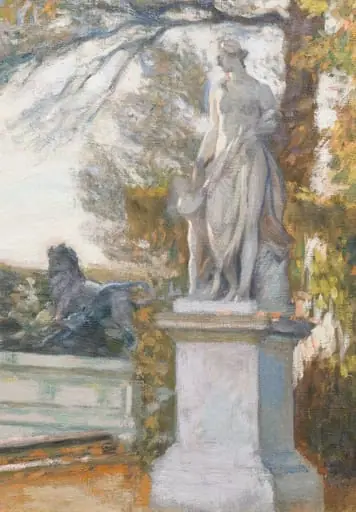
Peisaj din Grădina Luxemburg
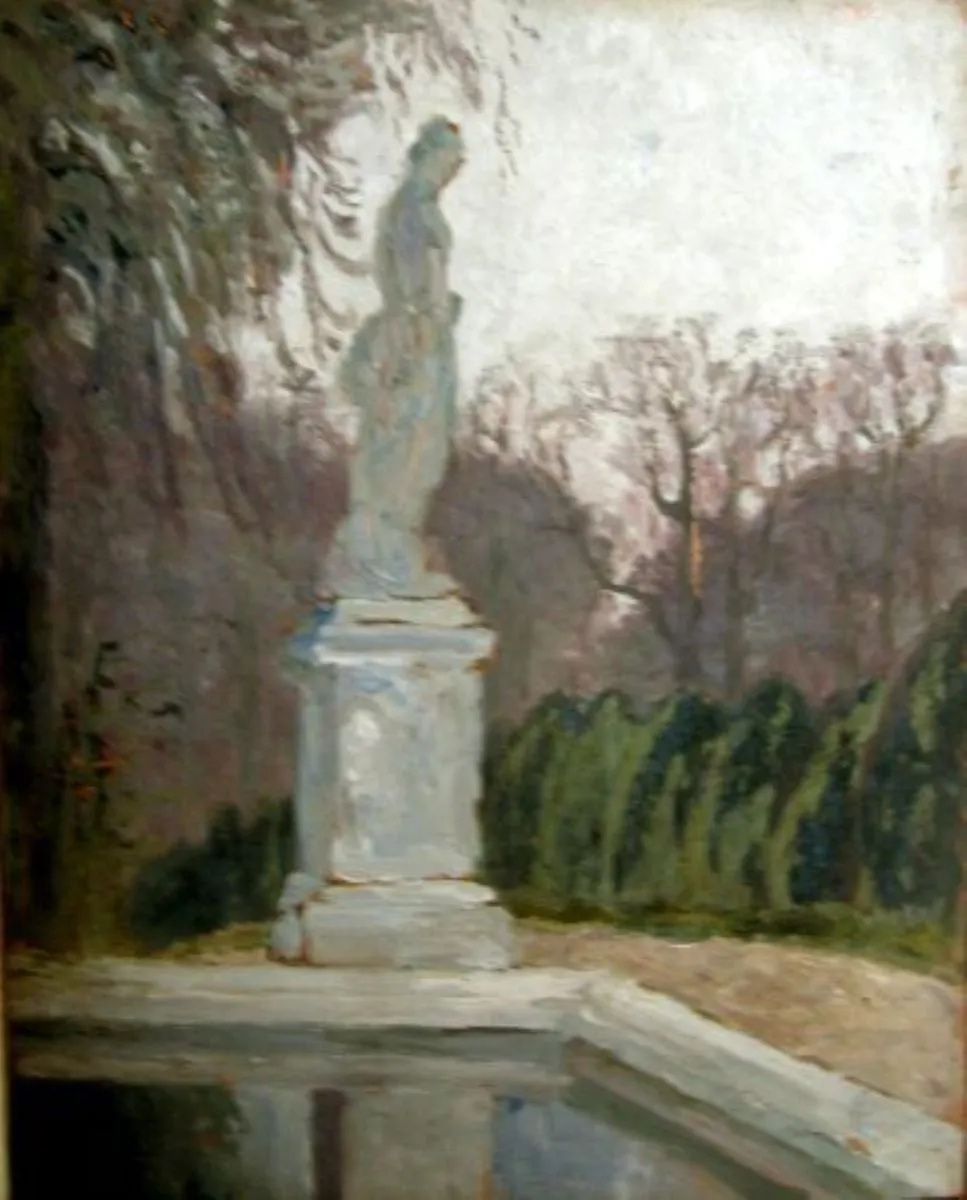
Peisaj din Grădina Luxemburg is an unspecified painting by Theodor Pallady. It dates from 1949 and is held in the collection of the Art museum of Craiova.
About this work
Overview
Peisaj din Grădina Luxemburg, executed around 1949 by Romanian painter Theodor Pallady, is an oil composition that resides in the Museum of Ethnography. The work presents a quiet garden scene rendered in muted pinks and greens, where a weathered stone pillar and a scarcely defined statue dominate the foreground, set against a backdrop of leafless trees and a low fence.
Subject & Meaning
The painting juxtaposes a half‑buried stone column with a barely discernible statue perched on a pedestal, suggesting themes of decay and the passage of time. The indistinct figure, whose features dissolve into the surrounding foliage, invites contemplation of memory and the fading presence of human art within a natural setting.
Technique & Style
Pallady employs a pronounced impasto technique, building up thick layers of paint especially on the stone pillar to convey texture and age. The brushwork is loose and atmospheric, with soft, blended strokes that soften the edges of the trees and fence, creating a hazy, almost dreamlike ambience while retaining tactile surface quality.
History & Provenance
Created in the post‑World War II period, the work entered the collection of the Museum of Ethnography, where it remains on display. Its acquisition reflects the museum’s broader effort to preserve Romanian modernist painting, situating Pallady’s garden scene within a national narrative of 20th‑century art.
Artist & collection


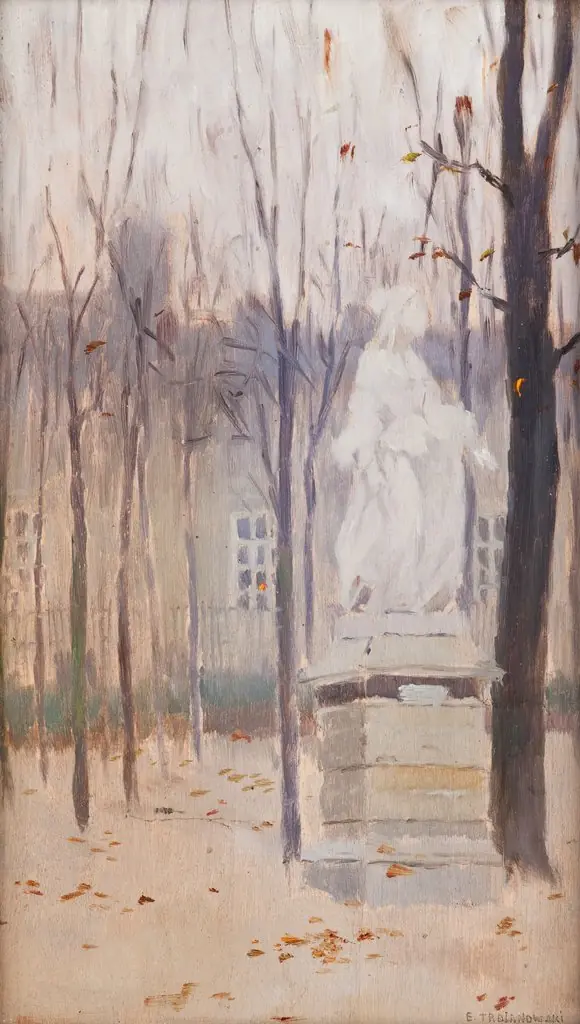 In the Luxembourg Garden
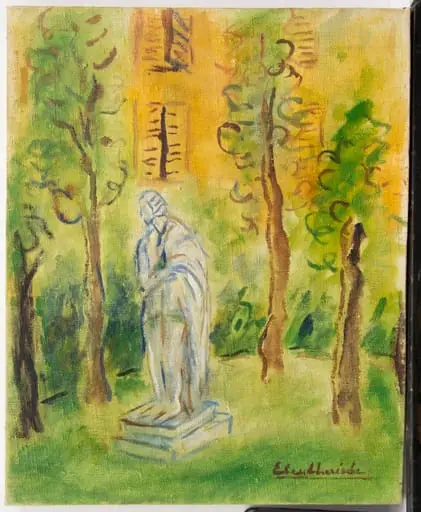 Statuia lui Voltaire - Paris
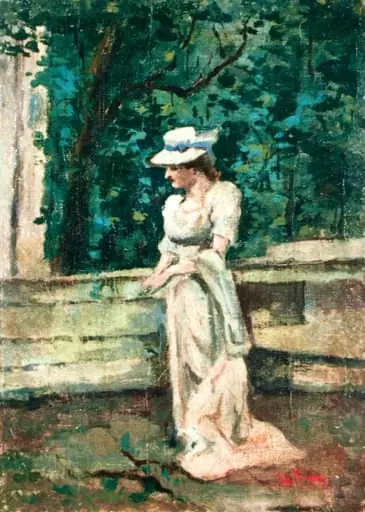 Femeie în parc
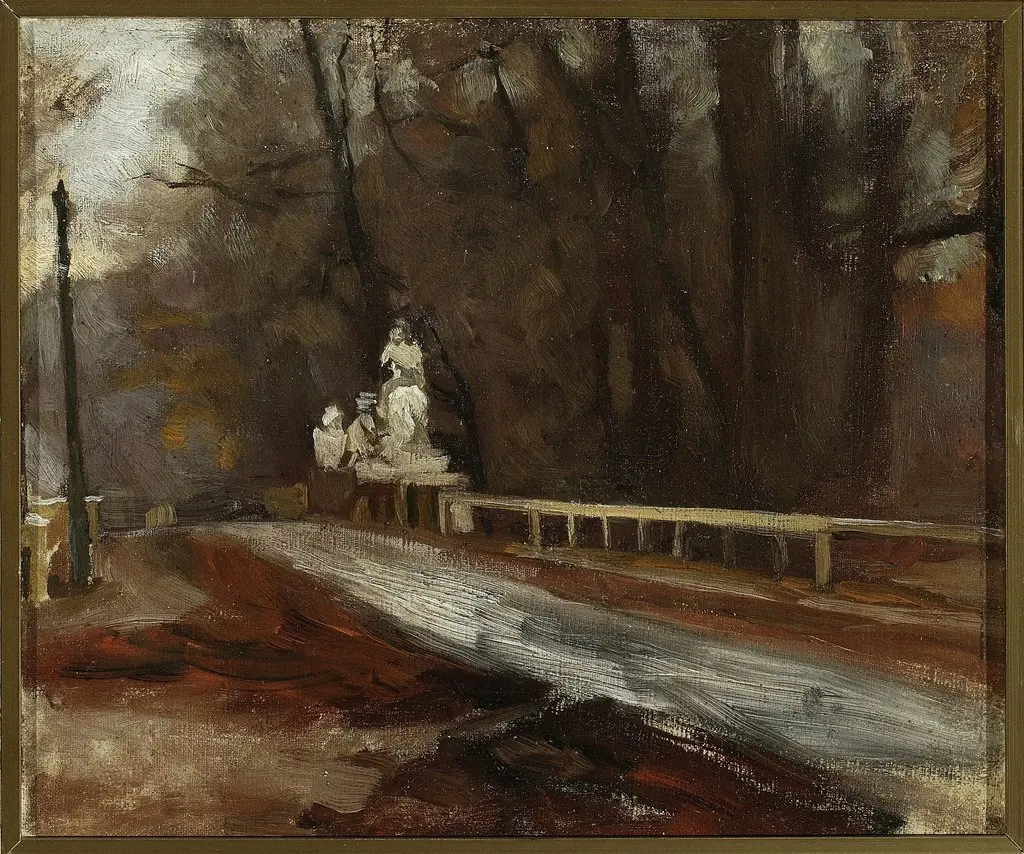 Bridge with the statue of Sobieski at Agrykola
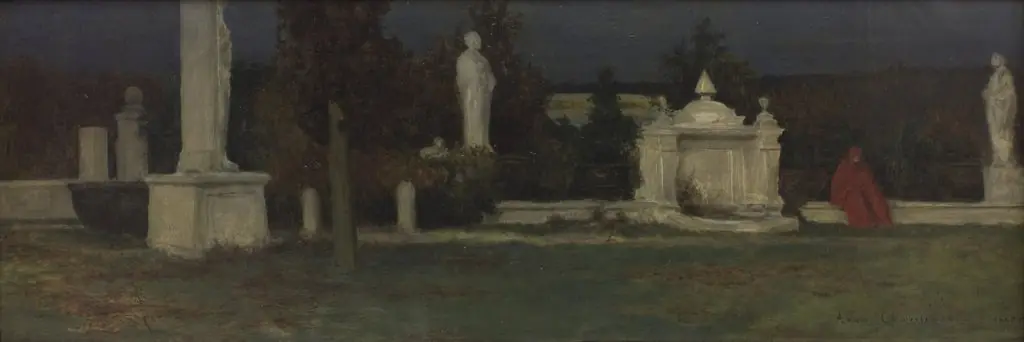 Grey Hour
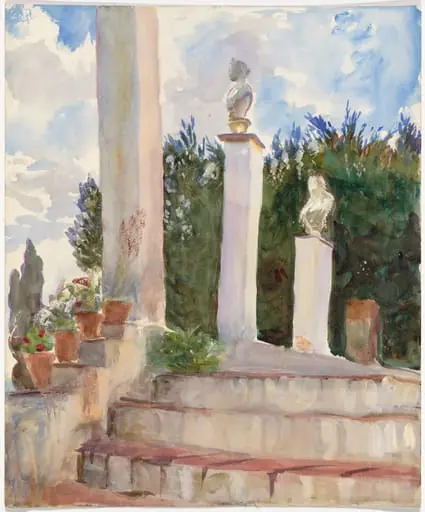 Generalife
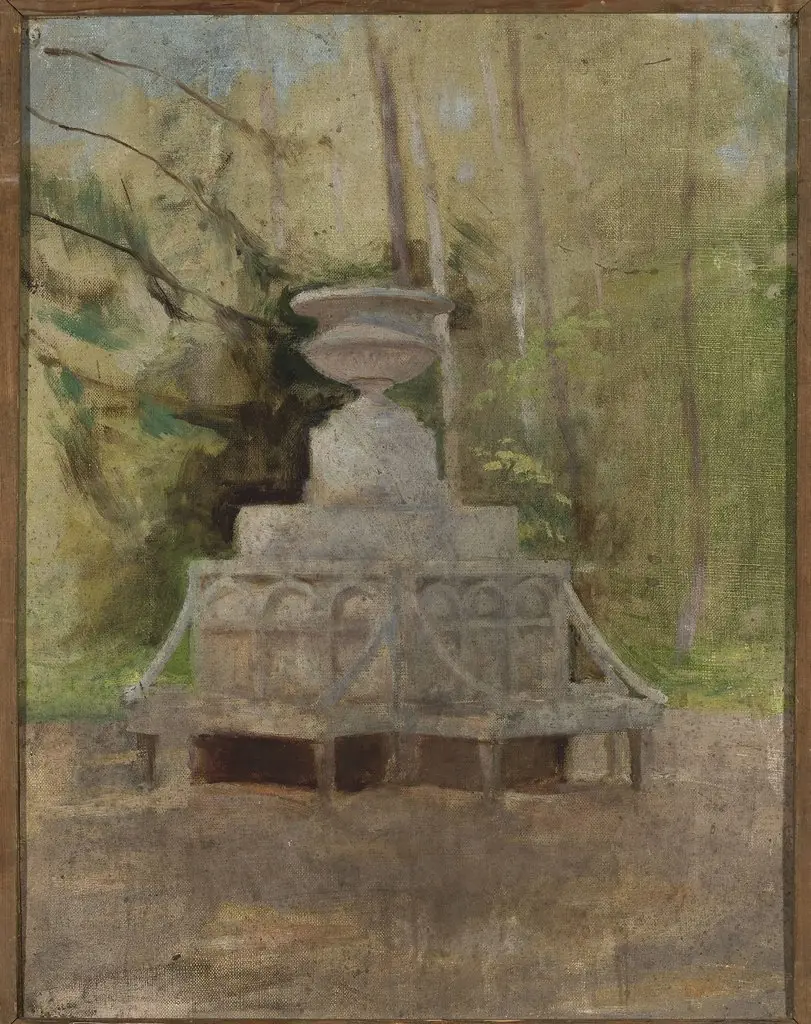 Park motif from Talashkino
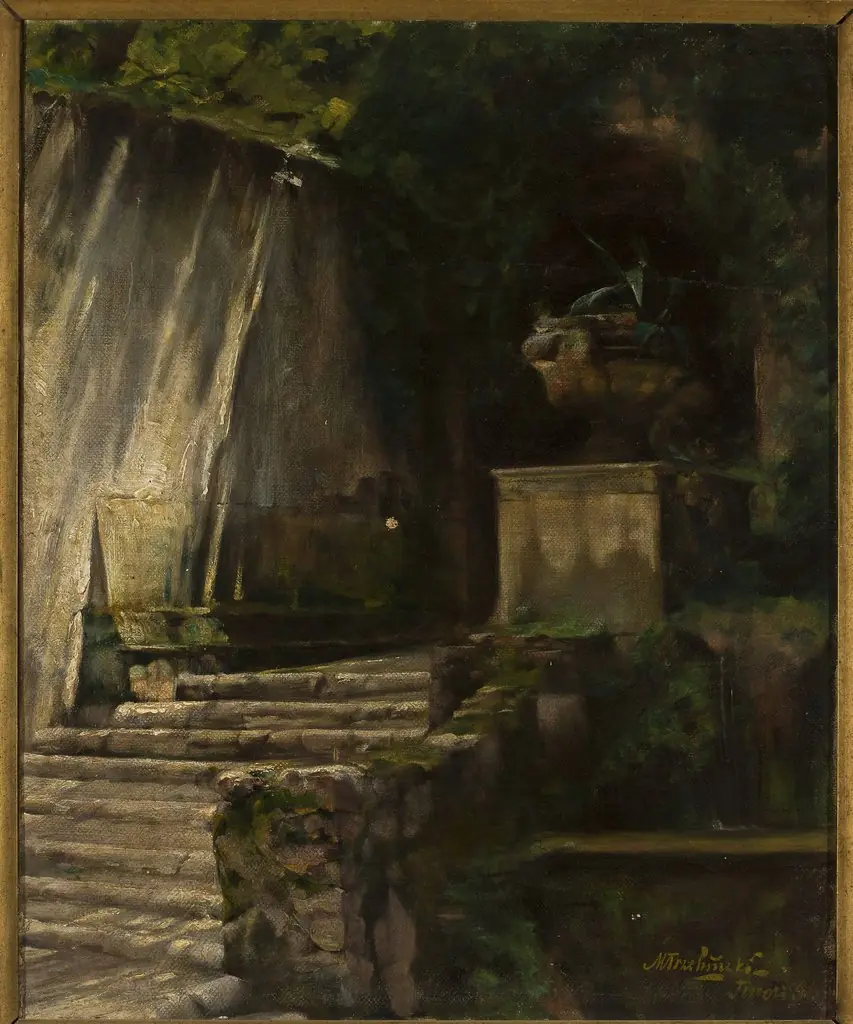 Fragment of the park in Tivoli
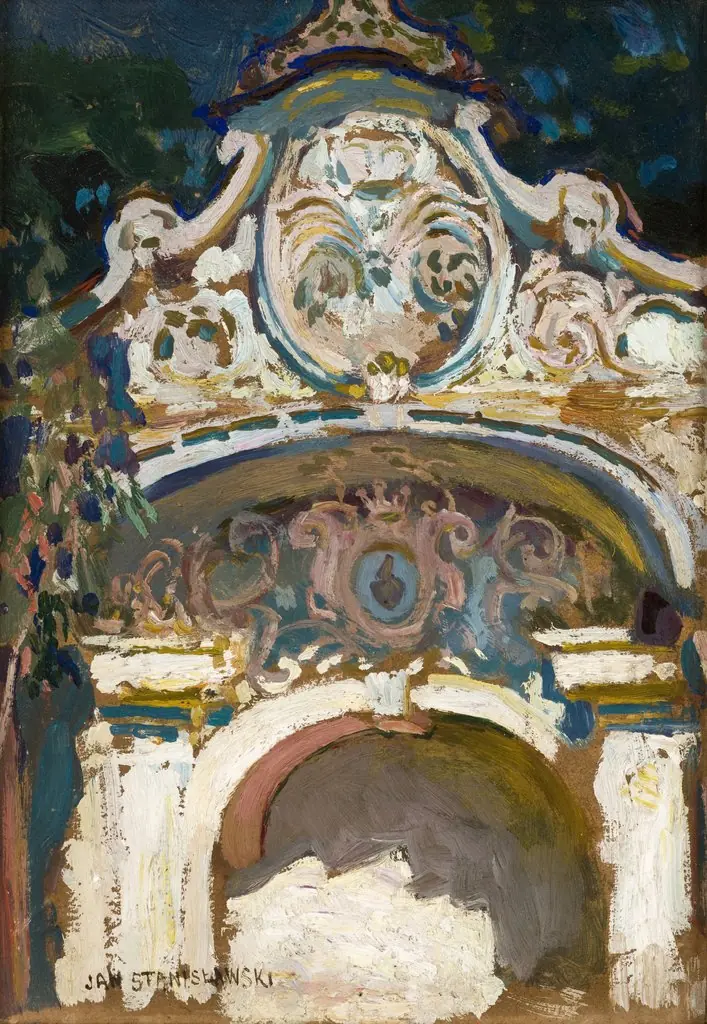 The Vasas' Gate in Kyiv
 Port Cochere at 39 Elm Street, Worcester, Mass.
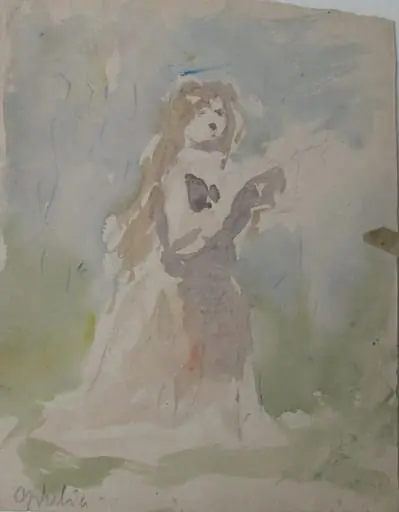 Ofelia din „Hamlet” de William Shakespeare
 Parc din Luxemburg