Artwork
Madonna and Child
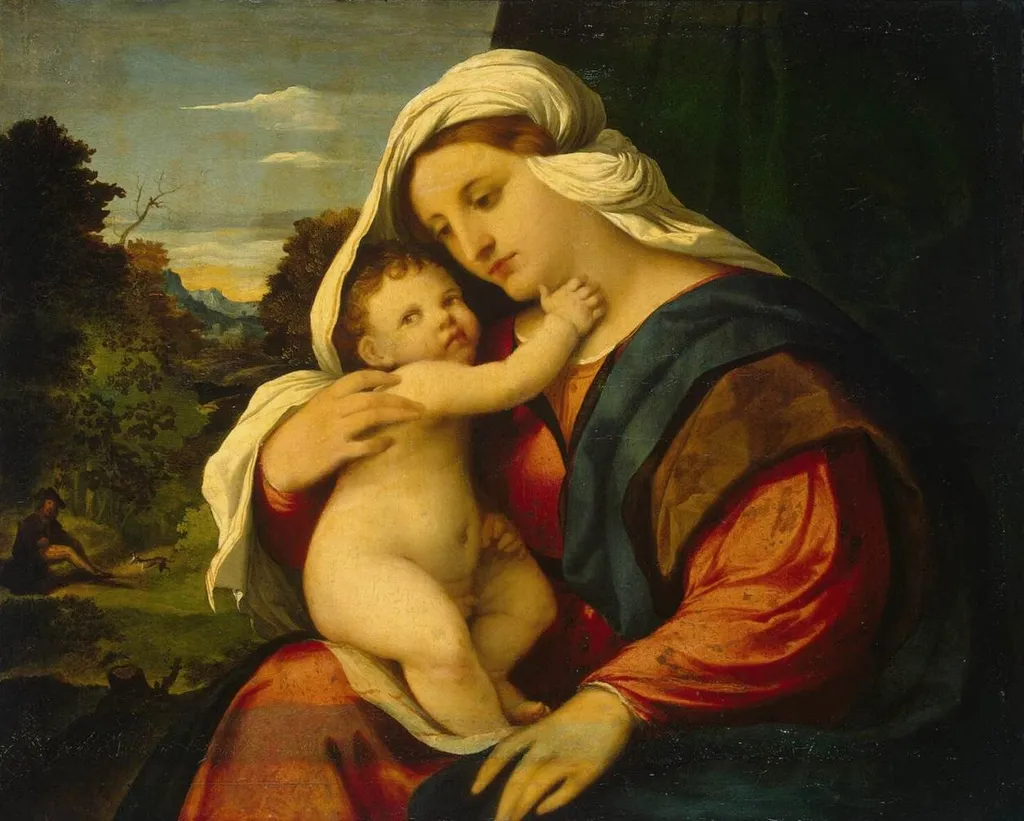
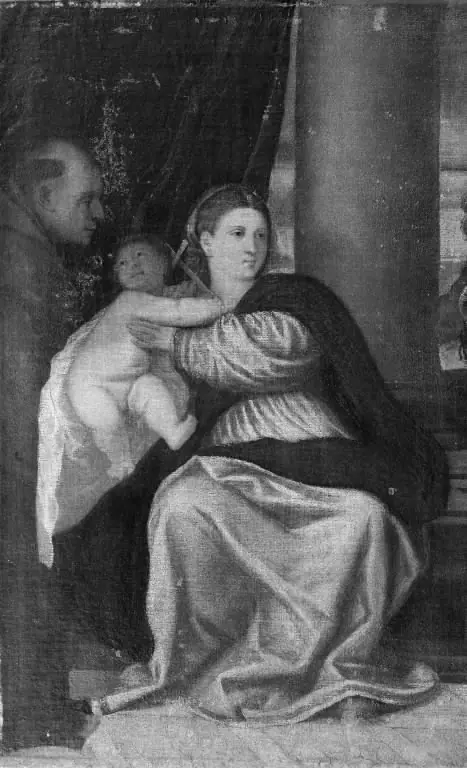
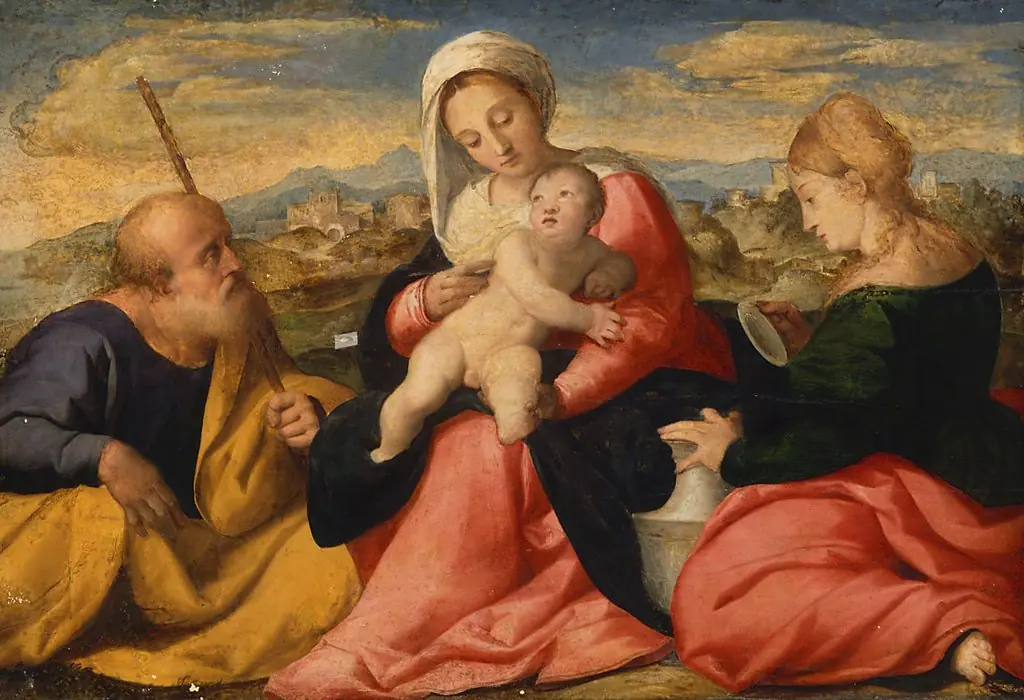
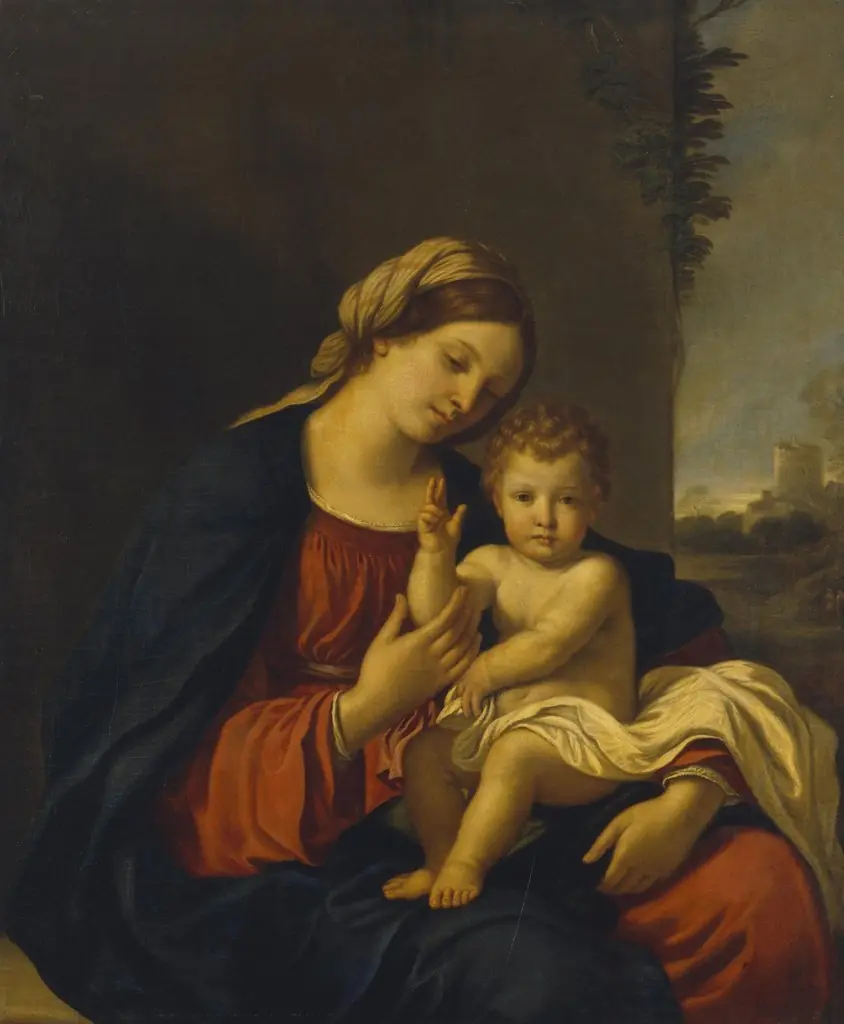
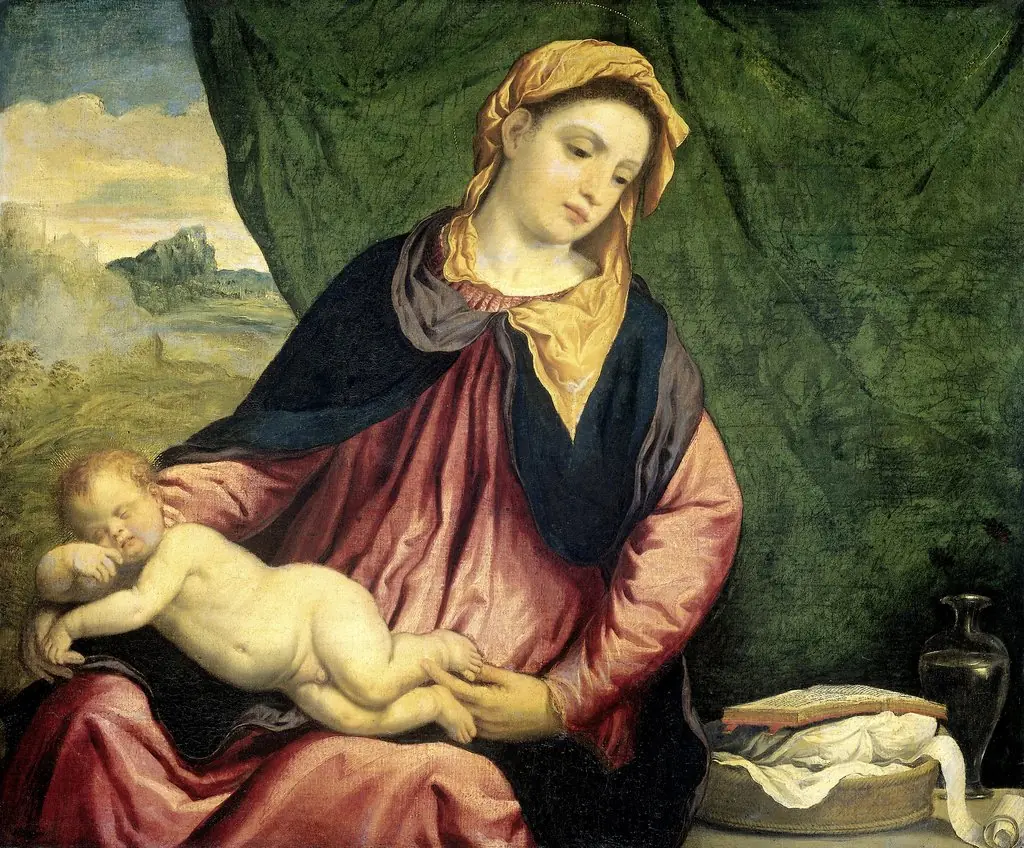
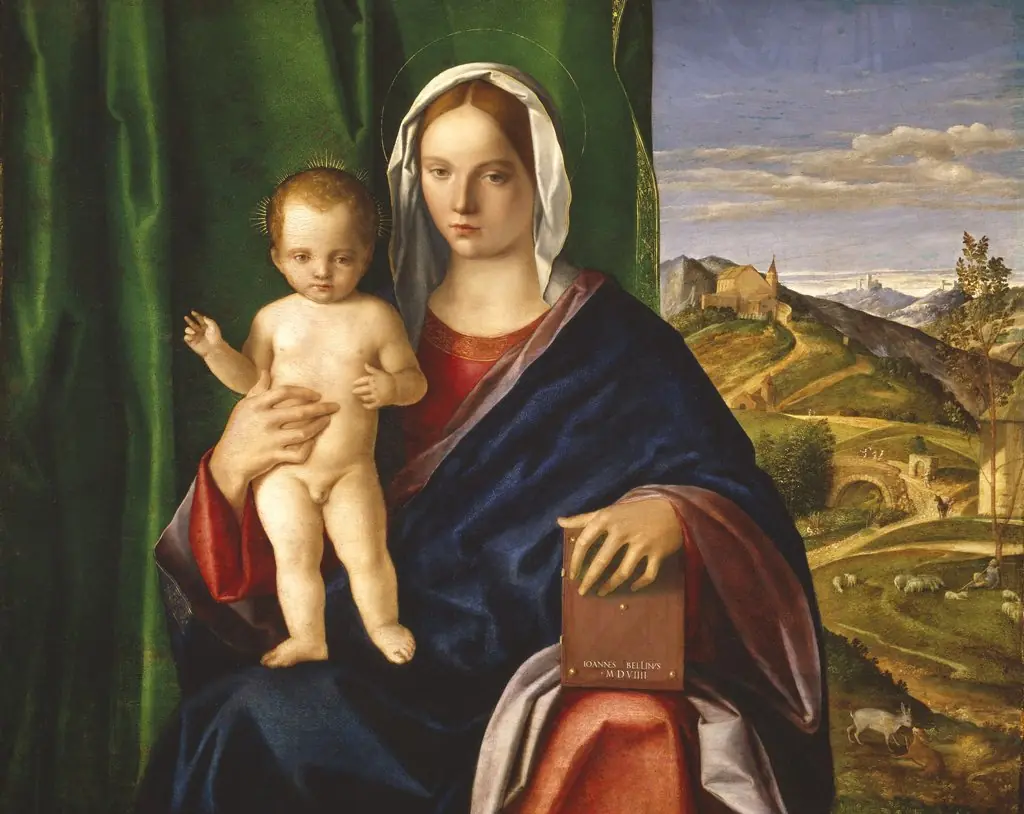
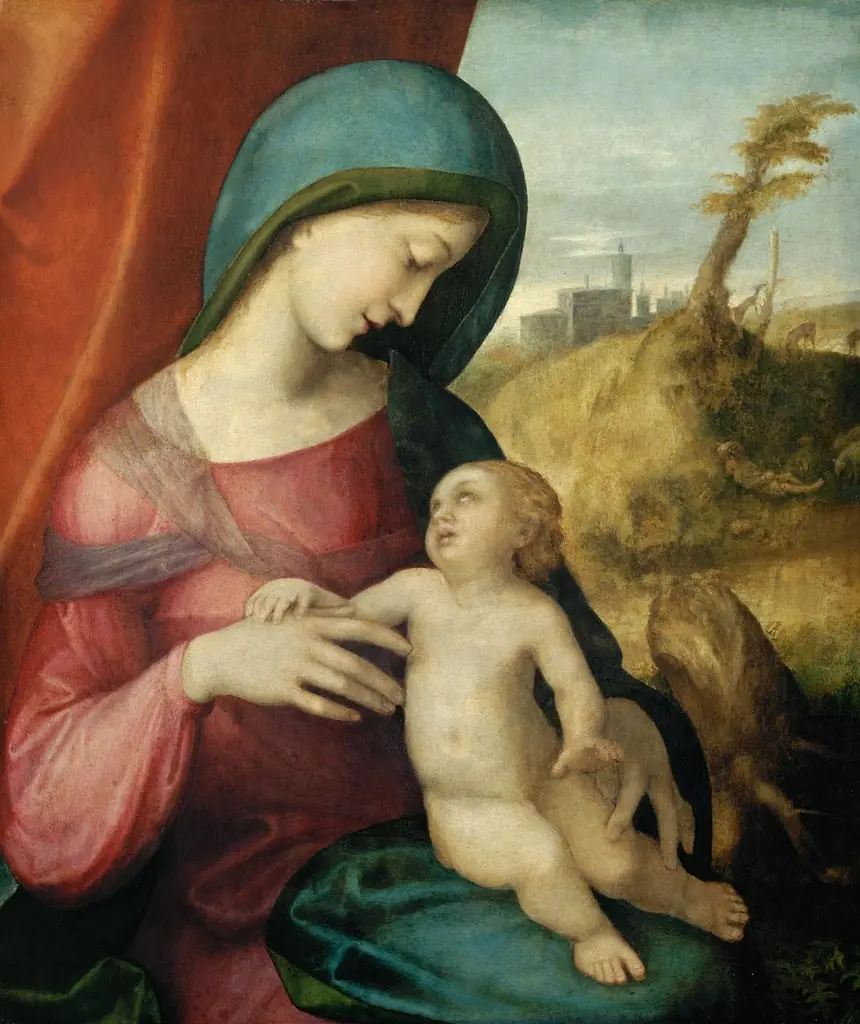
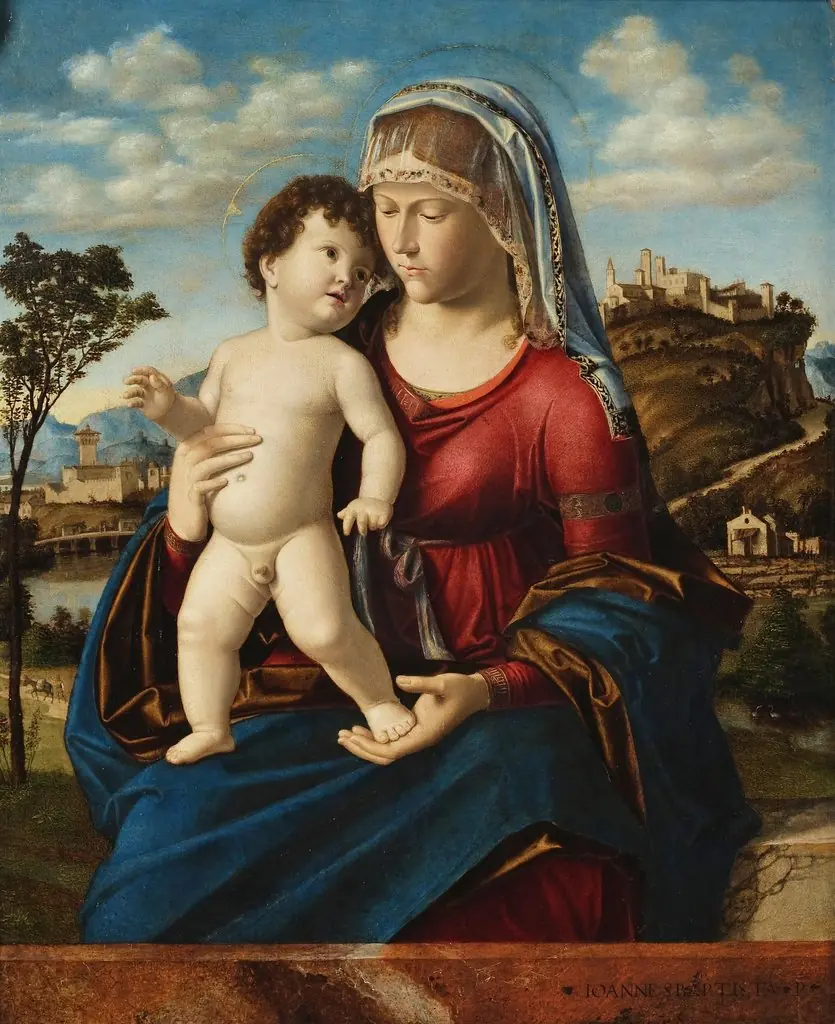
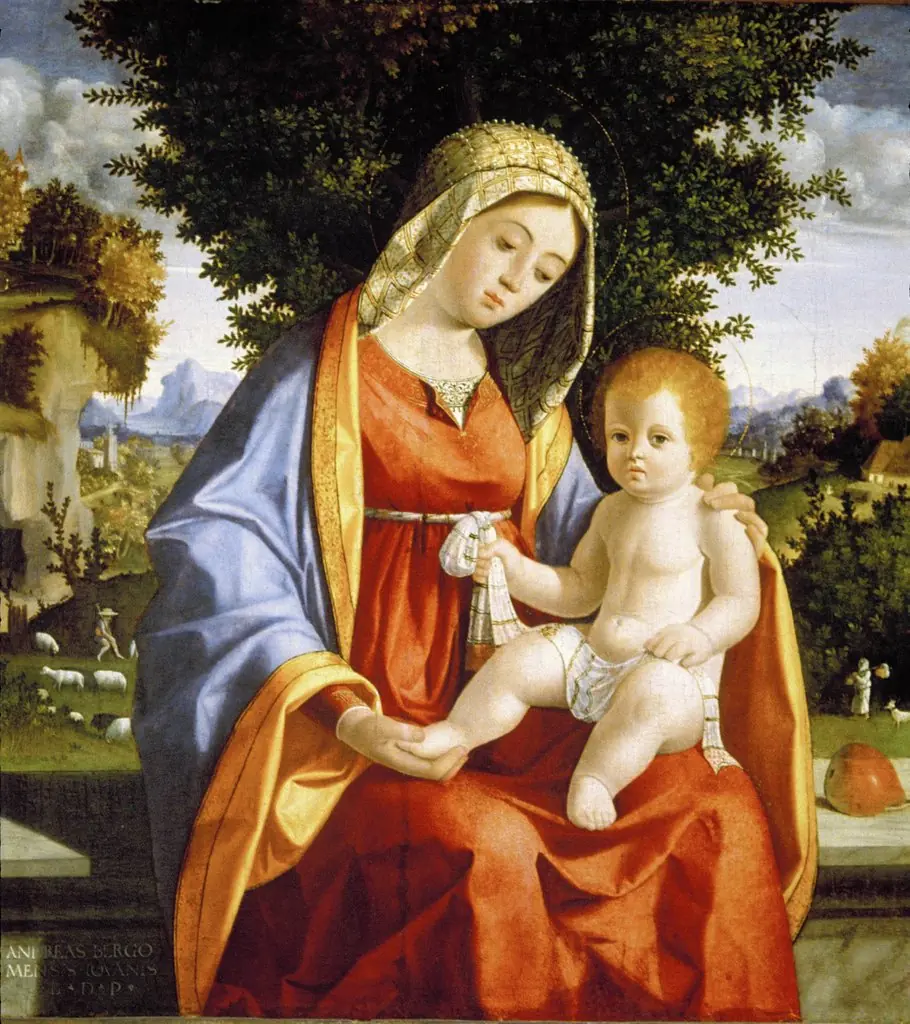
Madonna and Child is an oil painting by the High Renaissance artist Palma Vecchio. It dates from 1515 and is held in the collection of the Hermitage Museum.
About this work
Overview
Madonna and Child is a 1515 oil painting by Palma Vecchio, a prominent Venetian artist of the Italian High Renaissance. The work is characterized by its serene depiction of the Virgin Mary and the Christ Child, set against a natural backdrop.
Subject & Meaning
The painting portrays the intimate relationship between Mary and the Christ Child, conveying a sense of calm and serenity through their gentle interaction. Mary's calm expression contrasts with the Child's curious gaze upwards, adding a layer of depth to the traditional religious subject.
Technique & Style
Palma Vecchio employed chiaroscuro to create a striking contrast between the subjects and the darker background, achieved through the strategic use of light on the faces of Mary and the Child. Soft skin tones and the vivid colors of Mary's attire (red dress, blue cloak, and white head covering) further define the work's Renaissance style.
History & Provenance
Created in 1515, Madonna and Child is now part of the State Hermitage Museum's collection, though its history prior to acquisition is not detailed here.
Context
As a product of the Italian High Renaissance, the painting reflects the era's emphasis on harmony, naturalism, and the emotional depth of religious themes, characteristic of Venetian art during this period.
Artist & collection
Artist
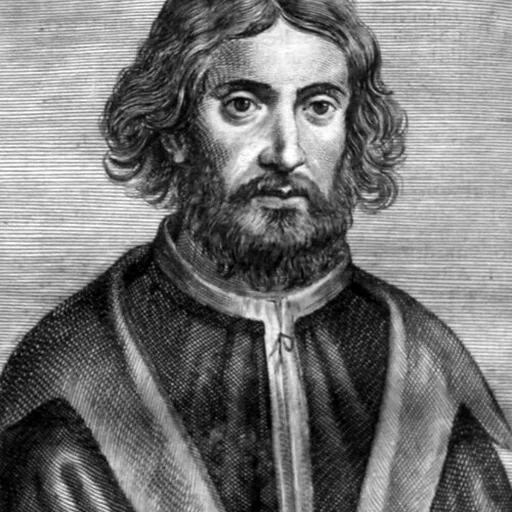
Palma Vecchio (c. 1480 – 30 July 1528), born Jacopo Palma, also known as Jacopo Negretti, was a Venetian painter of the Italian High Renaissance. He is called Palma Vecchio in English and Palma il Vecchio in Italian…