Artwork
Juditha
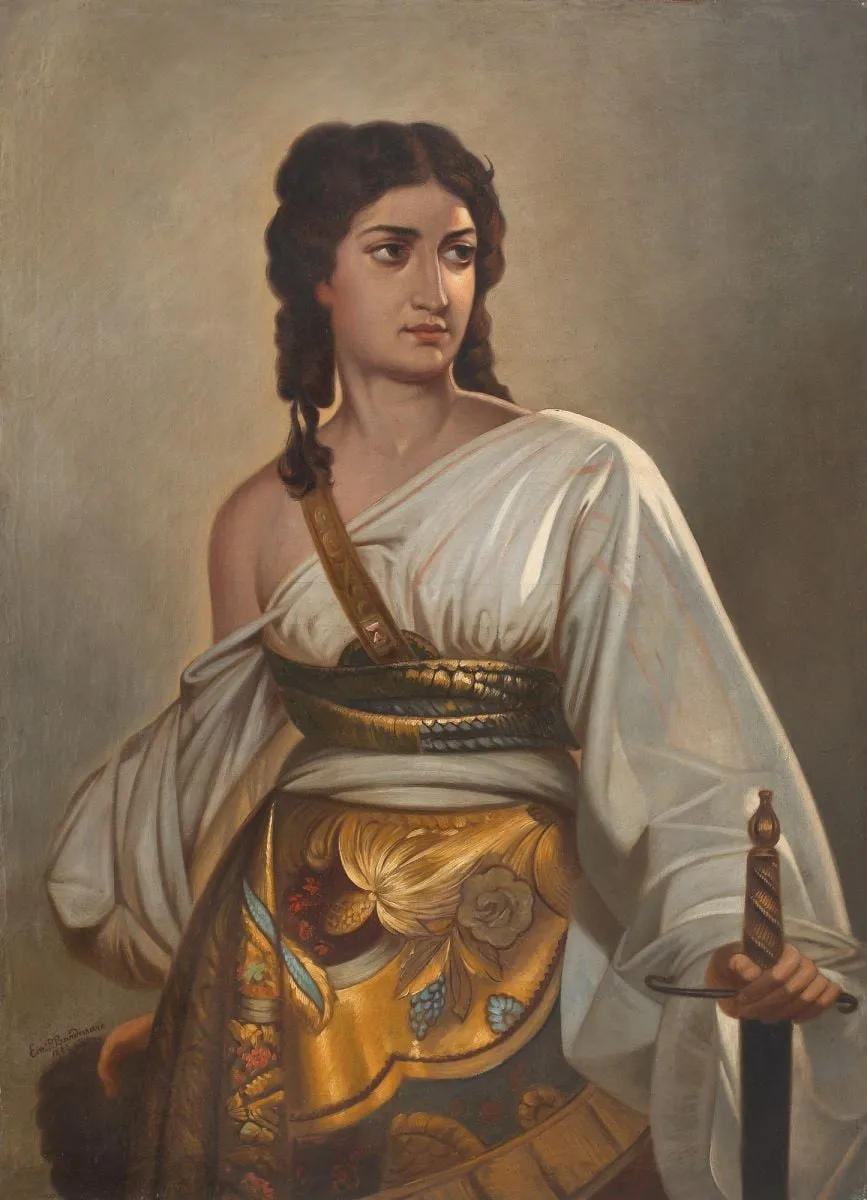
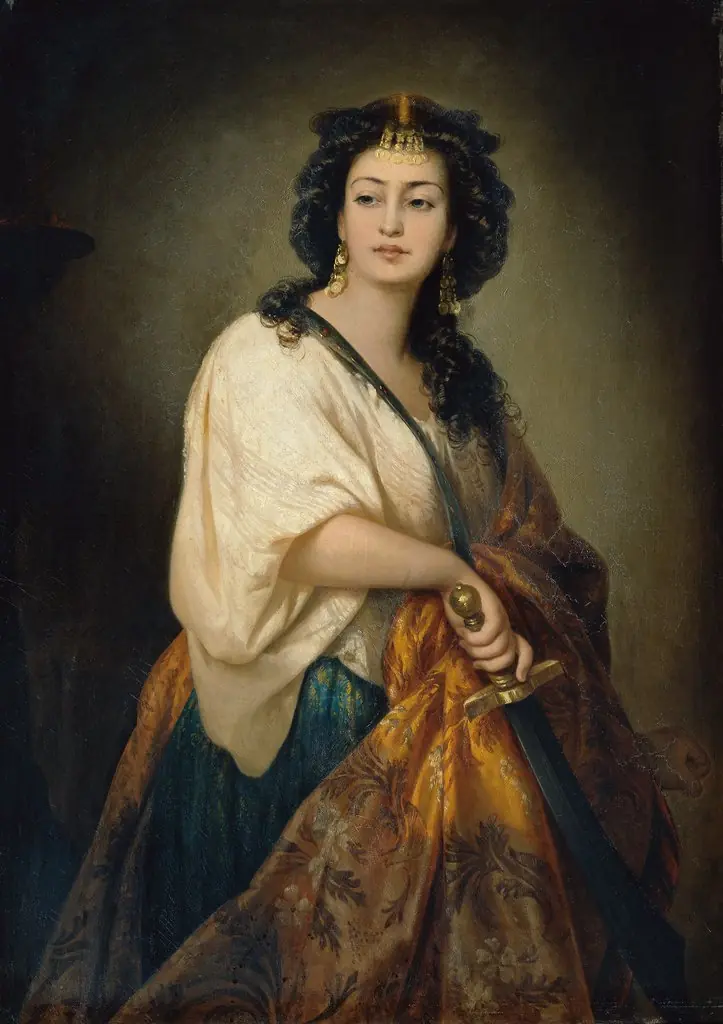
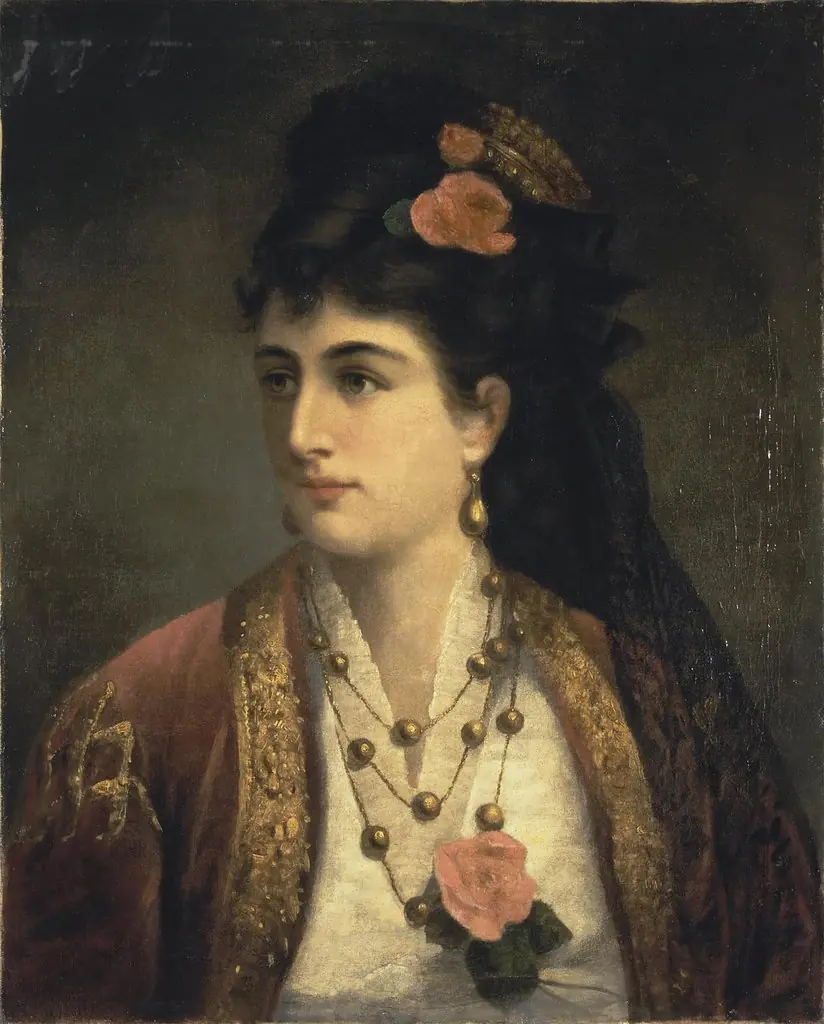
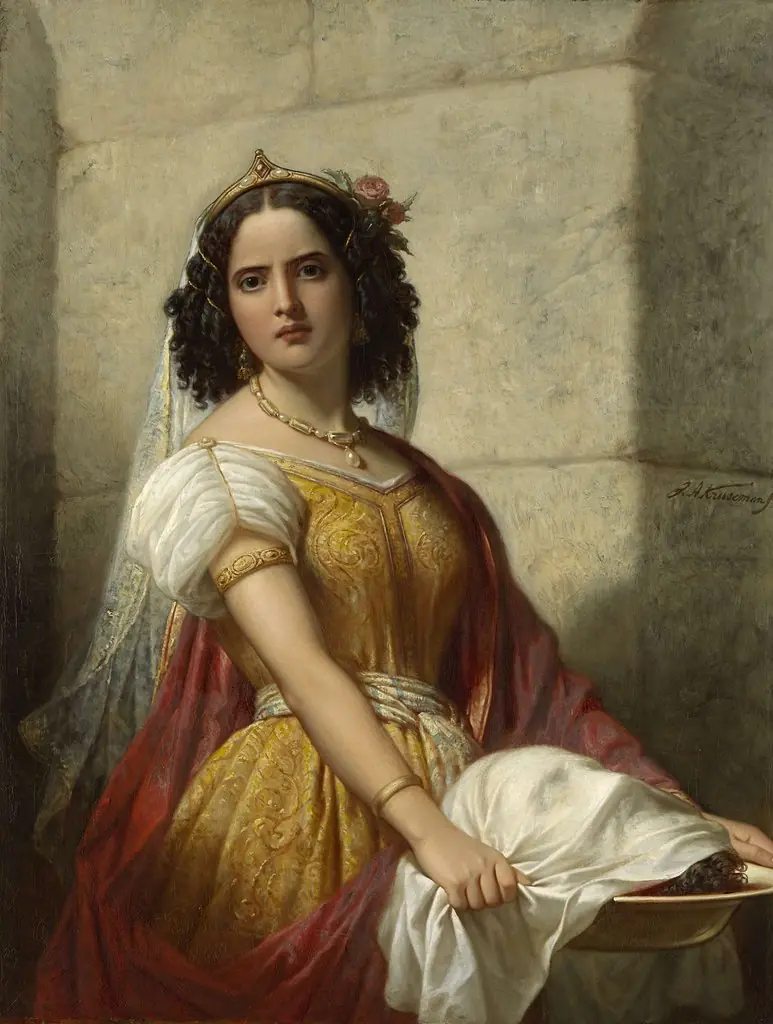
Juditha is an unspecified painting by the Byzantine icon painting artist Emanoil Panaiteanu-Bardasare. It dates from 1883 and is held in the collection of the Colecție particulară - București.
About this work
Overview
Juditha, painted by Romanian artist Emanoil Panaiteanu‑Bardasare in 1883, is part of the collection of the Museum of Ethnography. The composition presents a solitary female figure against an unadorned backdrop, emphasizing her presence and the objects she holds.
Subject & Meaning
The central figure is a woman dressed in a white, draped robe that falls over a gold‑toned skirt patterned with red floral motifs. She rests one hand on a dark sword whose hilt is bound with rope, while her gaze meets the viewer with a composed, steady expression, suggesting a blend of dignity and readiness.
Technique & Style
Executed in a realistic manner, the painting renders textures—such as the sheen of the gold fabric, the roughness of the rope‑wrapped sword handle, and the smoothness of the woman’s hair—with careful attention to light and shadow. The plain background eliminates distractions, directing focus toward the figure’s attire and the symbolic weapon.
History & Provenance
Created in the late nineteenth century, Juditha entered the Museum of Ethnography’s holdings at an unspecified date, where it remains on display as part of the institution’s representation of Romanian visual culture from the period.
Artist & collection
Artist
Emanoil Panaiteanu-Bardasare spent years painting portraits in Bucharest cafés, charging a few coins for a quick sketch.