Artwork
Doña Urraca
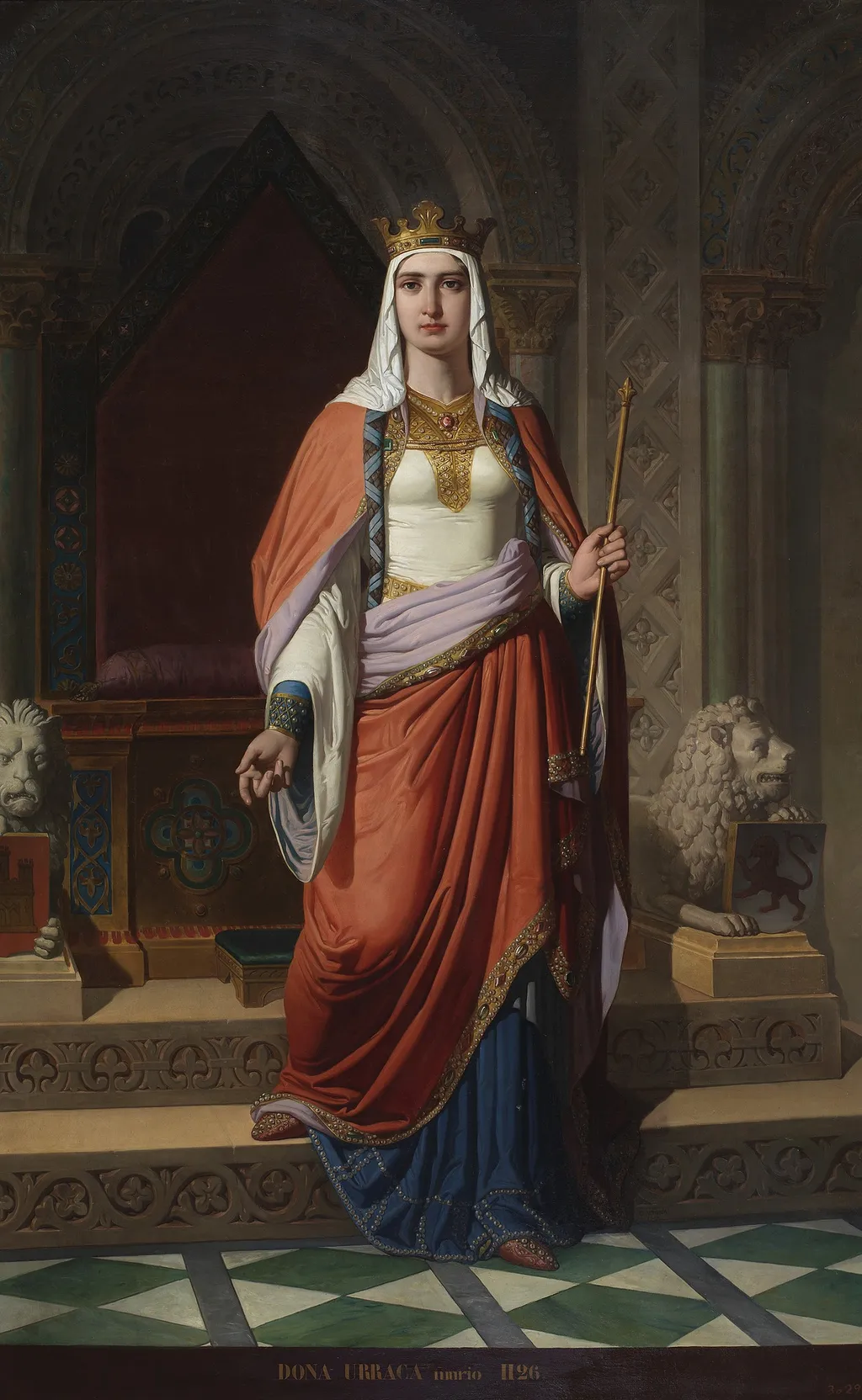
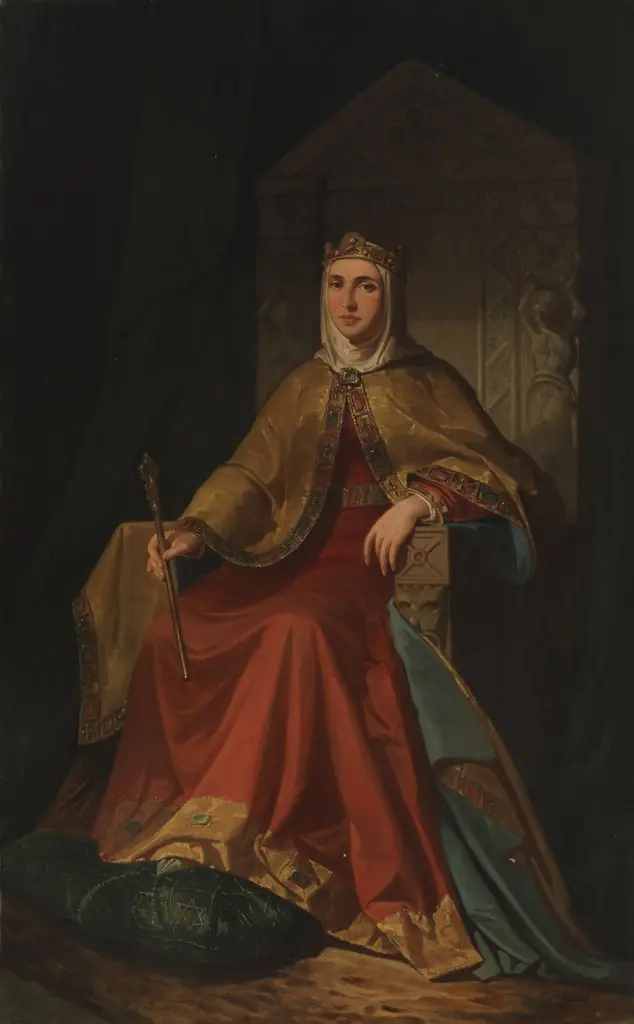
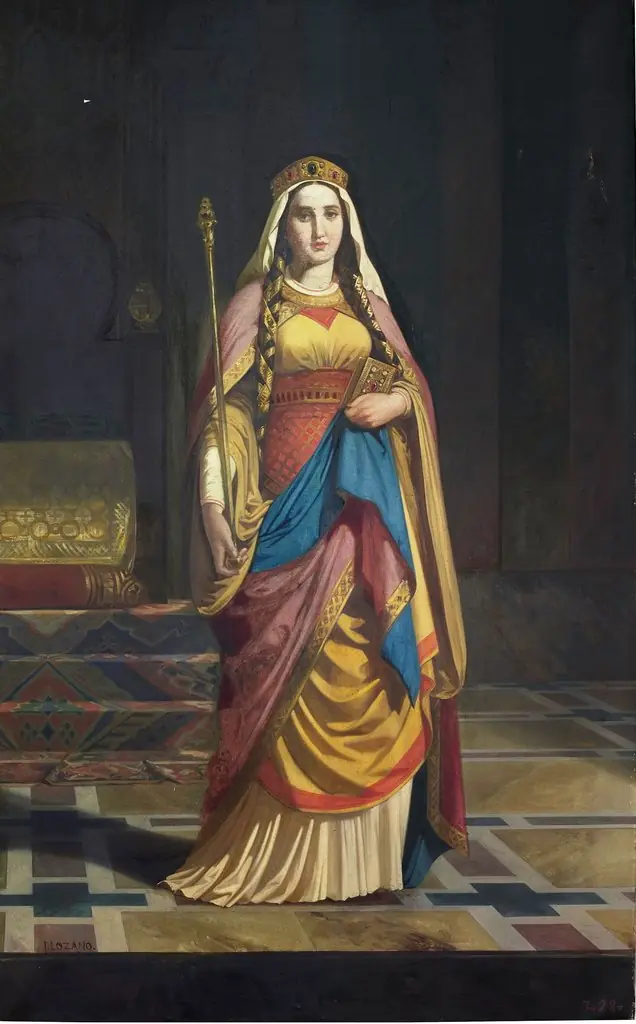
Doña Urraca is an oil painting by Carlos Múgica y Pérez. It dates from 1857 and is held in the collection of the Museo del Prado.
About this work
Overview
Created in 1857, the oil work titled Doña Urraca is attributed to Spanish painter Carlos Múgica y Pérez. The canvas is part of the collection of the Museo del Prado, where it is displayed among the institution’s 19th‑century holdings. The composition centers on a female figure rendered in regal attire, surrounded by heraldic symbols that suggest authority and lineage.
Subject & Meaning
The central figure is presented in a richly embroidered red mantle edged in gold, a white headdress, and a crown, holding a tall staff crowned with a cross. Flanking the scene are a throne and two lion statues, while a coat of arms and additional insignia occupy the background. These elements collectively evoke the image of a noblewoman or queen, emphasizing dynastic power and ceremonial role.
Technique & Style
Múgica employs a smooth, academic brushwork typical of mid‑19th‑century Spanish portraiture, allowing fine detail in the fabric’s embroidery and the metallic sheen of the crown and scepter. The palette balances saturated reds and blues with muted golds, creating a luminous contrast that highlights the figure against a patterned floor and architectural backdrop.
History & Provenance
After its completion, the painting entered the Spanish royal collection before being transferred to the Prado Museum, where it remains catalogued under the reference Q59856967. Its provenance reflects the 19th‑century interest in historicized portraiture, and the work has been cited in scholarly inventories of Carlos Múgica y Pérez’s oeuvre.
Own this work as a print
Artist & collection
Artist
Carlos Múgica y Pérez (1821–1892) was an artist, born in Villanueva de Cameros.