Artwork
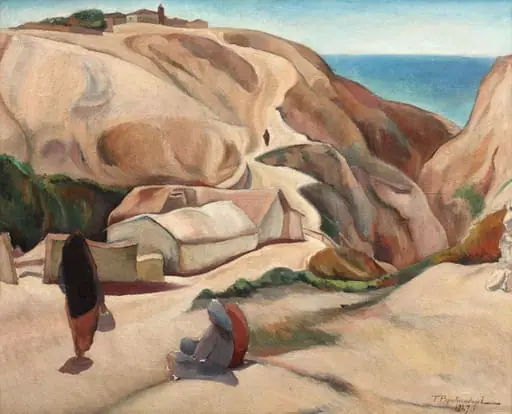
Peisaj din Balcic
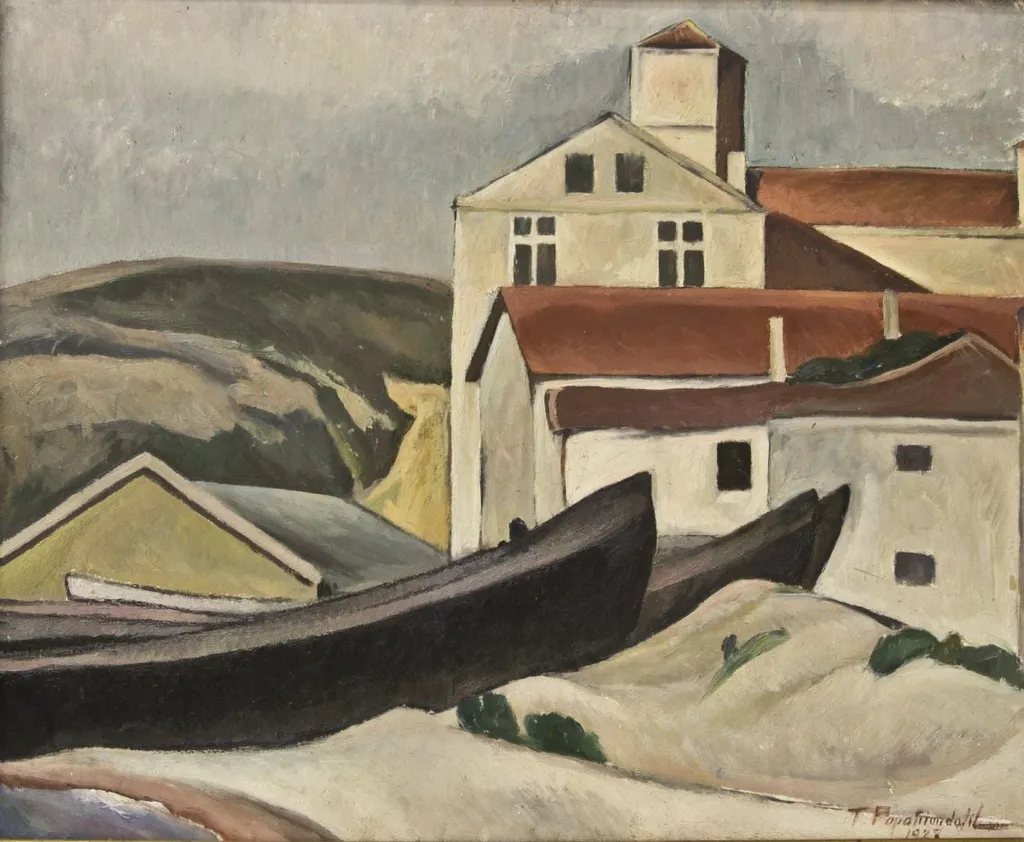
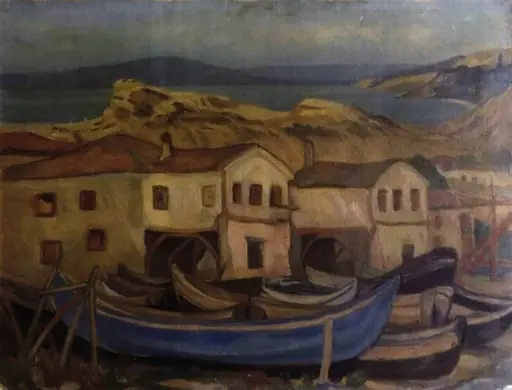
Peisaj din Balcic is a print by Tache Papatriandafil. It dates from 1927 and is held in the collection of the National Museum of Art of Romania.
About this work
Overview
Its deliberate simplicity and lack of perspective suggest an intentional departure from traditional landscape conventions.
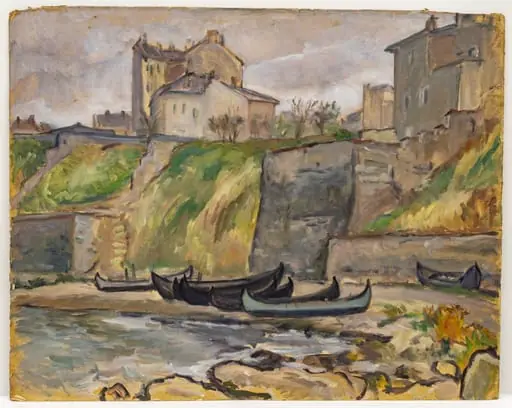
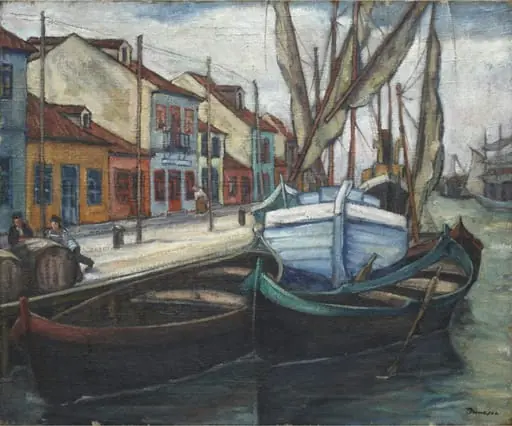
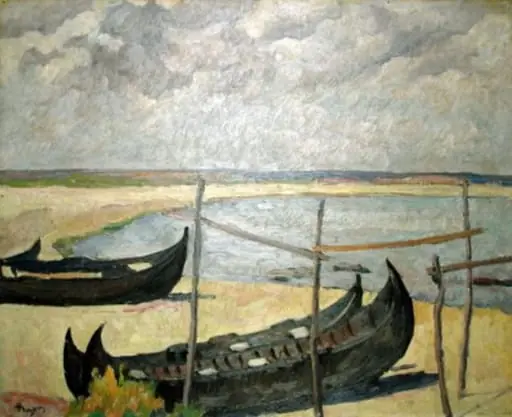
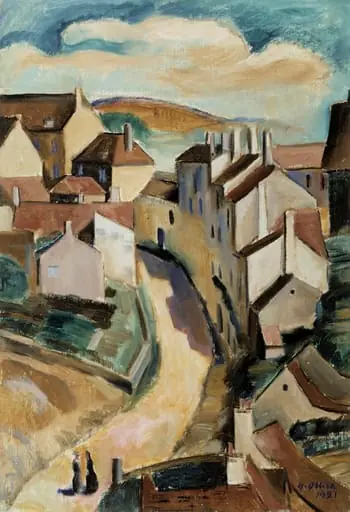
Painted in 1927 by Tache Papatriandafil, Peisaj din Balcic captures a quiet coastal village in northern Dobruja. The composition centers on modest structures and fishing vessels arranged along a low shoreline. The scene avoids narrative complexity, focusing instead on form and color. Its deliberate simplicity and lack of perspective suggest an intentional departure from traditional landscape conventions.
Subject & Meaning
The painting depicts a routine moment in a Black Sea fishing community, with whitewashed homes and red-tiled roofs clustered on a gentle slope. Dark, tilted boats rest on the sand, suggesting the ebb of daily labor. No human figures appear, yet the presence of domestic and maritime life is implied. The work conveys stillness and routine, honoring the quiet rhythm of rural coastal existence.
Technique & Style
Papatriandafil applied paint in thick, deliberate strokes, creating a tactile surface that emphasizes materiality over illusion. Colors are unmodulated—bright, flat, and unshaded—rejecting chiaroscuro. Forms are outlined with crisp edges, giving buildings and boats a graphic solidity. The absence of atmospheric depth and the textured brushwork align the work with early modernist experiments in simplification and surface emphasis.
History & Provenance
Created during a period of cultural redefinition in interwar Romania, the painting reflects regional identity through its focus on Balcic, a then-emerging seaside retreat. While details of its early ownership are sparse, it remains part of Romanian public collections, likely acquired in the decades following its creation as interest grew in vernacular modernism.
Context
In the 1920s, Romanian artists increasingly turned to local subjects, moving away from academic traditions. Papatriandafil’s approach resonated with contemporaries exploring folk motifs and simplified forms. Peisaj din Balcic aligns with broader regional trends that valued authenticity and direct observation, even as European modernism influenced stylistic choices like bold color and flattened space.
Legacy
The painting contributes to a lesser-known strand of Romanian modernism that prioritized local scenes through expressive technique over realism. Though not widely exhibited internationally, it is recognized domestically as an early example of how rural life was reimagined through modernist simplification. Its emphasis on texture and color influenced later generations interested in materiality over illusion.
Artist & collection
Artist
This artist made prints and paintings in the early 20th-century, often portraits and scenes of daily life.