Artwork
Pont-Neuf
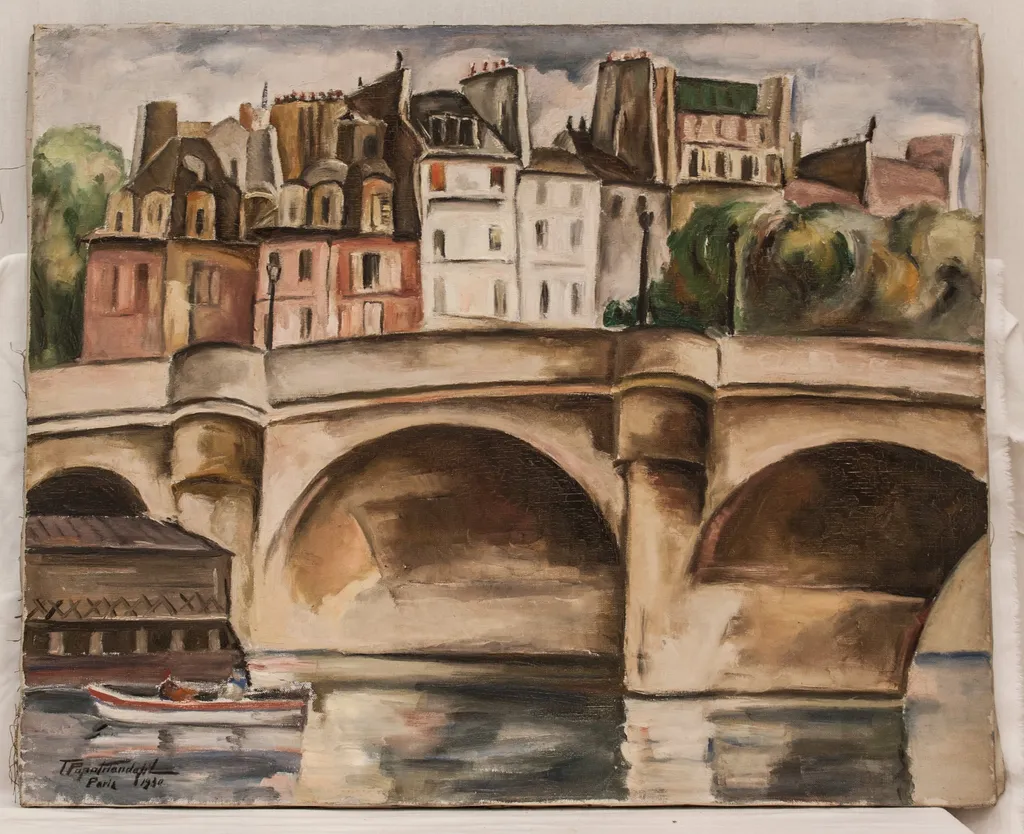
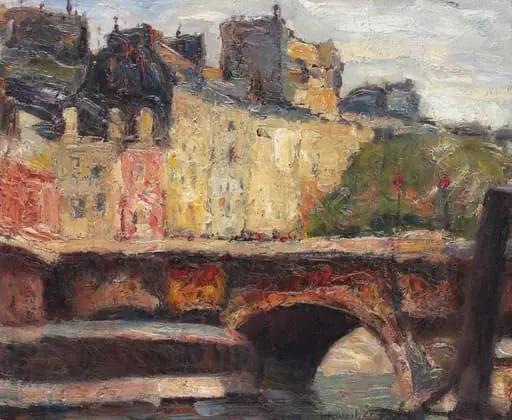
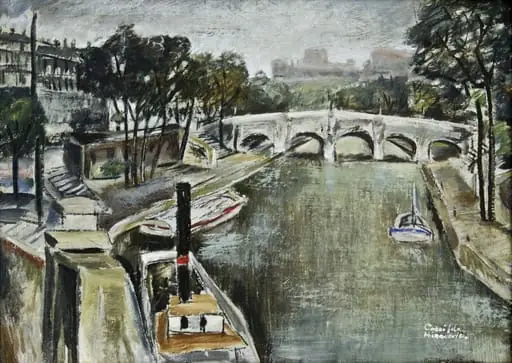
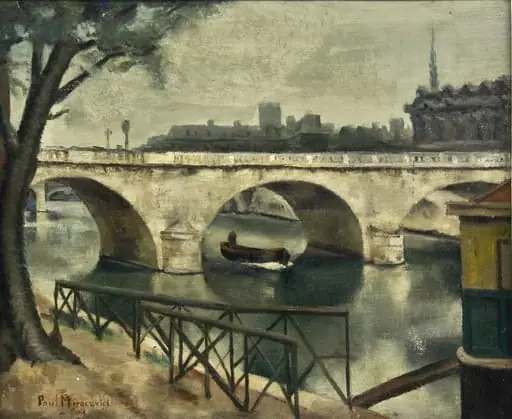
Pont-Neuf is a print by Tache Papatriandafil. It is held in the collection of the Gavrila Simion Eco-Museum Research Institute Tulcea.
About this work
Overview
This image depicts the Pont-Neuf bridge in Paris, rendered with loose, impressionistic brushwork that emphasizes atmosphere over architectural precision.
This image depicts the Pont-Neuf bridge in Paris, rendered with loose, impressionistic brushwork that emphasizes atmosphere over architectural precision. The composition centers on the bridge’s three arches, their shadows falling across the Seine, where a small boat drifts. Soft tones of white, brown, and muted green dominate, creating a subdued, contemplative mood. The technique avoids sharp definition, favoring fleeting light and texture.
Subject & Meaning
The scene captures a quiet moment along one of Paris’s oldest bridges, framed by modest buildings and sparse greenery. There is no human activity visible, reinforcing a sense of stillness. The lamppost and trees suggest urban life, yet the absence of figures invites reflection on the bridge as a silent witness to daily passage, rather than a stage for it.
Technique & Style
Brushstrokes are rapid and unrefined, suggesting immediacy rather than polished finish. Light and shadow are suggested through tonal shifts rather than defined outlines, with the bridge’s arches casting soft, dark reflections on the water. The palette is restrained, avoiding vivid contrasts, and the overall effect aligns with early impressionist concerns for transient light and informal composition.
History & Provenance
The work appears to be a 19th-century depiction of the Pont-Neuf, a bridge completed in 1607 and long a fixture of Parisian life. While the artist is unnamed here, similar views were common among painters documenting urban change during the era. The painting’s informal handling suggests it may have been a study or personal sketch rather than a commissioned piece.
Context
During the mid- to late-1800s, Paris underwent significant modernization, yet the Pont-Neuf remained a symbol of continuity. Artists increasingly turned to such landmarks not as monuments, but as sites of ordinary life. This image reflects a shift from grand historical narratives to intimate, everyday observations, aligning with broader trends in plein air painting and early modernism.
Legacy
The painting’s emphasis on light, atmosphere, and informal composition anticipates later developments in impressionism and post-impressionism. Its quiet, unadorned view of an urban landmark contributed to a growing interest in the poetic potential of ordinary scenes. Though not widely known, it exemplifies a quiet revolution in how artists perceived and recorded the modern city.
Artist & collection
Artist
This artist made prints and paintings in the early 20th-century, often portraits and scenes of daily life.
Museum
Gavrila Simion Eco-Museum Research Institute Tulcea
Continue through works from the same source collection.