Artwork
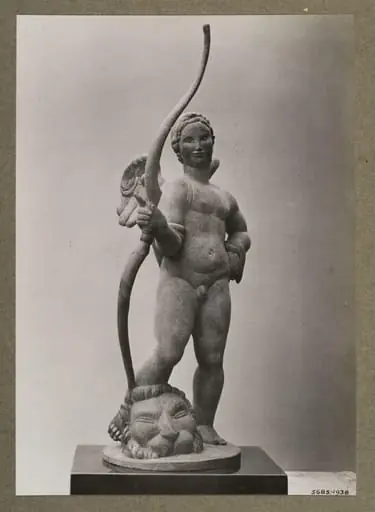
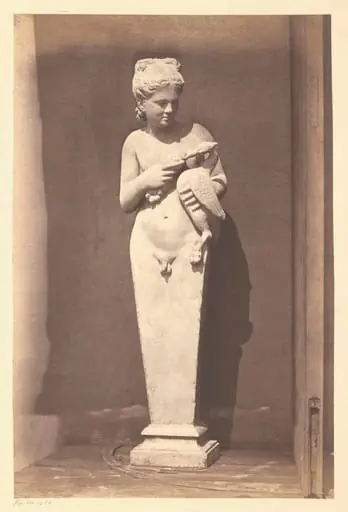
Sculpture - Statue of Cupid with his bow, in the Capitoline Museum.
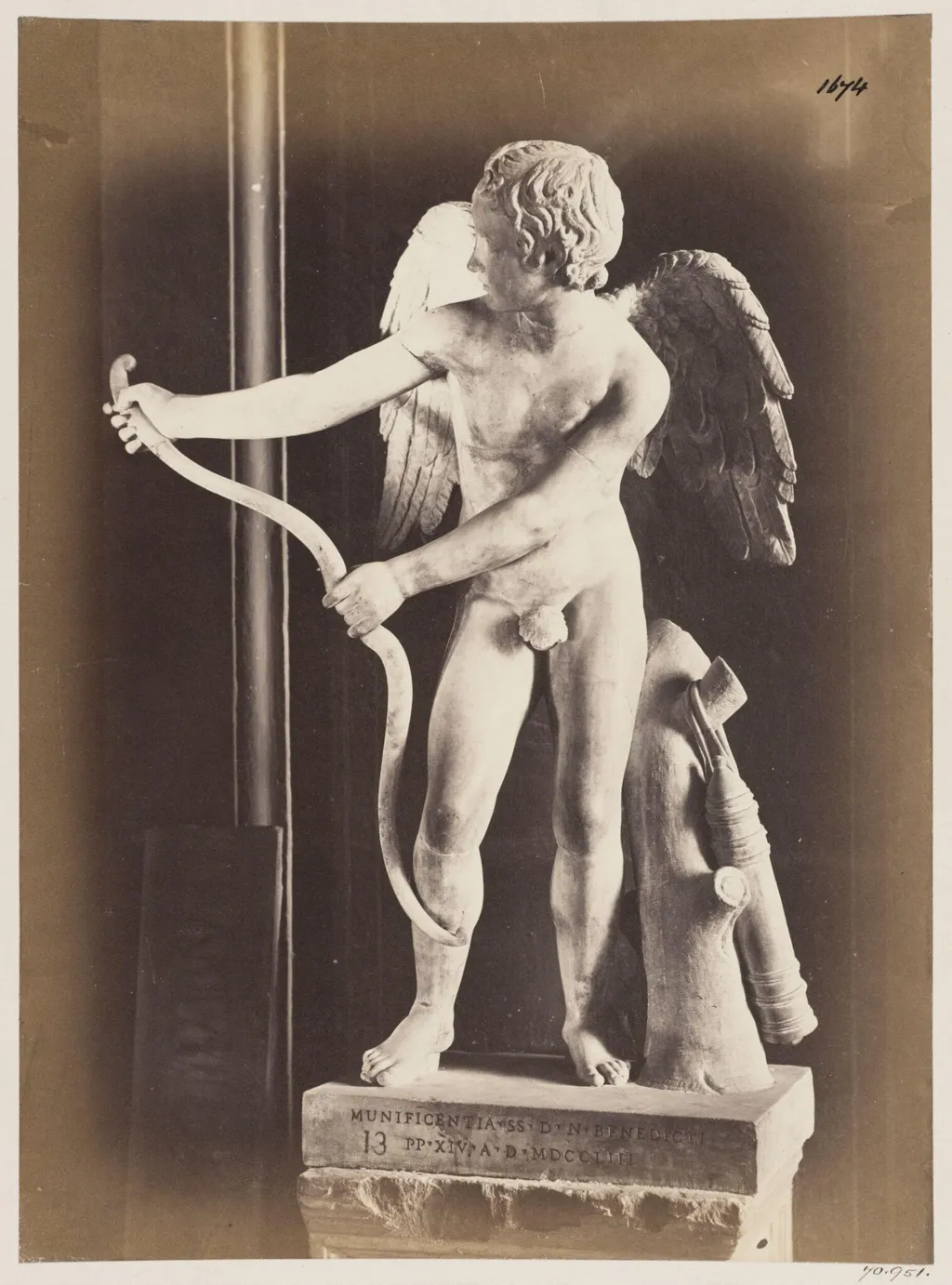
Sculpture - Statue of Cupid with his bow, in the Capitoline Museum. is a photographic photography by the Impressionist artist John Henry Parker. It dates from 1867 and is held in the collection of the Victoria and Albert Museum. This black-and-white photograph captures a classical statue of Cupid, currently displayed in the Capitoline Museum, Rome.
About this work
Overview
Taken between 1864 and 1879, it is one of over 3,300 images compiled under John Henry Parker’s archaeological documentation project.
This black-and-white photograph captures a classical statue of Cupid, currently displayed in the Capitoline Museum, Rome. Taken between 1864 and 1879, it is one of over 3,300 images compiled under John Henry Parker’s archaeological documentation project. The photograph’s faded, grainy texture reflects early photographic techniques, preserving the statue’s form with subtle tonal contrasts that emphasize its contours and shadows.
Subject & Meaning
The statue depicts Cupid, the Roman god of desire, as a youthful, winged figure in mid-motion, holding a bow and arrow. His dynamic pose suggests the instant after releasing an arrow, conveying movement and vitality. The inclusion of wings and the weapon aligns with traditional iconography linking him to love’s sudden, unpredictable force. The presence of a broken fragment nearby may indicate the statue was once part of a larger composition.
Technique & Style
The original sculpture exhibits smooth, polished surfaces typical of Hellenistic or Roman imperial statuary, with attention to anatomical detail and fluid drapery. The photograph, however, renders these features in monochrome, softening textures and deepening shadows. The composition frames the statue against its pedestal and a fragment of another figure, suggesting an archaeological context rather than a curated display.
History & Provenance
The photograph was produced as part of Parker’s systematic survey of Roman antiquities, executed by a team including Canadian photographer Charles Smeaton and local artisans. The image was later archived in the Victoria and Albert Museum, which holds a major collection of these 19th-century records. The statue itself likely dates to the Roman Imperial period, though its exact origin before entering the Capitoline collection remains undocumented.
Context
Parker’s photographic project emerged during a period of growing scholarly interest in documenting classical art before modern restoration altered its appearance. These images served as reference tools for archaeologists and collectors, preserving details of artifacts in their 19th-century condition. The inclusion of broken fragments in the frame reflects the fragmented state of many ancient sculptures found in Rome’s ruins.
Legacy
The photograph contributes to a foundational visual archive of Roman sculpture, offering insight into how antiquities were perceived and recorded in the Victorian era. Its preservation in the Victoria and Albert Museum ensures continued access for researchers studying both the statue’s form and the history of photographic documentation in archaeology. The image remains a quiet record of cultural preservation efforts from the 19th century.
Artist & collection
Artist
John Henry Parker liked to explore old churches in Rome. He'd photograph the sculptures and carvings he found. One thing that stands out is his attention to detail - he'd capture tiny parts of bigger pieces, like the…

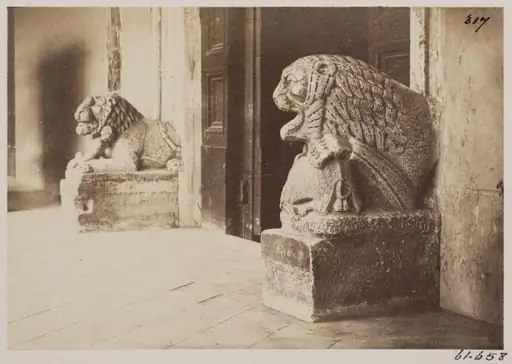 Sculptures - Lions at the Door of the Church of S. Lorenzo
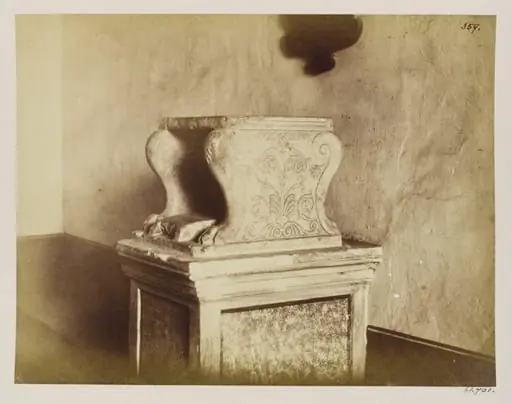 Sculptures - Marble Seat of S. Gregory in the Church of S. Stefano Rotondo, with Shallow Carving, c. A.D. 590.
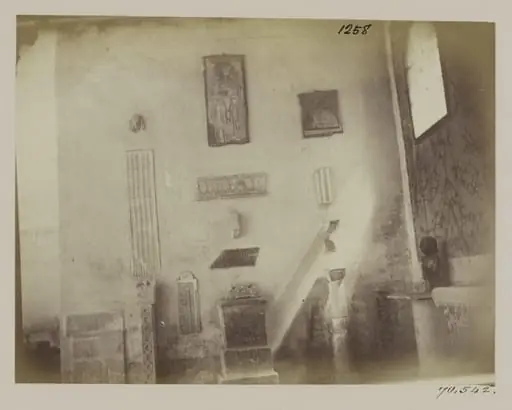 Church of S. Giorgio in Velabro - Fragments of marble sculpture, Tombs, &c., from the old Church, built into the wall.
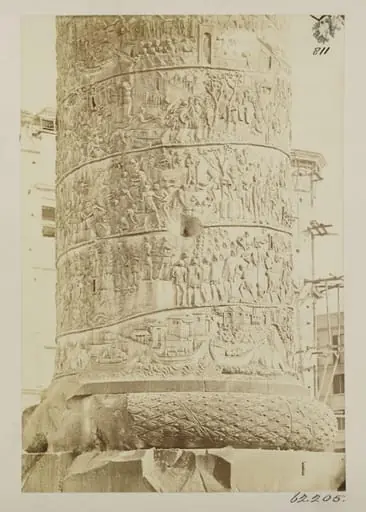 Sculptures - Details of Sculpture from Trajan's Column.
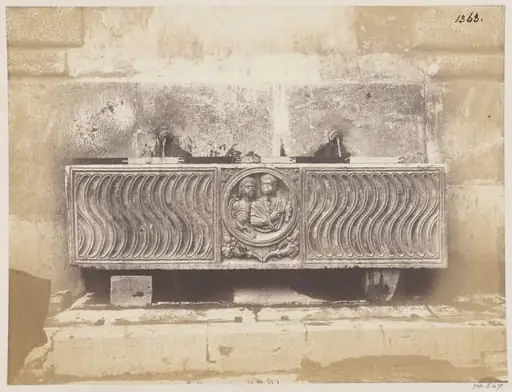 Sculpture - Sarcophagus of the fourth century made into a fountain, near the Church of S. Maria, in the Piazza del Popolo
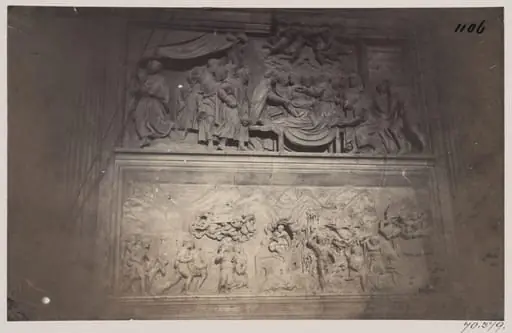 Out of Rome - House of the Blessed Virgin at Loreto. Sculpture of the Santissima Casa carried by Angels, A.D. 1520
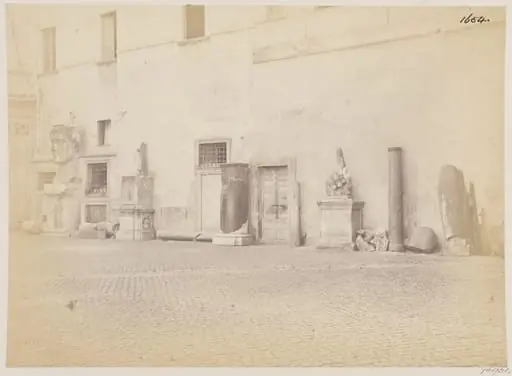 Sculpture - View on the left side of the Court-yard of the Palazzo de' Conservatori on the Capitol, shewing fragments of colossal Statues
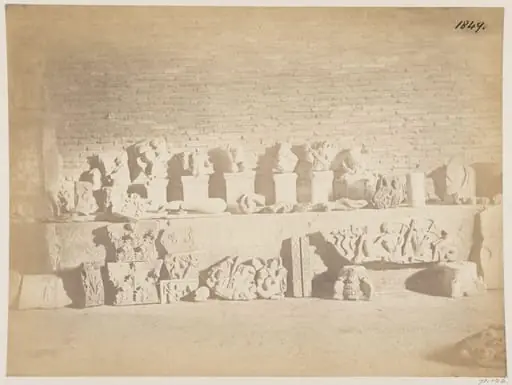 Ostia - Antique Fragments in the Museum