Artwork
Sculptures - Lions at the Door of the Church of S. Lorenzo
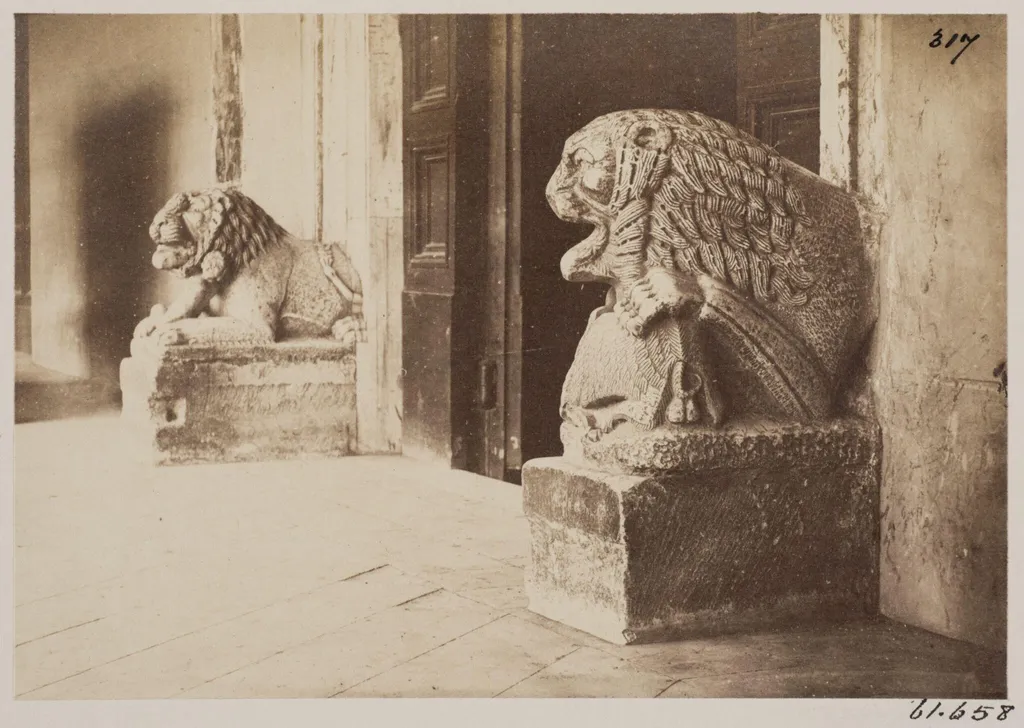
Sculptures - Lions at the Door of the Church of S. Lorenzo is a photographic photography by the Impressionist artist John Henry Parker. It dates from 1866 and is held in the collection of the Victoria and Albert Museum. A black-and-white photograph captures two stone lions positioned at the entrance of the Church of S.
About this work
Overview
The photograph belongs to a broader collection of documentary images intended to record Rome’s monuments before modern interventions altered their appearance.
A black-and-white photograph captures two stone lions positioned at the entrance of the Church of S. Lorenzo in Rome. Taken between 1864 and 1879 as part of a systematic survey of the city’s architectural heritage, the image was produced under the direction of John Henry Parker. The photograph belongs to a broader collection of documentary images intended to record Rome’s monuments before modern interventions altered their appearance.
Subject & Meaning
The two lions, carved from stone, serve as traditional guardians of sacred space. One rests with composed stillness, front paws neatly aligned; the other crouches low, head dipped and wings extended, suggesting alertness or readiness. Their placement at the church’s threshold reflects a long-standing symbolic association between lions and protection in Christian and classical traditions, reinforcing the sanctity of the building’s entrance.
Technique & Style
The lions exhibit detailed carving of fur, claws, and musculature, typical of Romanesque or early medieval stone sculpture. The photograph’s grainy texture enhances the tactile quality of the stone, emphasizing surface roughness and shadowed contours. The composition frames the lions symmetrically against a dark, arched doorway, drawing attention to their form and spatial relationship to the architecture without artificial embellishment.
History & Provenance
The photograph was produced during a documented survey of Roman monuments conducted between 1864 and 1879 by John Henry Parker, who commissioned local and international photographers to record artworks and structures. The resulting images were later compiled into his publication Archaeology of Rome (1874–1879). The Victoria and Albert Museum holds a significant portion of these pre-1870 photographs, preserving a critical visual record of Rome’s heritage.
Context
This image emerged during a period of heightened interest in documenting Italy’s artistic legacy amid political unification and urban modernization. Parker’s project aligned with broader European efforts to archive antiquities before industrial change obscured or destroyed them. The lions, though not ancient, were considered part of Rome’s layered historical fabric, worthy of preservation through photographic means.
Legacy
The photograph endures as a historical record of the lions’ condition in the late 19th century, offering insight into their appearance prior to potential restoration or weathering. As part of Parker’s archive, it contributes to scholarly understanding of how Rome’s medieval and early modern monuments were perceived and preserved during a transformative era in cultural heritage documentation.
Artist & collection
Artist
John Henry Parker liked to explore old churches in Rome. He'd photograph the sculptures and carvings he found. One thing that stands out is his attention to detail - he'd capture tiny parts of bigger pieces, like the…

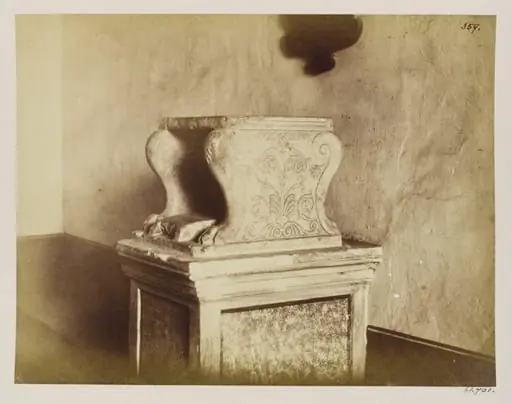 Sculptures - Marble Seat of S. Gregory in the Church of S. Stefano Rotondo, with Shallow Carving, c. A.D. 590.
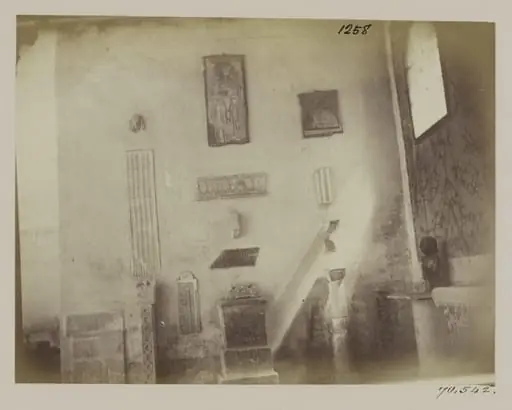 Church of S. Giorgio in Velabro - Fragments of marble sculpture, Tombs, &c., from the old Church, built into the wall.
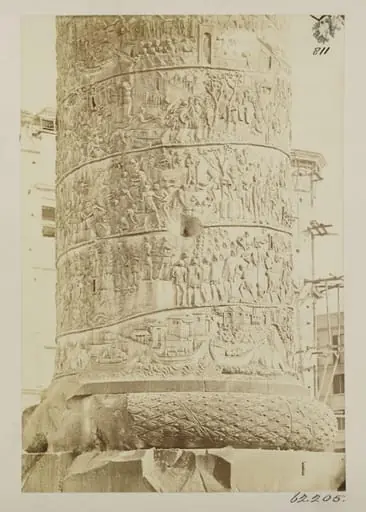 Sculptures - Details of Sculpture from Trajan's Column.
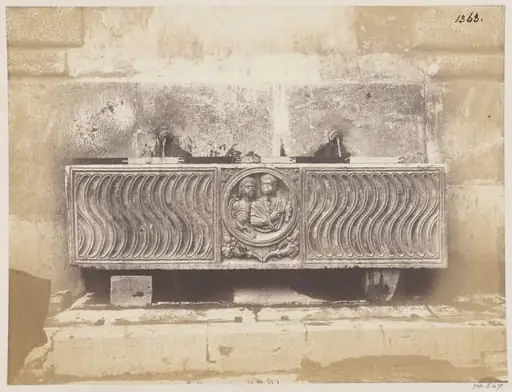 Sculpture - Sarcophagus of the fourth century made into a fountain, near the Church of S. Maria, in the Piazza del Popolo
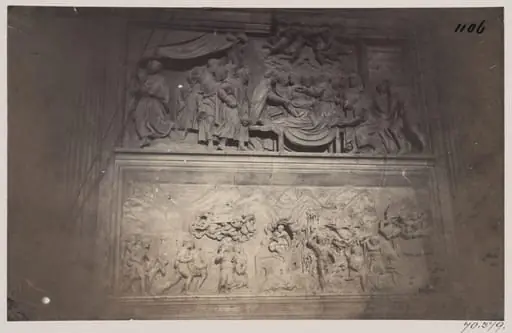 Out of Rome - House of the Blessed Virgin at Loreto. Sculpture of the Santissima Casa carried by Angels, A.D. 1520
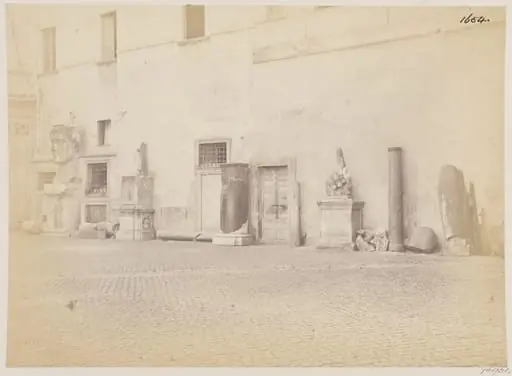 Sculpture - View on the left side of the Court-yard of the Palazzo de' Conservatori on the Capitol, shewing fragments of colossal Statues
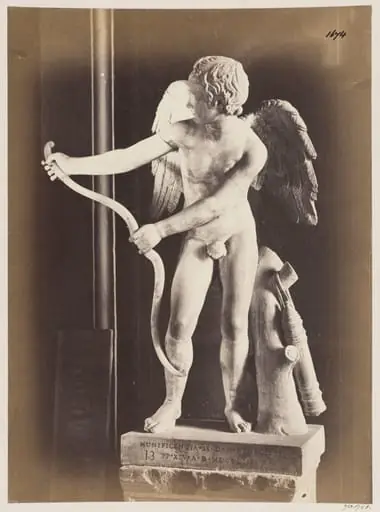 Sculpture - Statue of Cupid with his bow, in the Capitoline Museum.
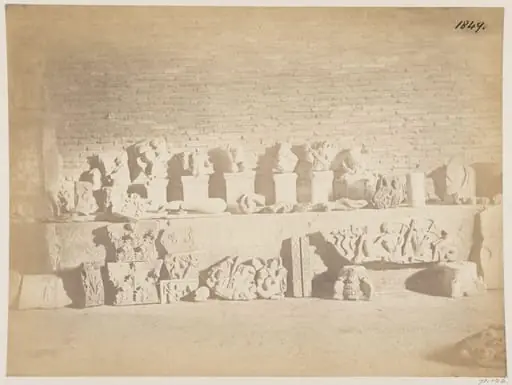 Ostia - Antique Fragments in the Museum
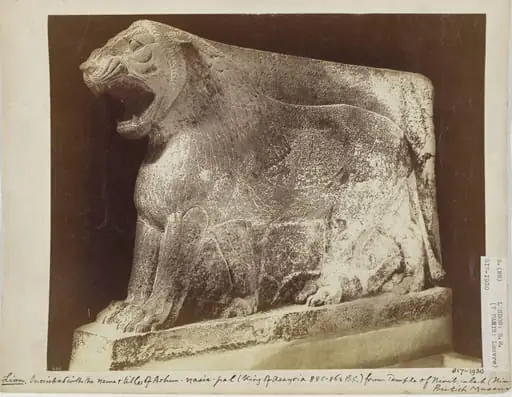 Assyrian sculpture of a lion inscribed with the name and titles of Ashur-nasir-pal (King of Assyria 885-860 B.C.) from the Temple of Nirib, Calah
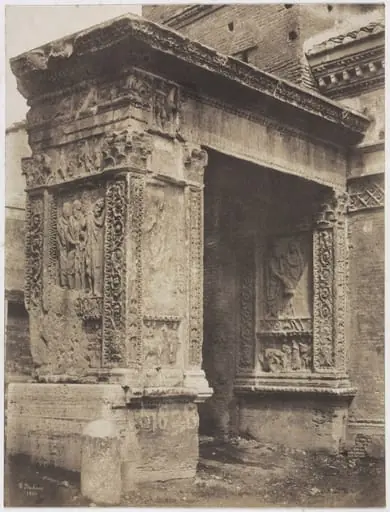 Goldsmith's Arch, Rome
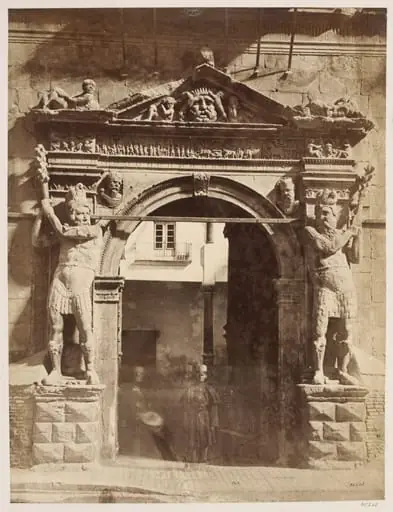 Zaragoza, Casa de los Gigantes, (now Audiencia)
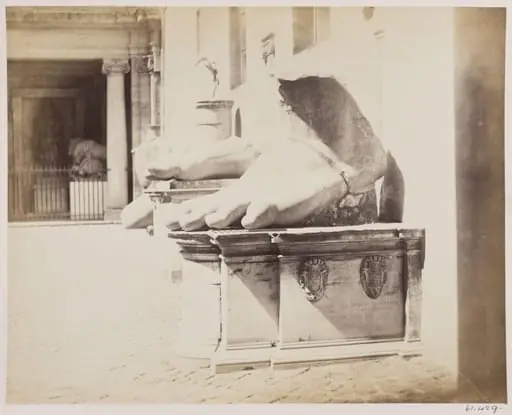 Sculpture - Colossal Foot, now in the Courtyard of the Palazzo de' Conservatori on the Capitol
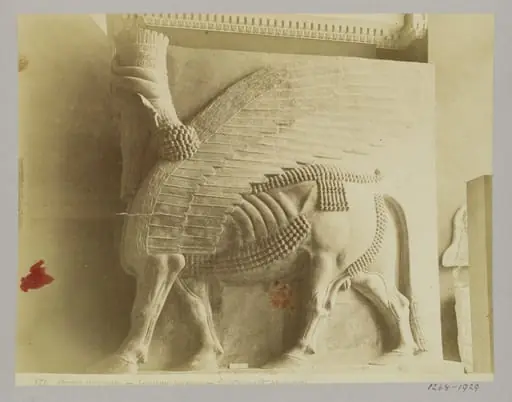 Winged bull from Khorsabad (Sargon, 722-705 B.C.). Paris: Louvre
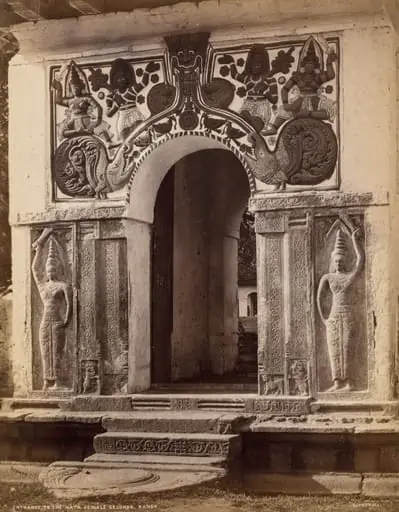 Entrance to the Nata Dewale Grounds, Kandy
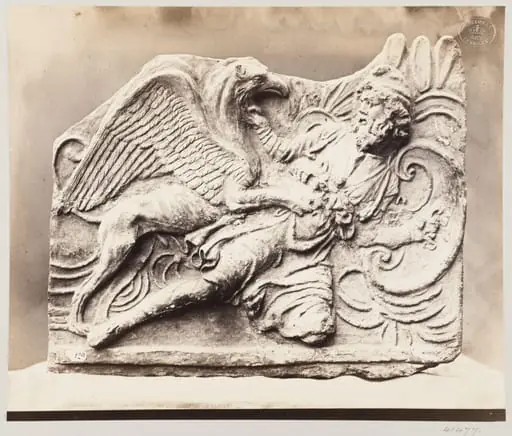 An Arimaspi combating with a Griffin, bas-relief fragment in terra cotta
 After Meryon - Le Stryge