Artwork
The Flaying of Marsyas
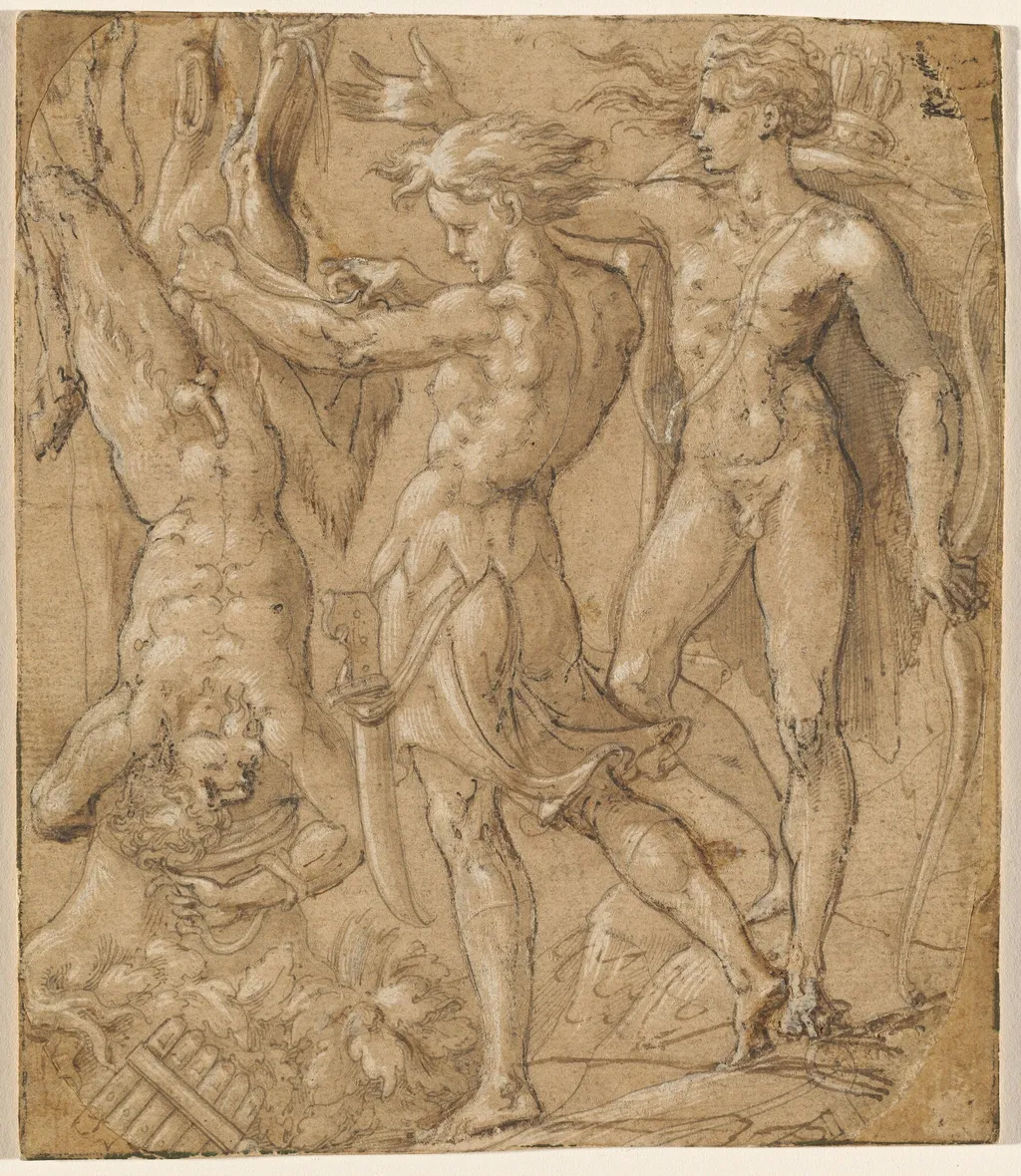
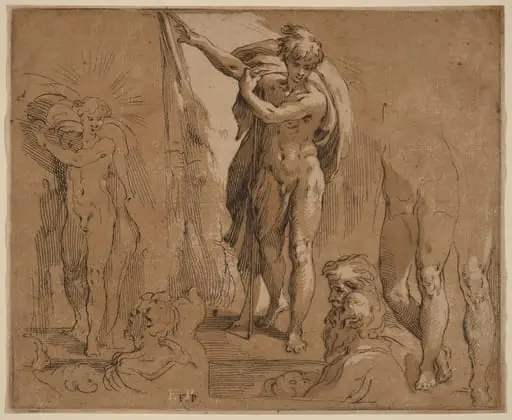
The Flaying of Marsyas is an ink drawing by the Renaissance artist Parmigianino. It dates from 1528 and is held in the collection of the National Gallery of Art.
About this work
Overview
This drawing, executed in 1528, exemplifies Parmigianino’s command of ink and wash techniques. The composition centers on a violent mythological episode, rendered on paper prepared with a brown ground to enhance tonal contrasts. White gouache heightens select areas, lending a dramatic interplay of light and shadow to the scene.
Subject & Meaning
The work depicts the punishment of Marsyas, a satyr from Ovid’s *Metamorphoses*, who dared challenge Apollo to a musical contest. Defeated, Marsyas faces the god’s wrath: flaying, a brutal act of divine retribution. The drawing captures the moment’s visceral horror, with figures entangled in suffering, their expressions obscured by the frenzied execution.
Technique & Style
Parmigianino’s Mannerist sensibility is evident in the elongated, sinuous forms and dynamic composition. Ink lines—both delicate and jagged—define anatomy and movement, while brown wash deepens shadows, creating depth. White gouache, applied sparingly, accentuates raw flesh and highlights, amplifying the scene’s unsettling intensity.
History & Provenance
Created during Parmigianino’s prolific period, the drawing reflects his engagement with mythological themes in Florence and Rome. Its early ownership remains undocumented, though it likely circulated among collectors drawn to Mannerist draftsmanship. The work survives as a testament to the artist’s technical experimentation and narrative ambition.
Context
The drawing emerges from a cultural milieu fascinated by classical mythology and human anatomy. Parmigianino’s interpretation aligns with Mannerism’s preference for artificial elegance and emotional extremity, contrasting with High Renaissance ideals of harmony. The subject’s violent transformation resonates with contemporary explorations of suffering and divine justice.
Legacy
As a study in expressive draftsmanship, the work influenced later artists exploring mythological brutality. Its technical innovations—particularly the use of gouache—demonstrate Parmigianino’s role in expanding the possibilities of pen-and-ink drawing. The composition’s raw energy continues to provoke analysis of Mannerism’s departure from naturalism.
Artist & collection

Artist
Girolamo Francesco Maria Mazzola (11 January 1503 – 24 August 1540), also known as Francesco Mazzola or, more commonly, as Parmigianino (UK: , US: , Italian: ; "the little one from Parma"), was an Italian Mannerist…

![Mars and Diana [recto], by Zanguidi, called Bertoia, Jacopo](https://artifactworldgallery.com/img/zanguidi-called-bertoia-jacopo--mars-and-diana-recto--a528dea7036b44d0-w320.webp)