Artwork
Cavalry Battle
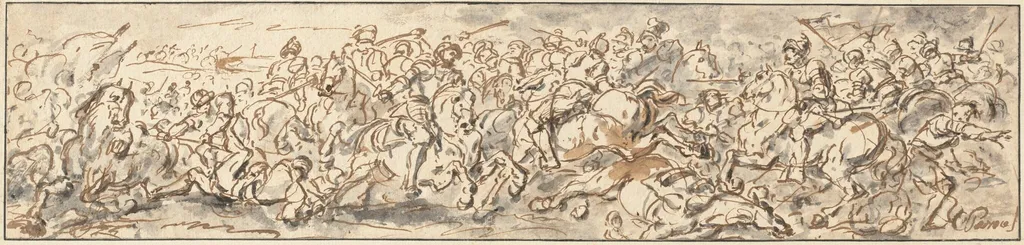
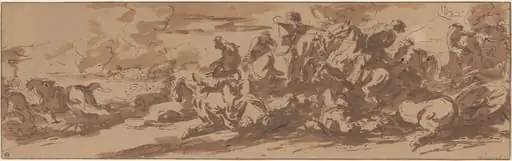
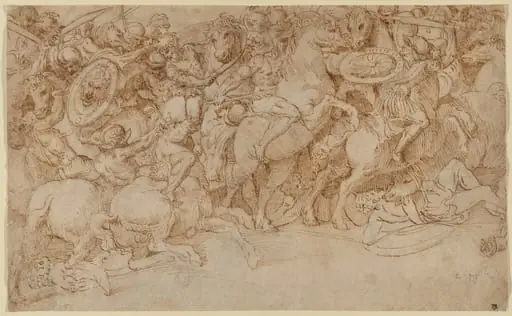
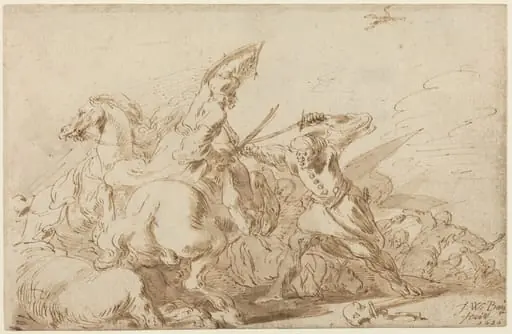
Cavalry Battle is an ink drawing by the Baroque artist Charles Parrocel. It dates from 1720 and is held in the collection of the National Gallery of Art.
About this work
Overview
Cavalry Battle is a drawing created in 1720 by French artist Charles Parrocel, executed in pen and brown ink with gray wash on laid paper. This work exemplifies Parrocel’s focus on military themes within the history painting genre.
Subject & Meaning
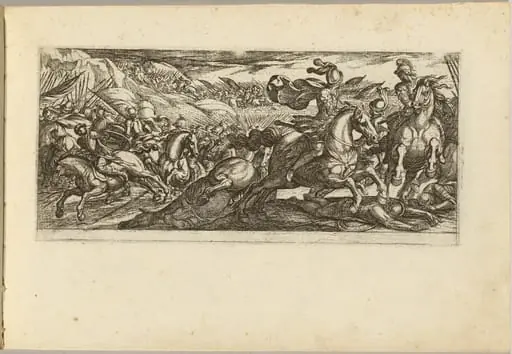
The drawing depicts a chaotic scene of horses and soldiers entangled in battle. The composition conveys the intensity and dynamism of combat through expressive, quick lines and strategic use of gray wash to modulate the turmoil.
Technique & Style
Parrocel employed pen and brown ink for bold, dark lines, complemented by gray wash to introduce subtlety and depth. The unfinished, study-like quality of the work highlights the artist’s spontaneous and alive drawing technique, suggestive of potential movement.
History & Provenance
Created in 1720, Cavalry Battle reflects Parrocel’s training under his father, Bon Boullogne, and Charles de La Fosse, as well as his influences from a 1713-1716 residency at the Académie de France in Italy.
Context
As a historical painting, Cavalry Battle situates itself within 18th-century European artistic preoccupations with military themes, reflecting both the era’s fascination with conflict and Parrocel’s specialization in the genre.
Legacy
While specific legacy details of Cavalry Battle are not highlighted, the piece contributes to Parrocel’s body of work known for its dynamic depictions of battle scenes, potentially influencing later artists in the representation of military action.
Artist & collection

Artist
Charles Parrocel was a French painter and engraver and a specialist in battle and hunt paintings.