Artwork
The Assumption of the Virgin
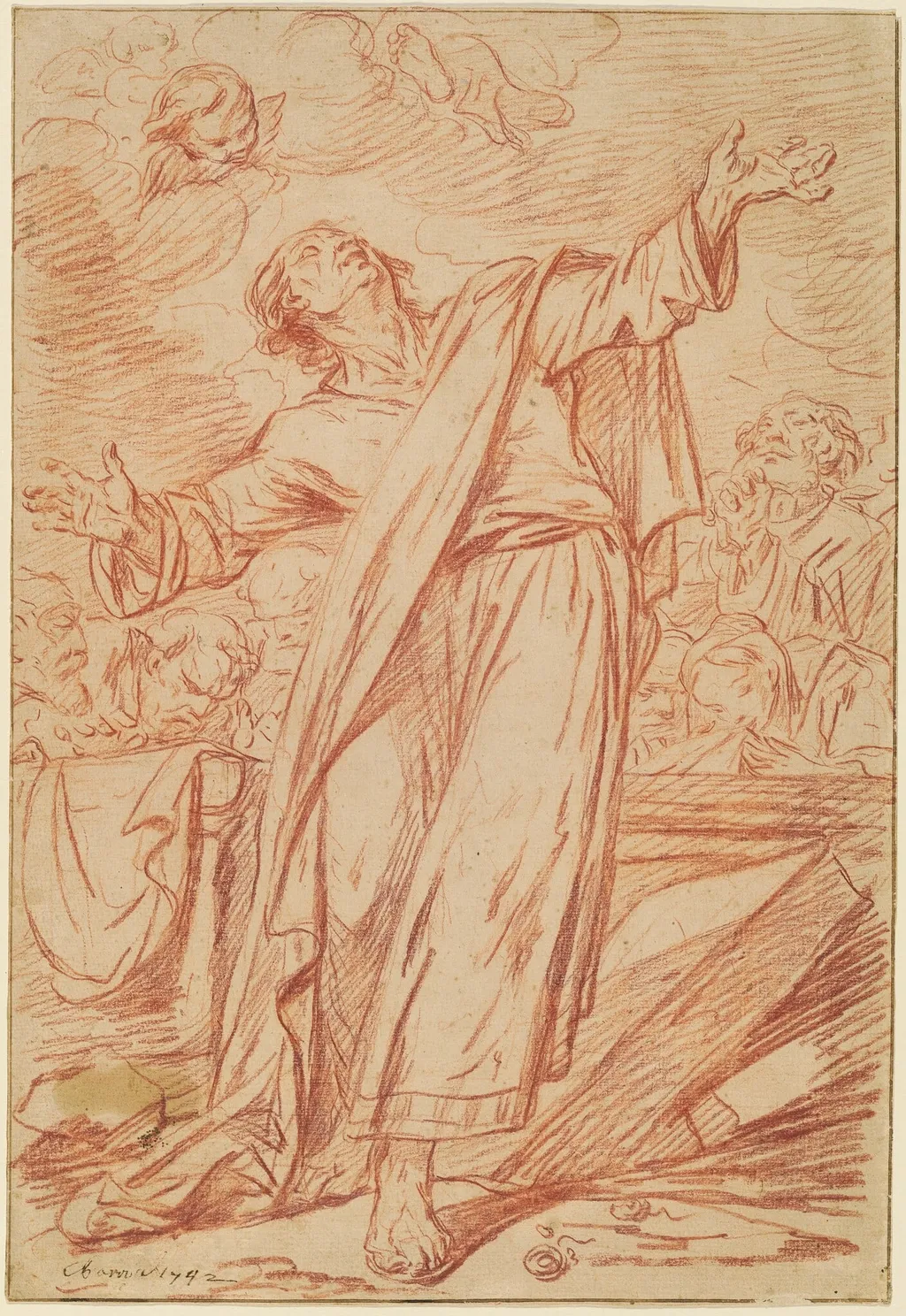
The Assumption of the Virgin is a chalk drawing by the Baroque artist Charles Parrocel. It dates from 1742 and is held in the collection of the National Gallery of Art.
About this work
Overview
The Assumption of the Virgin is a 1742 red chalk drawing on laid paper by Charles Parrocel, depicting the Virgin Mary's ascent into heaven. Characterized by loose, expressive lines and soft shading, the work conveys a sense of movement and vitality.
Subject & Meaning
The drawing illustrates a pivotal religious moment: the Virgin Mary's assumption into heaven. A robed figure rises upward with outstretched arms, surrounded by clouds and indistinct forms, possibly angels or onlookers.
Technique & Style
Executed in red chalk, the drawing features Parrocel's distinctive draftsmanship. The warm, earthy tone and sketchy, quick lines create a lively, unfinished appearance, suggesting a rapid study rather than a finished piece.
History & Provenance
Created in 1742 by French artist Charles Parrocel, a painter and engraver trained by his father, Bon Boullogne, and Charles de La Fosse, with formative years spent in Italy as an Academy pensioner.
Context
While Parrocel is notably known for battle and hunt scenes, this work demonstrates his capability with religious subjects, albeit in a more intimate, sketchy form. The style reflects the lingering influence of Baroque dramatic flair in the mid-18th century.
Legacy
This drawing, with its expressive and dynamic rendering, contributes to the broader understanding of Parrocel's artistic range. Its loose style may also reflect the transitional tastes of the period, bridging Baroque energy with emerging Rococo sensibilities.
Own this work as a print
Artist & collection

Artist
Charles Parrocel was a French painter and engraver and a specialist in battle and hunt paintings.

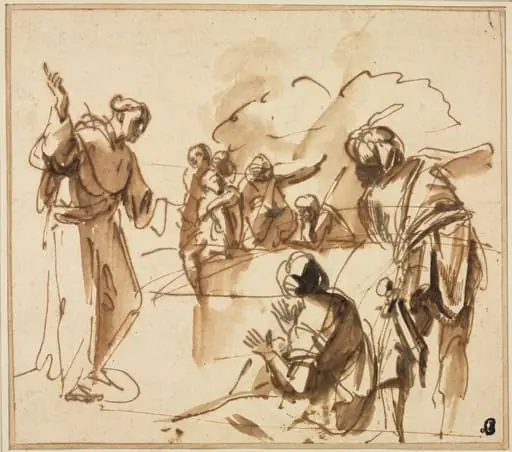 A Monk Preaching
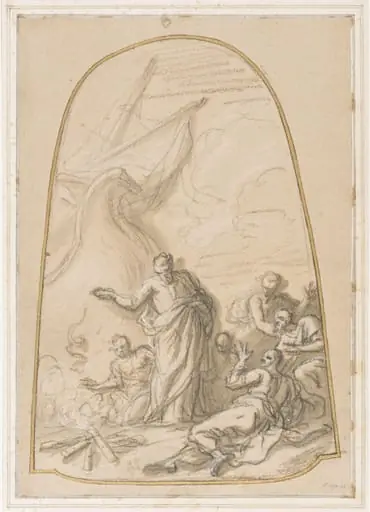 St Paul Shipwrecked on the Island of Malta
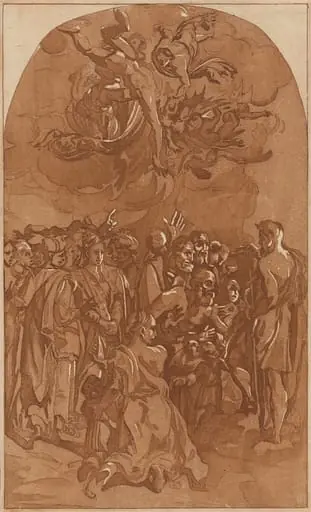 Saint John Preaching
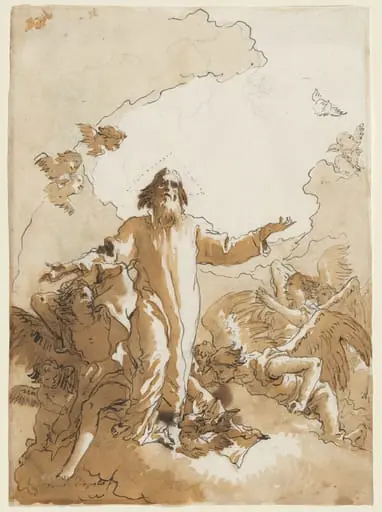 God the Father Standing in Clouds Surrounded by Angels and Putti
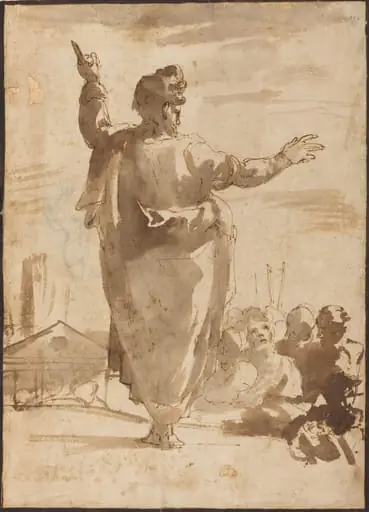 Saint Paul Preaching
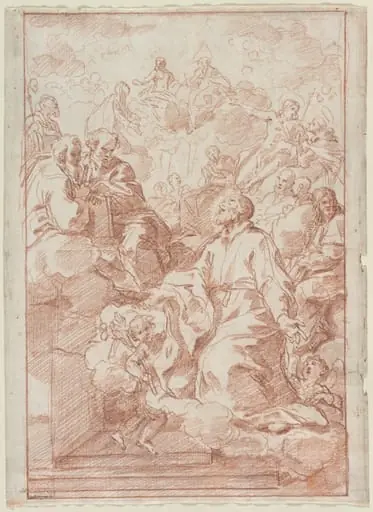 Vision of St. Philip Neri
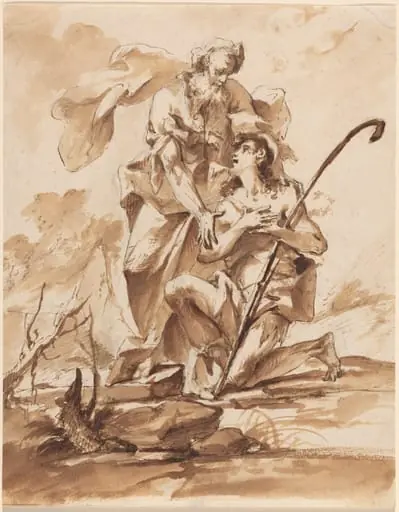 Return of the Prodigal Son
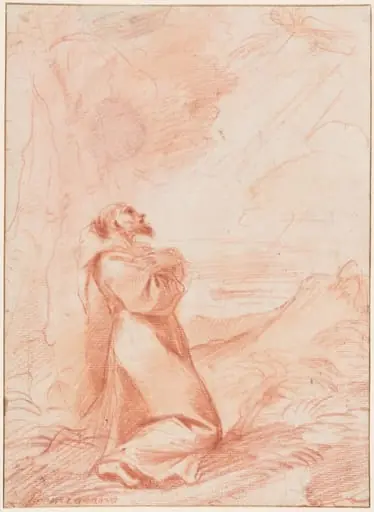 Saint Francis Receiving the Stigmata
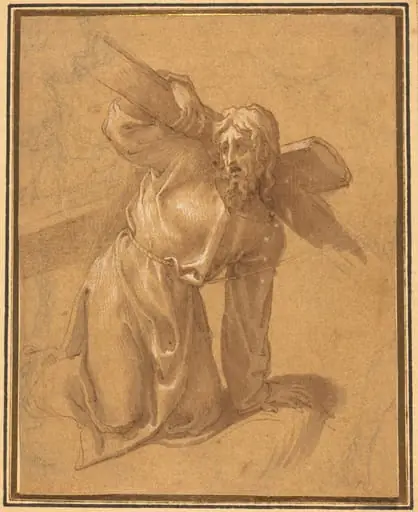 Christ Falling under the Cross
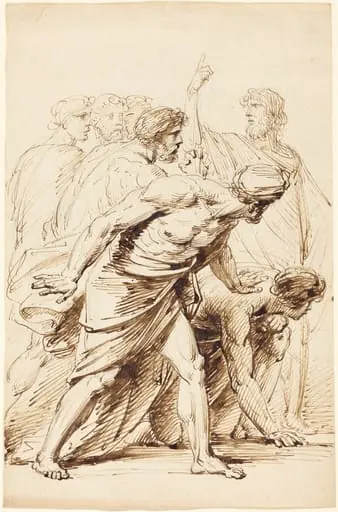 Seven Men in Antique Dress