Artwork
A Battle on Horseback
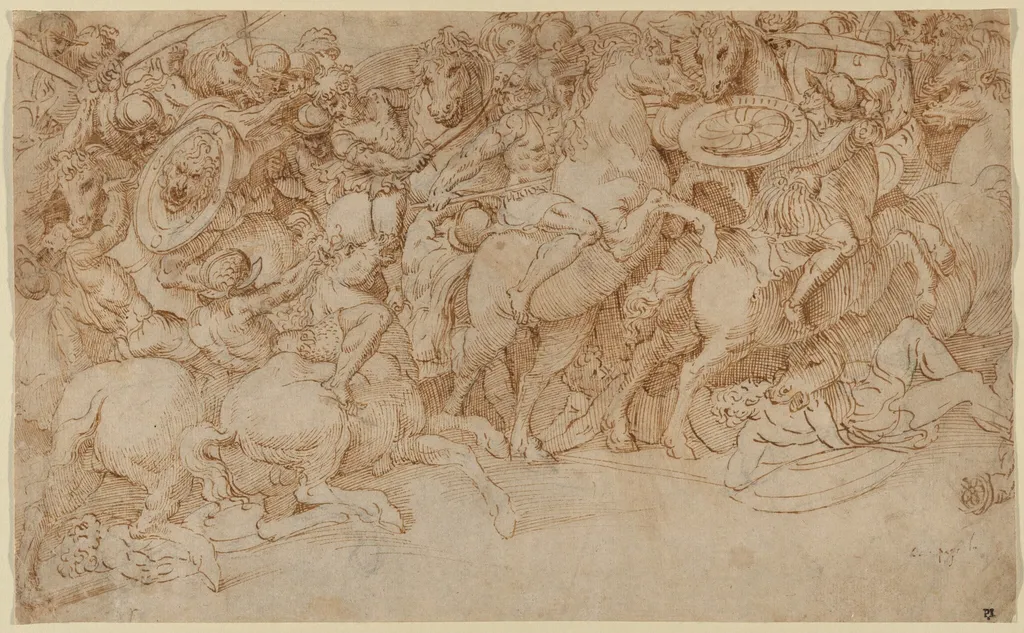
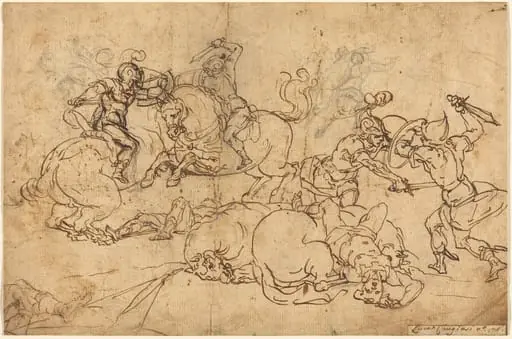
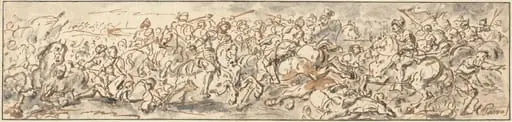
A Battle on Horseback is a chalk drawing by the Renaissance artist Domenico Campagnola. It dates from 1514 and is held in the collection of the National Gallery of Art.
About this work
Overview
Though finished with precision, its energetic lines suggest spontaneity, indicating its role as a working sketch rather than a final composition.
Domenico Campagnola created this drawing around 1514 as a preparatory study for a larger painting. Executed in pen and brown ink with wash over black chalk on laid paper, it captures a dynamic moment of mounted combat. Though finished with precision, its energetic lines suggest spontaneity, indicating its role as a working sketch rather than a final composition. The work resides today in the National Gallery of Art, Washington.
Subject & Meaning
The scene depicts two armored knights locked in violent confrontation atop rearing horses, their swords raised in mid-strike. The imagery evokes chivalric ideals and martial drama, common themes in Renaissance visual culture. It does not illustrate a specific historical event but instead presents a generalized, idealized combat, likely intended to convey heroism and tension within a narrative context for a planned painting.
Technique & Style
Campagnola employed rapid, fluid strokes to convey motion and force, avoiding meticulous detail in favor of expressive suggestion. Brown wash layers add volume and shadow, enhancing the three-dimensionality of armor and muscle without obscuring the underlying chalk structure. Subtle ink bleeds reveal revisions, showing the artist adjusting forms mid-process—evidence of a working method grounded in observation and improvisation.
History & Provenance
The drawing has been in the collection of the National Gallery of Art since its founding, acquired as part of the Samuel H. Kress collection in 1939. Its provenance before that is undocumented, though its style aligns with Campagnola’s known studies from the early 16th century. It remained in private hands until entering the museum, where it has been consistently cataloged as a preparatory work for a lost or unrealized painting.
Context
In early 16th-century Venice, artists frequently produced detailed drawings to plan complex compositions before executing frescoes or panel paintings. Campagnola, influenced by Titian and the Venetian emphasis on color and movement, used such studies to explore gesture and anatomy. This drawing reflects a broader practice among Renaissance draftsmen who treated sketching as both a technical exercise and a creative exploration.
Legacy
Though the intended painting was never completed or has since disappeared, this drawing survives as a testament to Campagnola’s skill in translating movement into ink. It exemplifies the Renaissance workshop tradition where preparatory studies held intrinsic value. Today, it is studied for its dynamic composition and as a window into the creative process of a Venetian artist navigating the transition from draft to finished work.
Artist & collection


 Soldiers Fighting
 Battle between Cavalry and Infantry
 Combat between Horsemen and Foot Soldiers
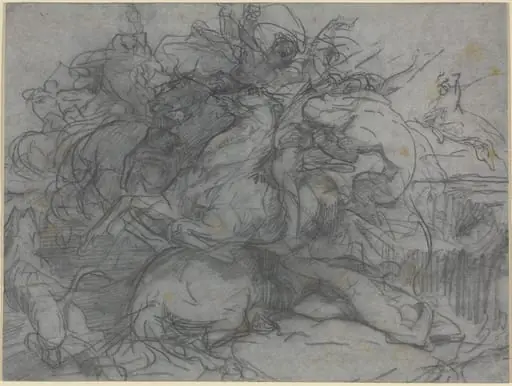 Study for "Surprise" (Battle of the Tigers)
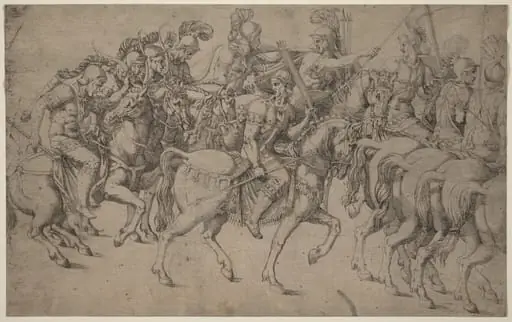 Riders Carrying Bows and Javelins
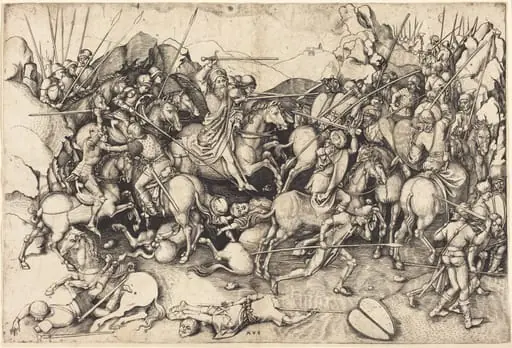 The Battle of Saint James at Clavijo
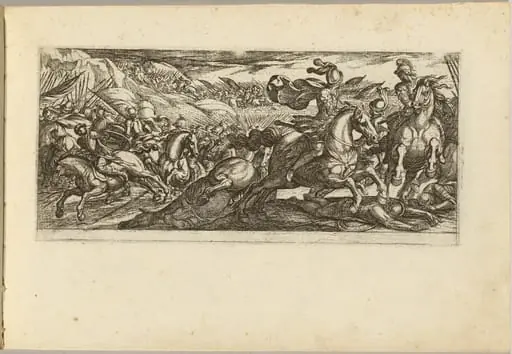 Cavalry Engagement
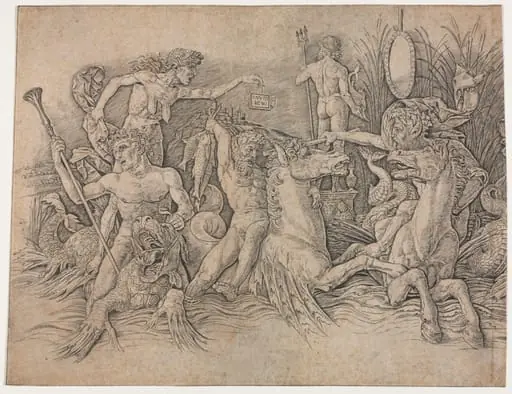 Battle of the Sea Gods - left portion
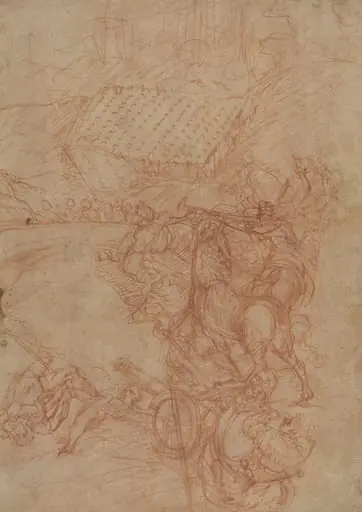 The Battle of Spoleto
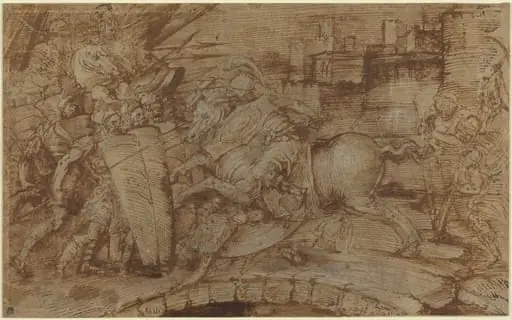 Horatius Cocles Defending Rome
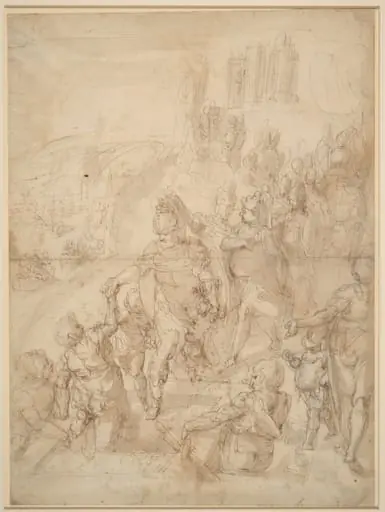 The Embarkation of Aeneas from the Ceraunian Headland
 Cavalry Battle