Artwork
A Fountain with Three Nereids
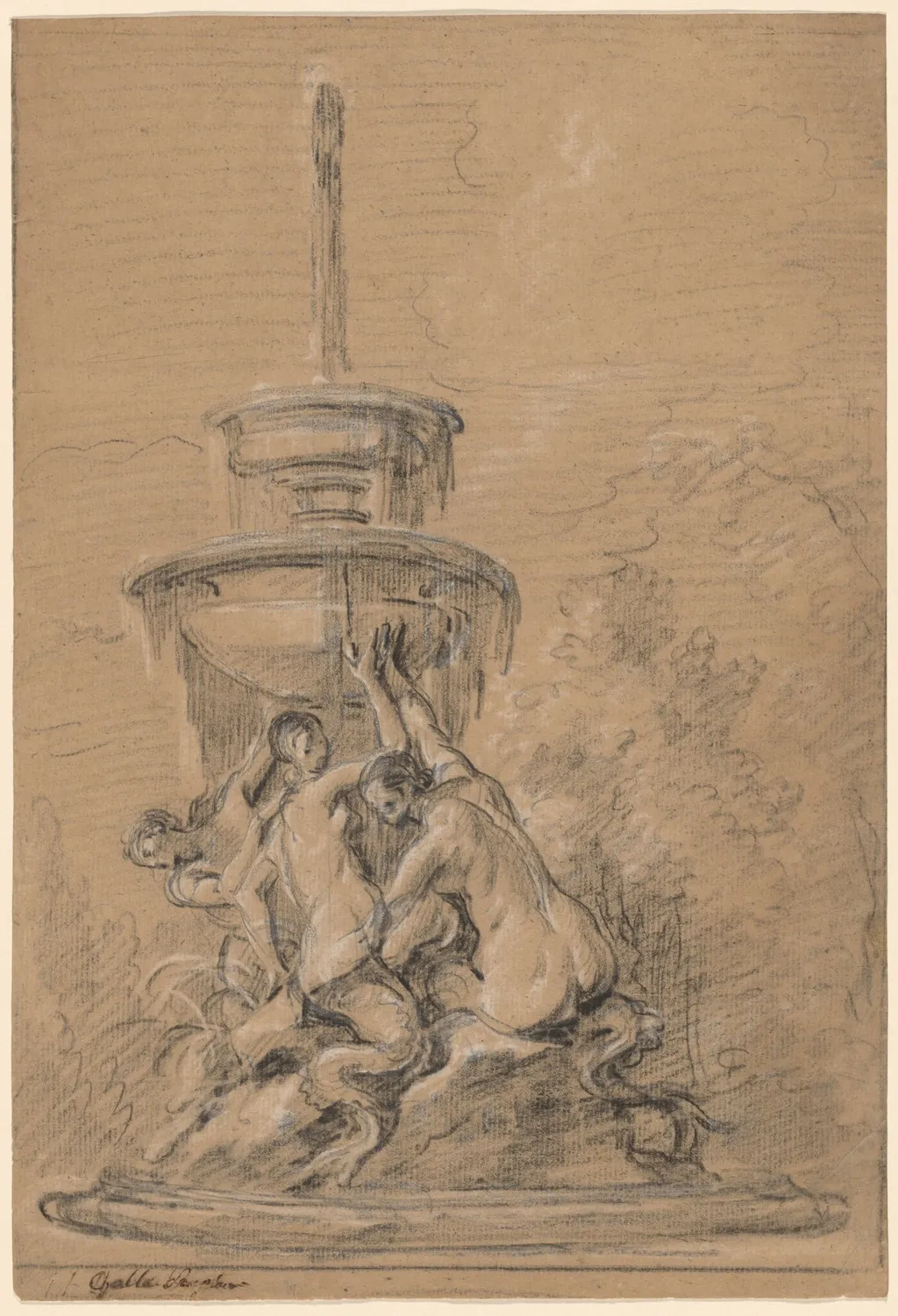
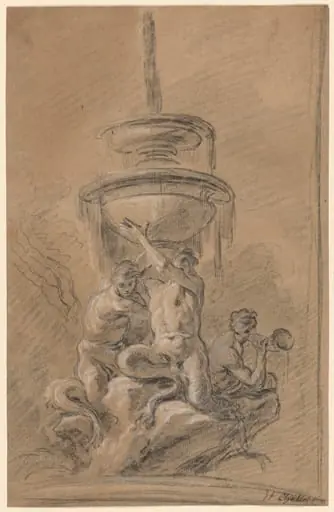
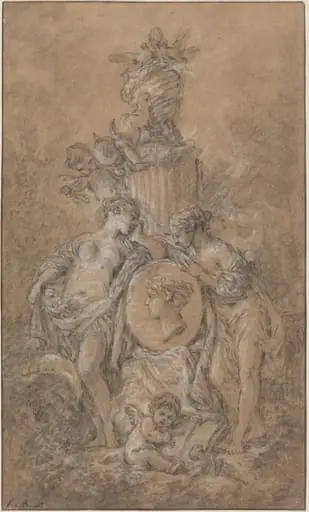
A Fountain with Three Nereids is a chalk drawing by the Baroque artist Joseph Ignace François Parrocel. It dates from 1744 and is held in the collection of the National Gallery of Art.
About this work
Overview
Joseph Ignace François Parrocel’s drawing titled *A Fountain with Three Nereids* dates to around 1744. Executed in black chalk with white highlights on a beige sheet, the work measures a modest size typical of preparatory studies, yet it presents a fully realized composition of a classical fountain surrounded by three sea nymphs.
Subject & Meaning
The central motif features three Nereids, the marine nymphs of Greek myth, positioned beside a sculptural fountain. Their graceful poses and flowing drapery evoke the fluidity of water, while the inclusion of mythological figures reflects the 18th‑century fascination with antiquity and the allegorical potential of nature.
Technique & Style
Parrocel employs a chiaroscuro approach, using dense black chalk to model form and lighter white chalk to accentuate highlights. The contrast against the warm beige paper creates a sense of depth and volume, allowing the figures and architectural elements to emerge with subtle three‑dimensionality.
History & Provenance
Created circa 1744, the drawing belongs to the later period of Parrocel’s career, when he was active in the French academic circles that valued classical themes. Its provenance traces through private collections before entering a museum holding, though specific ownership details remain limited.
Context
The work aligns with the Rococo interest in decorative mythological scenes, yet its restrained palette and emphasis on line echo the academic drawing practices taught at the Académie Royale. It illustrates how French artists of the mid‑18th century integrated classical iconography into decorative designs for interior spaces.
Artist & collection