Artwork
The Bath
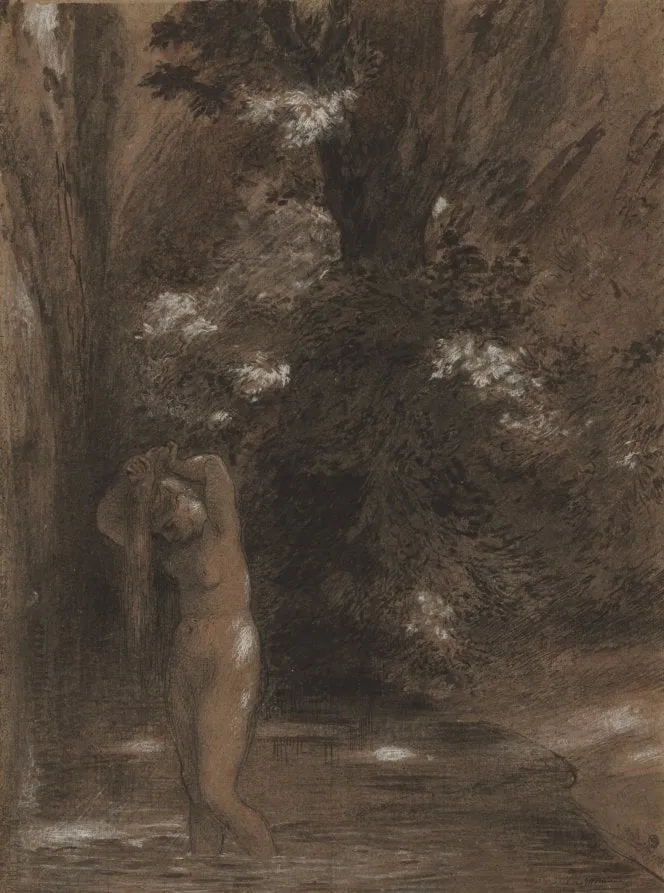
The Bath is a drawing by the Impressionist artist Félix Bracquemond. It dates from 1900 and is held in the collection of the Cleveland Museum of Art.
About this work
Overview
This drawing by Félix Bracquemond depicts a nude figure standing in a shallow forest pool, rendered in monochrome media with subtle pencil grid lines.
This drawing by Félix Bracquemond depicts a nude figure standing in a shallow forest pool, rendered in monochrome media with subtle pencil grid lines. It functioned as a preparatory study for enamel and print works, reflecting the artist’s interest in cross-medium translation. Unlike a finished piece, it served as a working tool, integral to his process of adapting imagery across surfaces. Its inclusion in two major exhibitions during his lifetime underscores its significance in his artistic practice.
Subject & Meaning
The figure, isolated in a natural setting, embodies a quiet intimacy rather than mythological or idealized narrative. Her posture and surroundings suggest a moment of private repose, grounded in observation rather than symbolism. The absence of dramatic lighting or embellishment directs focus to form and environment, aligning with Bracquemond’s broader tendency to elevate everyday scenes through careful composition and restrained expression.
Technique & Style
Bracquemond employed pencil, ink, and wash to build tonal gradations, using faint grid lines to accurately transfer the composition to other media. The technique reflects a methodical approach common among artists working between drawing and decorative arts. Sfumato-like softening of edges and delicate shading contribute to a sense of atmospheric depth, demonstrating his sensitivity to texture and light without overt theatricality.
History & Provenance
The drawing was exhibited twice during Bracquemond’s lifetime, affirming its role in his public artistic identity. In 1907, it was acquired by Parisian collector Alfred Beurdeley, who systematically gathered drawings to document contemporary artistic practice. Beurdeley’s collection emphasized process and craftsmanship, making this work a representative example of the transitional, utilitarian drawings he valued over finished compositions.
Context
Around 1900, artists increasingly blurred boundaries between fine art and applied design. Bracquemond, active in both printmaking and ceramics, used such drawings as intermediaries between disciplines. This practice reflected broader trends in French art, where the sketch was no longer merely preliminary but a legitimate record of creative labor, valued for its directness and technical insight.
Legacy
The drawing survives as evidence of Bracquemond’s methodical engagement with multiple media. Its preservation within Beurdeley’s collection ensured its visibility to later scholars interested in the intersection of drawing and decorative arts. While not widely known outside specialized circles, it remains a key example of how preparatory works contributed to the evolution of modern artistic practice in late 19th- and early 20th-century France.
Artist & collection

Artist
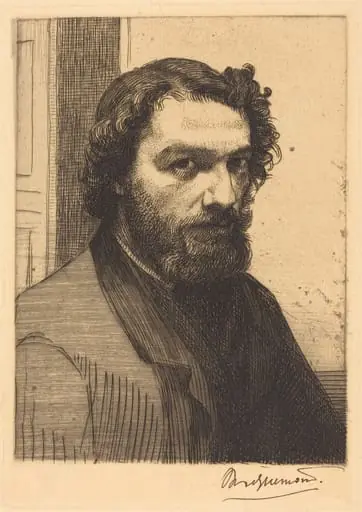
Félix Henri Bracquemond (French pronunciation: ; 22 May 1833 – 29 October 1914) was a French painter, etcher, and printmaker.

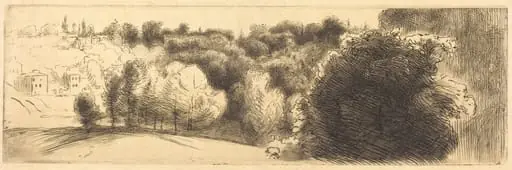
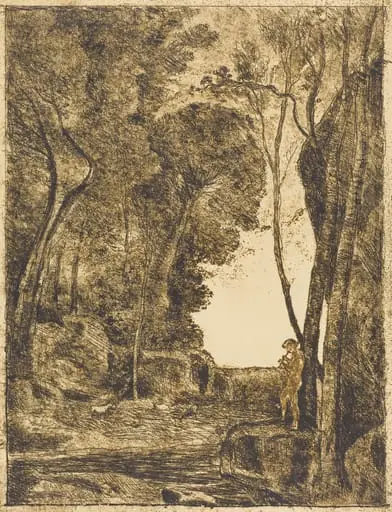 Little Shepherd, 1st Plate (Le Petit Berger)
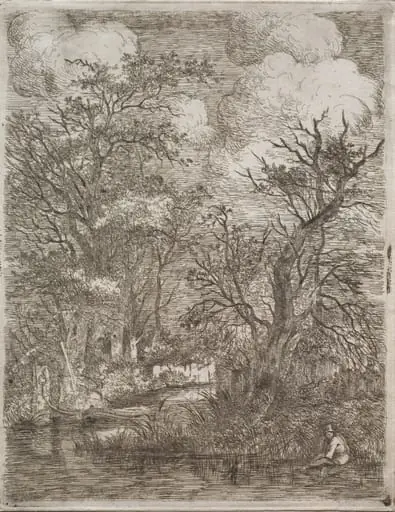 Back of the Mills
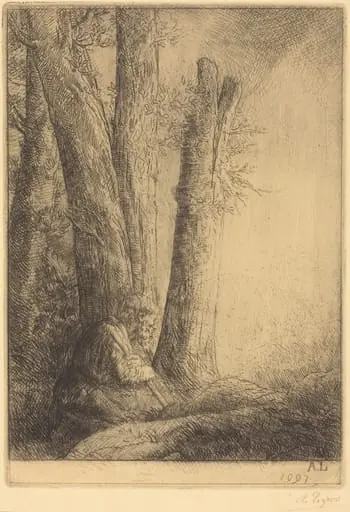 Study for the Prodigal Son (Etude pour L'enfant prodigue)
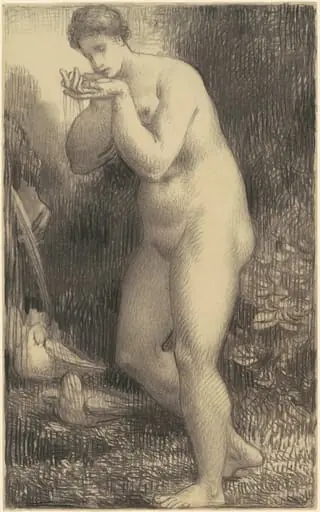 Nude Drinking at a Fountain
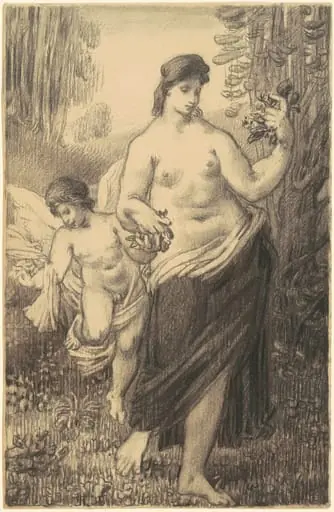 Nude Walking with Cupid
![Donna ignuda addormentata nel parco [Naked Woman Asleep in the Park], by Carlo Paolo Agazzi](https://artifactworldgallery.com/img/carlo-paolo-agazzi--donna-ignuda-addormentata-nel-parco-naked-woman-asleep-in-th--de8a13ff06573716-w320.webp) Donna ignuda addormentata nel parco [Naked Woman Asleep in the Park]
Donna ignuda addormentata nel parco [Naked Woman Asleep in the Park]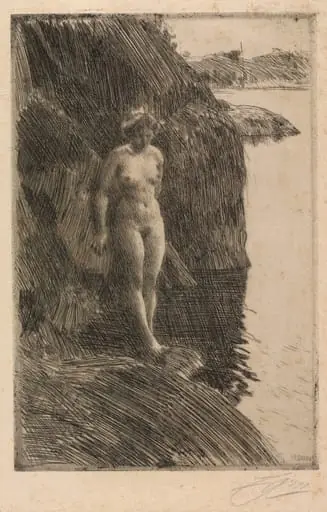 Precipice
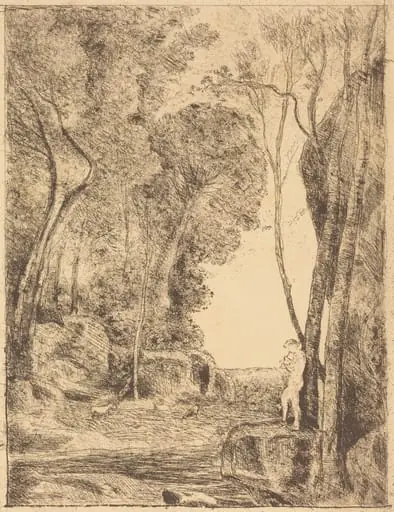 Little Shepherd, 1st Plate (Le Petit Berger)
 Aurora
 Eve
Eve Réverie
 Female nude in a forest landscape