Artwork
Havana
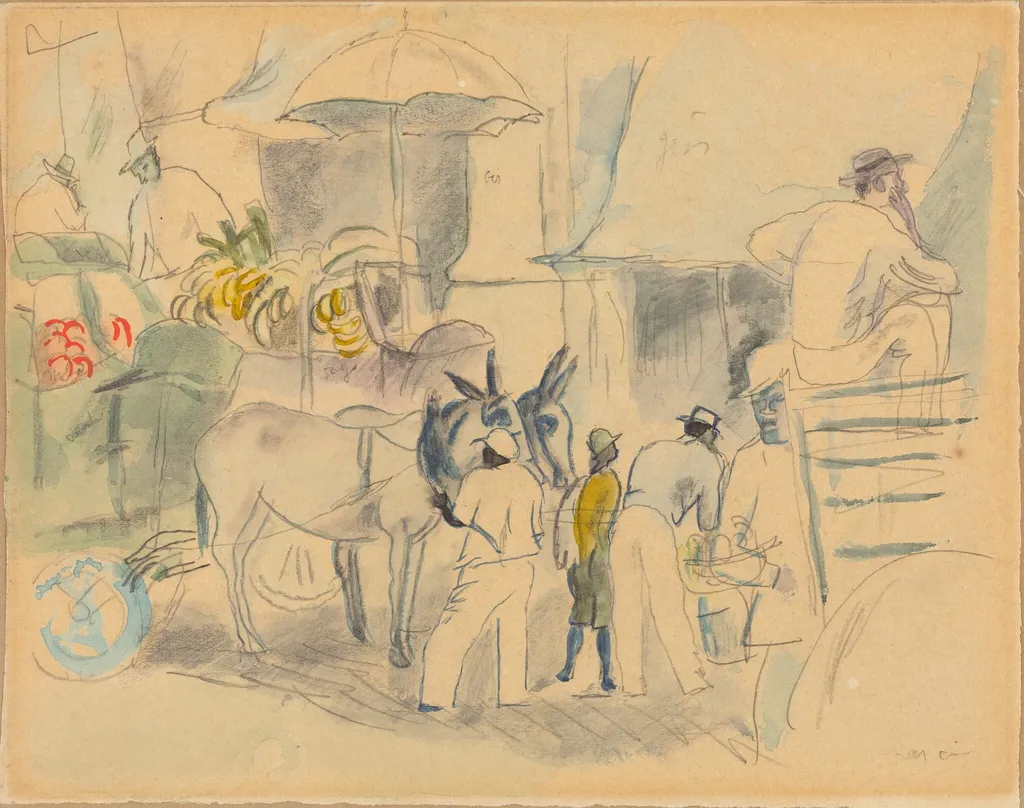
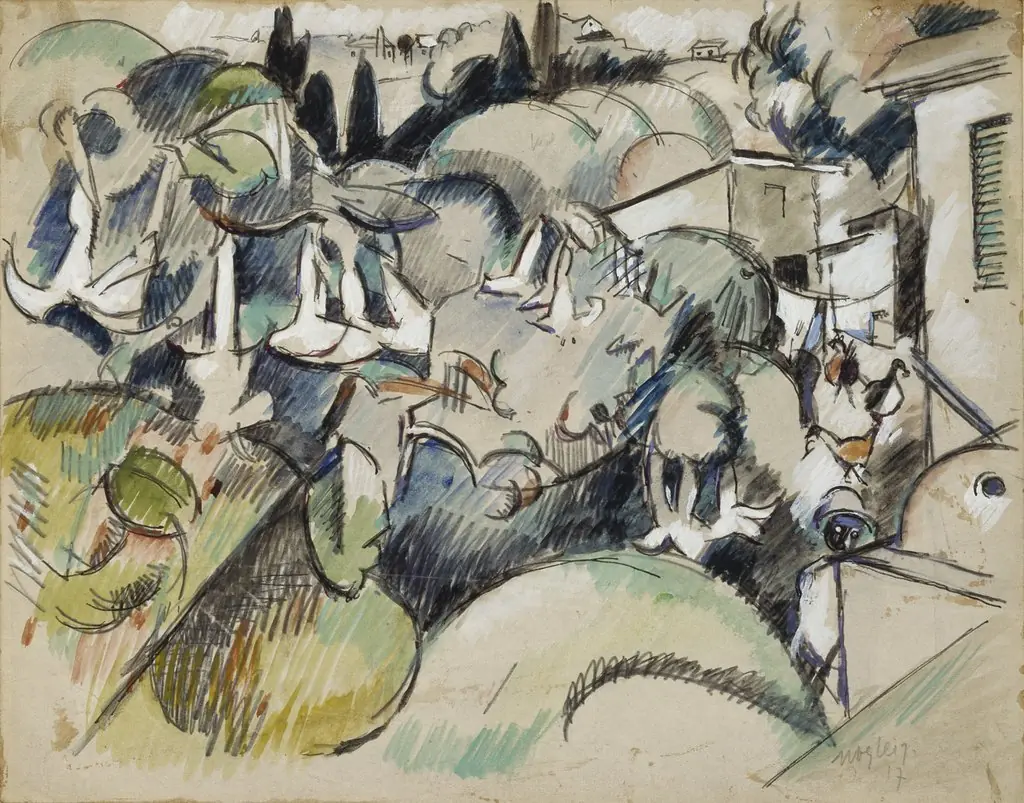
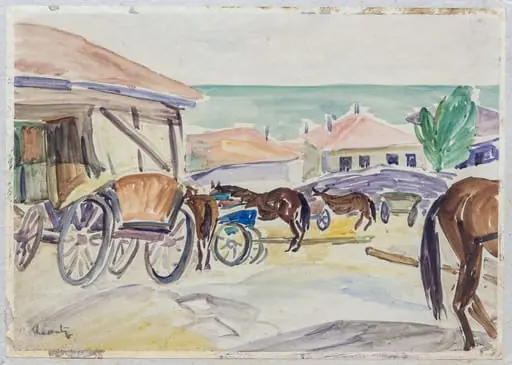
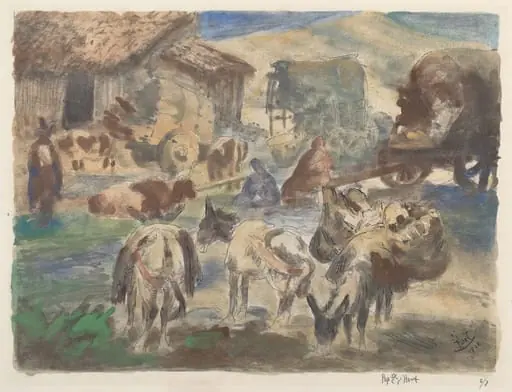
Havana is a graphite drawing by Jules Pascin. It dates from 1918 and is held in the collection of the National Gallery of Art.
About this work
Overview
Created around 1918, this work by Jules Pascin combines watercolor and graphite on paper mounted to a board. It captures a bustling street scene, rendered with swift, gestural strokes that convey immediacy and movement.
Subject & Meaning
The composition depicts a lively outdoor market: two donkeys stand beside a wooden cart laden with vivid yellow bananas, while men in loose clothing and hats navigate the space. A modest thatched-roof building and a solitary tree frame the background, suggesting a quotidian moment in a tropical setting.
Technique & Style
Pascin employs loose watercolor washes layered with graphite outlines, allowing the pigments to remain translucent. The rapid brushwork and minimal detailing create an unfinished, snapshot quality, while the contrast of bright hues against the pale paper emphasizes focal elements such as the bananas.
History & Provenance
The drawing dates to the post‑World War I period, a time when Pascin traveled extensively. Though specific ownership records are limited, the piece is catalogued among his early 20th‑century works and reflects his interest in depicting everyday life abroad.
Artist & collection


![Chicken Vendors [recto], by George Overbury Hart](https://artifactworldgallery.com/img/george-overbury-hart--chicken-vendors-recto--d97b582e13465974-w320.webp)