Artwork
The Handsome Barber
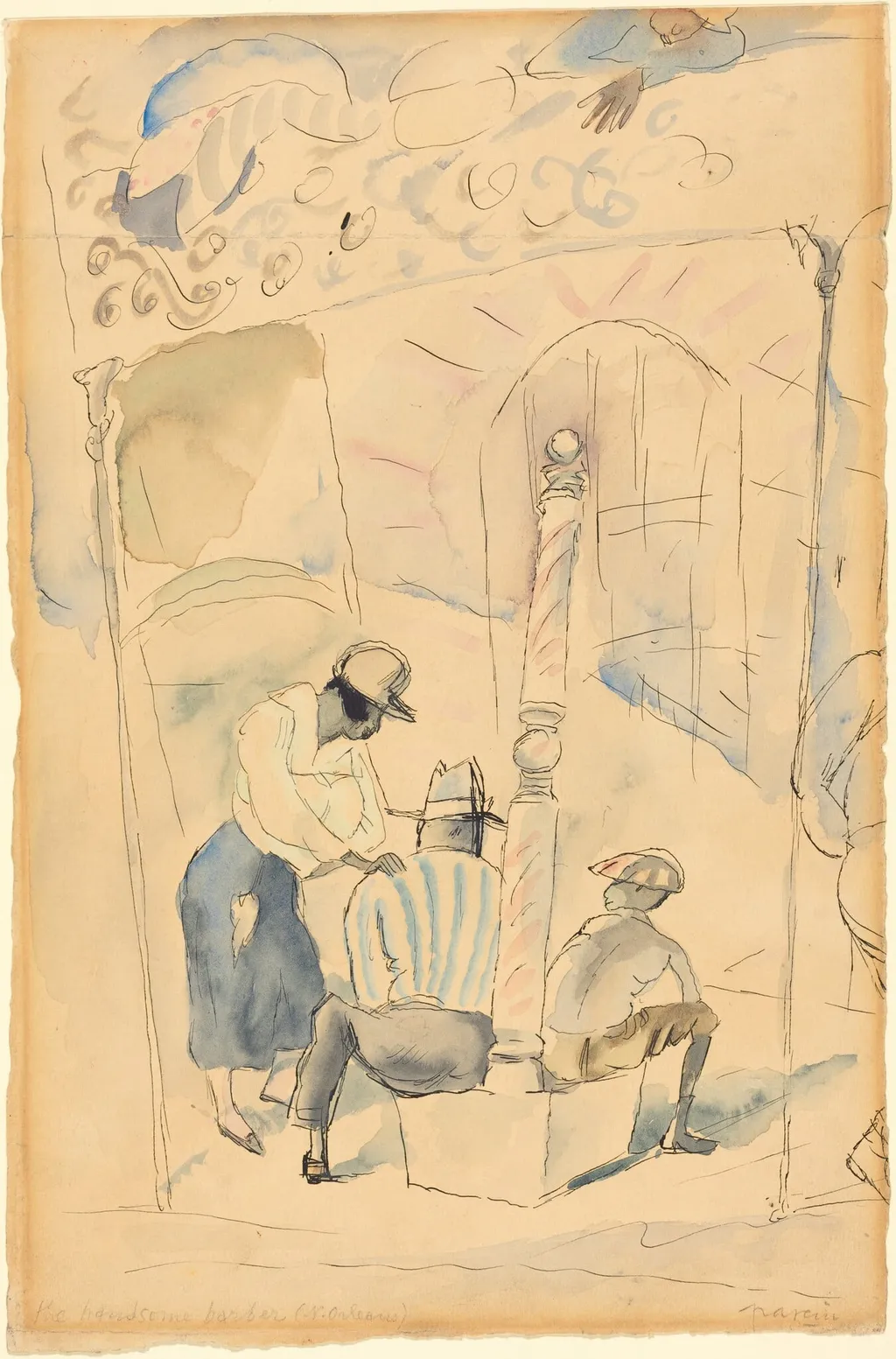
The Handsome Barber is an ink drawing by Jules Pascin. It dates from 1917 and is held in the collection of the National Gallery of Art.
About this work
Overview
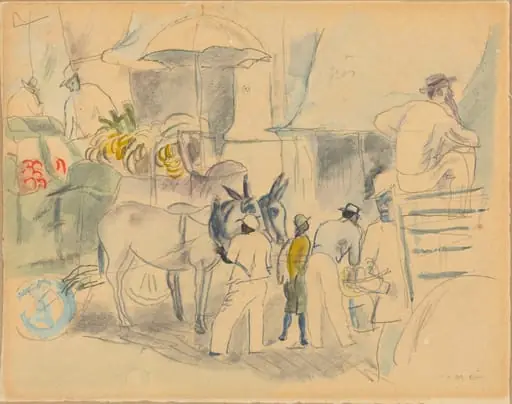
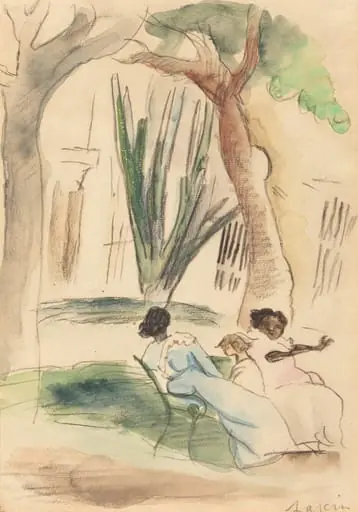
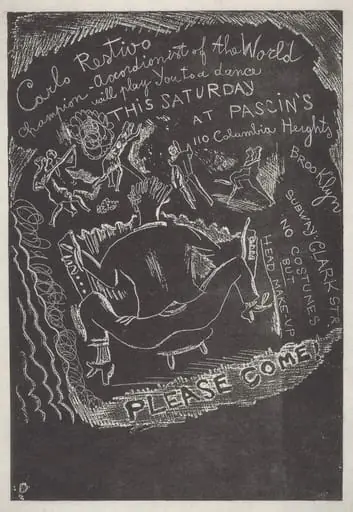
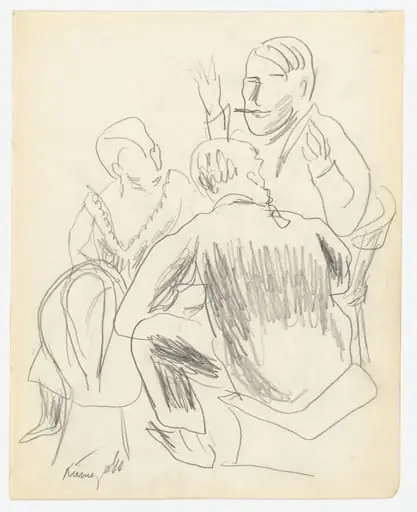
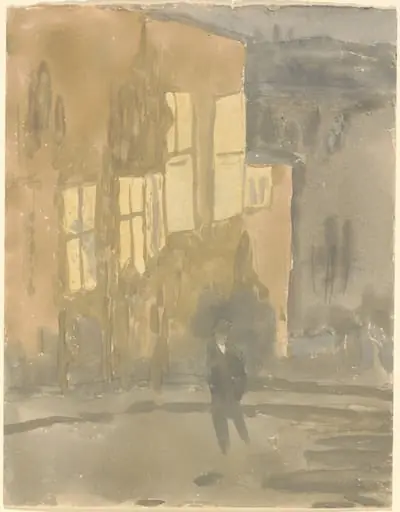
Jules Pascin’s drawing titled The Handsome Barber, executed around 1917, is a modestly sized work on wove paper that combines watercolor with pen and black ink. The composition captures a brief interior scene illuminated by a single lamp, rendered with a loose, sketch‑like quality that suggests immediacy and informality.
Subject & Meaning
The image presents three figures within a sparsely furnished room. A barber, positioned centrally, is engaged in cutting the hair of a seated client, while a second man observes from a short distance. The plain walls, a mirror, and a tall lamp provide a simple backdrop, emphasizing the everyday, almost voyeuristic nature of the encounter.
Technique & Style
Pascin employed a combination of watercolor washes and ink lines to achieve a light, airy effect. The palette is restrained, dominated by muted browns, soft blues, and pale yellows, with deeper shadows introduced for depth. The ink outlines are swift and fluid, reinforcing the work’s sketch‑like character and suggesting a rapid, gestural execution.
History & Provenance
Created circa 1917, during the later phase of Pascin’s career, The Handsome Barber reflects the artist’s interest in intimate, genre‑type scenes. While specific ownership details are limited, the drawing is catalogued as a drawing rather than a finished painting, indicating its role as a study or informal record within Pascin’s broader oeuvre.
Artist & collection